Software
Houzz Logo Print
home2518

engineered wood flooring

7 years ago

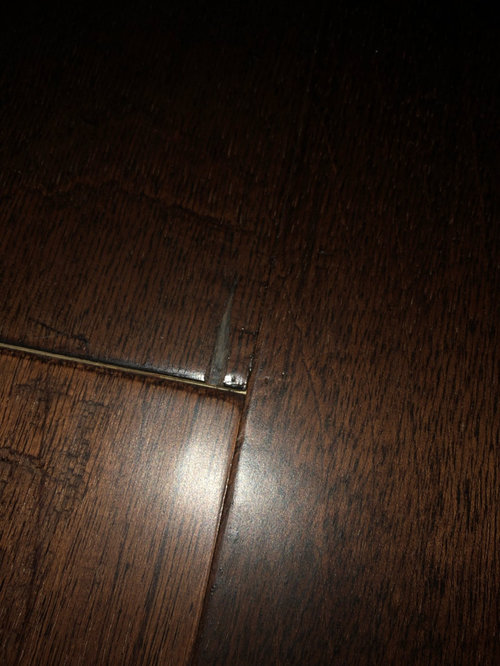
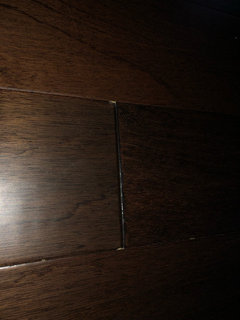
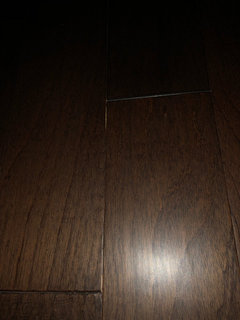
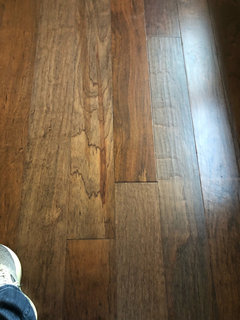
So it’s one thing after another. Today the engineered wood flooring went in my 2nd floor. They are to be nailed and glued. Not sure if the mailed happened. I looked around and saw minwax and paint thinner. Well then I knew something was up. There are splinted areas at the connecting joints. Chips on the floor and a few boards that are not thought I can see the subfloor. I think they used the minwax to hide the splinted areas and to go over the chips and scratches. My question is do you typifies stain on engineered wood? I would think not. Also can you please give me some advise on what I can do, or should do? Accept this or tell them to redo what they messed up. Plus I do not want to see any gaps. Should there be gaps? Because on some areas there are not. Thank you everyone.
Please see photos.

Comments (31)

  • 7 years ago

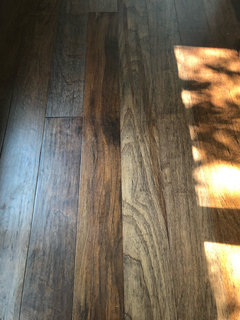
    Some more pics.

  • PRO
    7 years ago

    Hard to tell, but looks like a product issue.

  • 7 years ago

    Miss milling. Likely an import product. Should never have been installed.

  • 7 years ago

    Looks subpar product, possibly quality control issue. They should have stopped the install the moment it was noticed. I would not find the floor acceptable, personally

  • 7 years ago

    Thank you for responding to my concerns. I will be calling the contractor and telling him to stop laying the floor down and to go over to the house and look at what has been done. I noticed they put stain over some if not all the boards. This really upsets me. I did not approve of this. I wanted the shade of flooring that I had picked. And not for a stain to be placed over the pre-finished floor. Who does this, and why???

  • PRO
    7 years ago

    Those edges can be touched up with color matched alcohol based markers. Available at flooring or woodworking stores.

  • 7 years ago

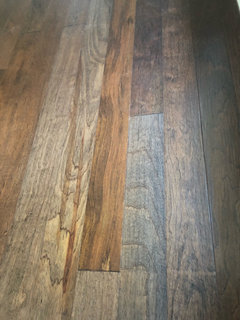
    So I just found out that the floor installed were from different lot numbers. The color and the grains are way off. Should they be using the same lot number? To me this looks bad and just wrong. When I spoke with the installer he admitted that the floor does look different but did not notice it until I pointed it out. What do you think? I contractor said it was fine and normal and that the workers were not going to take boards out to make sure they all look the same. Isn’t that what is supposed to be done when laying down floor? Please help.

  • PRO
    7 years ago

    How much was the flooring per SQ FT? What kind of flooring is it?

  • PRO
    7 years ago

    Should have mixed it better. The term is called racking before the installation. Was this done, or installed one box at a time?


    With the character floor craze, it's vital it be racked to prevent such issues. It's the only way to insure a consistent color mix, as some boxes may contain more of one color and vice-versa,


    Racking hardwood floors

  • 7 years ago

    Who is the installer? Who purchased the flooring?

  • 7 years ago

    My contractor purchased the flooring I told him what floor I wanted. When I checked on the back of the planks there a different lot numbers plus Contractor seem to have an in-house guy putting in floor

  • 7 years ago

    Is it asking too much to have the planks out and laid out in an order as to how they will look the best?

  • 7 years ago

    We have SOOOO many issues it is hard to say where one issue starts and the other stops. Here we go:


    1. NO - Do NOT stain over top of factory finished products. SOMEONE noticed the colours were wrong and were trying to HIDE IT by adding stain over top. This is a No-No and completely voids any warranty you had. STOP this practice. Have the GC tell his GUY to RIP OUT what the 'guy' did and start over.


    2. Multiple Dye lots - this is not uncommon but the way the GUY dealt with it is really wrong. Do NOT add stain to a factory finished floor. The GUY was supposed to TELL the GC that there were mixed dye lots. The GC was to tell the GUY to count EACH DYE LOT and see if there was a way to install different dye lots in different rooms so that it was less noticeable. And the GC was to tell HOMEOWNER that dye lots were mixed and what HOMEOWNER would like done.


    3. (Whew) Gapping. Something has gone wrong if you see gaps. Either the first row is not STRAIGHT (no one used a chalk line to start the first row = every row is out of alignment) or the MILLING of the product is WRONG. Either way the GC is on the hook for what his GUY just did. The GUY was supposed to CULL the poorly milled products (the one's showing gapping). The GC was supposed to STOP the GUY from installing if there was no CHALK LINE used to start the job (chalk lines are done in each room and down LONG hallways to ensure each room install properly...ahem...do you see CHALK LINES????).


    4. Chipping means a few different things. It could be a chip from the MANUFACTURER. If the product is VISIBLY defective out of the box the GUY was supposed to CULL the plank (to be used later as a cut or at the start/end of a row). A chip could also be an installer issue (the nail gun pressure set too high = damage to the face of the plank). The GC is supposed to STOP the GUY when the GC sees this. The GC is then to tell GUY that this is unacceptable. The GUY then removes/replaces ALL of these damaged planks.


    Do you see where I'm going with this? The homeowner picked the product but EVERYTHING else is the GC's responsibility to check, double check and then STOP his GUY from doing something stupid. Guess what did NOT happen? Yep. The GC didn't do the job he is being paid to do. And the GC is at fault for using the cheapest labour option open to him = some GUY who swings a hammer.


    The one and ONLY thing the homeowner is responsible for is the QUALITY of the product they chose. The QUALITY is a bit of an issue. The chipping of the surface is an issue. This indicates several concerns. A THICK wear layer (anything over 3mm is considered thick) is harder to chip.


    Please tell us the name of the product you chose.

  • 7 years ago

    This is the flooring we chose. I really do like the color we had chosen but it is not coming out that way.

  • 7 years ago

    SJ McCarthy thank you for the great explanation. And everyone else as well. I agree the floor is not acceptable. To many color variations to begin with. This is something I am going to be looking at for a long time. The worker said they did not use stain, but I swear they did. I saw them bring it out of the house today. The contractor said it is a big job to take the floor out because it is glued down. And asked if I could live with it. I’m really not happy with how it looks.

  • 7 years ago

    What it looked like with light from window.

  • 7 years ago

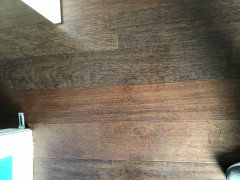
    This is what it should look like. Minus that darker one.

  • 7 years ago

    I would never accept that. I am also wondering about your contractor, who continues on without the lally columns, that flex pipe in the attic, and he seems to think this is all ok. Seems, he doesnt really care about much of anything.

  • 7 years ago
    last modified: 7 years ago

    The person ordering has the responsibility to check the received product for mechanical suitability to install. Had the GC and you both checked that, and not scheduled the installation, the problem wouldn’t be how donnydumbnutz gets glued down wood up. (A real flooring contractor would know.) The quality of that product is pretty terrible, as any flooring contractor would know, and reject up front from ordering. No true flooring contractor would have suggested that company to order from, or that product to order. They don’t even use real species names for their floors, so you know what you’re getting. That’s lost money there. They won’t take it back. The check cleared and installation constitutes acceptance.

    The person who wanted the floor ordered has the responsibility to check for color suitability. Had that happened, you’d have seen that your expectations couldn’t be met by that product, even if the dye lots were the same, and it didn’t have milling defects.

    By calling that completely unknown species wood “Brazilian hickory” which is not a real name, the manufacturer is trying to align your expectations to a wood that has a HUGE range of natural variation, much like American Hickory. Wood comes from trees, and normal variation in wood tone is a 100% expectation to have. The dark plank that you don’t like in the sample? 100% normal. The floor variation that you don’t like? Normal. The different dye lots don’t help. But the variation under the dye lots is normal.


    You need to reselect. You need a different flooring contractor. A REAL one. Not the GC‘s in house schlub. And you need a different, higher quality product. Pick a domestically produced domestic species name brand this time. At twice the price. Nothing from the junk purveyors like F&D or LL, ever.

  • 7 years ago

    When pursuing flooring the lot numbers should all be the same. There shouldn’t be any color deviation just graining. Is this correct? Ideally hard wood floors would have been great but to do the entire house is a little costly. We are doing a while home renovation. When I showed the contractor the flooring we chose he didn’t mention anything to me regarding brand, width and so on. I did find anything negative about the flooring I had picked. Do you think if I stick with the same floor and make sure the lot numbers are all the same the result would be better? TAI

  • 7 years ago

    The wood you have chosen, Guajuvira (aka Brazilian Hickory) is a WILDLY variable wood. Go ahead and google the images. It looks like Picasso or a Van Gogh painting! It puts Acacia and Hickory to shame.


    That means the *SOME of the variation comes from the wood itself. It will NOT be a uniform colour. It simply will not be. Everything in the same dye lot should have the same COLOUR FAMILY. But the variation INSIDE that colour family should be HUGE!


    Example: your wood could range from super dark cinnamon right up to BLONDE cinnamon. But the overall colour should read 'cinnamon'. It all should have a uniform tone on tone appearance.


    Your photos are showing grayish-blue and purply brown (which I would bet is one dye lot) right through to blond cinnamon and deep reddish-brown walnut (which is probably another dye lot).


    The dye lots are what is making your floor look like it was a paint by numbers. Once you get the dye lots sorted (you won't know your colouring until you open the boxes) you will have a floor that is in the same family (ie. not clashing with each other). But you will still have WILD variations from plank to plank.


    It is the nature of your wood choice. You better reach out to Floor and Decor to see which of the dye lots they have THE MOST of. You will need to pick them up ASAP. You can deal with 'Who's at Fault' later.

  • 7 years ago
    last modified: 7 years ago

    Engineered Wood is real wood. It’s layers of wood. Just like plywood. Laminate is a picture of wood, on a paper, under plastic, and over MDF. Vinyl is a picture of wood printed on plastic, under more plastic, and over more plastic.

    Wood comes from trees. Different trees. That grow in different woods. You will have a mix of tones naturally in any type of real wood flooring. Solid or engineered. . That is 100% normal. Some species have wild variability in natural wood tones. Like the who knows what botanical name wood that you selected. That has Nothing to do with how it’s stained.

    Staining wood doesn’t make it the same color. Not at all. It just evens out the variability a bit. It will NOT eliminate the natural and normal variability in tone of natural wood. If you want the same predictable color, you do not want real wood. You want fake wood of some type.

    Dye lots for large projects may not all be available the same. The retailer should attempt to order all the same, but that may not happen. The retailer should notify the installer up front when that happens, so they can mix the two together appropriately when laid.

    F&D is notoriously terrible both for quality, and for for mixing several dye lots and never telling anyone anything. Which is why reputable flooring installers do not shop there. They have to the trade resources that provide higher quality materials. They guide you and show you what will meet your needs and give you the look that you want. You supply nothing. You just go to their supplier.

    If you repeat the purchase of more cheap import wood, you will be throwing away more money on another cheap import bad quality experience. Just like you are experiencing right now. This was predictable. And avoidable. With the right flooring installer to guide you. You don’t have the right Professional involved.

    Find an Actual wood flooring professional. https://www.woodfloors.org/find-a-professional.aspx

  • 7 years ago

    With all your issues with your GC, you really need to hire an independent inspector who will be on your side.

    Additionally, you need to send emails of all the things you are contesting so you have a written record of it.

    And you need to hold back payment until they do the work to YOUR satisfaction.

  • 7 years ago

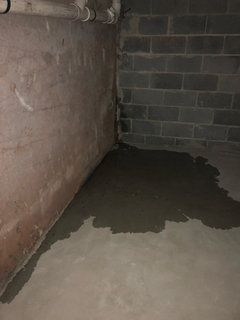
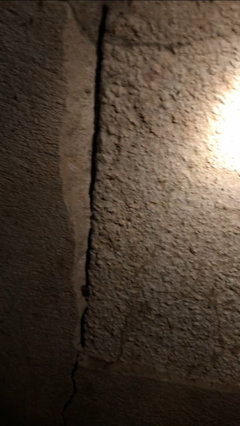
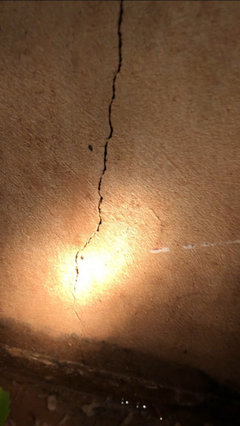
    Oh tonight it got even better seems where the old and new foundation meet water is now coming in my addition in the basement. I had said many times that there was a crack where the new and old foundation meet and everyone just dismissed me. Now I think there is a bigger issue then the floor. I’m about to lose my mind. And this guy came highly recommend. Why are we so special to have all these issues.

  • 7 years ago

    Whoa! That's the ADDITION? How old is the addition? I think you need an engineer in here pretty darn quick. Masonry foundations are notorious for weeping, but a new slab that is properly water proofed (with sloping landscape, down spouts properly positioned, etc) shouldn't have issues with water. Do you have photos of work in progress for this?


    Who is the architect for this project? What other work was done and what was the time frame? Where are the blue prints and the scope of the project? Did you need to pull permits for the build and submit everything to city hall?


    Someone needs to inspect this SOON. As in 'next week' would be great. But 'this week' would be better. Go back to the ORIGINAL person who signed off on these designs/structural work and work your way FORWARD.


  • 7 years ago

    Yes, permits pulled. I went to the town building inspector this morning and he came to my house today and looked around. The outside has still not be graded away from the house #1. The down spouts should be run underground toward the street not done#2. He also looked in the house and was surprised about a couple of things he saw. In the basement he saw flex duct attached to hard venting and said that will not pass one reason the hard is not insulated. I told him non of the hard duct work behind the Sheetrock is insulated. He then said before the Sheetrock went up and inspection needed to be done to check that the duct work seems were sealed. Inspector them said that an air quality test needed to be done as well and HS not been done.

  • 7 years ago

    Oh my. I am so sorry. Please stop him from working. Dont let him screw up anything else.

  • 7 years ago

    Ok....there are so many issues you need to stop all work. Who is the architect? Is this a Design-Build Firm (they have everything 'in house' for one-stop-shopping)? Or is this someone with their own shop?


    City inspectors look for 'basic code' violations. They do NOT deal with everything on your 'problem' list.


    Have you contacted a lawyer specializing in building law?

  • PRO
    7 years ago

    Who took out the building permits?

  • PRO
    7 years ago

    It would be foolish to look at your awful pictures online and try to diagnose what's wrong. Better pictures, with adequate lighting, or a site visit, would be required to make a determination.

    Is the floor finished? If yes, you have some issues. If no, let them finish.

    Regarding the dark board in one picture, I don't think that's abnormal.