Software
Houzz Logo Print
webuser_673781790

Inspection failed, quartz needs to be removed

7 years ago

Our electric inspection failed due to the electrician forgetting to install a required electric outlet. No one noticed that the outlet was not installed and quartz backsplash was placed.
To pass inspection, the quartz needs to be removed to cut a hole for the outlet.
The electrician asked me to get our quartz installer to remove and cut the hole. Quartz installer said they can do it but there is risk that the quartz may break.
Should I have the electrical company get their own installer and deal with it? I'm afraid if something goes wrong, they won't take responsibility.

Comments (38)

  • PRO
    7 years ago

    It may be possible to cut hole for outlet without removing splash.

    Eli Mo thanked Creative Design Cabinetry
  • 7 years ago

    Could meet code by installing undercabinet outlets?

    Eli Mo thanked THOR, Son of ODIN
  • 7 years ago

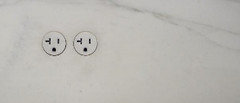
    Thor's suggestion is brilliant, but if you are thinking of cutting a hole for an outlet, think Bocci.


    Eli Mo thanked eam44
  • PRO
    7 years ago
    last modified: 7 years ago

    Don’t cut into the backsplash! Like Thor posted, electric boxes can go on the bottom of upper cabs and meet code.

    We’ve had good luck with boxes from Bryant - they will hold a duplex receptacle or a switch. We usually use them for receptacles. They are metal and well made, we also put them in medicine cabinets.


    Eli Mo thanked myricarchitect
  • 7 years ago

    Yes, go for the undercabinet lighting!

  • 7 years ago

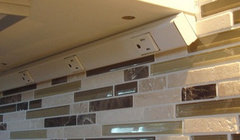
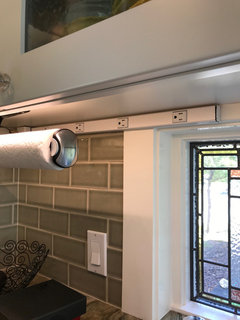
    I used plug mold under my cabinets instead of outlets in the backsplash

    Eli Mo thanked cpartist
  • PRO
    7 years ago

    cpartist - I'm shocked!!! How could you use such a cheesy cheap plug mold. How did that pass inspection? Don't you have a requirement for dedicated plugs to service the counter top?

    Eli Mo thanked The Kitchen Abode Ltd.
  • 7 years ago

    Electrical boxes on the bottom of cabinets sounds great. One electrician I spoke to said they can be pricey to install (in his opinion, it's not worth it). But since your electrician flubbed, here's a chance to get an upgrade for free.

    Eli Mo thanked girl_wonder
  • 7 years ago
    last modified: 7 years ago

    Thank you you all so much! I didn't know that undercabinet outlets could be an option! Spoke to electrician and he said it can be done and would pass inspection. Not sure why he did not mention this option before!

  • 7 years ago

    Why didn’t he mention it, indeed? Maybe because it’s easier (for him) to have the fabricator solve his problem??? I don’t know. Keep an eye on this guy. Good luck! Sounds like you’re almost done, yay!

    Eli Mo thanked girl_wonder
  • PRO
    7 years ago

    I also used plug mold under one cabinet where there was no good place for the outlet. It has not been a problem and it does not show. It was a good choice!

    Eli Mo thanked Anglophilia
  • 7 years ago

    How nice to have a silver lining!


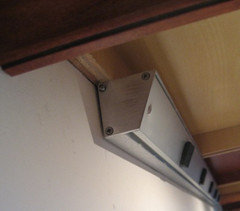
    Consider what angle you would like for the wiremold/plugmold install: flat against the wall, the cabinet bottom, or at a 30 or 45 degree angle.

    Eli Mo thanked THOR, Son of ODIN
  • PRO
    7 years ago
    last modified: 7 years ago

    eam44:


    Your pictured duplex receptacles can't be legal in the states because the box they're in is inaccessible.


    If it's engineered stone, not quartz, it's not going to break when it's removed. Stick some Sink Savers to it beforehand. It's definitely not going to break.

  • 7 years ago

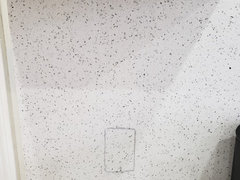
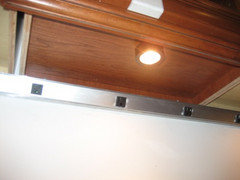
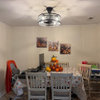
    The electrician came out and installed the outlet under the cabinet! I am happy we didnt have to remove backsplash and you can only see it if you look under. Thanks again everyone. Now for inspection


  • PRO
    7 years ago

    ????

  • PRO
    7 years ago

    ????

  • 7 years ago
    last modified: 7 years ago

    If you're asking about the picture...Eli Mo put the outlet on the bottom of the cabinet. It's shown in the upper left corner of the picture.

    I also have Plugmold on one side of my Kitchen. I like the fact that I can plug something in anywhere along the counter without having to drag/trail a cord across the counter to a lonely outlet. My plugs are approx 7.5" apart. Mine is "angled Plugmold" for ease of use and, yes, it passed inspection. (As did my pop-up Mocketts in front of the window on the other side of the Kitchen.)

    I don't "permanently" plug anything in on that side of the Kitchen, so Plugmold worked well.


  • 7 years ago

    I think Houzz cut the picture off in mobile.

  • PRO
    7 years ago

    Just need to click on the pic to see all of it.


    Looks good!!!

  • 7 years ago

    What’s with the rectangle drawn(?) on the quartz backsplash? Will that clean off? (That may be what Joe was ??? about...)

  • 7 years ago

    That's the Ghost of an outlet never to be installed.
    Wooooo.....

  • 7 years ago
    last modified: 7 years ago

    Eli Mo, I'm happy you found a solution without the need to remove your backsplash. I'm posting because often people read these threads at a later date, and I wanted to clear something up for The Kitchen Abode Ltd. and anyone who might be curious about plug molds in kitchens:

    3rd Photos for Uploading · More Info


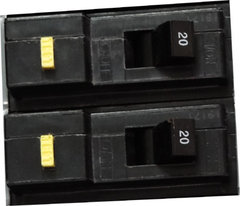
    It's called a GFCI breaker. They are used with plug molds. In most areas this is what is needed to meet code. Check with your local inspector first, of course.

    Edited to correct photo, as The Kitchen Abode rightly pointed out I'd posted a 15 amp breaker, whereas 2-20 amp are usually required by code. This is a quick pic of ours above.

  • PRO
    7 years ago

    I'm fully aware of the option to install a breaker in the panel to meet the GFCI requirements. However, you should be cautious about showing a 15amp breaker, most electrical codes now require 20amp kitchen outlet feeds. Many also require Arc Fault protection.

  • 7 years ago

    The Kitchen Abode, you are exactly correct - and I should have caught that! It was my intention to make sure any do it yourselfers not make code mistakes. I grabbed the first GFCI image online and didn't realize it was a 15 amp. Thank you for catching my error.

    I'm updating the photo with our own, (two) 20 amp breakers. Standard code typically requires 2-20 amp breakers in a kitchen for plug molds - but as I originally mentioned above, check with your local inspector first.

    If anyone is concerned about dedicated outlets, those by most code requirements (if not all) require that large appliances such as refrigerators, ranges, vents, etc. all have their own dedicated outlet. I have never seen a refrigerator or range or DW plugged into a plug mold. That just would never make sense. And most contractors, and their electricians, would be fully aware of these basic code requirements.

    As for other smaller appliances such as microwaves, toaster ovens, and anything pulling a lot of amps, depending on where you live, it may or may not be code to require a dedicated outlet for those. We do not require them for smaller countertop appliances in our area, but have dedicated outlets for our toaster oven and microwave to keep from tripping the breakers. Again, it's important to check with your local inspector.

  • PRO
    7 years ago

    2ManyDiversions - I assumed that's most likely what you did and appreciate your response.


    My main concern is that respondents often post examples of what they did, and though it may have passed at the time they did it, it may not pass today. Though we expect any poster doing electrical work to be using a licensed electrician there is no assurance they are actually doing so. In fact in many jurisdictions if you are the home owner you are permitted to do the electrical work yourself if it's your home that you are working on, just requires a permit & inspection. It's very difficult if not impossible for OP's to really know if a respondent is fully versed in the subject, especially when it comes to code related matters, some even though they are incorrect come across in such a compelling definitive way that the OP can be convinced they are being provided valid advice even though they are not.


    Another aspect is that OP's come from many different jurisdictions, not only the USA but also Canada and beyond. As such codes vary so we have to be careful not to assume that what's done or accepted in our area is ok in some other area. The world is a much bigger place than our own little microcosms.


  • 7 years ago

    Thank you - when I'm wrong, I'm wrong. Though an accidental error, I made what I consider a serious error with that 15 amp breaker and am so glad you caught it. I completely agree TKA, Ltd. This is why, when plugmolds were mentioned repeatedly, I posted examples but ended with 'check with your local inspector'. There are so many here who DIY - which I think is great if you have experience. But as you say, codes differ.

    We did our own electrical work but we are capable people, and re-wired some mistakes our contractor made. All our wiring met code inspections. BTW, plugmolds can be a booger to install. In the States, it's important to apply for remodeling permits - in case someone working for you, even your contractor, makes an error which might later result in pricey repairs when it comes to selling time, or more seriously, a fire hazard.

    Back to the OP - Eli Mo, I hope you now meet code and pass inspection : ) My apologies for hijacking your thread.

    Addendum: I couldn't see the outlet on my cell phone either, but did on my computer : )

  • 7 years ago

    @Eli Mo, wow, that's a big relief. Your subject line stopped me in my tracks, so yay you!

    @cpartistdespite much of the world (and my GC) looking down on PlugMold, we are also leaning toward that choice, so I'm glad you piped up. I'm barely 5 feet tall, so the angled outlets stare me directly in the face with their blocky bulkiness (plus that early IBM computer color, ugh). PlugMold is less obtrusive from my eye level and I don't think I'll have trouble finding the outlets since I'm short enough not to have to crouch to see them.

  • 7 years ago

    Mittens Cat, I don't think you'll regret plugmolds - nor do I think others are down on them. Electricians and GC's tend not to like them for one reason: They can be difficult to install - wires, wire caps, and connectors stuffed into very slender boxes : )

    Ours are on angle, but the plugmold wasn't originally that way. We had the cabinet maker install 45 degree angled wood blocks at the back underside of our cabinets, then installed the plugmolds onto those. Easier to plug in straight into or at an angle rather than straight up... unless you're 5 feet tall and have no problem seeing them : ) I can pick and choose among multiple outlets, and when I've got cooking spread out, other items plugged in, that's a wonderful option. We placed ours under every upper cabinet.


  • 7 years ago

    @2ManyDiversions, thanks! And great idea about installing 45-degree angled blocks...wish our cabinet maker had thought of it! All well...next remodel (as if!). :-D

  • 7 years ago

    Following up about the Bocci 22 outlets mentioned by @eam44 and debate here as to whether or not they would meet code, it is interesting that these outlets are designed by a Canadian company, but I've seen comments online from designers and electricians whom I presume to be based in the United States who are installing them in clients' cabinetry. The Bocci company advertises these as solutions to be flush mounted not only behind wood but also into drywall and behind permanent stone and tile installations, most of which applications would indeed make the junction boxes inaccessible, a violation of code in essentially every jurisdiction in the United States as @Joseph Corlett, LLC pointed out. Another potential issue with the Bocci 22 outlets is that when used behind wood cabinetry, which is considered a flammable surface, the junction box could be made accessible depending on the configuration, but the edges of the junction box won't be flush with the flammable surface as mandated by the NEC code that most jurisdictions follow. The Bocci outlet part itself projects forward out of the junction box and sticks through the wood overlay, a unique design that skirts the usual issue of how sparks would be contained because the outlet and face of the junction box together create a spark-proof seal. Even so, I'm not sure all inspectors would pass these. We're thinking of putting these in our new cabinetry layout but will need to ask ahead for clearance.

  • 7 years ago

    But they're so cute....

  • 7 years ago
    last modified: 7 years ago

    @eam44 There is discussion in another thread about how since the Bocci outlet can be removed with a special tool from the front to give access to the wiring connections, this could count for "access to the box." In reality, it's only partial access because if the box itself became loose or the holding faceplate broke, you couldn't get to it under a permanent surface, but you could fix or replace the outlet part and the wires. My concern with Bocci 22 is that the entire holding faceplate is made of plastic. If you had to plug in something that required extra force, I fear you could break the faceplate that holds the outlet, and then you'd have no way to access the faceplate to replace it under a permanent installation. Sillites are only slightly larger than Bocci 22 but are self-contained receptacles so avoid some of these problems. Sillites require 2 face screws but also come with cover plates to use if desired for an inconspicuous appearance. Sillites don't meet code in every jurisdiction, is my understanding.

  • 6 years ago

    Thanks again for the suggestions. We passed inspection and didnt have to cut through quartz.


    The electrician billed me to install this outlet after inspection failed to pass because they forgot to install it initially. Not sure If we should pay. We have a few other billing issues but conflicted on this one.

  • PRO
    6 years ago

    I can't imagine getting the nerve to bill a client for the remedy to get my work to pass inspection.

  • 6 years ago

    Very forgetful people! First they forget to install an outlet, and then they forget that they shouldn’t be charging you for said outlet...

  • 6 years ago

    cpartist - I'm shocked!!! How could you use such a cheesy cheap plug mold. How did that pass inspection? Don't you have a requirement for dedicated plugs to service the counter top?

    Those are the dedicated plugs to service the countertop.

    I have no appliances that get plugged in on my counter on a daily basis. I have a dedicated coffee cabinet with with a regular outlet in the rear for the coffee maker and the toaster oven. There is also an outlet in the cabinet next to my prep sink inside the appliance garage. That one never gets used since the cabinet is for the dog's stuff.

    My outlets for my MW, stove, fridge, etc are all behind the appliances and up to code on their own dedicated circuits.

    As for it being cheap and cheesy, it's what the electrician installed and since no one sees it since it's under my cabinets, I really don't care.

    My house is brand new (got our CO finally in January 2019) and it passed code.

    And frankly I'm shocked you are so rude to make a comment like you did without knowing what was done!

    @cpartistdespite much of the world (and my GC) looking down on PlugMold, we are also leaning toward that choice, so I'm glad you piped up. I'm barely 5 feet tall, so the angled outlets stare me directly in the face with their blocky bulkiness (plus that early IBM computer color, ugh). PlugMold is less obtrusive from my eye level and I don't think I'll have trouble finding the outlets since I'm short enough not to have to crouch to see them.

    I love my plug mold because my backsplash is clean looking.

    I actually also have plug mold on the side of my island under my countertop.

  • 6 years ago

    That's chutzpah charging the client for something they forgot to install.