Software
Houzz Logo Print
dirty_gardener

Charlie and the Cassia

6 years ago
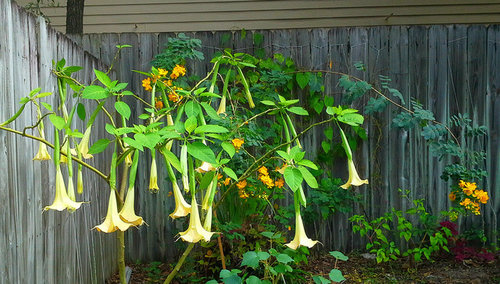
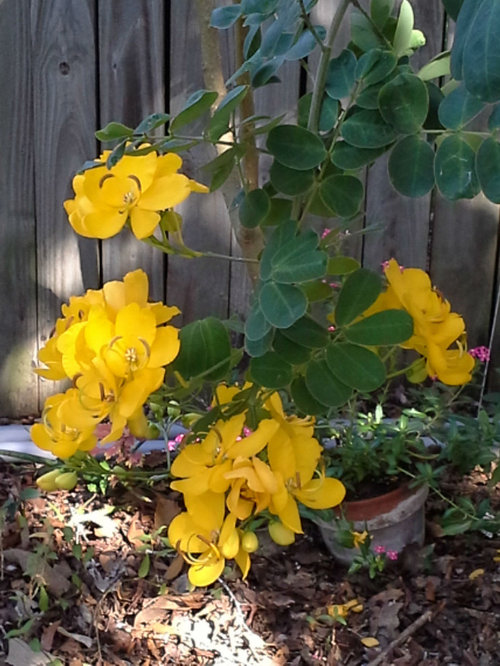
The Charles Grimaldi, which now has hardly any leaves, making the blooms stand out even more, and the Christmas Cassia (C. bicapsularis) decided to bloom together this year. They are two entirely different shades of yellow, but still beautiful. I tried trimming the cassia this year to get it to fill out, and it did, but then it decided it would let all the shoots die but four. It's such a persnickity plant!


Comments (10)

  • 6 years ago

    Beautiful! Chas Grimaldi is probably my favorite. I've never seen a C. Cassia. Quite showy.

    Lol, I drug my 4 brugs back in last month. Threatened to throw them over the hill. Not one bloom this year. Actually I did not fertilize enough and we had rain at least 4 days a week Mar-Sept. There's always next year,

  • 6 years ago

    Pandora, I planted five brugmansia seedlings this year that refused to grow and bloom. I probably didn't fertilize them enough, and they were in soil with a lot of roots from trees, but live and learn. I'm hoping that they'll do better next year, if they survive the winter. I'm not digging them up or trying to protect them in any way. I have two Charles Grimaldis, the large one, which will likely survive the winter, and a smaller one I will probably at least try to mulch a lot to get it to survive. I'll start taking cuttings from them soon to plant next year if they don't survive.


    The Christmas cassia didn't do what I wanted it to. I was trimming it all summer to get it to bush out, but one huge part of it died, so I ended up with only four long, spindly limbs. The flowers were beautiful, though.

  • 6 years ago
    last modified: 6 years ago

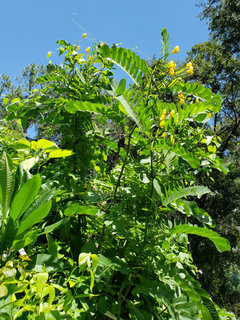
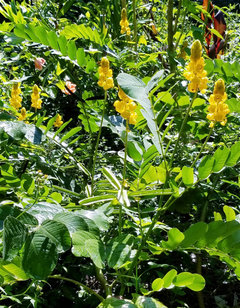
    They are both beautiful! I have the Candlestick Cassia that I grow for the Sulphur butterflies. They get quite tall and weedy lol. The plumeria on the left is probably about 7ft.


  • 6 years ago
    last modified: 6 years ago

    A long time ago, the large majority of Cassia were reclassified as Senna (thus labelings of, and the persistent references to, Cassia are anachronistic in most cases).

    Most commercial offerings of the bicapsularis species are S. pendula instead. They are extremely similar.

    I have concluded that we must resign ourselves to the long spindly stems. They are what we always will get again shortly after pruning; and they are what we must have in flowering season, otherwise no flowers. I continue to prune mine (I have many) until shortly before then.

  • 6 years ago

    Does the Candlestick Cassia attract sulphurs better than other cassia?

  • 6 years ago
    last modified: 6 years ago

    Well, attraction is one thing, and survival of eggs and caterpillars is another; the ants always patrolling every square inch of S. alata are a plague.

    Although butterflies do not drink from the flowers of either species, the flowers attract. S. alata has the advantage of flowers starting in warm weather. Of course if you have both plants, then sulphurs attacted by S. alata flowers can find the not-yet-flowering S. pendula.

  • 6 years ago

    I still really like them!

  • 6 years ago
    last modified: 6 years ago

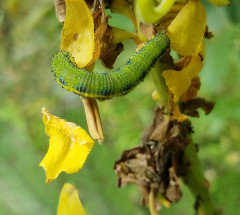
    I dont see that many ants on the Candlestick Cassias but they can be weedy looking. They reseed wherever they want. I just pull them out of where I dont want them. I believe its the Cloudless Sulphurs that we have here. There seems to be plenty of cats and butterflies around so they must be doing okay.

    I think I got my original seeds years ago from someone named Laslo or something like that on Dave's Garden. They've been coming back ever since lol.


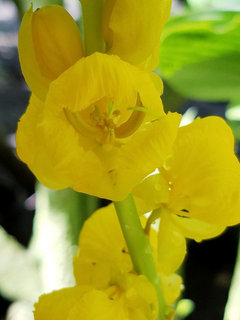
    Closeup of flower


  • 6 years ago

    I think maybe the Alata and popcorn cassia will give me seeds, since they bloom earlier, but by the time my C. bicapsularis blooms, all my pollinators are pretty much gone. Last year, it bloomed early, and the sulfurs did a number on it. I got no blooms, because the cats ate them all, but that was o.k. I did see a couple of what looked like honeybees the other day on my brugs, but they ignored my cassia.


    When I grew C. Alata, I would go and cut off all but a couple (for sharing) of the green seed pods every year to keep them from spreading. C. bicapsularis holds onto its seeds for a long, long time, and they don't dry out and spread as readily, so I could pick them dry. The inside of the seed pod has a sticky substance that holds the dry pod together until it gets very, very dry. I never really had a problem with them being invasive, though. I found one or two Alata seedlings one year, and it may be that they didn't spread too much because they were on the hedgerow instead of in a garden bed. I just tried hard to be responsible about the seeds.

0
Sponsored
Columbus' Home Design Experts Specializing in Custom Cabinets