Software
Houzz Logo Print
tnflowerlover

Jar soil test interpretation?

6 years ago
last modified: 6 years ago


We just moved from NC to east TN. My husband is building raised boxes for me, and we bought topsoil and compost to mix ourselves. Most likely, I will use a 50/50 mix, because it feels less “sticky” than the 60 soil/40 compost mix I have been playing with.

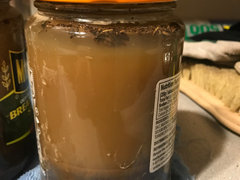
I tried a jar test on the mix (this is the 50/50 mix) but am having trouble understanding which layer is which. I think layer 1 is sand...layer 2 is silt...and layer 3 is clay? Part of me wonders if layers 1 and 2 are sand, but that doesn’t make sense b/c then I barely have any clay. Although the dirt here isn’t rock hard clay (thankfully!), it still has the stickiness of clay.

What do you think?

Comments (20)

  • 6 years ago

    With a jar soil test, the soil particles will always particulate out by size. Sand - the largest particles - will always be the bottom/lowest level, followed by silt (next largest) then with clay (the finest particle size) as the top level. Water and whatever organic matter might be present in the mix will be the remaining material, usually with the OM floating on the top. Always :-)

    I can't see the jar and its contents clearly enough to say exactly where the levels are.

    Please tell us again what exactly you are testing.....is it your own garden soil or the purchased mix? That will make a big difference in what you are seeing.

    TNflowerlover Zone 7a thanked gardengal48 (PNW Z8/9)
  • 6 years ago

    Thanks, GG! I did a sample mix of topsoil and compost (mixed myself) to test. The photo is from the 50/50 mix, I will try to get a better photo.


    The topsoil I purchased is actually very similar to what we have in the ground...we are pulling some out to dig the trench for gravel/blocks.

  • 6 years ago

    Very likely minimal clay in the topsoil mix or IOW, not enough to show as a measurable level. So your test is showing a mostly sandy loam.

    TNflowerlover Zone 7a thanked gardengal48 (PNW Z8/9)
  • 6 years ago
    last modified: 6 years ago

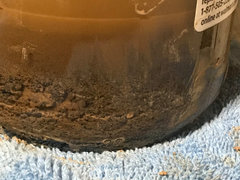
    Hopefully, this photo shows the distinction between the layers better. I cannot tell if there is a light sand layer (layer 1) and dark sand layer (layer 2), or if layer 1 is sand and layer 2 is silt.


    Seems that layers 1 and 2 are both sand, if I understand correctly.


    Thanks for helping me. I thought my soil was mostly clay because I am in TN, and the dirt is sticky. I know clay is good for nutrients, but I have been terrified about drainage.


  • 6 years ago
    last modified: 6 years ago

    I'm seeing a lot of sand (layers 1 and 2) and some clay (layer 3) and no organic matter, Whatever you bought for compost apparently is not.

    What is "topsoil"/ Perhaps this article from Michigan State University may be of some use,

    https://www.canr.msu.edu/news/the_shocking_truth_about_topsoil

    Keep in mind that the market for "topsoil", compost, garden soil, etc, is a buyer beware market.

  • 6 years ago

    Kimmq, thanks for chiming in. I thought the organic matter floated at the top? I do have a layer of that that I didn’t include in the picture. There is also some black stuff on top of the layers that is hard to see in the pics.


    Wait...you said nothing about silt. Is that the organic matter?? My hands definitely end up stained, so I thought that was stilt? Trying to learn.


    Unfortunately, I live in a very small town where I only had two options for topsoil. I only had a few options outside of that, but they would have charged $50-100/cubic yard. :o


    Fortunately, we do have a large hickory tree that I can compost the leaves and add for organic matter (trying to be careful of juglone toxicity).


    Thanks for the link.

  • 6 years ago

    ???

    IF OM always floats on top, as GG says, then how could kimmq visualize any OM in this jar, even if much was present, as the top of the water level is not visible in either photo?


    Photo 2 shows 4 layers, including a thin layer 4 above the top red line.

    OP, do you see 4 layers?


    No silt anywhere, kimmq? How did you determine layer 2 is sand? Did you base it on the color you see in photo 2? Or possibly on your determination of particle size, using the photo? Or by some other feature or reasoning?


    I am asking because I have never performed this test, nor even seen it performed. I understand why OP is puzzled.


    TNflowerlover Zone 7a thanked rifis (zone 6b-7a NJ)
  • 6 years ago

    IF layer 2 is also sand( of smaller particle size than layer 1, but still within sand range), then why not layer 3 silt, and (thin) layer 4 clay?

    TNflowerlover Zone 7a thanked rifis (zone 6b-7a NJ)
  • 6 years ago
    last modified: 6 years ago

    Rifis, you are right in that there are 4 layers. I didn’t label the 4th one originally b/c we thought it was also clay but was overly saturated with water. I am actually starting to think layers 1 and 2 are sand but different particle size...layer 3 is silt...and that tiny line is clay. I think that is what GG was saying and what you are thinking, too.


    Thanks, everyone!

  • 6 years ago

    You can't have 4 layers :-) There will only always be 3 as that is how many different types of soil particles there are - sand, silt and clay. ALL sand will precipitate out together; so will all the silt and all the clay. The only other possible layers would be whatever water remains after the precipitation of the 3 different soil particles and any organic matter, which will float on top. But those are not soil particle layers :-)

    It is often difficult to read the levels in the jar clearly and that gets even more complicated when represented only by a photo. And a photo that does not show the jar in its entirety!

    I see what looks to be OM floating at the top above the lightest colored level right above where you have drawn the line for level 3......is that the top of the water level? If not, an you show a photo that illustrates clearly where the top of the water level is? I won't swear to it long distance but to me - and I've done this test many, many times - layer 1 is the sand, layer 2 is the silt and layer 3 is either clay (which seems unlikely given the source) or just muddied water.

    I would also just add that testing of an imported soil used to fill raised beds is typically unnecessary. Soil tests are usually reserved for the indigenous, inground soil - what already exists in the garden. Imported, engineered soils generally already have decent drainage just by virtue of the fact that they are engineered or mixed/prepared away from their natural occurrence and to specific requirements. And a raised bed will always offer better drainage than any inground soil just by virtue of its elevation.

    You may be fretting this point unnecessarily :-)

  • 6 years ago
    last modified: 6 years ago

    Thanks, Gardengal! Below is a photo of the entire jar. (It keeps getting cut off, but I think you can see up to bottom of jar lid if you click on it.) And a new closeup. We reshook it and added two drops of liquid dish soap (apparently we should have used dry?). It does seem to be separating a little better. I think the previous layers 1 and 2 are nearly identical/mixed now into one sand layer. Maybe I did not shake it good enough before.

    The topsoil we bought is local soil from top of a mountain. Yeah...not the most ideal, I know. But, we had little to no other options. It did have trees growing nearby, so I figure good sign (it’s at least somewhat fertile and likely had some OM from leaves over years/decades). It’s actually fairly similar (best I can tell) to the topsoil in our yard, which is apparently classified as gravelly silt loam. It is kind of like clay, but doesn’t stick together as much as the clay I am used to. And, it’s really easy to dig into.


    Thanks for reassurance on raised bed drainage. I actually sort of made a few sample beds one brick wide and 2 bricks high to see what the two acted like with water. lol After the rain yesterday, it appears my 60 soil/40 compost mix was the happiest. Yeah...I tend to over-worry...a little. (insert whistling emoji)

    Thank you so much!


  • 6 years ago

    I'm looking at a particle size and sand is the largest soil particle size and the bottom two layers look pretty close to each other, to me.

    Silt is a soil particle smaller than sand but still much larger than clay. Silt comes from river beds and some soils will not have any silt in them.

    You may see layers of Sand, Silt, Clay, and organic matter and that according to my count is 4.

  • 6 years ago

    But the organic matter does not count as a "soil" or a type of soil particle and is not included in the soil triangle so is not technically considered a layer.....and neither is the water. If you count that then there are 5 levels! And NO jar soil test discusses multiple layers over and above 3.

    " Soil particles vary greatly in size, and soil scientists classify soil particles into sand, silt, and clay. Starting with the finest, clay particles are smaller than 0.002 mm in diameter. Some clay particles are so small that ordinary microscopes do not show them. Silt particles are from 0.002 to 0.05 mm in diameter. Sand ranges from 0.05 to 2.0 mm. Particles larger than 2.0 mm are called gravel or stones. Most soils contain a mixture of sand, silt and clay in different proportions."

    You can see that there is a possible overlap between the silt and the sand.........

  • 6 years ago

    Kimmq, I agree. I am starting to think that the bottom two layers are both sand, after all. Especially since after reshaking it, they are not looking quite as different now. I think the top layer above that is likely the silt. And that the tiny layer above is clay.


    The four layer comment of mine was because I originally counted the two sand layers (which seem to be more one layer now) as separate ones. Whoops. I edited my post since GG actually said that I had sandy loam. Whoops. Sorry I didn't catch it in time, Rifis. :o GG saying that the jar looks like sandy loam makes sense since the topsoil I bought is similar to my yard's soil, and the jar does show a lot of sand.


    Soo....seems I have a decent amount of sand and silt and tiny amount of clay with some organic matter floating in there. Sound about right?


  • 6 years ago

    GG....the idea of an overlap is interesting. Why would that happen? That may explain why when comparing to pics online, I really was struggling to decide if it was sand or silt.

  • 6 years ago

    Clay won't settle out in a layer, but remain in suspension. See that muddy water? There's your clay and much of the silt.

    If you did the test properly, the results may be more accurate. Did you use a washing powder? Soil Texture Test: do it right.

  • 6 years ago
    last modified: 6 years ago

    Thanks, Rhizo. Do you know if Oxiclean counts as a washing powder? I am definitely curious, so I will try again.


    ETA: Looks like Oxiclean is not a detergent. Guess I better get one. :)

  • 6 years ago

    I'm going ahead to further muddy the waters (ahem!). After decades of reading these forums, it seems that magnesium is the chief cause of soil stickiness. Most people who think they have a clay soil problem end up with a magnesium salt problem once the soil is tested. The easy way to get too much magnesium is to apply Epsom salts (magnesium sulfate) to the soil repeatedly. Another way is to spray magnesium chloride, a common road dust spray and also used for deicing winter roads. The ONLY way to determine if you have too much is a chemical soil test.

  • 6 years ago

    Lol


    Thanks for that info! I just finally finished mixing soil and mixing the boxes yesterday. I will pull sone samples today before mixing in the shredded leaves. I am definitely curious!


    The top of the soil is crushing slightly...hoping the shredded leaves will help. Good news is that they do seem to drain well, despite the nearly daily rain!