Software
Houzz Logo Print
saconnon

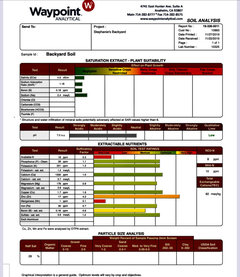
WayPoint soil test, Manganese deficiency

I got my soil test back and finally have a chance to look at it. The main points that jump out are Nitrogen deficiency, which is pretty obvious when you look at my soil, but then there is also Manganese deficiency. I think this mainly explains all the chlorosis issues I have been having!

Comments (16)

  • 6 years ago
    last modified: 6 years ago

    Here is the test


  • 6 years ago

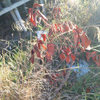
    This is exactly what my rose leaves look like.
    https://www.treloarroses.com.au/Manganese-Deficiency-Roses

    Next step is figuring out the best way to correct this deficiency in my neutral pH soil that is completely devoid of organic matter.

  • 6 years ago

    Stephanie, it's interesting to see this (but not for you to deal with). I "self diagnosed" this problem a few years ago for two roses next to each other in my garden. My theory is that after a summer of constant irrigation via the drip system and small sprinklers, the manganese had leached out of the soil and caused the problem. Less watering helped, and being aware of it helps. This is something that occurs here in one particularly wet spot at the end of the summer only. Could you possibly be over watering? In your lean soil, this would be easy to do. Soil here is pretty lean, too. I didn't have to add anything, but fertilizing with Miracle Gro with a hose end sprayer helped. I usually use other methods for my regular fertilizing. Give a try with the Miracle Gro. Good luck. Diane

  • 6 years ago
    last modified: 6 years ago

    Stephanie, I bought a 50 lb bag of MgSO4 at a garden store in Alaska, and they accidentally threw a 50 lb bag of Manganese SO4 in my vehicle. It was pelletized and looked a little different than what I was used to for MgSO4. It looked like Osmocote pellets. I scattered it around before looking at the label more carefully. No harm was noted in my garden. This would be easy for you to scatter, Stephanie.

    That is overall a great result for your soil testing, I think.

  • 6 years ago
    last modified: 6 years ago

    Diane and Shelia, I did more reading and concluded Manganese Sulfate pellets would be easiest, so I’m glad to hear some concurrence on this. Our soil is dry and given just enough water to keep the plants alive on drip. I had to hose down the roses a couple times this summer since drippers weren’t enough. So not waterlogged. But I did read that waterlogged and alkaline soils get deficient most often. My soil is pH 7 so I wonder if the rocks that were ground down into our soil just don’t have much of this mineral? Our soil seems to be whatever rock weathering happens on the mountains just above us and then got washed down over thousands of years before the neighborhood was built. Also lots of granite boulders 4 to 20 inches in diameter that are common everywhere here, but they are black and white and the soil is yellowish tan.

  • 6 years ago

    I enjoyed looking at your soil test, makes we want to have one done, too. I think I know my soil because it’s much written about since a great portion of the Southwest has the same alkaline black clay. But a detailed test would still be nice.

  • 6 years ago

    ph of 7 was nice, I thought.

  • 6 years ago

    Stephanie: Is the landscape in your neighborhood devoid of native vegetation - like a lunar landscape? I ask because of the OM result you posted. 0% is striking. And are these 4 to 20 inch diameter granite boulders encountered often when you dig planting holes? If so, do they come out easily?

  • 6 years ago
    last modified: 6 years ago

    Rifis, check the table again it is actually 1ppm (ie. 1mg/kg). I found a study, link at the end, of trace elements in the soils in the mountains above our house that burned in the Station Fire. (We evacuated during that fire.) It was really nice that the test results show what is normal, high and low. The roses in people’s yards here often have chlorosis; it seems to be the natural state for them unless well cared for. And yes the granite rocks are easy to remove, partly because they are pretty round. They are just loose in the soil, which is more of a dense fine sand. You often see them piled decoratively in peoples yards or used to make retaining walls. Some people have WAY more rocks than we do. We got lucky! When you hike on trails above our house sections of trail are just various sizes of rounded granite rocks.

    I am still reading through this but Tables S7 and S8 seem relevant.
    https://www.ncbi.nlm.nih.gov/pmc/articles/PMC4856391/#!po=76.8182

  • 6 years ago

    Shelia, Yes I was glad to see pH 7. Very workable.

  • 6 years ago

    Stephanie, that is so cool you got your analysis done. Mine is Nitrogen and a little low on K2O which is potash.

    That is very interesting table about S7 and table S8. Information is so cool :))

    I wonder how often we have to do this ? Every few years or get home kit. Problem is it always rains here and nutrients always leeched out. We get about 54 inches a year on average. 38 to 74 inches throughout the state.

    How much did you pay for your analysis bec it is really detail compared to mine. Seems it is private company :))

    Thanks !!


  • 6 years ago

    Thank you, Stephanie.


    The only table I saw was from your 1st “comment” - the Waypoint Analytical test you posted there.

    The only mention of organic matter I see is under the “Particle size” heading; the box in the “organic matter”column contains no entry.

    My statement about “0% OM” is derived from your statement:


    ”Next step is figuring out the best way to correct this deficiency in my neutral pH soil that is completely devoid of organic matter.”


    I was curious to know why you have so little organic matter in your soil. Do you think it’s because there is not (and has not been) a good source ( like vegetation native to your area) for it, or because your mineral soil allows it to be washed/leached away very rapidly? That’s why I mentioned “lunar landscape”. What is your approx annual rainfall? You did mention “soil is dry”.


    I have never had a soil test done. What methodology was used for your OM test that yielded the result in “ppm” - rather than in “%” ( as I have seen in other examples online?


    Apologies that this does not address your original concern about Mn.


  • 6 years ago

    And regarding the units on the Waypoint tests I do have some questions for them. I might email them and ask about the methods they are using and some of the units don’t seem standard. I do know that parts per million (ppm) = milligram per kilogram if talking about solids and ppm = milligram per liter if a liquid. So for example, if someone reports that a solution is 20 ppm magnesium then you know there are 20 milligrams of magnesium in every liter of that solution.

  • 6 years ago

    Stephanie I know the lawn forum regulars really like Logan Labs for soil testing. It would be interesting to see if the analysis was different between the two labs.

  • 6 years ago

    Good to know Logan Labs is popular. Yes I thought a second test would be nice. I am a scientist so I love replicate data :-)

0