Software
Houzz Logo Print
port2015

Installing a Lawn on a Slope / Help Needed

6 years ago
Central Massachusetts Zone 5b.

I am trying to plan ahead and need help and advice on how to install a lawn on a slope.

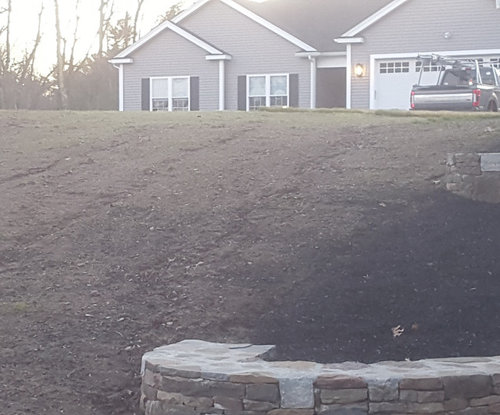
I tried to grow the lawn twice but due to the steepness of the slope large culverts would form after heavy thunderstorms.


In an attempt to reduce the slope I had retaining walls built in late September, early October of 2019 and I missed the fall lawn installation season.


I have researched the alternative of installing sod. But the cost is approximately $3,000.

This would be my second choice because of the cost.


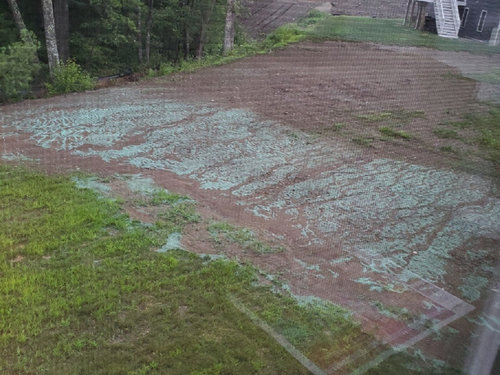
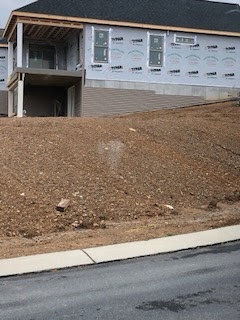
Attached are pictures of the culverts that form following rain storms.


Side Yard with the steepest slope.

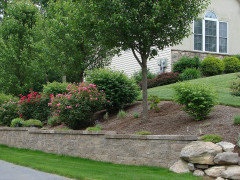
Showing walls that were built to try and reduce the steepness of the slope.


Backyard: Photo showing run-off after being hydro-seeded


Any suggestions you have would be deeply appreciated.

Thanks


Comments (14)

  • 6 years ago

    I think you're going to need some erosion control fabric on the steeper sections. Like https://www.homedepot.com/p/Hanes-Geo-Components-4-ft-x-225-ft-Jute-Mat-Soil-Stabilizer-81692/304366949

    I like using straw as mulch. On the less steep sections I would heavily add straw.

    Good luck!

    port2015 thanked Seabornman
  • 6 years ago

    SOD. Trust me, it's cheaper than trying to seed it umpteen times and still not getting a good result.

    port2015 thanked mishmosh
  • 6 years ago

    I agree with mishmosh. FWIW, your stone wall looks really nice. Maybe by the time you put in some trees and mulch or whatever you’re planning, you won’t need as much sod, but from experience, sod is the way to go. Maybe just do sod in the front? The back yard doesn’t look as steep.

    port2015 thanked User
  • 6 years ago

    I just put our lawn in around an addition. A bag of grass seed and $20 of straw. Yes, I'll have to fill in missed spots next spring.

    port2015 thanked Seabornman
  • 6 years ago

    Thank you all for your suggestions.

    Suzanne your yard is beautiful.

    Did you sod the slope above the mulched planting area?

  • 6 years ago

    I wish it were my yard, but no, it’s from a landscaper whom I am considering for my own problem slope at my new build.

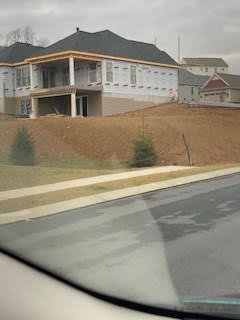
    House is not final grade yet, but this is what I am dealing with. We did end up using sod at our previous house. My DH just got tired of fighting Mother Nature and gravity, so for sure I am biting the bullet and getting sod this time.

    port2015 thanked User
  • 6 years ago

    Sod's certainly going to be the most helpful here.

    But again, if you can't, you can't, and we're just going to have to make suggestions that conform to your needs. Erosion control fabric (AKA burlap, there's no real need to get spendy since I'd recommend removing it when the seed sprouts anyway--jute, burlap, it doesn't decay off well or quickly that I've noted in most locales, and certainly not in MA-5b because it sure didn't in PA-7a on my back problem slope...

    I might suggest trying a winter dormant seeding for at least some lawn this spring, which you're going to have to coddle a bit in summer (again, far less in 5b than one would in 7a or points southward), and that'll help a bit to hold that slope. Or for putting in sod just in that particular area as early as you can, as soon as the ground unfreezes, if the budget will swing that far.

    Neither solution is perfect, but both are better than letting it lie fallow until the fall planting season when it'll be rutted by summer thunderstorms again.

    port2015 thanked User
  • 6 years ago

    laceyvail makes an excellent point. Establishing a decent lawn on a slope can be tricky......as will be the ongoing maintenance. Depending on the steepness, mowing can be difficult. I once had an inherited garden with a grassy slope so steep it could only be "mowed" with a string trimmer.....was not safe to use any sort of power mower. Irrigating can also be a challenge, especially with an unestablished or new lawn, as gravity will typically draw any irrigation or rainfall to the base of the slope before it has time to soak in. When watering, it is best to use short bursts of irrigation, wait for a short period of time and then water again. This may need to be repeated several times until the root zone for the entire slope is fully hydrated.

    Some other type of no-mow, drought tolerant groundcover may make a better choice. And even that may require some sort of geotextile - jute netting - to hold the slope soil in place while the GC's establish. In my very summer dry climate, the netting will degrade within a single growing season but by then the plantings will have established sufficiently to deter erosion.

    port2015 thanked gardengal48 (PNW Z8/9)
  • 6 years ago
    last modified: 6 years ago

    Laceyvail does have an excellent point. Or even break with tradition and traditional teaching and forget the "ground" cover and go with something less "groundy."

    My parents had a hard-to-deal-with area that couldn't be watered effectively, quite rocky, that also suffered from variable light levels through the season (yours doesn't, but the solution does not change).

    I put in a variety of daylilies, from the super-cheap wild orange ones you see everywhere to others less super-cheap that bloom at other times of the year and at different heights and different colors.

    It was a great display from May to early September and my mother enjoyed putting dwarf lilies at the corners like the Stella d'Oro to compliment the whole thing.

    The advantages being that they don't need a vast amount of water, so the slope and rockiness didn't matter, they root and spread fast and deep so they held the slope against erosion very quickly, they were tolerant of the changing light levels (again, not your problem), and required very little maintenance except a cleanup at the end of the season.

    I'm not sold on jute or burlap because of my experiences with it in several places around here but what the heck. It's not like it's going to hurt anything and even though it won't decay fast, it's not like it won't go eventually. Even in the compost bin, the burlap took two cycles.

    If you hate daylilies, there are plenty of other fast-rooting, fast-spreading options for drought-resistant slope gardens that will bloom beautifully and provide you with a nice display. The point simply being, now that the idea's been raised, you've got options and can even mix tall and short on a slope that size for a really nice perennial garden if you wanted.

    port2015 thanked User
  • 6 years ago
    last modified: 6 years ago

    Thanks for the suggestions.

    The slope is approximately 30 degrees. A grass lawn is our preference. is sod the only recommended alternative.

    Thanks again

  • 6 years ago

    We have decided to try the sod route on the slope.

    Listed below are blends of sod available from one of the local sod farms.

    Which blend would you recommend for a lawn that receives ~6 to 8 hours of sun per day, very little foot traffic.

    Average lawn maintenance program ~5lbs/1,000 sq ft applied per season.


    100% BLUEGRASS – A mixture of improved bluegrasses – for exceptional job sites 30% Abbey Kentucky Bluegrass 25% Barrister Kentucky Bluegrass 20% Avalanche Kentucky Bluegrass 15% Everglade Kentucky Bluegrass 10% Midnight Star Kentucky


    Bluegrass 80% BLUEGRASS/20% FESCUE – For partial shade areas – need 75% or more sun 20% Award Kentucky Bluegrass 20% Nudestiny Kentucky Bluegrass 20% Nuglade Kentucky Bluegrass 20% Freedom III Kentucky Bluegrass 10% Gotham Hard Fescue 10% Audobon Red Fescue


    50% BLUEGRASS/30% FESCUE/20% RYEGRASS- 20% America Kentucky Bluegrass 15% P-105 Kentucky Bluegrass 15% Award Kentucky Bluegrass 15% Jasper Creeping Red Fescue 15% Victory Chewings Fescue 20% Divine Perennial Ryegrass


    50% BLUEGRASS/50% FESCUE 20% Freedom III Kentucky Bluegrass 15% Nuglade Kentucky Bluegrass 15% Award Kentucky Bluegrass 20% Gotham Hard Fescue 20% Audobon Red Fescue 10% Cindy Lou Red Fescue


    80% FESCUE/20% BLUEGRASS – High Fescue Blend 40% Berkshire Hard Fescue 40% Audobon Red Fescue 20% Freedom III Bluegrass


    Thanks again

  • 6 years ago

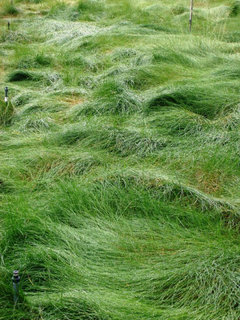
    I've seen a couple things work. In SoCal I've seen creeping red fescue used on hillsides with no intent to mow. Here's a picture.


    And in SoTex I've seen mulch rows used to stop erosion. They just pile up several rows of mulch across the slope of the hill and that slows the flow of water enough to keep it from washing away seed and soil. This seems to be the best method of natural erosion control even in deep ditches.

    port2015 thanked dchall_san_antonio
  • 6 years ago

    I'm not terribly impressed by many of the cultivars listed, but I'm also not actively afraid of any of them. :-) I wouldn't go with the pure bluegrass, nor with anything that has no bluegrass (none of the listed ones do, but just in case you see something in the future).

    At least bluegrasses have the advantage of having a good dormancy mechanism, once established, and may look awful if not watered, but they'll survive it.

    Remember...you're going to have to match the cultivars in the rest of the lawn or you'll notice the difference. Rather severely...

    port2015 thanked User