Software
Houzz Logo Print
webuser_921326460

Bathroom shower curb

6 years ago
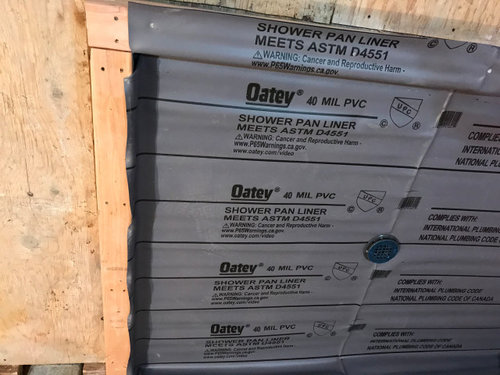

Hi there. We’re renovating our bathroom - a standalone shower. The contractor‘s helper put down the shower liner - wondering if the liner should cover the curb - see picture. On the internet, pictures showed the curbs to be completely covered. I asked him about it and he said it didn’t have to be covered. ??

Comments (26)

  • 6 years ago

    Thank you. I’m going to ask the contractor... he came highly-recommended so...

  • PRO
    6 years ago

    Ask the builder what TCNA method they adhere to and make sure you get a flood test shower pan inspection. Heres a basic pic.


    Oatey shower pan diagram

  • 6 years ago

    Thank you! Yes - we will definitely do the flood test.

  • PRO
    6 years ago

    At least you found it now not a year from now.

    Katie thanked HALLETT & Co.
  • 6 years ago
    last modified: 6 years ago

    You only want waterproofed if you want it waterproofed. That goes for the entire shower as a whole. If you get the deer in the headlights look, or the arrogance in ignorance line of “I’ve done it this way for 30 years,. “ bit, you’ve not chosen a tile professional.

    https://www.ceramictilefoundation.org/homeowners-guide-to-hiring-qualified-tile-installer

    Katie thanked User
  • 6 years ago

    Thank you. We spoke to the contractor again and he will make it right. I am shaking my head - when you hire a professional with good references and you aren’t going w the lowest quote, you think you can sit back and let them do their thing. Why do we have to keep an eye on them? But of course we want it done right...

  • 6 years ago

    That liner over the curb, with no nails or screws in the curb, is only 1/4 of getting a waterproofed shower done correctly.

    Katie thanked User
  • 6 years ago

    You'd do yourself a favor by taking pictures of the rest of the shower build and posting here at each step to make sure they're doing it correctly. The tile work is just the icing on the cake.

    Katie thanked cpartist
  • 6 years ago
    last modified: 6 years ago

    This is a red flag. Did the GC hire this person? Ask the GC if this person is licensed, trained, experienced, etc. Ask the tile setter where they did their training and what professional tile association they are licensed under? You probably won't get satisfactory answers, but ask anyway. Ask them about TCNA, local building codes, permits, when the inspector is scheduled for the 72 hour flood test. If they look clueless, like they don't even know what TCNA stands for, you'll have your answer right there.

    If you continue with this tile setter be sure to take several pictures everyday, then save them on your computer in files organized by the date you took the picture. You can take them in the evening after they leave, or when they leave for lunch if you are working from home, or nearby. Be sure to take pictures from far back, medium and close up, not just if you have a concern about an area; take pictures of everything. Including all the tools, buckets and supplies they are using. It's best to not interfere with them or ask too many questions, but of course if you have a concern or question be sure to ask it. I always took my pictures at night after they left. You can look up the install instructions online for the materials they are using. For example, I had a tile setter doing my Dad's shower and I noticed when reviewing my pictures that he didn't have any fiberglass tape amongst all the supplies, but I knew that the waterproofing boards he was using called for all the seams to be sealed and taped. So the next morning I talked to the GC and the tile setter about it, handed them a copy of the instructions and they made it right. I was professional about it and so were they. The rest of the project went smoothly after that. Some contractors can't believe that homeowners actually read.

    If you have a concern, have a meeting with them. Treat it like any other business meeting, take notes, don't let them bully you. You wouldn't allow a business vendor at your job bully you, so there's no reason that a contractor should be allowed to do that just because the work site is your home.

    I too share the concern that it seems we have to be on top of everything even though we are not experts.

    I've also never been able to solve the problem of the GC hiring poorly. Even if the GC is highly recommended, the homeowner doesn't have any say in who they hire. I've experienced twice when a highly recommended GC hired horribly:

    - a plumber who didn't seem to understand that water, generally, goes in a downward direction

    - a hack-job tile setter who didn't do a preslope, poked holes in liner, waterproofed wrong, and then quit bc I asked him to fix it.

    If you are a nerd like me and you like to read, buy a $35 downloadable version of the TCNA handbook and read the shower chapters. It's about 600 pages, but you only need to read the introduction (about 50 pages), and then read the shower chapters for the type of shower you have. Also read the manufacture's instructions for the materials he is using, such as the waterproofing materials he is using such as Hardie boards, Kerdi, Laticrete, Red guard, etc.

    https://www.tcnatile.com/products-and-services/publications/218-english-publications.html

    I hired a true professional directly (not though a GC) after the hack-job quit. He wasn't listed on that website linked above, but on this one:

    https://www.tile-assn.com/

    Gook luck

    Katie thanked AJCN
  • 6 years ago

    Yep - planning on taking pictures along the way. I’ve learned so much from this site!! Thank you

  • 6 years ago

    And so it continues. The contractor is planning to use Durock cement board in the shower area. I asked him if he was going to use a vapor barrier. He says no - bc the cement board is waterproof and furthermore, if he uses a plastic sheet, moisture can be trapped between the plastic and the cement board. He says - the tile and grout will also prevent water from seeping into the board. I have read a lot ab waterproofing showers on this site and I don’t think he’s right. We called Durock and the representative said that waterproofing is not necessary for residential showers - unless we are doing a steam shower. I still think a vapor barrier is prudent. Thoughts? Thanks!

  • PRO
    6 years ago

    The number of showers I have pulled out built like yours that were absolutely furry with mold... A properly waterproofed shower is completely waterproof before the tile goes in- you should be able to take a shower without causing damage. The tile is just pretty and easier to clean.


    Run from this person.

    Katie thanked HALLETT & Co.
  • 6 years ago

    I had a very very similar problem as you are experiencing. Sad that these kinds of threads are not uncommon. After we had a sit down meeting with the GC, asking them what their plan was to fix it, they quit. I'll post the story because there might be something in there that is helpful to you. Especially important to you is to document everything. Do not communicate verbally only. Everything should be documented in email. You need a paper trail.

    https://www.gardenweb.com/discussions/5725013/what-to-do-when-a-project-goes-completely-south#n=66


    Katie thanked AJCN
  • 6 years ago

    Fire this hack now before it goes further.

    Katie thanked cpartist
  • 6 years ago

    with the cement board it's a vapor barrier behind the board, in front of the studs, or paint on a waterproof membrane on top of the board. one or the other, not both.

    Katie thanked Beth H. :
  • 6 years ago

    What the hack-quit-tile person did is install a vapor barrier (the black thick plastic sheet) to the studs, then installed Hardie board, then put a ton of red-guard. That is the dreaded "moisture sandwich." It's a double barrier, so will trap moisure in between the layers of the sandwich. When we realized this is what they built, and asked them to tear out and re-do, they quit. Turns out their quitting was a blessing in disguise because the court case all came down to that. We didn't fire them and they couldn't give the judge a good reason for quitting. Maybe you will get lucky and they will quit. Read my "Goes South" post. In most states you have to give the contractor a chance to fix things. After they refuse or fail to fix, you can fire them. If you're not familiar with the construction laws in your state, give them a chance to fix first, then fire after the either refuse, try to talk you out of it, bully you, or other stuff like that. Document all the refusal, trying to talk out, bullying, etc in writting in an email to them which summarizes your meeting. Such as:

    "Thank you for meeting with us today about the waterproofing problems with the bathroom remodel. We were disappointed that you weren't able to explain how this could be fixed, but understand that you will take the weekend to create a plan and we will talk again on Monday. Let us know what time you want to meet Monday."

    If they yell or bully you in the meeting you can also add something like "So-and-so seemed very upset during the meeting. I hope he is feeling better on Monday so our follow-up meeting can be calm and professional."

    After the refuse, or fail, then fire them, with a request for a refund. Everything in writing please, that was also pivital in our court case. We did not bring up 1 fact to the judge that was not supported by a piece of paper trail.

    Katie thanked AJCN
  • 6 years ago

    Thank you everyone! You've all confirmed that waterproofing is needed. We will speak to the contractor in the morning and insist on waterproofing. I think he will comply with our request. If not, then we will have to part ways. I am disappointed that the Durock representative also said that waterproofing is not needed -- I think that's the part of the problem. But I read this article that says most manufacturers don't come out and say its needed b/c they don't want their product to be disadvantaged... but that's a disservice to homeowners who want things to be done the right way. (Preaching to the choir) Thanks again!


  • 6 years ago

    Katie, I think they say it's not mandatory. In some circumstances, it may be true. others, not.

    A lot of tile guys also believe that. but they're aren't the top quality guys either. I still like the old school tile guys who mud (wire lath and mortar). I had my shower done that way. that's how they did way back when, and we all know those showers lasted a good 60-80 years.

    Katie thanked Beth H. :
  • 6 years ago

    Just to give an update. The contractor added a moisture barrier to the stud before installing the cement board. He says he's never had to do this in the 20 years he's been in the business. I wonder if noone ever calls him back b/c people move out of their homes soon after the renovation, before the discovery of mold. Otherwise, I imagine he would get some calls. We will not be installing a niche in the shower so we don't have to worry about waterproofing that : ) We will be adding a floating quartz shelf. Once again, thank you for your comments.

  • PRO
    6 years ago
    last modified: 6 years ago

    thats truly unfortunate for the entire building community. Ive been doin it wrong for 20 yrs guys are a dying breed. Unfortunately being replaced by even lesser quality DIYers and internet trained newbies. Guessing you are in either texas or florida?

  • 6 years ago

    nope - we‘re in NJ. We interviewed several people before we picked him. And you’re right - lots of unqualified people and worse, they‘re not open-minded and unwilling to accept suggestions.

  • 6 years ago

    "The contractor added a moisture barrier to the stud before installing the cement board."


    What type moisture barrier was installed? What did he do with the pan as what you have pictured is incorrect as pointed out by Mint Tile?

    Katie thanked millworkman
  • PRO
    6 years ago

    So far I count 3 red flags......

  • 6 years ago

    @millworkman - he redid the shower liner. We did a 24h flood test - no leaks. Thx

  • PRO
    6 years ago

    Leaks can also occur due to what happens after the flood test. If there are any holes poked in the liner due to nails or screws for example. Got pics of what happened the day after the flood test?

    Katie thanked Cabot & Rowe
Sponsored
The Steele Group
Average rating: 5 out of 5 stars1 Review
Industry Leading General Contractors in Franklin County, Ohio