

Has anyone created a passive house? If so, what advice do you have?
We are purchasing a grey stone in Chicago and it is a complete gut. We were thinking about making it a passive home. I am not sure of the cost benefits, let alone the overall living benefits beyond what an architect says. I would love to hear owner feedback, the good, bad and ugly about creating a passive home.
Comments (28)
 6 years ago
Unless you are selling the home - do not pursue the certification. However, engaging with an energy consultant can help you determine strategies to get yourself 95% of the way there using modeling and cost / benefit analyses.
 6 years ago
I am not sure of the cost benefits, let alone the overall living benefits beyond what an architect says.
Typically, there are few energy efficiency upgrades that have a positive net present value using even a conservative discount rate. You can plug in the numbers yourself on an NPV calculator. I prefer the one from calculator soup and since I regularly invest in the market I use an 8% discount rate, however, I usually suggest a, more conservative, 5% discount rate.
There are great non-financial reasons to choose energy efficiency and I am not trying to discourage you, but I think an informed decision is always better.
Related Professionals
San Jose General Contractors · Wausau Home Remodeling · Minneapolis Bathroom Remodelers · Pittsburgh Bathroom Remodelers · Logan Bathroom Remodelers · Anderson Design-Build Firms · Columbia Design-Build Firms · Monroe Design-Build Firms · Annapolis Home Builders · Wichita Decks, Patios & Outdoor Enclosures · Poplar Bluff Design-Build Firms · Newport News Design-Build Firms · Brattleboro Design-Build Firms · Clovis Design-Build Firms · Longview Design-Build Firms PRO6 years ago
Your location of Chicago makes a passive home unrealistic in terms of an old build rehab. If you are truly looking at that much better to build new.
The climate in which you build or even remodel will vary and most likely determine how passive the home will be.As an example --- a home built into the southern side of a hill is protected from the sun. The less windows you have, the less surface area above ground makes it that much more likely to be a passive home, because ground temperatures are less extreme.
Think Chicago in the winter time with wind chills some times in the -40 degree below zero. It can also get hot there as well although much shorter time periods than the cold.
A passive home is much easier in a more moderate climate. This doesn't mean you can't do this in a more extreme climate, but there are trade offs as well as potential problems.
One problem building into the side of a hill can be flooding or rain water problems leaking into the structure. That's what I mean by trade offs. Pros versus Cons.Everything has a Pro, just as much as everything has a con. The idea is to find a good balance. Due to building techniques and time --- things done now versus how they were done years ago pretty much makes it impractical to attempt to retrofit an existing structure into a passive home.
Unless of course you are made of money. I think that defeats the purpose though.
- 6 years agolast modified: 6 years ago
PHIUS certified?
I don't find certifications that worthwhile in residential settings. My last build was Energy star certified. That gave a 5% discount for life on NG and electricity. But when energy use is low, that 5% isn't much. It was about $50 a year and we sold the house in 8 years. We paid $750 for the energy rater.. Now the rater was helpful for many reasons so - no regrets. The certification meant little on resale I think. An 8 year old ES certification is just about code now but certainly better than a comparable 8 year old house.
This time, we failed ES. The remedies were multiple and I did most but never had them back out for reinspection. It was $150 - and one remedy was $150 or so.. Now our energy bill is closer to $500 so that 5% discount (if still available) is only $25 a year. We did pass the HERO code option which is a state upgraded code. We got a $9k rebate for that. So apparently - I chase the money....
Lots of things about upgraded code are helpful for IAQ which is obviously valuable beyond money. The inspections often catch things that others don't. One of our bath fans was plugged and was not flowing much air at all.
A PHIUS rehab in Chicago is probably not anywhere near financially viable. But building tight and going over code is. A tight house is more comfortable and humidity is easier to control. Temperature is more constant. Vents or radiators can be smaller. Noises from HVAC less. Most likely less exterior noise intrusion.
- 6 years agolast modified: 6 years ago
I don't know the cost benefits, but if you want to read up more on it, Chelsea Green is a publisher that sells some passive green books that discuss the details. Originally I wanted to go this way myself, but couldn't find builders on that wavelength (of an affordable sort). So in my case, my house faces compass south, which means I can have roof overhang that provides me with sun coming through in the winter, and none of that blazing down in the summer (properly over-hanged roof). The authors of the two books I did purchase did have suggestions for making your floor a heat sink - which my tiled kitchen facing south in part achieves.
You can also help by having more large windows in the south, and a lot fewer in the north or the west. (I am assuming you are living in the northern hemisphere. Large windows in the north and a lot fewer still in the west - but now in the south - if you are southern hemisphere.)
Emily Jungels thanked artemis_ma - 6 years ago
Spend $2 to get $1 in eventual payback. You can still incorporate some common sense passive solar principles that will give good payback, without getting nuts on the expensive bits that get you certified.
 PRO6 years agolast modified: 6 years ago
Many years ago, we bought a gorgeous, large post and beam home. The previous owner had installed a heat pump (as I said years ago). We were sooooo cold. Heat pumps and New England just don’t jive!
- 6 years ago
OP " We were thinking about making it a passive home."
Impossible in my situation - I have a wife,
Emily Jungels
Original Author6 years agoThanks everyone, this was all very interesting to read... especially Stax.;)
But all food for thought, thank you all!- PRO6 years ago
So I decided to do a deeper search and this is an interesting tidbit I found.
If I personally was going to do this net zero thing I would do it this way... ( watch the video - There are trade offs though so I'm sure it would take some getting used to.)The home has tire walls built into the side of a hill. Air conditioning and heating is done naturally. This home as shown in the video is said to be 'off grid'. 8,000 gal of water storage that has a reusable grey water system.
These are called earth ships, built partially under ground.
Emily Jungels
Original Author6 years agoThanks Austin! There are a few homes in the Chicagoland area that are passive homes and have seen some pretty good success. They are making water filtration systems for homes for grey water.
- 6 years agolast modified: 6 years ago
There are a few homes in the Chicagoland area that are passive homes and have seen some pretty good success.
What is pretty good success?
I know I am whipping this horse well after it stopped moving, but the question isn't can you be successful creating a passive house, it is at what point is the financial burden of passive house design too great for the non-financial rewards?
I somewhat recently restored an old house in an area that was in climate zone 4 but very near zone 5. There had been a small kitchen fire and I purchased it with most of the plaster and lathe removed. It was at studs from about 12" above the floor to 12" below the ceiling (in order to save the plaster mouldings and wooden baseboards). This house didn't breathe, it gulped. Yet, when I priced out upgrading the insulation to spray foam it wouldn't make financial sense over 12 years even if it eliminated over 80% of my HVAC costs.
I did it anyway because I didn't like the breeze, and will argue it was a good success in non-financial ways.
 6 years ago
Many of the earth-friendly strategies are tough to justify from a financial perspective because energy is too cheap. I'm doing an addition/renovation on an old house in zone 5. My contractor thinks I'm crazy to spend money on energy upgrades I'll never get back. I value the feeling of a comfortable, energy-efficient house so I don't worry about only the money.
- 6 years agolast modified: 6 years ago
Many of the earth-friendly strategies are tough to justify from a financial perspective because energy is too cheap.
There is a difference between earth-friendly and energy efficient and many of the things sold as both are just environmental destruction with a great marketing campaign. Batteries and photovoltaic systems are energy efficient and yet terrible for the environment. Solar panels create 300 times more toxic waste per watt than nuclear power. We would be much better off from an environmental perspective if we stopped remodeling perfectly acceptable houses to improve energy efficiency.
I am not trying to get on a soapbox here, I love remodeling houses but I try to limit the amount of lying I do to myself.
- 6 years ago
insulation, air infiltration and windows/doors are areas you can do a lot towards the goals of a passive house.
 6 years agolast modified: 6 years ago
The vast majority of the effort and bucks spent on building or remodeling homes has little to do with environmental or efficiency considerations. These issues if addressed at all are very much effort and spending on the margins - here's what we've decided to do, how to do them? A little more insulation or attention to air tightness or not, more efficient heating and AC equipment or not, possible alternatives for efficiency given design decisions, etc, (This ignores particular projects pointedly aimed at these matters as the focus, also a minority of cases).
Solar panels? Very popular in my area because of high utility rates and year round sunshine. People who get them don't do a comprehensive scientific analysis of environmental impact, they get them because they're viewed as being cool and it's a ___ You gesture to their utility company. Payback period is more reasonable now as costs have fallen but that too is often not a consideration.
- 6 years agolast modified: 6 years ago
I don't think any serious analysis thinks solar panels are bad for the environment (relative to other energy sources). Comparing "toxic waste" to nuclear waste by a measure - volume? weight? - isn't exactly apples to apples. So "300 times" more what?
Emily - you really need to clarify what you are talking about. The usual way "passive" is used has nothing to do with recycled grey water.
Passive - often means passive solar. Big southern windows (with appropriate overhang) and large mass - stone or concrete - to hold the heat through the night. These houses are really tough to get right and represent a lot of compromises. They overheat in April and still need supplemental heat on cloudy days.
More typically, passive today mean PHIUS certified. That is an energy standard that is very strict. Mostly with regards to air infiltration. You typically need things like triple point doors and gaskets everywhere. In my area, it is a very high end thing to do and mostly a proof of concept or bragging rights kind of thing.
The most common goal in 2020 is net zero energy. This is where the house generates more energy than it uses. This house is all electric since generating natural gas/oil/propane isn't an option. This can be a financially viable option. Probably not in Chicago though.
- PRO6 years agolast modified: 6 years ago
So while I luckily happened across that New Mexico earthship home and things seemed a bit cumbersome but not too bad. Climate will have a lot to do with it.
This next earthship home is in Canada. If you take the time to watch this video I think you will see a much different picture than the New Mexico location.
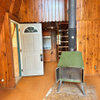
This shows that this can be done in a brutally cold climate, but there are struggles and things you will have to spend a relentless amount of time on. Namely small enough fire wood to feed that wood stove for heat.
I would tire of the life shown in the video below.... (note the temps quoted in the video are in degrees Celsius.)
You may say that passive homes have nothing to do with fresh water & grey water systems, but in terms of resources of the earth, there is far less drinkable water available than any other resource.Because these kinds of homes are often ugly looking, you're not going to find one of them in some far flung HOA.
In terms of savings, in this example above you would be saving money but wasting time. Because those maintenance related things shown in this video would never go away.
- 6 years ago
I don't think any serious analysis thinks solar panels are bad for the environment (relative to other energy sources). Comparing "toxic waste" to nuclear waste by a measure - volume? weight? - isn't exactly apples to apples. So "300 times" more what?
Many serious studies have noted the environmental impact, I am not sure the difference between analysis and a study, but I assure you we understand the environmental impact well enough.
Toxicity is typically measured by volume as that is the measure that best transfers to containment costs. However, your position isn't unusual and is arguably why we are in this predicament. We pay attention to intense problems and ignore the cumulative effects of less intense problems. While certainly nuclear waste is more toxic, it isn't getting tossed into landfills either. Only Europe has any recycling restrictions on solar which drives the cost up. Not to mention that solar production was largely moved to China largely because of relaxed environmental standards.
I am completely for solar power. The only way we are going to get to better performance is more demand. I am not trying to guilt people out of solar but as Elmer noted much of the green movement is superficial, you get to be a cool kid who cares about the environment if you spend a bunch of money making your house green. There are many people who worry about that philosophy. I would argue that if you are really that concerned about the environment, buying an electric car is not the answer, buying a bicycle is. Since I am on this soapbox, eat less meat.
- 6 years agolast modified: 6 years ago
"The most common goal in 2020 is net zero energy"
This is baloney. Zero energy homes are still a very, very small minority of today's construction activity. Even in my area of expensive, high tech homes, high efficiency and cool features are definitely front and center but "energy zero" projects are rare. And, like solar panels, are most frequently done for the cool factor, not in pursuit of personal philosophies.
- 6 years ago
I think he meant for folks pursuing some measure of an energy efficient home, NetZ Zero meets their needs / care abouts better than Passive House.
For example, I could have raised my score for passive house by REDUCING my under slab insulation to let more "cool" transfer through in the summer. I have old dogs. I don't want my slab contributing to cooling or them laying on a cold floor.
Net Zero - i.e. I can produce as much energy as I consume fits better with what I care about -without doing things that seemed out of touch with my needs. - 6 years ago
Elmer - I meant "in the high performance house world" - net zero energy is the most common goal. Certainly not the most common in other worlds. When you start talking passive house, I took that to mean vs other high performance houses. An assumption for sure. My house is net zero energy with a roughly 15 year payback which is pretty reasonable in the world of super low interest rates. And I haven't mentioned it to any of my friends or neighbors.
In CA, you certainly have solar as a financial decision. Very different world than other places. As far as "cool factor" - I am pretty sure that no one knows my ACH or my above code insulation. Even in CA - do you really thing most people do solar for "cool factor"? I mean maybe - but that seems a stretch. I could certainly seem some element of cool factor mixed in with personal philosophies along with financial self interest. Nothing really wrong with that I think.
Bry - you are right - the bicycle is better. But that is really hard to work into most cities and climates and jobs. And how many solar panels are in landfills? Since there are 40 year old examples out there still working and a tiny amount of 40 year old panels, we can't really be talking about a lot. It is a pretty stubborn and short sighted person to remove perfectly functioning panels ... like Reagan did.
Solar was also moved to China just like every other manufacturing. Unlike iphones, there are solar panels made in the US and Germany. And the manufacturing byproducts aren't exactly tossed into landfills either (ok don't know what happens in China).
Nuclear is just so darned expensive. That isn't my fault. And there isn't anything we can do about it. All energy harvesting creates a problem. Complaining about the problems of renewable sources is often a distraction and I think you know that. Windmills cause cancer and all that.... Emily Jungels
Original Author6 years agoDavid Cary, thank you for your insight. We are ultimately trying to become a net-zero house. We are installing solar panels, as well as the other features needed for a net-zero house. You mentioned people not knowing your ratings, that is something we agree on. Most people do not put a value on these types of upgrades so it is strictly for our comfort of living.
Bry- As far as riding a bike, pffff already do that- like everywhere. It's our main source of transportation in the City. :)- 6 years ago
" Even in CA - do you really thing most people do solar for "cool factor" "
Yes. Of the people I know that have put in solar panels, it's more than half of them.
" Solar was also moved to China just like every other manufacturing. "
This is not correct. The early solar voltaic panels, and I believe still the more efficient and most common kind, are made from silicon wafers. This is the same material and same technology as used to make semiconductor devices that are the enabling brains and circuits in electronic devices now - microprocessors, memory, etc. The last few semiconductor fabs (that's where wafers are made) had disappeared from the US scene decades ago in favor of Asian locations, many different countries. Mostly for cost reasons and availability of skilled labor. The wafers (horizontal slice of a silicon crystal) when the solar power industry was new became scarce and expensive because the industry was geared up only to produce wafers for semiconductor device customers buying by the hundreds and thousands for devices, while solar power companies needed wafers by the ton.
Chinese companies saw the opportunity and built fabs intended to supply the solar power industry. That's why prices have come down, supply is now adequate for demand.
The other kind of solar panel are thin film ones, less common. They don't utilize semiconductor technology.  6 years agolast modified: 6 years ago
A lot depends on what you mean by 'Passive House'.
There is the original very strict and often too strict definition of PHI (Germany). A step removed from that is PHIUS (United States) which is a bit more localized to climate which is good. Their version is based on PHI but had a lot of good tweaking by BSC (Dr. Joe) and then some further not-necessarily-so-good tweaking by PHIUS. Then there is Resnet world which is really quite lax.
PGH (Pretty Good House) is a quite reasonable attempt at finding a good value middle ground between PHI/PHIUS and Resnet. Some of it is retrofit applicable and some not.
In the end every project, especially retrofits, is different and you have to pick and choose what elements are or are not worth it.
You might also want to talk to Tim Eian about the EnerPHIT projects he's done such as: https://testudio.com/projects/minnephit-house/, several brownstones he did in NYC and various other projects.
 6 years ago
We built our Passive House DIY in the Chicago suburbs: www.kimchiandkraut.net
You might find this project interesting:
The benefits of Passive House are low energy bills (relatively easy to get to Net Zero), interior comfort regardless of season (as long as HVAC is planned correctly), and high indoor air quality (with a quality ERV that has good filters that are changed regularly).
The downside is upfront costs. There's no way around the need for substantially more insulation when compared to code-built structures, along with time and materials to properly air seal to meet the low blower door numbers for air leakage. High quality windows and doors (typically triple pane and from Europe) are also a must, both for thermal comfort and air tightness.
In theory PH is straightforward: insulate well above code, meticulously air seal the structure, and provide adequate continuous ventilation. The problem is finding competent professionals to execute all of these details. We initially tried using 'experts', but ended up doing a bulk of the work as our own GC. We're very happy with the outcome, but the process was always a struggle.
A retrofit is definitely more difficult to achieve Passive House, but it is doable. Having said that, unless this is going to be your 'forever' home, it's probably not worth all of the effort and cost.
We chose not to pursue PH certification mainly because we didn't see the value in it. We also had extremely unpleasant interactions with several PHIUS members, including people in leadership positions.
https://kimchiandkraut.net/2016/05/05/review-of-evolutionary-home-builders/
https://kimchiandkraut.net/2016/05/11/phius-review/
A cautionary tale suggesting that credentials don't guarantee a professional outcome.
Feel free to contact me through my blog if you have questions. I'd be glad to help if I can.- 5 years ago
NREL studies show passive solar is zero to 2% over standard construction and saves enormously. Chicago is a fine climate for passive solar. I have built passive solar in Mass and Southern NH. The thing to be aware of is the trade-offs. More south-facing glass means more heating potential during the day, but more cooling potential at night. Insulated shutters or similar and thermal mass can hold the heat in at night but both add cost. More glass also leads to an interior that can be overwhelmingly bright fot some people. Trombe walls can mitigate that but add expense but also thermal mass. Super insulation is highly recommended. Retrofitting limits your options. Residing eigh rigid insulation panels on the outside yo boost insulation is a good idea regardless of solar. Use high SHGC windows on the south side, and a limited number if high R windows elsewhere. I highly recommend designing for insulated shutters. If you can reasonably work in thick stone flooring and a masonry stove for thermal mass it will help minimize temperature swings from night to day.


Len Moskowitz