Software
Houzz Logo Print
veronica_hardgrave

Inexpensive Soil Type for Rhizomes?

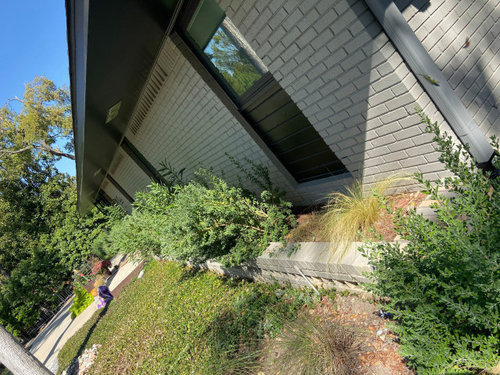
I have these two long planters under a large overhang where I decided to plant rhizome plants. The shady one will either have cast iron or liriope and the sunny one will have irises and possibly something else. The planters are long so I need quite a bit of soil. I see a lot of people post about free dirt on various sites like marketplace, craigstlist, etc that was dug up from their yards and was wondering if I need to be careful about the soil I add to these containers. The house is pier and beam and the planters are right against the foundation so I am also worried that soil with too much organic matter like mulch will attract termites or will break down easily and cause sinkage. I'm in Dallas, TX zone 8a btw.


In other words:

Can I use cheap or free soil (without knowing what's in it)?

Will soil that has too much organic matter like mulch attract termites or break down easily causing the plants to eventually sink?


Comments (20)

  • 6 years ago
    last modified: 6 years ago

    The fact these plants all have rhizomes doesn't affect your choice of soil. I know nothing of termites nor USA house construction but I'm just pointing out that the rhizomes are neither here nor there. Is there a reason you can't use the soil already in the beds?

  • 6 years ago

    I haven’t planted them yet. Once I remove the current plants they will need about a foot of soil depth.

  • 6 years ago
    last modified: 6 years ago

    What sort of soil might be best to add to the planters/containers depends mostly on how they are constructed. If just planters open to the ground at the base, then pretty much any kind of garden soil can be used (although I would want to include a small amount of organic matter in the mix). If they have a solid base - no direct connection to the underlying ground soil - they are in essence just long containers and then a specially formulated container or potting soil would be better.

    Just an FYI but organic matter - typically in the form of compost - should not be attractive to termites. Termites want wood and a good finished compost should have very little discernible wood included.

  • 6 years ago
    last modified: 6 years ago

    Can't tell from the photo - does the soil in those planters cover several courses of the brick veneer?

    Termites shouldn't have a concealed way into the framing from the front as long as the integrity of any buried bricks (or blocks) and mortar holds - though that's questionable over time with all the shifting common on north Texas clay. There may be some kind of termite stop/shield on the back ("crawl" space) side. If so, I wouldn't fill dirt in the planters above it... just in case.

  • 6 years ago

    Bostedo, I’m not for sure but it looks like the soil covers about four layers of brick. Btw, I think it is real brick not brick veneer.

  • 6 years ago
    last modified: 6 years ago

    Well, if it's free dirt dug up around Dallas, it will likely be mostly Blackland Prairie black gumbo clay with no organic material in it. You'd be better off adding some actual topsoil on top, although I'm not sure where you could find that for free? However, it usually retails cheaper right now during wintertime...

  • 6 years ago

    Blakrab, I thought irises were clay loving plants that’s why I was wondering if the local dug up soil would work. I’ll probably just suck it up and buy the topsoil. Maybe someone will want to buy the plants I plan to remove or trade for some irises and I can save money there.

  • 6 years ago

    Fortunately all the plants you mentioned will do okay in unamended Blackland Prairie clay. So getting more free clay if it's clean and from a "healthy" spot should be okay. Though agree with blakrab about taking advantage of the opportunity to incorporate some well composted organics to improve tilth.

  • 6 years ago

    Be aware that most of what is bagged and sold as 'topsoil' or 'soil amendment' is quite useless.

  • 6 years ago

    Dbarron, even for irises? What do you recommend then?

  • 6 years ago
    last modified: 6 years ago

    It depends on what you can find. Real certified organic matter is best, usually from farms, though some forms are too hot for immediate use.
    Think of it like bottled water, most of what you buy is just tap water put in a bottle (often locally).
    Irises probably don't require *anything*, but don't delude yourself that most of those bagged amendments are going to really do anything for you. Just making sure you're aware.

  • 6 years ago
    last modified: 6 years ago

    Veronica - Irises can definitely survive in clay...as they are pretty bulletproof here. What they actually fear most is wet feet, which can causing rhizome rot. So be sure to plant them very shallowly, like with maybe just ~1/2 or 1" of soil on top.

    Still, I'm not sure if they actually "prefer" clay...or can just tolerate it?

    Otherwise, some sort of actual soil would generally benefit anything else in there (like maybe some assorted wildflowers thrown in or something)?

    Problem with clay is that it lacks aeration (compaction) and bakes hard in the long, hot, dry summers here. It's fine as a portion of the overall mix. But when it's 100%, it's especially hard on plants with fibrous roots, unless they are irrigated whenever needed until they get established...

  • 6 years ago
    last modified: 6 years ago

    The fertile dark clay soils of the Blackland Prairies are some of the richest soils in the world. Challenging traits for gardening are its fine texture/compaction and alkalinity. The plants you mentioned should handle both the above neutral pH and clay structure, but will almost certainly appreciate a boost in organics while getting established.

    Texas Pure Products composts for several cities on the northeast side of Dallas. Some products are OMRI listed. They are VERY serious about quality, though imagine some junk occasionally gets through in handling yard waste from five+ cities.

    Also, here's a Master Gardener article on Managing Soil Tilth that gets into more details on the structure of clay and other soil types.

  • 6 years ago

    Good local info, bostedo (I assume, it's good..having never sampled) :)

  • 6 years ago

    Thanks everyone for the info! Right now I’m all research and planning and never seem to get anything planted because I’m scared of making a wrong choice about soil, plants, etc. There are so many variables and it is overwhelming me. I hope that changes this spring and I just do something!

    I may add some phlox and daylillies too.

  • 6 years ago

    Maybe there is another place in your yard where you could appropriate some more soil. Do you have another area where you want to plant? Add some good soil there (quality garden soil), mix, then see if you have a surplus to add to your bed along the side of the house.


  • 6 years ago

    Doing research and careful planning is usually a good thing :)

  • 6 years ago

    I would not say that all purchased soil amendments are useless. Having looked at some detailed analysis of a bunch of bagged products myself, my conclusions were that quality varies a lot, some are better than others, and generally you get what you pay for. The cheapest compost will have less organic matter and more sand or soil mixed in. However the most expensive is not necessarily better than the mid-priced.

    I always advise looking at the product. If you're buying compost, you should not see a lot of soil in it, or shredded wood etc. that's not decomposed.

  • 6 years ago

    I didn't say they were all useless, I just said buyer beware and check.