Software
Houzz Logo Print
shinyonne

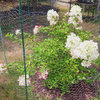
Does this hydrangea look OK to you?

6 years ago


I deliberately left the dead flower tops on the hydrangea this year as I’ve heard they contain buds for next years growth and each year that my husband has deadheaded it the plant has grown only a few flowers the next year - but lots of leaves. (I forget the variety but it grows on new wood I believe.)


We live in a rental that has gardening service. The gardeners came the other day and chopped down everything in the garden. I came out to find an entirely bare hydrangea stripped of all leaves and dead flowers.


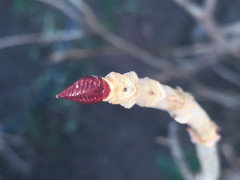
There are some buds on the tops of the branches, though. Does this mean my hydrangea will flower this year?


I don't know enough to know whether what the gardeners have done here is good or bad. I assume they know what they're doing, but wanted to check.

Comments (29)

  • 6 years ago

    Some more info. These might actually bloom on old wood as I believe it is a lacecap hydrangea. I've included an

    old photo of the blooms here. The reason I thought they grew on new wood is that I've seen the flowers growing on new green stems, though those green stems are growing out of the old wooden stems. So that seemed a bit ambiguous.

  • 6 years ago

    Deadheading - just removing the dead flowerheads - has no affect on next season's flowers. Unless you cut back too far. But back as far as the next set of leaf axils is fine.

    Do you know what kind of hydrangea you have? Shape and color of the flowers? And where are you located?

    The buds at the top of the stem look cold damaged to me. And they are leaf buds, not flowers, so they could regrow or can be snipped off if they do not develop properly later. I also see some axillary buds further down the stems but they look brown and dry as well.

    Never assume "gardeners" know what they are doing :-) Many have not a clue and treat everything the same. Midwinter is not a recommended time for pruning these if any pruning is even warranted! Really now all you can do is wait until the shrub leafs out and see what is alive or not. And then prune out the "or nots".

  • 6 years ago
    last modified: 6 years ago

    Gardeners only know how to cut and many cannot identify plants unless someone tells them something about said plants. Home owners have to tell then what to do and where. So to them, the dried out looking hydrangea is just "a shrub" -who knows what kind of- so they proceed to prune it unless someone said "no" in all possible languages.

    Hydrangea that bloom on new wood would not be affected. They would produce flower buds either in late Spring or early Summer, depending where one is located.

    But since you indicate that winter pruning by your husband has resulted in no blooms or fewer than normal then I agree that this hydrangea blooms on old wood only. Pruning it now will result in yet another year with few blooms.

  • 6 years ago

    Thanks very much! Is it possible to say, given the pictures, whether it's unlikely to be a good bloom year for this plant?


    I'm surprised that it would look cold damaged. I'm in California (Bay Area). It has been a relatively cool winter here - someone said it got down into the 20s a couple nights - and my potted lime tree is looking a little worse for wear as well. But mostly it doesn't get much below the low-40s at night here.


    That's the problem with renting - I don't have much say in what the gardeners do or when they come. A few weeks ago they came and chopped down everything in the garden (hydrangea included). The entire yard looks awful now.

  • 6 years ago

    Thank you! I’ve assumed there was a correlation between my husband cutting back the plant and fewer blooms, but I only really have two years of evidence to go by so it’s an assumption on my part.


    I guess I will have to see what this summer brings!

  • 6 years ago

    The reason I mentioned cold damage is both the buds at the tip of the stems and those in the leaf axils look brown and dry. And at this time of year, that is usually attributable to cold :-)

    In normally mild climates - like yours and mine - cold damage can be tricky. It can happen when the fall or early winter is mild enough to encourage early leaf bud formation only to have it zapped when temps subsequently dip low into the 20's.

    FWIW, I do not encourage anyone to routinely prune a bigleaf hydrangea.....it is just not necessary and will often eliminate or greatly reduce the potential for any flowering. Just a simple deadheading and removal of any dead wood after the shrub leafs out. If your gardeners (or your hubby) persist in cutting back willy-nilly in winter, you will never get reliable or prolific flowering in season.

    shinyonne thanked gardengal48 (PNW Z8/9)
  • 6 years ago

    Thank you! I schooled my husband last year and so he left it alone this year. But now the gardeners have been at it.


    I had assumed the leaf buds were purpleish rather than dried and brown but I don’t really know what to expect so perhaps they are cold damaged. :(

  • 6 years ago
    last modified: 6 years ago

    The concept behind leaving the spent flower heads is that doing so offers some winter protection to the stem ends in cold climates. I haven't read anything that I remember about whether there is much to this or not.

  • 6 years ago

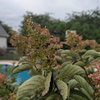
    Thanks! Also here’s a close-up of a leaf bud on the plant


  • 6 years ago
    last modified: 6 years ago

    Actually, the reason for leaving the flowers that I mentioned was just aesthethic.... it gives winter interest when all around the plant is plain white (everything is covered with snow)...

    But is that a red leaf bud? The leaf buds at the ends of my stems are brownish or -when opening- they are green.

    When I view your picture, the ends of the stem appear red. Is that right or should I replace my PC monitor asap? Hee hee hee. Maybe the leaves in this variety have a red tinge at first when the leaf bud opens???

    I do not have stems with leaves leafing out now but I do see some new growth that is leafing out on a few of the hydrangeas... oh-oh, sigh, I know, I know. On recent years, that has become common as winters are milder and some of the hydrangeas stay evergreen. Now that I have some new growth, I have to winter protect if temps are expected crash much below freezing, in order to protect the flower buds at the ends of the existing stems.

  • 6 years ago

    Not the clearest picture, sorry! The buds look almost purple to me rather than brown. So I’m hopeful that they’re not dried up.

  • 6 years ago
    last modified: 6 years ago

    Maybe they are from the Fall and never opened (so they are dried out... hope not though). I have some evergreen oakleaf hydrangeas whose fully opened leaves are now a mix of dark red, maroons, purples. Their keaves used to turn brown and fall after a while before but, in the last few years, the leaves stay "on", pliable, with their Fall colors, one of which is purple-ish. But I hope yours is not dried out. Winter damage or lack of some minerals can make some open Spring leaves turn some purplish colors.

  • 6 years ago

    They are starting to open now and the leaves inside are green. So only the outer leaves are purple-ish. I'm still not sure about flower buds though. Should I be seeing flower buds at this stage? Or is it too early to know whether the plant will flower well - or at all - this year? Also, I've used a miracle grow fertilizer (something for blooms) in the past. Should I be using a different fertilizer? I haven't put any on it so far during the winter months.

  • 6 years ago
    last modified: 6 years ago

    Don't prune them now. Some of them bear this year's flowering buds. You have to know the name of the hydrangea. Also, most hydrangeas do look like that. By leaving the dead tatty flower heads, you effectively keep the plant warmer and bugs some shelter. Don't be too tidy in winter as horrible looking flower heads provide shelters and even foods for bugs and birds. As long as they are planted on moist enough soil, they should be fine. Please don't prune unless you know the name of the plants. Type pruning and hydrangeas on youtube and you can learn more.

    I myself would not remove the tatty flowerheads. Give wildlife a chance and keep your plant warmer.

  • 6 years ago

    It is a macrophylla and the flower buds will not appear for several months yet. They will look like little nubs of broccoli when they do appear :-)

    Deadheading is not pruning and can be done at any time. They really do not supply any winter protection and generally look like a hot mess by this time of year if they even remain in place (winter wind and rain usually gets to them).

    The best suggestion for pruning any mac is.....don't :-) At least on any sort of routine basis. Removal of any deadwood can be done - any stems that fail to leaf out after the rest of the shrub has - but otherwise it is generally not recommended nor necessary. If the plant gets too large for its location, moving is a better option than pruning, although older, large shrubs can be rejuvenated over a period of time. Or a one time, whack-back-hard. however this will general negate any flowering for at least a season.

    You can find a lot of very bad gardening info on YouTube :-) Approach with caution!!

  • 6 years ago

    No, deadheading is NOT pruning, but leaving the deadheads on has a lot of advantages - insulating the plants, providing shelters and foods ..

  • 6 years ago

    MYAL, leaving the old flowerheads in place doesn't really accomplish anything. They do not provide any additional winter protection or insulation to the plant and their food value to wildlife or insects is minimal. They may offer some shelter but even that is negligible. Their only real value is some winter interest to the garden or for the gardener :-)

  • 6 years ago

    Dead-heading

    • Dead blooms on mophead hydrangeas can, in mild areas, be removed just after flowering, but it is best to leave them on the plant over winter to provide some frost protection for the tender growth buds below. Remove the dead flowerheads in early spring, cutting back the stem to the first strong, healthy pair of buds down from the faded bloom

    From RHS

    https://www.rhs.org.uk/advice/profile?pid=516

  • 6 years ago

    While you will still find this dubious advice printed by various sources, it has never been established scientifically that leaving the old flowerheads in place provide any degree of winter protection at all and you will also find just as many sources, including recognized hydrangea authorities like Dirr, that state that deadheading can be done any time the flowers become unsightly.

    If you wish to leave them in place over winter, that is a personal choice. But it is not going to provide the shrub with any significant degree of additional winter hardiness. That is more myth than a proven scientific fact!

  • 6 years ago

    Thanks all. unfortunately the gardening service that my landlord employs decided on their own to prune and deadhead. I’m glad to learn here that deadheading won’t necessarily impact the next seasons flower growth. That was my main concern.

  • 6 years ago

    I'd hardly call RHS advice dubious!

  • 6 years ago

    It is dubious because there is no science behind it.....it is just speculation. And I have seen many gardening suggestions made by the RHS that are outdated or have otherwise been disproven as sound horticulture. They are not infallible!

  • 6 years ago
    last modified: 6 years ago

    You should not be seeing flowers yet, shinyonne. The opening flower buds will look like broccoli heads.

    But worse, if this is a mophead, the gardening service may have cut off this year's blooms if they pruned deeply instead of deadheading. The ends of the stems is where the "invisible" flower buds reside so pruning can leave you flower-less until the Summer if this is a rebloomer mophead or until next year otherwise. Luckily, the ends of the stems have some "back up" flower buds that may open but they too are near the ends of the stems so if the gardening service cut "too far down", there may not be flowers (or there may be just a few). If they pruned the stems just a little, you may have a better chance of seeing flowers. Good luck.

  • 6 years ago

    Nobody or no institution is infallible. That's why some asters are re-classified. Nobody has monopoly to any knowledge!


    By removing the deadflowers, a sudden drop in temperature might expose the new buds or plant to frost or snow damage. That's for sure.

  • 6 years ago

    Which would be just as likely to occur with the flowerheads intact. They do not provide any measurable degree of winter protection. And thinking they might is just asking for trouble if late winter temps do swing back forth. I have been growing these plants for going on the past 50 years and have done both - leaving the flowerheads intact over winter and removing them. It does not make any difference to stem tip hardiness!!!

    And the comment about the asters just reinforces my premise. Horticulture is a science and like any science, changes as technology and research improves. Asters - and a great many other genera - have been reclassified recently due to DNA analysis, something that was pretty much unheard of a couple of decades ago. Many sources will report outdated or unsubstantiated data because they have not kept up with new ideas or concepts or current research.

  • 6 years ago

    just curious: how far down the stems do the “invisible“ flower buds reside? I think the gardeners cut some stems down quite a bit but left most relatively intact.

    Im not convinced it’s a mophead though. It looks more like the hydrangea I’ve seen online called tuff stuff.

  • 6 years ago

    It could be a lacecap form of macrophylla. Or it could be a serrata or mountain hydrangea, which used to be classified as a subspecies of mac.

    While I was researching the validity of not deadheading providing additional winter protection, I came across a couple of articles, primarily intended for wholesale growers, that indicated that they do cut back more heavily on plants destined for the retail trade. This tends to stimulate latent flower buds that may reside lower on the stems, resulting in a more compact plant (for easier transport and sales appeal), yet one that is also in full bloom....or close to it. But they also tend to have more specialized growing conditions as well, so how easy this is to achieve in a home garden is up for debate.

    OTOH, in mild climates with a long growing season, I have seen some cultivars of macs - and not necessarily new wood bloomers - that have been cut back hard yet still manage to flower quite well. So all is not necessarily lost :-)


  • 6 years ago

    Thanks! Yes I see now that it could also be a lacecap. I’ll do some research and see if I can tell. That’s good to know about the advice for wholesalers. I’m I’m California so hopefully that is the case for me.