Software
Houzz Logo Print

Comments (9)

  • PRO
    6 years ago

  • 6 years ago

    Our monster health system in my city is UPMC . The CEO makes 8.5 million a year. It's not about quality health care. It is about greed and power. They have all the lawyers under their thumb so you wouldn't find any to take on a case against the hospital. Plus you wouldn't find a doctor to testify against them since most are employed by UPMC or are threatened with the loss of hospital privileges.

  • 6 years ago
    last modified: 6 years ago

    It's easy to misunderstand the term "non-profit" and I think the author of this article most certainly does. Underlying the theory of what kind of activity qualifies for tax exemption are those either serving a public good or those with other types of activities that Congress decided at one time or another to allow to be exempt from income tax. The key for all of them is that the earnings don't inure to private owners. In other words, no owners and no shareholders, the entities own themselves. Non-profit entities pay regular income tax on income unrelated to their exempt activities and many have plenty of that.

    Enumerated types of entities exist that are exempt from tax but don't necessarily operate for the public good. Sports leagues (the NFL, the NBA, etc) are exempt from tax. Labor unions and private clubs, which also don't necessarily operate for the greater community good, are exempt from tax and so all these and other types too are also "non-profits".

    Not all activities operated for some kind of public benefit are inherently run by a tax exempt entity. Museums, schools, hospitals, can be exempt entities but also can be taxable entities (with owners) and many are.

    A successful non-profit most certainly has profits. Operations and entities of any kind that don't have profits tend to go out of existence. A good example of this is schools, whether on a local level or on a college level. Tax is not paid on the profits that come from the conduct of an exempt activity, so a better label would be to call them "exempt organizations" (a term used in and around the tax law) rather than "non profits".

    I agree there's a broad misunderstanding of this area.

  • PRO
    6 years ago

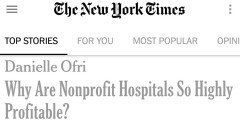
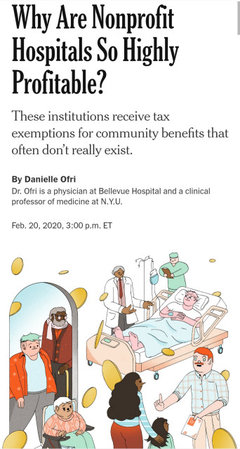
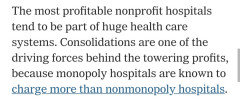
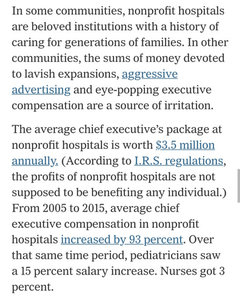
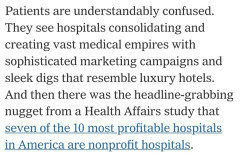
    @ function, you are correct, from the article:

  • 6 years ago

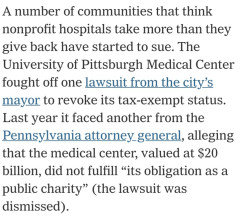
    The lawsuit from the city didn't go anywhere. The previous mayor instituted it and the present mayor is a sissy and dismissed it. The lawsuit with the attorney general, UPMC gave in at the last hour. The attorney general's lawsuit was over available of patient care not taxes.

    mdln thanked functionthenlook
  • 6 years ago
    last modified: 6 years ago

    Politicians file suits for political reasons.

    Tax exempt status is regulated by the IRS and state taxing authorities, not by mayors or other elected officials. I'm sure there exist plenty of people around who sincerely think that non-profit hospitals, museums, schools, etc., in their communities should spend their net receipts for the year on funding homeless shelters, after school programs for children, and filling potholes. So long as their management and boards comply with corporate and tax requirements for their classification, it's up to them, not politicians nor the general public, to decide how they spend their money and what they do. They're exempt from income tax, not agencies or instrumentalities of any government subdivision.

    Such feelings of betrayal about how residual money is spent, however sincere, arise from the same misunderstanding of the wherefors and whys of tax exemptions for entities that pursue the defined activities. The key is that the excess of revenue over expenses from expressly defined activities of exempt orgs can be either retained for operations, reinvestment or expansion, or invested financially. No one gets it. That's why they're exempt from tax.

    mdln thanked Elmer J Fudd
  • 6 years ago

    My question about Planned Parenthood--and since it is sooo profitable--why the need for Government subsidies?

  • 6 years ago
    last modified: 6 years ago

    There are a lot of 'old time' rules and laws that no longer make sense today. Tax-exempting some institutions (like hospitals, churches, etc.) used to make sense when they performed quantifiable services in a community -- sparing tax-supported services some of the load.

    A separate pension system for teachers was believed necessay to tie the employee to what was usually a low salary. (Requiring women teachers to be unmarried served the same goal of 'servitude'.) I don't know why teachers -- and railroad employees? -- continued to have separate pension systems after the advent of Social Security.

    It's ridiculous to see hospitals and other providers *advertise* without realizig they are profit-seeking. The same is true of pharmaceutical companies; they are allowed to not only advertise prescription medications, but write off the costs of the advertising.

    mdln thanked chisue
Sponsored
AIS Renovations
Average rating: 4.5 out of 5 stars15 Reviews
Custom Craftsmanship & Construction Solutions in Franklin County, Ohio