Software
Houzz Logo Print
webuser_757664975

Cedar Cultivars

6 years ago
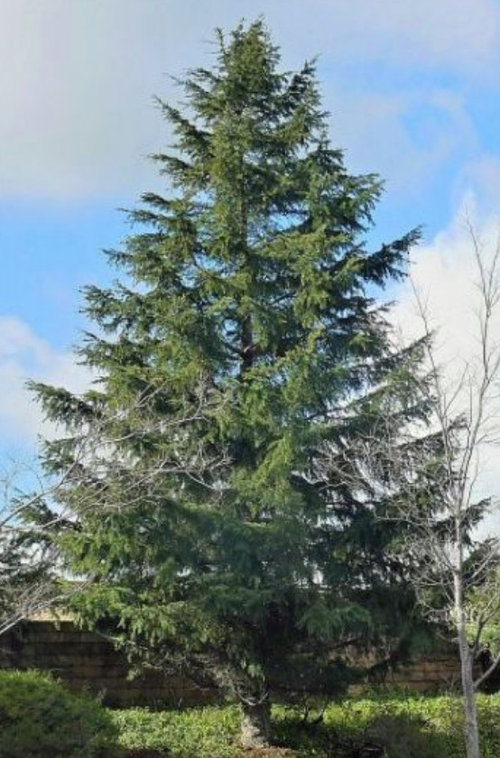
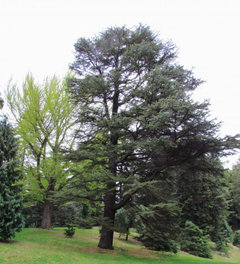
Unfortunately, cedars seem to go from beautiful trees like this:


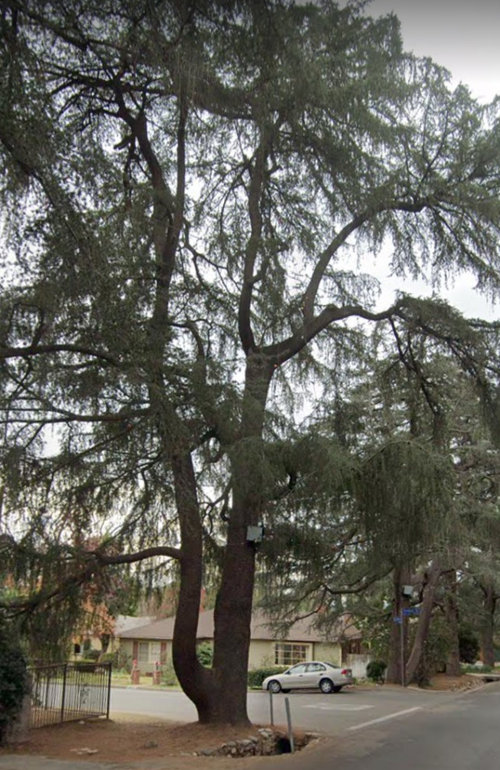
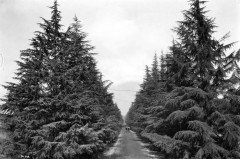
to ugly trees like this:


Does anyone know of any cedar cultivars that maintain a central leader and good uniform horizontal branching as they age?

Comments (22)

  • PRO
    6 years ago
    last modified: 6 years ago

    True of almost any tree capable of forming a central leader, one must remove any branch in youth that takes a skyward turn. The condition shown in the second picture is completely preventable. Had that been done, normal branching would appear in place of the "rogue."

  • 6 years ago

    Nether one are true 'cedars', Cedrus species. And different kinds of conifers have different types of growth habits, with some including an ability to sprout a secondary leader when young that, if left untouched, will eventually grow into a trunk-like structure.

    Whether or not one considers one growth habit acceptable and the other 'ugly' is a matter of personal aesthetics and the setting. The first looks to be a Douglas fir, which almost always grows with a single, strongly defined leader and no competing upward growing branching. Finding a double leadered Doug fir is like looking for a unicorn!! Harder to discern the ID of the second but it does resemble the growth habit of our native Thuja plicatas, Western red "cedars" which grow with low originating secondary leaders frequently and often add a lot of character to venerable older specimens and are often chosen for this specific feature.

    Whether one wants a tree with a sideways significant branch or secondary trunk in the middle of one's front yard is just a matter of personal choice but the choice must be made very early in the life of the tree.

  • 6 years ago
    last modified: 6 years ago

    GG, I don't know what you're looking at, but they both sure look to me like they could be Cedrus. Close-ups of the foliage would confirm.

  • 6 years ago

    The second could possibly be a Cedrus but too indistinct to say for sure. The first looks more like a typical Douglas fir than any true cedar I have ever seen!! There are zillions of both in my area - well, zillions of Dougs anyway but maybe only thousands of true cedars of all species - and almost impossible to mistake the form and habit of one for the other :-)

    yes, close ups of the foliage would be needed to confirm.

    btw, "cedar' seems to be a catchall term for many different kinds of conifers and especially popular with those unfamiliar with specific genera. Doesn't mean what is termed a 'cedar' actually is one!

  • 6 years ago

    They are both Deodar Cedars, which are "true cedars"

  • 6 years ago
    last modified: 6 years ago

    did you check ACS site for cultivars ?

    ron

    conifer database

  • 6 years ago
    last modified: 6 years ago

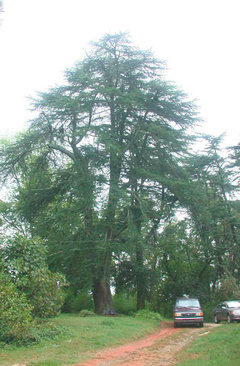
    Elzeard, seems old Deodars often branch/spread out -- here's Georgia's champion. Some might consider this majestic:

  • 6 years ago

    Ooh! I like it, Beng, and yes I find it majestic. Of course I also like the strongly pyramidal one in the first photo. Guess I’m just weird. :)

  • 6 years ago

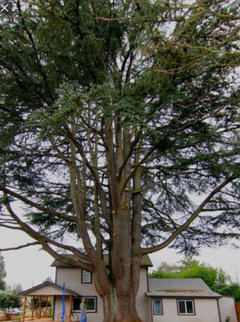
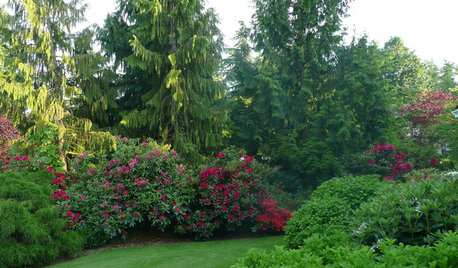
    I can appreciate the one in Georgia, it's just not what Im looking for regarding this project. Im in zone 8 with alkaline soil and the options for a traditional conifer "look" are extremely limited. Deodar cedars may be my best bet, but I feel like a it's a huge gamble because I don't know if it will turn into this:


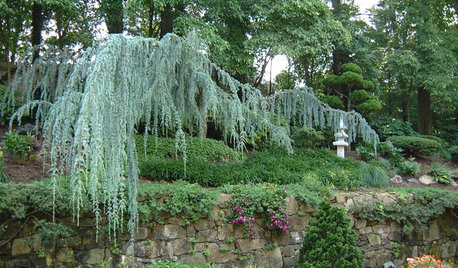
    Or this:


    I was really hoping there were certain cultivars that maintained the central leader and horizontal branching throughout their life, but it seems that many get really wonky in old age and almost develop a wide crown like an oak along with an oak's branching structure. I would hate to find out once it's too late that I made a mistake.

  • 6 years ago

    You're not gong to be looking at them in 100 years.

  • 6 years ago
    last modified: 6 years ago

    Some nice cedar pics in this post. Here's a Cedar of Lebanon in NJ w/ginkgo behind:

  • 6 years ago
    last modified: 6 years ago

    Notice that in your last two pictures - showing first what you want and then what you don't want - the first shot shows a grove or plantation (where the cedars are so close together that many of them have now gotten to the point that they look spindly) and the second is an isolated specimen growing by itself, in the open. These are the two basic, light exposure driven growth responses shown by many kinds of trees. That is one where shading from the sides results in reaching for the light (and an associated tendency not to fork much) and freedom from this shading results instead in the same kinds of trees spreading out sideways, forming a more complex crown. Exceptionally tall trees like old growth coast redwoods and emergent tropical hardwoods living in climax equatorial rainforest have both types of architecture present to large degrees within the same specimen. Due to them having been shaded while growing up into full light exposure and then having produced large, branching upper crowns after they acquired it.

    Elzeard Bouffier thanked Embothrium
  • 6 years ago
    last modified: 6 years ago

    Thank you Smivies! I think Cedrus libani var stenocoma is what I'm looking for! Now if I could just find someplace that sells them . .

    And Embothrium, I think I will plant them as a Grove to ensure they maintain that form.

  • 6 years ago
    last modified: 6 years ago

    My area has a percentage of tall single trunked examples of both C. deodara and C. libani - there is a limit to how much genetics can be used to predict specific outcomes.

  • 6 years ago
    last modified: 6 years ago

    Yikes, surprised no one has mentioned the fallacy inherent in the original post, although smivies got close. There's no way to "go from" the first picture to the second. At least with most tree species, including deodars. (more on that in a moment) Embo is correct about response to growing conditions; but the whole point of horticulture (well, one of them anyhow) is we don't leave things to chance. It's possible the plant in picture #1 came with an errant waterspout, when it was a little plant being planted, that WOULD have turned into picture #2...but someone appropriately trimmed it off!


    cf: https://www.houzz.com/discussions/4977109/we-agree-some-cutting-grown-trees-need-aggressive-waterspout-control

  • 6 years ago
    last modified: 6 years ago

    I've looked at scads of pictures of deodaras in the wild and in cultivation. Saw plenty of old ones along the west coast. The normal growth pattern is like other conifers: start with a single leader, stay with a single leader.

    How cedar-of-lebanon and to some degree atlas cedar go from relatively upright when young to 'picturesque' is a partial mystery to me; however it doesn't really matter if only deodars are being discussed. Even if you look at some of the extremely 'wonky' cedars of lebanon often parked outside the great manors of the British Isles, they have habits more helter-skelter than what pictures show in the native habitat. This implies to me something about the UK climate is making this happen: perhaps periodic damage from wind storms to plants that grow faster and more weakly, ultimately, on a compost fed English lawn than they would on mountain screes. Wet sea-level maritime climate snow versus powdery high elevation Lebanon or Atlas mountains snow? Late spring frosts? Who knows, a variety of factors.

    The huge Georgia deodar that beng posted clearly formed at least one split leader at some point; and unlike say a split leader with spruce or fir that stays almost parallel, these diverged. A couple years ago, the moment I spotted a split leader forming on one of my Abies firmas, I got my tree guy's longest pole snipper and took care of it!

  • 6 years ago
    last modified: 6 years ago

    One can even observe differing, shall we say, horticultural milieus here. First plant is in a purposeful, maintained garden space where we can assume it gets some kind of care, perhaps a very high level of care. Second plant looks thoughtlessly planted too close to an intersection in a (probably) lower middle-class neighborhood. Sorry to have to put that so bluntly, but anybody with a brain can see that, in some parts of the world especially, social class has a lot of influence on horticultural outcomes! Drive me to a random place along the east coast, blind folded, tell me every species in a yard and give me a general description of how those have been maintained, and I could give you a pretty good hunch about the neighborhood!

    update: My Abies firma is actually a better an example than I even initially thought. Why? The reason it formed a split leader was probably the effect of an early spring frost. Which are rarer in my garden that many other places in the CONUS, but still possible. Just had one of the worst ones I've ever had...but not too devastating. Only went down to 29.7F, and not for very long. Nothing looks too damaged and in fact Camellia flowers held up better than expected. But I digress; almost anywhere in Japan is even less prone to spring frosts. So by fixing the split leader on mine, I'm helping the plant to perform "as it should". (actually more worried about camellia fruits! As I made my first purposeful crosses ever this spring)

  • 6 years ago
    last modified: 6 years ago

    Actually davidrt28the second one started out just like the first. The second photo in each post is from "Christmas Tree Lane" in Fresno California, which is a street lined with 300 deodars. This is what they looked like around 1930:


    Now over 50% look like the trees in the second photos I posted. You can see for yourself by using google street view

  • 6 years ago
    last modified: 6 years ago

    Ok, fair enough.

    But I go back to, something about the environment or care they received didn't suit them or suit the realization of their proper form. The ugly waterspout in the second didn't appear overnight! Unless you have pictures of that tree from past decades, we don't know at what point something went wrong. Or what. I can only imagine. Santa Ana winds kill some branches due to drought and dryness? Doesn't matter.

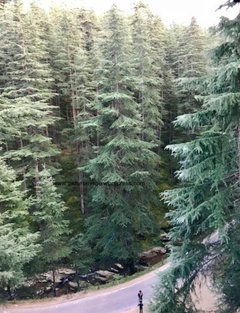
    https://www.youtube.com/watch?v=rw3ayHK3P4s
    Why do none of the native deodars in this video look like the 2nd picture?

    Contrast with monterey cypress. They look like this in their native habitat, wonky:

    https://www.youtube.com/watch?v=n4neyJqXyKw

    And ones I saw throughout the state of Victoria, Australia, even away from the coast, looked exactly the same! So it's not a matter of unsuitable (or suitable!) conditions, it's just how they grow.

  • 6 years ago

    Venture a guess (supported by the condition of those trees on Christmas Tree Lane) that the Deodar Cedar is poorly suited to the dry summers in California. It’s a summer monsoon species...