Software
Houzz Logo Print
upperbaygardener

we agree some cutting-grown trees need aggressive waterspout control?

8 years ago
last modified: 8 years ago
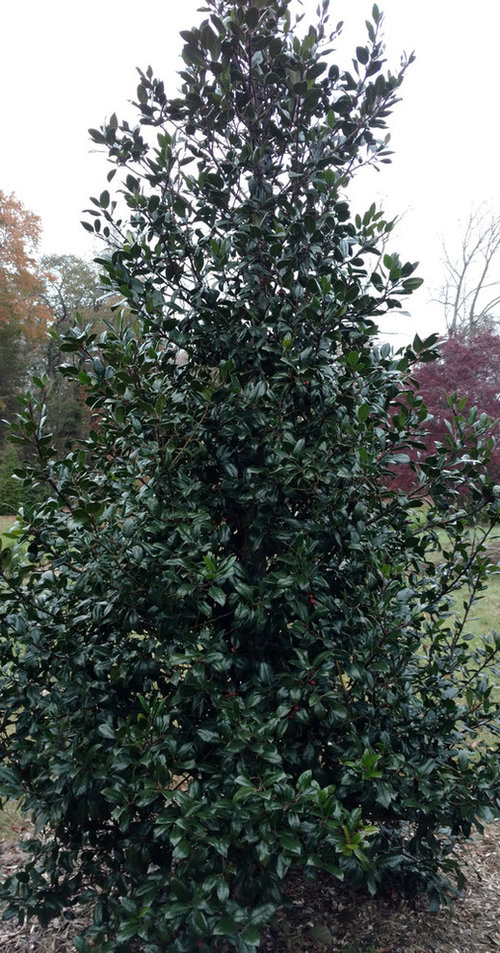
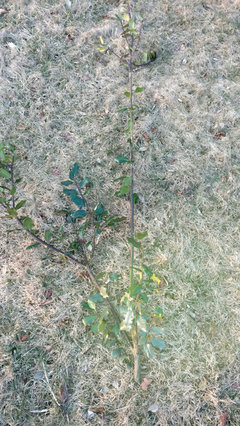
Here is an Ilex 'James G. Esson' from which I have been aggressively removing waterspouts for the last 8 years, as it grew from a 24" tall 2 gallon plant. This year it finally gave up.

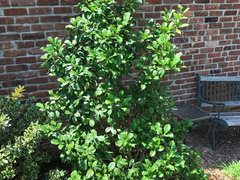
Here is a holly near my house, almost certainly planted in the 60s and quite possibly cutting grown. (I'm told the people who built the house were very into horticulture - what a co-incidence. The old Japanese Maples certainly attest to that.) This is the mess you can expect from a cutting grown plant that is not so controlled. It had 4 main trunks, and I removed one for practical, not cosmetic reasons, causing all that new growth you see. Basically, even putting aside the fact it's a boring opaca, this plant already marked for removal once a replacement gets a little bigger.

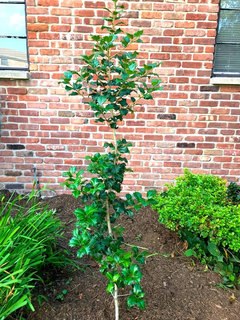
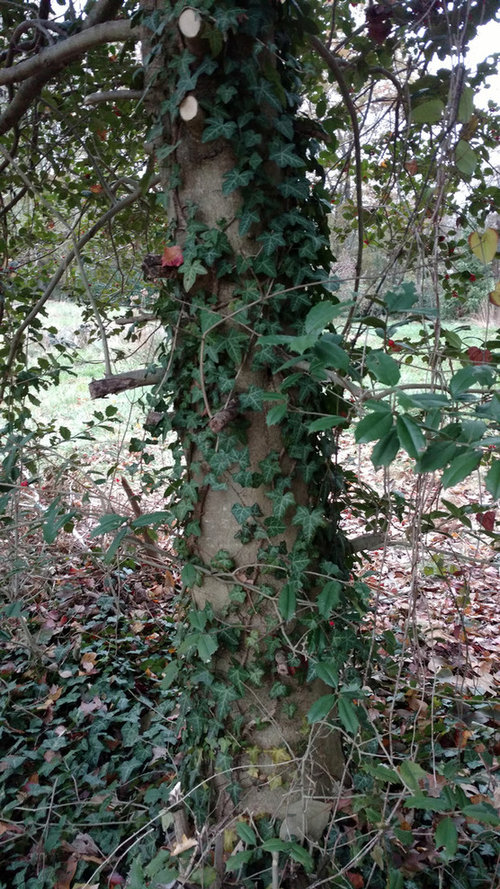
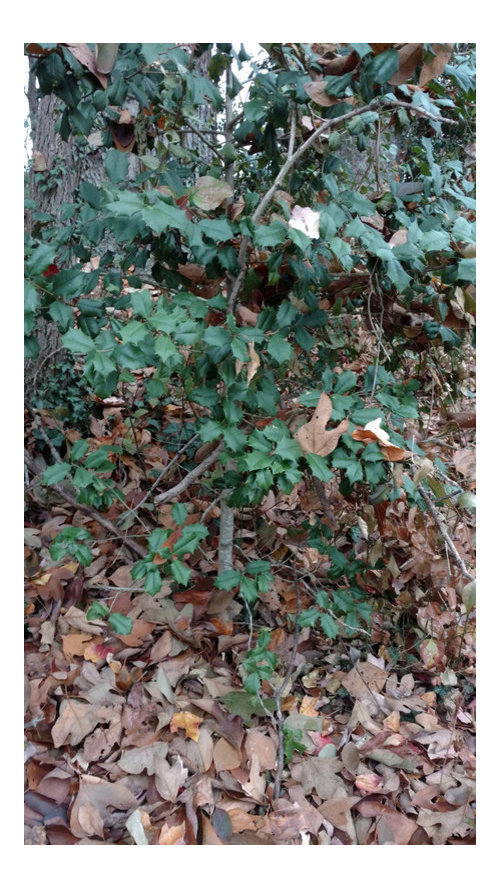
Here are two native, seedling hollies in the wild part of my property, that used to be more wooded and brushy but I've slowly be clearing out. You can see both naturally formed a single stem from seed. From a distance it is more attractive and more cone-shaped. I did have to limb up the big one to capture some Smilax and Celastrus vines.

All of the wild hollies I see the woods are like this.

In contrast, so many cultivated hollies I see have the ugly multi-stemmed look. Even ones in some professional collections.

Going back to the first cultivar, 'James G. Esson', here is one in a European collection where the standards of care were obviously high and the plants were properly shaped when young.

(fair use thumbnail)

http://www.alamy.com/stock-photo-holly-ilex-x-altaclerensis-james-g-esson-21327002.html

Hollies are the worst but I see the problem with other plants, like southern Magnolia. Now a doubting Thomas might say that, well, the first one might have been pruned as a large shrub for years. Possible, but almost every cutting grown holly I've grown will throw up waterspouts for the first few years. If they aren't cut out, they will form multiple trunks.

I've been meaning to do a post like this for months - I'm pretty sure it isn't a repeat but if so, my bad.

Comments (17)

  • 8 years ago

    Rooted cuttings seem confused for a year or two in my yard. Their buds are orientated wrong and everything. Then they get the idea they are the tree.

    For me suckers seem to come from either cultivars of bushes that can be forced to grow into tree shape, trees with a circulatory system problem, or grafted trees.

    UpperBayGardener (zone 7) thanked Toronado3800 Zone 6 St Louis
  • 8 years ago
    last modified: 8 years ago
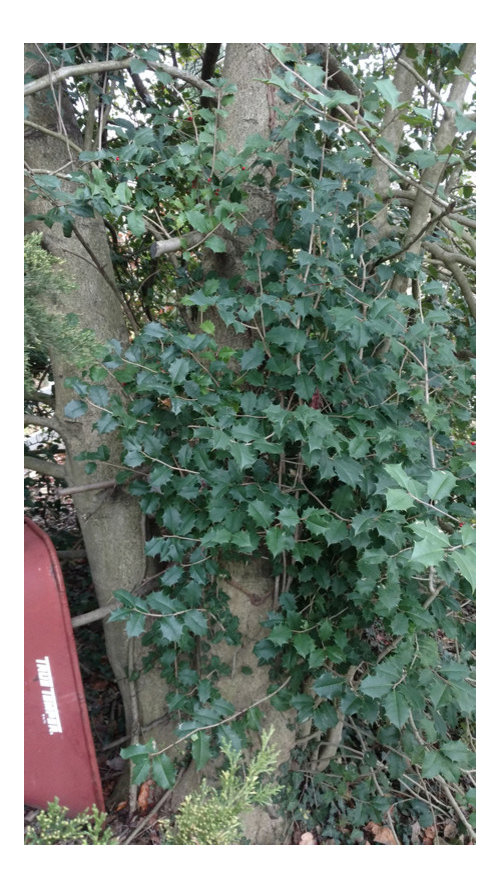
    Agreed. But make no mistake these hollies are not shrubs that are being 'forced' into anything. They will no doubt become trees at some point. The question is just will be a nicely shaped tree or an ugly one? OTOH yes, trying to make something like a rose into a standard is going to be a lot of work!

    As for the first holly, a few days ago I spotted this sneaky devil, well hidden inside:

  • 8 years ago

    And if i prune the last plant pictured, as would be ABSOLUTELY REQUIRED to produce a saleable plant, we'd have the same problem.


    As an aside, david, you may be intetested into looking into the difference between terminal cuttings and lateral cuttings.

  • 8 years ago
    last modified: 8 years ago
    "And if i prune the last plant pictured, as would be ABSOLUTELY REQUIRED to produce a saleable plant, we'd have the same problem."

    I'm confused by this statement. I can only assume you mean the smaller woodland holly I posted. I'd buy it as it is, assuming it was B&Bed or in a large container. But then, I know, at the moment anyhow, it's a awkward looking baby tree.* If "typical" buyers are ignorant and want to buy an American holly to become a 4'X4' bun next to their front door...which would be a bad idea...well, yeah, I guess you'd have to try to make it look that way.

    "As an aside, david, you may be intetested into looking into the difference between terminal cuttings and lateral cuttings."

    Yes I know the terminal cutting produces a plant more likely to have the correct apical dominance. But at what cost to the parent plant? It is likely to form a split leader, potentially ruining the perfect straight trunk seen in the picture of the mature Highclere holly in a European garden. To me, easier to just deal with the side cuttings...though I will admit...I am still new at this. I have a new rare holly put in the ground last spring. Small...only a year from being rooted. Am going to see if starting very early with the training means that 10 years down the road, I am not still struggling as I am with this 'James G Esson'. In the first couple years, I was probably not as attentive as I could have been, towards pruning or training it. It mostly seemed to be forming a conical shape. Now I wonder if I should have been carefully looking for those waterspouts when they were only a couple inches tall, and 'nipping them in the bud'! (yes, I know this is contradiction to my original post; I meant I was always removing waterspouts when they got huge, 3-4' and easy to spot.)

    And btw, it is certainly possible some cultivars are more prone to it than others. I have a couple 'Longwood Gold' and they don't seem to be forming as many waterspouts.

    * - some nursery owners feel this is a problem with the genux Ilex as a whole. They have a tendency to be, eh, gawky when young. Not indicative of future potential. OTOH, no nursery ever had trouble selling 4' Cornus florida stuffed in a 2 gallon pot, that were already blooming.

  • 8 years ago

    dave, you are talking about things that have no relevance to each other. Production of cuttings for the purpose of producing plants? you don't care about the parent plant...the purpose of the parent plant is to be the source of cutting material. What happens to the form of the parent? you hope it doesn't grow to tall because then harvesting that next cutting is a real &^tch. Care of the plant in a landscape setting? you don't care about production of material for cuttings...you may stick a few if you have the inclination, but then, you are by your statement taking the cuttings most likely to produce lateral growth; ie, 'confused'.

    You're using the standard of your perceived ease of care and trying to create a standard of judging growing techniques. My suggestion? start your own nursery and grow the plants you want to the way you want to. Let me know how it goes.

  • 8 years ago
    last modified: 8 years ago
    You still haven't clarified what you meant by your first statement, i.e., what would be 'absolutely required' to sell it.

    At any rate, yes I'm a not a nursery, I'm a collector who wants my plants to look as good as possible. But I don't even think your 'things that have no relevance to each other' can be taken at face value anyhow; in fact, one of the only problems (IMHO) about the storied McLean Nurseries we've mentioned before (best variety of hollies in North America, to be sure) is that many of the display plants - which of course are stock plants, too - don't have a very good form. Thus do no really market themselves as well as they could. And of course, in some sense that's forgivable: because running a specialist nursery in the USA, at least, is a punishing task. Few have managed to pull off the 'maintain an impressive display garden and run a successful business at the same time' feat. But with such an incredibly niche plant, if every 'James G. Esson' ever sold, anywhere in North America, had had to come from a terminal cutting...the appearance of the world's limited stock of planted 'James G. Essons' would have been adversely affected!

    So I guess I'm just proposing...well thanks for mention terminal cuttings and yes in an abstract sense 'the purpose of the parent plant is to be the source of cutting material' but as a practical matter, terminal cuttings are not the real solution to ensuring every 'James G Esson' sold grows in the way it should; i.e., the way the original seedling almost certainly grew. (like the stock picture). Really, educating gardeners/purchasers in proper aftercare is the only solution. And good luck with that! Which is why the typical tree hollies seen in planted, suburban eastern US landscapes, at least, DO have multiple trunk problems. This kind of goes back to a discussion some years ago where Embo/Bboy was questioning whether the purported original 'Sonoma' Dove Tree really was the original; but if it had been hacked for cuttings for years and years, maybe paradoxically the original didn't look like the original was 'supposed' to look. As you stated, they would have preferred it to stay low so they didn't need a ladder to reach most of the cutting material.

  • 8 years ago
    last modified: 8 years ago

    And, just to clarify...hollies were never on my radar as a young horticulturalist although, for example, I was paid as a teen to help maintain an old colonial-style garden in the DC suburbs, that had them. (long since demolished for McMansions, sadly) I started to notice them about 10 years after my first visit to McLean Nurseries. The woods near my house and in the coastal parts of Cecil County, generally, have scads of native Ilex opaca and I can safely say the ugly multi-stemmed look is extremely rare in native stands. Clearly it's some kind of a by-product of cultivation, either being grown from cuttings or once have been trimmed into bush shape. Since my 'Venus' and 'James G Esson' and a couple others were very "waterspouty" when young, and seem to be mostly giving up on it, I'm just assuming in the case of named cultivars, it is because of being cutting grown.

    I guess if I ran a nursery, I'd have a one-pager I would hand out with every tree from holly I sold, "how to keep your hollies form looking dumpy and misshapen in 10 years" LOL. The display hollies at Patuxent Valley nursery in Howard County WERE mostly corrected trimmed, and it was actually there that I fell in love with Koehne hollies, for example. The owner, much to his credit, told me about McLean nurseries because I wanted smaller 1 gallon plants to make my Koehne hedge, but he mostly sold big, expensive plants to landscapers and the wealthy. And yes I had to fight a few waterspouts on those, too; I'm glad back then I had an least an abstract sense that they were a problem. Hedge looks great these days, I've posted a video of robins [feasting [(https://www.houzz.com/discussions/zapped-dsvw-vd~4494476)on it.

  • 8 years ago

    please advise on keeping hollies from looking dumpy and misshapen.


    I planted a Mary Hollman Holly in October of 2016. Sems to be doing fine so far. I have not pruned it. Should pruning be done in the Spring months only ?

  • 8 years ago
    last modified: 8 years ago

    I say it looks fine. Single trunk and no waterspouts. I might remove a couple of the highest side shoots cause it looks like they might try to form a split leader on you.


    Of course it also depends on what shape you want or need it to have.


  • 8 years ago

    Thanks. We also planted a Dan Fenton Holly last year. It was just 3 feet tall when we planted it 14 months ago and is now almost 6' tall but still looks like a stick, with very short branches. It grew straight up but not out.

  • 8 years ago
    last modified: 8 years ago

    It will fill in. My Koehne hollies look somewhat lamentable for the first 3-5 years but are now an impressive hedge.

  • 8 years ago

    good to know. I was surpassed how tall it grew in first year, as it grew straight up without much branch growth.

    UpperBayGardener (zone 7) thanked John McMahon
  • 6 years ago
    last modified: 6 years ago

    When harvesting apical cuttings, just how many times can you do that on one plant? Eventually all the 'apical material' will be gone and you're left with lateral material aren't you?

    I still hold to my theory that some of the marginally hardy hollies readily produce suckering growth as a response to cold damage of the tips.

    UpperBayGardener (zone 7) thanked Dave in NoVA • N. Virginia • zone 7A
  • 6 years ago

    oh, I hadn't noticed that this had been bumped!

    Dave I am sure that can happen, but I've seen it happen to plenty of hollies (or other plants, generally) that aren't marginally hardy. 'James G. Esson' has never had a bit of injury here.

  • 6 years ago

    Yup, waterspouts can overturn ships! Imagine what they could do in your garden.... :)

    UpperBayGardener (zone 7) thanked bengz6westmd
  • 6 years ago

    haha good catch, flora!