Software
Houzz Logo Print
hoosiers12

Need Help Growing Grass in Midwest ! !

6 years ago
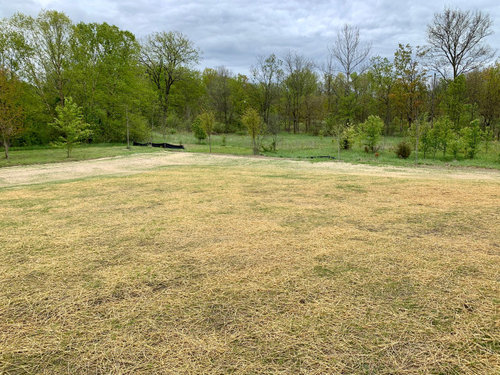
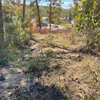
Any advice for growing back yard in Indiana?


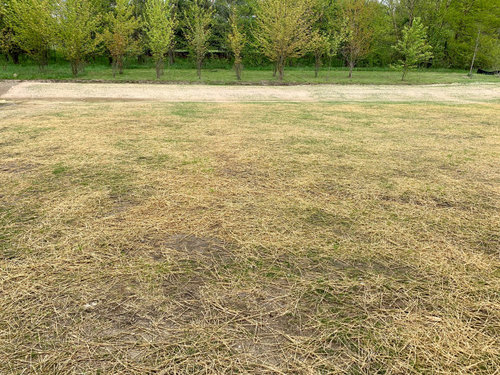
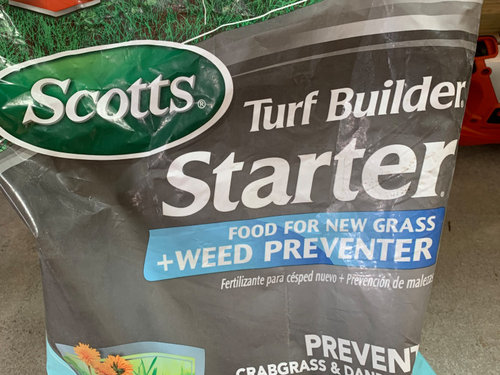
Our home builder put down seed and straw about 4 weeks ago. I put a very light layer of the Scotts starter turf builder (photo below- Lowes gardening guy recommended) down about 2 weeks ago. Keeping the yard watered and nice and damp. I have had some help with rain but looking for how to take it to the next level. Should I put another layer down of seed? Starter seed? I was told the Greenview Fairway formula was good but was not sure when the appropriate time to put it down would be.


Any tips greatly appreciated! Front yard is sodded and staying healthy. Any tips there to keep it that way would also be appreciated!


Starter seed I started using a couple weeks ago (very light) about half of a bag used so far.


Comments (11)

  • 6 years ago

    It sounds like you got stuck and had to seed at that time, which was too bad. April is almost exactly the wrong time to seed grasses (May and June would have been worse).

    For now, you're doing the right thing. Keep it damp and bring it in as best you can. Feed gently around Memorial Day. Plan on coddling it through the summer, watering a lot, and seeding again in August when summer starts to fade out and nights get cooler (for me here in PA, that's usually August 15th or so, but your mileage is going to vary; it's the day when you say to yourself, "Summer's starting to end" and the evenings are just getting that little bit of fall in them, but days are still nice and warm).

    Seed then. It's going to seem too early and too hot, but that's correct--you want it to have 10 days to 2 weeks of good warm days to germinate, during which you water 3 times a day to keep it damp. Then 2 more weeks for the laggard seed to germinate, usually the bluegrasses, by which time it's now mid-September and the weather's not so warm any longer and nights are getting kind of cool. Now you can back the water down to once a day.

    A week later, every other day because the weather's turning. If it rains that day, skip watering.

    And so on.

    You'll have a nice lawn there next year. This year, it's going to be kind of a mess.

  • 6 years ago

    Don't waste any more money on seed at this point. This is the time of year when northern grass seed is almost guaranteed to fail to perform. There is no such thing as taking it to the next level this time of year for new seeds. The heat coming next month is going to severely challenge new seedlings. What it won't challenge is the summer annual weeds, like crabgrass. Summer weeds are going to come, so just relax and let it happen. You might expect to have a 100% crabgrass lawn by July no matter what you do now.

    But don't worry! You can fix it much more easily in late August to early September, which is the correct time to seed in your area. In the mean time learn what you can with what you have. You can learn how to water properly (once the grass comes in), how to mow, and how to fertilize. Well, you can learn some of that. Watering is different for a mature installation (which you will have next spring). And if you fertilized now, then you won't need to fertilize again until you redo the lawn in a few months.

    It is clearly a full sun area. Does your seed mix include Kentucky bluegrass? KBG loves full sun. It can, and often does, turn brown/dormant in the winter depending on the health of the turf and the temps. Again, this can all be done in a few months.

    For now it is best to keep the surface moist, but not soggy. The seedlings need continual moisture for 2-3 weeks. Once you get 80% germination, you can start to back off on the watering frequency and water for a longer time. At that time you can allow the surface to go dry for a day or two between watering. Next summer you will be letting it go dry for a full week in the summer heat, so that's the basic difference between new seed and mature turf.

    When your new grass gets up to 5 inches, mow it back to the highest setting on your mower. After that if you see dandelions or clover, you can spot spray those with Weed-b-Gon. WBG does nothing for grassy weeds, but that will all be taken care of with the redo later on. You'll kill all the weeds at the beginning...which I'm certain your builder neglected to do for you. It's easy, though.

    If you have specific questions about what I've said or something that popped into your head, feel free to ask.

  • 6 years ago

    Good stuff, thanks guys. Best time of day to water, morning? How long and often should I be watering every day? I'm working from home with during Covid, so plenty of time on my hands!


    Also, while I have you, the builder planted some cheap 6 foot tall trees in dirt next to my property line. How often should I water those and should I put some mulch around the base of those? They are not budding much.

  • 6 years ago

    My husband says you can plant grass seed any month that has an R in it. In other words, not May, June, July or August. I fudged a bit and planted on May 3 but we’ve had several rains and looks like we will have more this week. Plus it’s been unusually cool. (I’m in Missouri.)

  • 6 years ago

    >> Good stuff, thanks guys. Best time of day to water, morning? How long and often should I be watering every day? I'm working from home with during Covid, so plenty of time on my hands!

    Until seed sprout, at least morning and late afternoon. Optimally, three times a day--morning, mid-afternoon, and early evening to keep it damp during the evening and night.


    >> Also, while I have you, the builder planted some cheap 6 foot tall trees in dirt next to my property line. How often should I water those and should I put some mulch around the base of those? They are not budding much.

    For the first month, keep them damp. You want the tree to adjust, like any other plant. Don't drown them, but don't let them go dry, either. A light initial feeding wouldn't go amiss, just a little handful of a good balanced fertilizer scattered all around the drip zone and beyond , but if you don't have anything, don't worry about it. They don't really need it.

    For the first year, you can coddle them a bit. Don't let them go horribly dry, but don't baby them too much either. Natural rainfall in June is probably OK, but if you're getting a dry summer, water them every week (early on) to two weeks (later in the season) to assure that they never go completely dry and suffer stress. If you choose to feed them, feed them with your lawn, at about half the same rate, but don't use anything with a weed killer in it.

    Budding on recently transplanted trees will usually be very slow and if your weather is like our weather, it's really cold.

    And you have us--me, at least--until eastern PA is out of the Covid emergency. That is likely to be mid-June as we're all still dropping like flies. And probably others as other states find that they just jumped the gun and they also begin to drop like flies again.


    >> My husband says you can plant grass seed any month that has an R in it. In other words, not May, June, July or August.

    Not really, no. Spring-planted grasses won't be old enough or have deep enough root systems to tolerate summer weather without vast amounts of coddling, which will also result in huge numbers of weeds. OP is about to discover this.

    Thus, April is out and, as you're also about to discover, May-planted grass is going to lead to either a dead planting or massive weeds unless the weather cooperates perfectly (and if it does, you get massive weeds).

    October and November are out for being too late for northern grasses except, perhaps, as dormant seeding across the extreme north tier. Here in PA, as well as most of the middle and mid-northern tier, those dates will cause a high percentage of failure.

    August 15th is about the best compromise date for most areas--a tad earlier than most recommendations, but it gives 2 solid weeks of hot weather for fast germination, followed by 2 more weeks for bluegrasses to still have time to limp over the finish line. Plus September and October for root systems to develop, and hopefully some of November for hardening off.

    Even so, I tend to give the "you know the end of summer feeling" as the day to go. That can vary by a few weeks across the range. Some have told me (central Canada) that it happens some years the first week of August.

  • 6 years ago

    Morpheus- so when August rolls around, what seed do you suggest I put down? Thanks for all your help!

  • 6 years ago

    I agree with David here. Something with bluegrass in it would be nice for the self-repairing ability (as long as it's well-fed). Any good sunny area mix should contain plenty of Kentucky bluegrass, although I'd be inclined to pick a slightly more expensive one for a slightly better grass.

    Something with zero noxious weed seeds and a very low percentage of weed and other crop seeds, in other words. And if you can get something that has nice named versions of grasses in it like Midnight II bluegrass, so much the better. Pricier, yes, but worth it.

  • 6 years ago

    Ok- a little confused though. Do you guys believe I should be laying down some seed now or just water it? A neighbor here recommended the link below and to pre germinate it in a bucket of water for a day or two before laying down. His yard is significantly further ahead than mine. Thoughts? Thanks guys! Grass Seed


  • 6 years ago

    Maybe seed was the wrong option. But should I be putting down fertilizer is the better question? THanks!

  • 6 years ago

    I was understanding that the area was already seeded? If so, ride with what you currently have (and continue to bring it in if not complete, of course!) and reseed in August--you'll have thin areas and lose a lot over summer even if you water. Which I recommend doing, there's no sense losing what you have.

    If not seeded, it's really getting rather late. I'd actually allow the current weed crop to take over, kill it back in July, and seed in August after giving it a good scalping. At least the weeds will provide ground cover and keep the soil from eroding.

    If seeded, then by all means, fertilize on Memorial Day or thereabouts. Any good fertilizer with high nitrogen (the first number) and low everything else (the other two numbers) is fine. While the lawn is new, new lawns may or may not require starter fertilizer and it's impossible to tell without a soil test. Any given lawn starting in my soil, for example, wouldn't require starter. Phosphorus levels are extremely high.

    Soil testing would take things to the next level, but it would depend on the quality of lawn you want. Tolerable to OK lawns don't require one. Good or better lawns usually do, but not always. Great lawns always do. Most around here get Logan tests because I do most of the soil test reads and I read Logan tests. I'll try on others, but if they turn out to be too hard, I'll give up. I do this free, so...