Software
Houzz Logo Print
rstgardener07

Growing Currants From Seeds - Special Processes?

6 years ago

Hi,


I'm a beginner gardener who recently became interested in growing currants - specifically red and gold currants. I am planning on growing them from seeds and was wondering whether they required a stratification/scarification process of any sort? I read on one site that gold currant seeds need 120 days to stratify but it didn't provide any further information on the growing process. I've also read that seeds of some other plants/berries that require stratification before planting use moss like spaghum or peat while refrigerating the seeds. Would something like this be needed to stratify currant seeds if they do require it?


Any information on how to germinate currant seeds would be greatly appreciated; as well as any other growing and gardening advice that would help create vibrant and healthy bushes!


Thank You

Comments (35)

  • 6 years ago

    Thanks floral_UK; I'd heard that currant seeds can take a while to grow from seed but unfortunately in region of the US that I live in I haven't been able to find existing bushes. Currants seem to be quite a rarity in the States in general.


    Winters here are cold but I wanted to see if it was possible to start the seeds in some type of stratification for now in the hopes that I can begin to actually sow them sometime this summer. If this is feasible, do you happen to know how I could do about the stratification?


    Thank you once again for your advice.

  • 6 years ago
    last modified: 6 years ago

    Currants seem to be quite a rarity in the States in general

    Currants and gooseberries have been grown for food in North America since the mid 1600s and were commercially grown by the mid 1800s. Some native Ribes have been used for food raw, cooked, or dried.

    http://www.efloras.org/florataxon.aspx?flora_id=1&taxon_id=128544

    Rashane Thapa thanked Embothrium
  • 6 years ago

    I don't know much about how to grow currants, but double check your local regulations and make sure that it is allowed and if you need a permit to grow certain varieties.

  • 6 years ago
    last modified: 6 years ago

    I've never grown currants from seed for the reasons I gave above. Redcurrants self sow for me but I always pull the seedlings up. They are not worth growing on. I'd be really surprised if you can't get currants mail order. A quick google turns up multiple sources in the USA. One bush would supply you with multiple cuttings.

    Even if you could get a month or two start on winter-sowing by stratifying artificially now you'd still be several years behind bought bushes or those grown from cuttings. And, for reds certainly, the results when you finally get fruit would be disappointing. Plus, if you have seeds now they won't be very fresh.

  • 6 years ago

    Thanks Embothrium, I didn't know that until now; I guess they're just not as common of a shrub in Michigan because I have not been able to find mature plants in stores I've checked in my area.

  • 6 years ago

    floral_UK I'd only been looking for seeds; I'll see what I can find for already developed shrubs, thank you.

  • 6 years ago
    last modified: 6 years ago

    It appears the blister rust control effort Blueberry alluded to is present in Michigan:

    A permit is required for planting black currants anywhere in the state of Michigan. Red currants, white currants and gooseberries require a permit only if the planting site is located in the white pine blister rust control zone. Alpine currant is exempt from permit requirements.

    To obtain a permit to grow rust-resistant currants and gooseberries, send a letter, fax or e-mail indicating the varieties you intend to plant, the quantity, and address where they will be planted. Permission will be granted only for those varieties that have been shown to be highly resistant to white pine blister rust through scientific research, as listed above.


    https://www.michigan.gov/documents/mdard/White_Pine_Blister_Rust_Resistant_Currant_and_Gooseberry_Varieties_489802_7.pdf

  • 6 years ago

    Yes Embothrium, I saw that same document and, assuming my seeds even germinate, I'd be planting red and gold varieties where there are no white pine trees in the vicinity. I was also interested in acquiring alpine currants. I have contacted the dept of agriculture to see if my plantings would be permitted.


    Thanks

  • 6 years ago
    last modified: 6 years ago

    Do notice that the above document uses the phrase "white pine blister rust control zone" and that except for Ribes alpinum all of the kinds listed as being acceptable are named horticultural selections and not random untested seedlings.

  • 6 years ago

    I did indeed notice that Emothrium, thank you. I am currently waiting to hear from the supplier I ordered the seeds from to see what variety they are. I had come across some sites that had listed some of those specific horticultural varieties but unfortunately they did not ultimately work out for me to order from them.

  • 6 years ago
    last modified: 6 years ago

    Seeds will not be any named variety. They can't be. Only species can be reproduced from seed. All named cultivars of red currants are produced vegetatively. If your supplier tells you the seed is a named cultivar do not buy from them. They are scam artists.

    In fact anyone selling seed for red currants is a dubious trader imo. That's just not how they're propagated by serious growers. Excepting plant breeders, of course, who will grow thousands of seedlings in the search for a good cultivar.

  • 6 years ago

    Floral I didn't know that, thank you for letting me know. I ordered these seeds from abroad some days ago so I doubt I could get a refund. Hopefully I can get at least some of them to germinate, even if the eventual shrub doesn't give very high yields. And just so I completely understand, you're saying that the only good versions of currants are ones grown from named cultivars?

  • 6 years ago

    The point is that the Michigan rust control program only approves particular named horticultural selections and not untested seed raised stock (except for Ribes alpinum).

  • 6 years ago

    Oh dear. "Ordered from abroad" that is often a sign of a scam. Was it eBay? We have so many posts here from disappointed people who have ordered seeds and received completely different ones. They prey on beginners who are attracted by the price and the supposed rarity or beauty of the plants. They rely on purchasers not being knowledgeable so they can cheat them. Always try to buy from reputable companies in your own country.

    A top quality named red currant bush from a good supplier here is about 11$. That would give you some fruit in its first year and supply a bunch of cuttings for more bushes. Taking a red currant cutting is simply a question of shoving a stick in the ground. It's that easy. A seedling plant might produce some fruit in around four years time. The crop will be scant and the berries smaller than on a cultivar. People have spent a few centuries developing cultivars for a reason.

    But before that you need to check the map to see if you're in the rust control zone. It isn't just a question of having no white pines in the vicinity.

  • 6 years ago
    last modified: 6 years ago

    No, the seeds aren't from Ebay; I ordered them from a company called Seeds Gallery, which has an address somewhere in Europe. I contacted their support about my order a couple of times already but have not heard back since I made the order last Thursday. I am starting to think I may very well have fallen for a scam; I definitely won't be ordering from any site without looking them up a bit first. As you can likely tell I am a complete beginner to gardening and knowing about named cultivars as opposed to seedlings is very useful information, so thank you for that! I'm waiting to hear back from my financial accounts to see if the site can be investigated.

  • 6 years ago

    I had a quick look at Seeds Gallery website. I'm afraid I wouldn't touch it with a barge pole. There are a lot of danger signs. One of which is that they offer Granny Smith Apple seeds. Named apples cannot be grown from seed. At it's kindest they're guilty of misleading the public. At its worst they're a bunch of lying con artists.


  • 6 years ago

    floral_uk I had a similar feeling after browsing through their site a little more thoroughly. Looks like I most likely got fooled here. However one person on their Facebook page did say that they got part of their order, just not all of it, so I'm crossing my fingers at this point. They also did get back to me when I asked about my order progress and said that it's just taking longer because of the covid situation in Europe; I can only hope that's why I've been on hold.

  • 6 years ago

    Is not the delay which is the real problem. The thing is that even if you receive seeds, and even if they are seeds from red currants, and even if they grow into sizeable bushes, any resultant fruit will most likely not be satisfactory.

    With the example of the Granny Smith Apple it is perfectly possible to extract the seeds from a Granny Smith and sell them. However, any trees grown from them will not be Granny Smiths.

  • 6 years ago

    Yes, that's also why I hope the order can be cancelled now. I didn't search up enough on named varieties vs just seedlings and so I ordered these as a result. And I didn't know that about seeds, does that characteristic apply to all types of fruit or just apples/berries? What would grow from the apple seeds if not a Granny smith apple tree?

  • 6 years ago

    That was a really interesting article floral, thank you. If I could plant the currants, they'd just be for my yard for personal interest so I don't really mind having genetically dissimilar plants or low fruit yields. With the currant restrictions for my area though I have started looking for some acceptable named varieties of golden currant and red currant - they're not the easiest to find in stock right now unfortunately. According to the dept of agriculture here I can grow rovada or rondom varieities of red currant and a special type of golden currant called 'Crandall', so I'm keeping an eye out for those. It is certainly nice to have an already established bush/shrub too.

  • 6 years ago

    I was planning to take red and black currant cuttings this year from two acquaintances in my region. But the covid lockdown prevented me from getting them in March. Generally trees lose their leaves in October here, and fruits trees start blossoming in April. March and early April are the best time to plant most cuttings that I know about in this region (before leaves sprout on the stems).

    What would be the next viable time of year to plant currant cuttings?

  • 6 years ago
    last modified: 6 years ago

    I grow red currants for "personal interest" too. But that interest is entirely based on their value for eating. I don't see any other reason for growing them. The bushes are nothing much to look at. The flowers are barely visible greenish things. And wild, non cultivated, bushes, such as would be obtained from seed are straggly weedy looking things. Rovada and Rondom are common varieties and should be obtainable via mail order.

  • 6 years ago

    Thanks floral, I have found some sites selling those varieties but its just been a matter of them being in stock or not. I guess those types of currant have become quite popular this year. Same for crandall currants. As for the ones I ordered, I got some gold currant seedlings from amazon which I'm going to plant in some pots anyway; named variety or not they'll still look pleasing for me, especially if what most have said in the reviews are true.

  • 6 years ago

    Golden Currant, Ribes aureum, is a species rather than a cultivar and so seedlings will work fine. I believe there are a few named cultivars but nothing like as many as for red currants. The flowers are much showier than those of redcurrant. My comments about the boring appearance to not apply Golden Currant.


    Possibly the red currant suppliers are out of stock because it is not the planting season. They are best planted when dormant. In my climate they can be planted from autumn right through winter until spring. I doubt that's the case in Michigan.

  • 5 years ago

    Check out this new website for getting seeds and cuttings. https://permapeople.org/marketplace They put gardeners together to sell/trade seeds and share information. I have sold some of my excess asparagus seeds and traded for some jerusalem artichoke tubers :)

  • 5 years ago

    I have loads of currant bushes and could trade cuttings :)

  • 5 years ago
    last modified: 5 years ago

    I ordered currants and gooseberries from Nourse in the past. Excellent plants, took off very quickly. The varieties they offer are resistant to mildew and White Pine Blister Rust.

    Not sure how humid Michigan gets, but make sure you get plants that will be healthy in your area. Otherwise you will have to spray for mildew.

    https://www.noursefarms.com/category/currant-plants/

    https://www.noursefarms.com/category/gooseberry-plants/

  • 5 years ago

    I was born in belgium where currants are really popular, but I have lived in California for several years now and rarely anyone knows what currants are here!! I ordered some seeds from Italy and I planted only a few in March right before spring in a shady area that never gets direct sunlight. It's been 3 months now, and my current seeds are finally sprouting!! I did hear somewhere that it does take about 3 years for it to bear fruit.

  • 5 years ago

    If you read all the preceding thread you'll see that, sadly, currants from seed will very likely be disappointing and nothing like as good as the currants you ate back at home. If you can possibly order named cultivars as bushes, do so.

  • 5 years ago

    Ali, next time order from Nourse (linked above) -- for $9.00 you will get a nice plant. Also, you will get a tasty variety and not a mystery plant that may or may not be edible when grown from seed.

  • 5 years ago

    Floral, many thanks for your comments. I learned a lot about propagating currants from this discussion. Fortunately I somehow have preferred to give away layered plants or plants from cuttings. Seedlings are weeded out but I did not know how important it is to do this. I had a couple of white currant bushes that came from seedlings many years ago. The parent plant was possibly at least 60 years old, no idea of variety. They seemed fairly good, I removed one a few days ago and will go on with just the one specimen. I’d really like to grow pink currants, Pink Champagne seems a good variety to try but I cannot seem to find any in stock at the online suppliers.

    Getting a few cuttings from someone in Canada who has a bush would be the simplest way. is there a Canadian gardener growing a Pink Champagne plant who would send me a few cuttings? I’d be willing to travel to anywhere in southwestern Ontario.

    Back to picking currants, they are all bearing like mad!

    Frances

  • 5 years ago
    last modified: 5 years ago

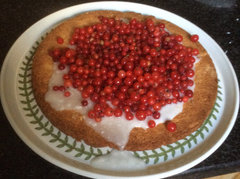
    Yes, my reds have recently started. Time for red currant shortbread.


Sponsored