Software
Houzz Logo Print
rstgardener07

Transplanting Wild Black Raspberry Shrubs into Yard?

6 years ago
Hi,


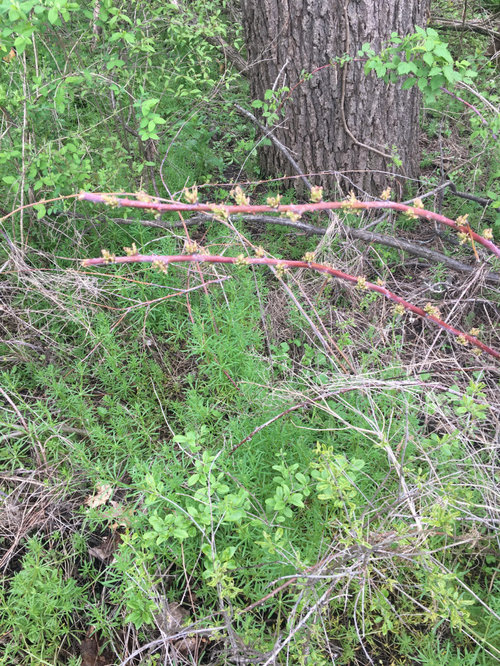
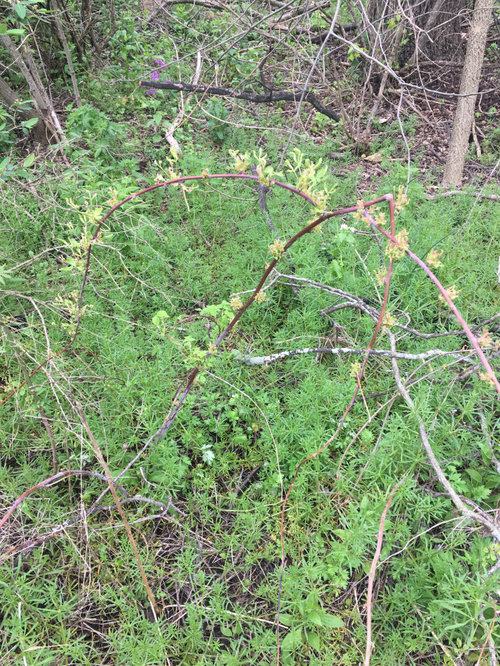
So in an area of foliage/brush near my house there are several black raspberry shrubs and I was thinking about transplanting one or two of them into my own yard to grow with the rest of my garden (or close to it; I know how thorny the shrubs can be). Right now they're just growing freely with no pruning/maintenance except for an occasional crude trimming by one of my neighbors (it keeps them from growing onto a neighborhood path) and I think it would be really cool to have some of my own, especially to see if they can fruit more after maintaining them. Judging by their noticeable purple color I think the canes are second or third year (I hadn't been paying attention to them the last few years, so I'm not 100% sure about their stage). I have a picture of them attached here as well. In a video I watched on getting new black raspberry plants it showed someone using a pot and having a newly forming cane be put into the pot, and then the woman cuts the cane off at a certain area to start the new shrub. I noticed several canes/branches of my the wild black raspberries near my yard that I could do the same with.


How successful would I be if I tried transplanting some of them? This is the first time I would be trying anything like this and I'm by no means an expert on berry gardening/horticulture in general.


Thank you!

Comments (16)

  • 6 years ago

    Thanks so much, Wayne! That helps a lot. Speaking of cane year, based on the pictures do you have any guess of whether the canes are first or second year? I know it's still basically spring but I was curious. And for the part of the plant I'll be cutting to grow separately will it boost growth if I have some Miracle Gro mix in the pot I put it in?

  • PRO
    6 years ago

    2nd year canes will be the ones that bloom this year. You can dig out a clump of canes and transplant it in the ground. Or you can wait until this autumn and attach the tip of a 1st-year cane (blue-green stem, fresh looking, does not bloom) to a large pot of dirt. If kept moist, the tip of the plant should take root. This is then cut off next year when new shoots start growing.


    The leafing canes in your picture are 2nd-year; the dead canes are older; 1st-year canes may not have risen above the weeds yet.

  • 6 years ago

    The wild blackberries growing by me are a mouthful of seeds -- I suggest making sure you like them before going through the effort of transplanting them.

  • 6 years ago
    last modified: 6 years ago

    There's something odd about the foliage. I think they might have been treated with herbicide judging by the distortion. Can you show a close up?

  • 6 years ago

    mxk3 all the shrubs near my house still appear to be in a budding phase and I can't remember how they berries were like in the past; Even if the berries end up having many seeds I'll still be ok with just having the shrub growing in my yard. I think they should be fine though.

  • 6 years ago

    floral_UK the ground of the brush there is covered with a weed that sticks easily to the skin but other than that I don't see anything odd; my neighbor runs an yardcare service and he sometimes trims there but I don't think he applies any herbicide. There's another shrub in a different area of foliage that I can get a close up of later though.

  • 6 years ago

    Logician when you mean a clump of canes do you mean the largest canes/the whole shrub, or just any canes from a shrub that are currently blooming?

  • 6 years ago

    The weed on the ground is Galium aperine. It sticks to you but is completely harmless. In fact it's edible. The leaves on the actual raspberry canes in the foreground of both photos appear distorted and yellowing. There are raspberry leaves top right of picture two against the tree trunk which look unaffected.

  • 6 years ago
    last modified: 6 years ago

    Are you sure you want these growing in your yard? They are thugs -- they march through the edges of woodlands up here, the dense thickets crowd out pretty much everything in their path except other woodies and some groundcovers that manage to survive underneath them. Cultivars of raspberries are bad enough -- these wild things are downright monstrous to control if the conditions are to their liking.


    ETA: Also, I don't know about the laws in your state, but in my state it is illegal to dig plants from the wild -- and I would argue unethical.

  • 6 years ago

    Floral thanks, the canes further in the brush appear redder than the ones closer to the path.

  • 6 years ago

    mxk3 I'm not certain at the moment, I'm just considering it because I remember how tasty their berries were way back when I was little and especially because I don't remember seeing so many black raspberry shrubs as I have this year; in fact for the last few years I don't recall seeing any canes. And it's not just near my house either; along the street parallel to ours (also part of our neighborhood) there's even larger groups of them that appear to be growing faster than the ones by my yard. Right now I'm thinking of just placing one cut cane of a shrub in a deepish pot and then see how it grows over the next couple of months. If it does end up growing like crazy and spreading too fast for me to manage, I'll know not to actually plant them in the yard.

  • 6 years ago

    And I haven't heard of that sort of law/regulation in my area but I can check. I'm not trying to start a greenhouse or anything either so I doubt that kind of thing would have much of an impact on the natural flora and fauna.

  • 6 years ago

    May I suggest you do yourself a favor and purchase a cultivated variety of black raspberry, such as Munger. Why would you take a chance on a wild berry plant with unknown properties when cultivated specimens are so easy to acquire. You can have confidence that you will get sufficient fruit, you'll enjoy after all the work of digging, planting, and caring for them. The odds of you reliving those childhood memories of sweet wild fruit are kind of low. It could happen, but why chance it?

  • 6 years ago

    Hey Gred, thanks for the suggestion. I would be more inclined to take your advice if I could leave my house more freely and had a little more money on hand, but the wild ones are the most convenient option right now, and they're growing in the same spot they were in the past when my family and I would eat them. I also thought it would be making use of what's already growing around my area if I raised a wild one. If I get the chance to go to a greenhouse/nursery I'd surely give a named variety a try though.

  • 6 years ago

    I can appreciate your sentiment regarding using what you have to avoid additional expense. All the more so if you know what they taste like and you like them. However, Its just been my experience that the cultivated varieties are selected for a reason. Nine out of ten times they consistently offer better: flavor, productivity, disease resistance, growth habits, hardiness, etc... For the cost of $5 or $6 they're well worth it. You could even trade for them. P.S. I have red currants.

Sponsored
Peabody Landscape Group
Average rating: 3.5 out of 5 stars8 Reviews
Franklin County's Reliable Landscape Design & Contracting