Software
Houzz Logo Print
fabs555

Raised Bed Garden in Phoenix AZ

6 years ago
last modified: 6 years ago
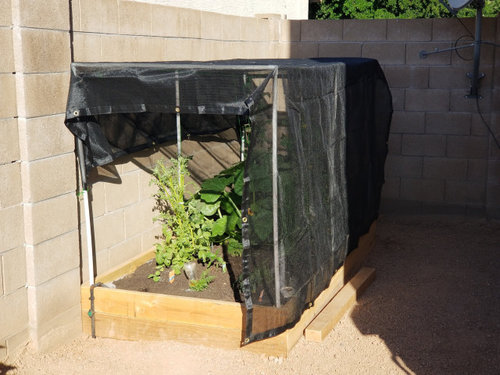
Hi guys, im a first time gardener! decided to build a raised bed around April and so far I have been successfully growing cherry tomatoes, Zucchini Black Beauty, Cucumber Burpless Hybrid, Late White Onions, Watermelon Black Diamond, Carrots & Potatoes. All of these plants has grown and looks healthy but no vegetables yet. Anyhow, I wanted to write because this past week and all through this weekend, temperature has been over the 100F, and I wanted to make sure I provide to my plants what is needed to help them get through it.

So here are a few questions:

- I installed three lines of 6" appart drip tubing on my 4x8 raised bed which is connected to my timer through a 25psi reducer. I water every morning around 6:30am for 24 minutes. Overall, by end of day, I stick my finger into different areas of the soil and it is still moist, Is this the right amount of time I should be watering? I dont want to under or over do it so your advice is appreciated.

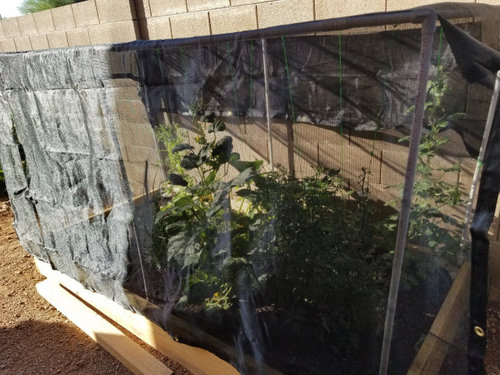
- With the heat over 100F I was recommended by my local Home Depot that by all means I should install a shade cloth to my raised bed. So I did, I bought what was available which is a 10'x10' shade cloth and installed it. My question is, should it be fixed to cover the raised bed all the time? Does it provide enough light through to help my plants produce? What should I do? Also, if you have a better recommendation of a shade cloth I should buy, I still can return this one!

Here are some photos of my setup as of this morning, lighting/shadows shown is around 7a.m, by noon there is no shade on top of the raised bed:


Thank you all! Cant wait to read your feedback, happy to belong to this community of gardeners!!

Comments (7)

  • 6 years ago
    last modified: 6 years ago
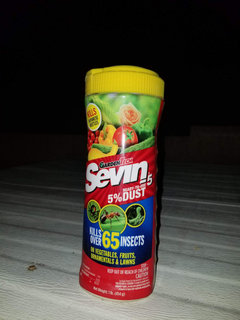
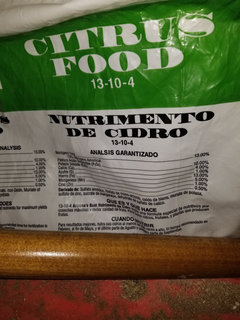
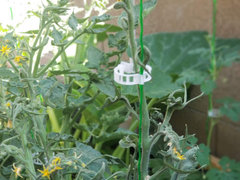
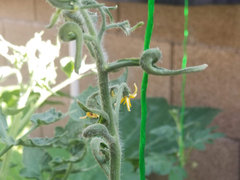
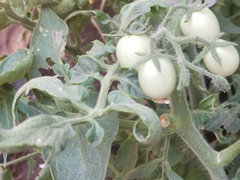
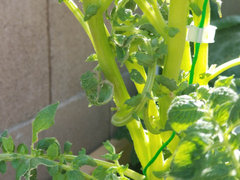
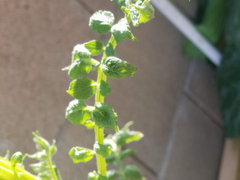
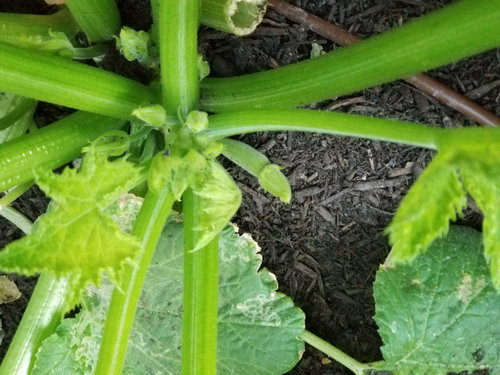
    Excellent Mary! Thanks for the response. I went ahead and bought the moisture meter, I'm sure it will be very helpful. Meanwhile, I noticed this past couple of days that my cherry tomato plants and my potato plant are having curled leafs up top, as im new to gardening, something doest feel right. Could the cause be the couple days above 100F we have been dealing with prior to buying the shade cloth?, other things that I did prior to noticing the curl leafs is applying a treatment to the soil to deal with the many fruit flies which was recommended by a lowe's expert who suggested it as fully safe for my plants, its called Seven 5.... And last, I applied to the soil around the plants roots a fertilizer that is 13-10-4 which happens to be the only fertilizer iI had around the house. Anyhow, i will appreciate if you can take a look at the pictures and tell me if the curl I'm dealing with is heat related or might be something else, and is there anything iI can do to improve it or will it be fixed on its own?

    Thanks again!!


  • 6 years ago
    last modified: 6 years ago
    Hello Fabio, I can't speak to that particular problem but as a lover of homegrown tomatoes I *can* tell you that growing them in Phoenix is extremely difficult. It's the heat. By the time the soil has warmed up enough for the roots to be happy, triple digits set in and fruit will not set.


    I did a search for tomato diseases and found a couple of articles that might help.


    Tomato Diseases

    UofA Cooperative Extension


    Summer is not the time for growing tomatoes here. Sometimes I can get a fall/winter crop if we have a mild winter. But the best growing season for us is spring. I try to get my plants in the ground around Valentine's Day. I was late this year but my plants are producing now. Some green fruit and lots of buds.


    The only tomato I grow now is called Silvery Fir Tree. It's a small salad size tomato. Also any of the cherry types do well. Those big ole Beefsteaks just won't grow here, our season is too short. I start my plants from seed. I don't buy plants from a nursery. LMK if you find a solution to the curling leaves.

  • 6 years ago

    I forgot about the fertilizer question. I use liquid seaweed like this:

    Liquid Seaweed or this

    Powdered Kelp

    Poured over the plant so there is some foliar feeding (through the leaves) as well as a soil drench. Several times in a row just after planting, then every 2 or 3 weeks.


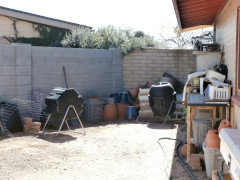
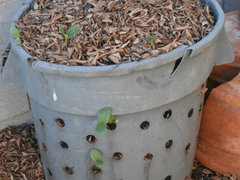
    And I compost all kitchen scraps. Two systems: 1) outside in a barrel that can be flipped;


    That plastic garbage can with all the holes in it was my first compost bin. Then picked up the one on the right at a garage sale and finally got the best one yet, the one on the left from Gardener's Supply. You need two of whatever you decide to do because one has to be resting while you are adding to the 'working' bin. City of Phx sells/gives away?? old recycling bins that they have removed the bottom. Works ok but it was too heavy for me to move when it was time to redistribute the composting matter.


    2) a worm farm in my back bedroom. Vermicomposting worms (red wigglers) are temperature sensitive so must be kept inside. I use this:

    Worm Factory 360

    It's Da Bomb! You don't even know it's there. No odor whatsoever. They love coffe grounds, banana peels, melon rinds, baked sweet potatoes......about every 3 or 4 months, I rotate in new bedding, transition the wigglers to the new bedding and harvest all that black gold worm castings.


    Hope this is not TMI. It's too hot to be outside and I'm bored with reading and housework. ;-)

  • 6 years ago

    Hi Mary! Thank you so much for all the info and for taking the time to write! Its really uplifting to have someone in town who truly understand what it takes to garden in Phx and your guidance has already been helpful in so many ways, so thank you! I've heard from so many that doing the garden in Phoenix is looking for added headaches, not an easy process, specially coming from the Northeast. Anyways, I think what really pushed me to start doing my raised bed was to find a nice, healthy project to do while being in quarantine. I have two girls, 3 and 6 that would benefit from doing this together, so I thought its an overall win despite the difficulties. I will say that I thought I knew that I was starting late in the season with this project by having the bed fully built by April 19, and that was the day I planted the few plants recommended by my local Lowes, (Cherry Tomatoes,Zucchini, cucumber & mint). Later on, we planted from seed carrot and potato, both doing beautiful until last week the potato as well as the cherry tomatoes started showing the curl leafs I showed you earlier. So, that was the first challenge I encounter, and later that week I tried to plant two green tomatoes plants to fulfill two empty spots I had and both died within a few days... So I am still learning and there is definitely a learning curve to this. Also, right before the heat wave from last week, I finish the irrigation system to water the raised bed from (manual hose watering straight to the roots) to now, a 6 inches apart dripping through my timer controller. I am very excited about this improvement but for sure, your suggestion to use the moisture meter will become handy, because I'm unsure how much water are my plants really getting within 25-30 minutes every morning, I'm getting the meter today! I would love if I get to see our plants give us some produce, even though I'm a little afraid the cherry tomatoes and the potato plants might be in trouble without much understanding yet on what the cause might be...


    This morning I was trying to look up close the the cherry tomatoes, see if I find insects or anything that might be able to discard as an option, and couldn't find anything, but a few leafs did show little black dots, up to 8 in some of the leafs, they didn't move so they dont look like insects, but could be caterpillar poop, which I have found couple caterpillar in the past weeks and moved them somewhere else farther away from my garden. Not even sure how they came along, do they come within the soil I bought?


    Anyways, Im impressed with your setup, thank you for sharing! I haven't even started doing my own compost, I find it challenging, and a bit overwhelming, since I am still taking baby steps, but I am very intrigued how you transition the wigglers from one bedding to the next. Doesn't sound easy.


    To start my raised bed I fill the bottom half with dried leafs, branches and yard soil and then I used garden soil purchased at Lowes for the top half. Plants seemed to enjoy it since they were growing fast and healthy.


    I will have to do further research on all the steps you are currently applying in your garden, so gain a bit more confidence and understanding on the how to and benefits.


    Here is a link so you can see my raised bed since the beginning to where it is right now.

    https://photos.app.goo.gl/RGytgdz8hzwCjYts5


    Thank you again as always!


  • 6 years ago

    Your pics look great Fabio! Caterpillars often appear as a result of a moth laying her eggs on the leaves. This is the time of year for hornworm moths to be active. One hornworm will decimate a tomato plant in one day! I'll give you another pic at the end of a setup that works really well to keep out pests.


    Did you look at the link I sent about tomato diseases? Verticillium Wilt is one possibility on the leaf curling. And there's 2 or 3 mentions of black spots. The reason I stopped buying plants from nurseries, especially like HD or Lowe's was because I found the plants often introduced either Verticullium wilt or blight into my garden. It's a condition in the roots, I think from improper care. There is a grower who sells at the farmer's markets and I trust her plants but they are pricey. Can't remember her name right now. It'll come to me.


    I'd be happy to teach you some of the techniques I use to grow from seed. I usually start the seeds around 4th of July for winter garden and New Year's for the spring. Also, I think the composting and worm castings play a huge roll in giving me good soil. If you and your family eat most meals at home and use fresh produce frequently, and if you are discarding the scraps you are really tossing out garden magic. Houzz has a Soil, Composting and Mulch forum.


    Transitioning the worms is fairly easy actually. And I only ever have one tray in operation. The Worm Factory comes with 3 or 4 trays but I only do one. To transition: Set up new tray with bedding, this is coco coir (Coco coir) mixed 80/20 with shredded paper. I buy from a hydroponics store near metro center. I'm a bookkeeper so have lots of confetti shredded paper available. Fill the tray then add some of wormy's favorite food: melon scraps and a baked sweet potato (cooled of course). Remove the tray that is working now, place the new tray, then put the working tray back. Leave a light on and the worms will migrate down to the new tray a) because of the scrumptious treats; and b) to get away from the light. You have to keep scraping away/removing the castings so the light penetrates well. Houzz has a vermicomposting forum that you may want to visit.


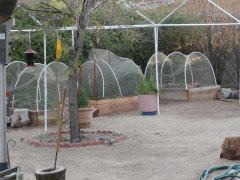
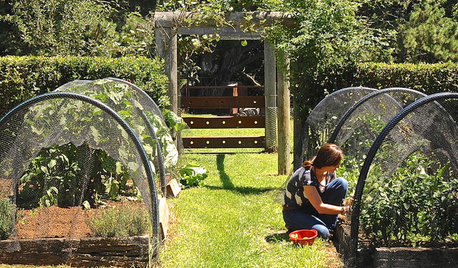
    Finally, here's a pic of my gardens a few years ago. I still use this pvc pipe/mosquito net set up. It's cheap and works great. Get an Army surplus mosquito net designed to cover a cot. :-) That middle bed was 3 tomatillo plants! Heavy producers they were.


    Here's my early compost bin in action. Those are spaghetti squash sprouting from seeds I dumped in after dinner! Periodically, every week or 10 days, tip it over, move the bin to a new spot and shovel everything back in. This is in order to redistribute everything. With a barrel composter, you just flip it over every day or so. Whew....done for now. Good luck with everything.


    Fabio Apelbaum thanked MaryMcP Zone 8b - Phx AZ
  • 6 years ago

    To bring down the moisture level just stop watering until the meter shows low green, 4 or 5. I think if you just check at the same time each day you'll get a feel for it.

Sponsored
Wannemacher Interiors
Average rating: 5 out of 5 stars26 Reviews
Customized Award-Winning Interior Design Solutions in Franklin Cnty OH