Software
Houzz Logo Print
kelseybutton

Mold on Soil and FLF Branching

6 years ago
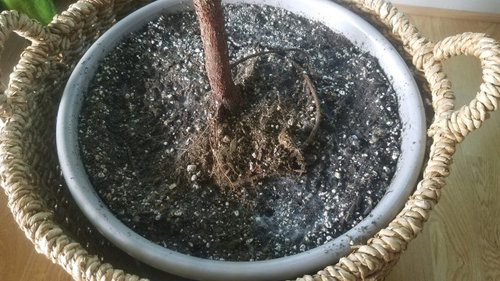
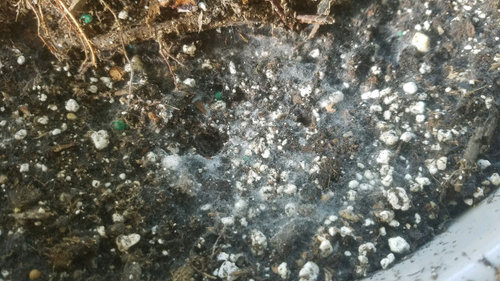
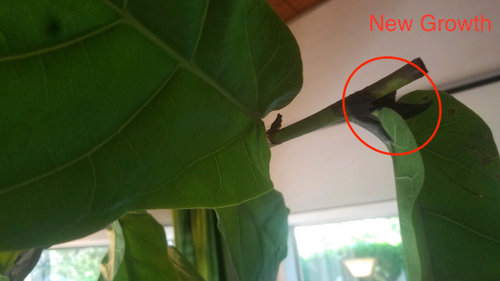
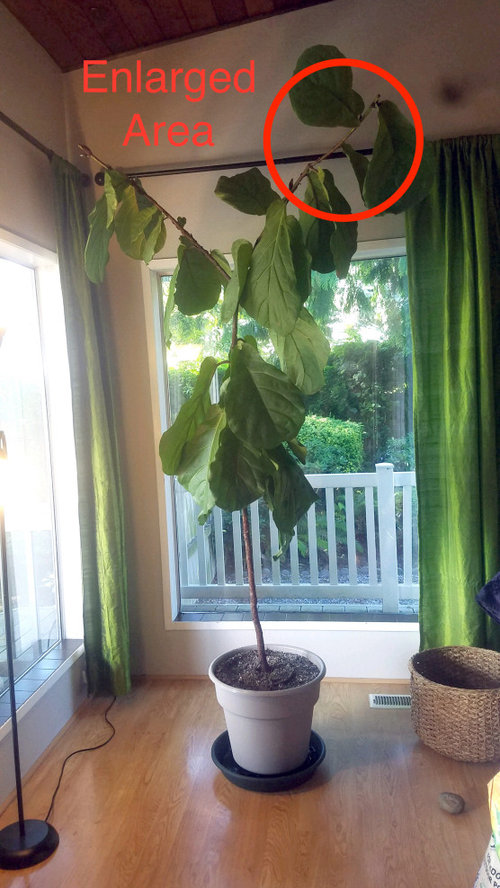
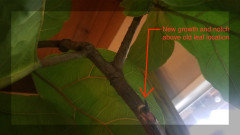
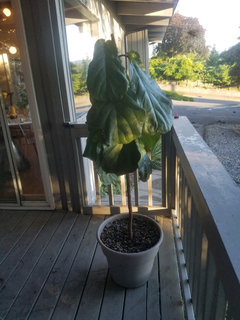
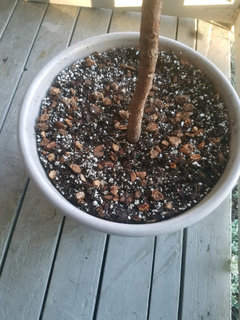
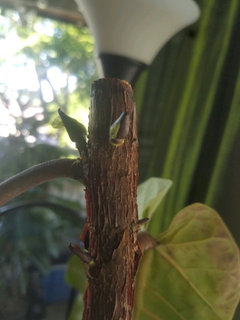
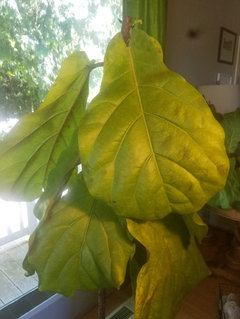
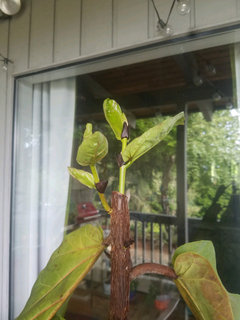
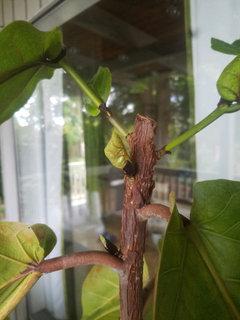
I pruned my FLF a couple weeks ago, then repotted three days ago. When I repotted, I added fish emulsion to the water, and watered the plant in the bathtub so I could ensure all the soil was throughly saturated. Now there is a white mold growing on the surface of the soil. What, if anything, should I do to remove it? Additionally, after pruning I have a stubborn branch that is only producing new growth at one location instead of actually dividing to form two branches. Any ideas why? This happened when I pruned last year as well.


Comments (15)

  • 6 years ago

    Thanks for the input Tom! I used this soil mix: https://blackgold.bz/product/black-gold-natural-organic-potting-mix/

  • 6 years ago

    Hi, Kelsey. Mold/fungal spores are ubiquitous, so their appearance on the surface of your substrate means only that the mold finds conditions there favorable. It's not necessarily a manifestation of over-watering or too much organic material in the soil. Re the fish emulsion - I don't use it indoors because it's like setting the table for fungus gnats - they love the stuff. I agree that FP 9-3-6 is a great fertilizer choice, and would mention it's all you need in the way of nutritional supplementation to maintain your plant in a state of high vitality, not withstanding other cultural challenges unrelated to nutrition, of course.

    My experience with container substrates shows over and over that the more often you need to water, the greater opportunity your plant will have to realize a larger % of the genetic potential it was endowed with. IOW, if you have a plant in a substrate that requires watering only every 2 weeks, and one in a substrate that requires watering every 2 days, when all else is equal and you're observing the appropriate watering intervals, you should see MUCH greater vitality/growth from the plant requiring water more frequently.

    The easiest way of determining when your plant needs water is probably going to be via using a 'tell'. More on using a tell below.

    There is no need to plant the plant deeper at the next repot. All plants being properly watered in containers can be counted on to have the roots in the upper part of the soil serve only as means of anchorage and plumbing. The fine roots will have died off because of the cyclic drying of the top several inches of soil between waterings. Exposure of these roots to light actually hardens them off and helps to prevent new root generation while the top of the soil is moist after a recent watering.

    I would cut your tree back hard, in order to force branching lower on
    the trunk. How enthusiastically your tree responds after you prune
    depends on several things, but the primary considerations are A) How
    much reserve energy your tree has. Energy reserves are directly linked
    to vitality levels, and usually, trees are in fine fettle at this time
    of year (in the N Hemisphere) because of the long days and intense
    sunlight. B) The tree' current ability to make food. Trees make their
    own food (carbohydrate) during photosynthesis. Sunday was the longest
    day of the year and the sun's intensity was highest, so now is a perfect
    time to be doing heavy work on your tree (repotting and hard pruning).
    C) How hard you prune. The harder you prune, the more enthusiastically
    your tree will respond.

    As I look at your tree, I immediately see a looming problem. Your trunk splits way up near the top of the window. If you build the top of the tree based on the existing 2 halves of the 'Y', the top of your tree will be well above window ht and starved for light. If you're lucky enough to get some lateral breaks (new branches) lower on the trunk, they're going to be much thinner than the existing branches, and that will look very odd. I suggest you chop the trunk back to about 1/2-2/3 the ht at which you wish to maintain the tree. That gives you a chance to build the top before it runs out of light up in the stratosphere.

    If you do decide to follow my pruning suggestions, I have other suggestions that will prove helpful.


    Using a 'tell'

    Over-watering saps vitality and is one of the most
    common plant assassins, so learning to avoid it is worth the small
    effort. Plants make and store their own energy source –
    photosynthate - (sugar/glucose). Functioning roots need energy to
    drive their metabolic processes, and in order to get it, they use
    oxygen to burn (oxidize) their food. From this, we can see that
    terrestrial plants need air (oxygen) in the soil to drive root
    function. Many off-the-shelf soils hold too much water and not enough
    air to support good root health, which is a prerequisite to a healthy
    plant. Watering in small sips leads to a build-up of dissolved solids
    (salts) in the soil, which limits a plant's ability to absorb water –
    so watering in sips simply moves us to the other horn of a dilemma.
    It creates another problem that requires resolution. Better, would be
    to simply adopt a soil that drains well enough to allow watering to
    beyond the saturation point, so we're flushing the soil of
    accumulating dissolved solids whenever we water; this, w/o the plant
    being forced to pay a tax in the form of reduced vitality, due to
    prolong periods of soil saturation. Sometimes, though, that's not a
    course we can immediately steer, which makes controlling how often we
    water a very important factor.

    In many cases, we can judge whether or not a
    planting needs watering by hefting the pot. This is especially true
    if the pot is made from light material, like plastic, but doesn't
    work (as) well when the pot is made from heavier material, like clay,
    or when the size/weight of the pot precludes grabbing it with one
    hand to judge its weight and gauge the need for water.

    Fingers stuck an inch or two into the soil work ok
    for shallow pots, but not for deep pots. Deep pots might have 3 or
    more inches of soil that feels totally dry, while the lower several
    inches of the soil is 100% saturated. Obviously, the lack of oxygen
    in the root zone situation can wreak havoc with root health and
    cause the loss of a very notable measure of your plant's potential.
    Inexpensive watering meters don't even measure moisture levels, they
    measure electrical conductivity. Clean the tip and insert it into a
    cup of distilled water and witness the fact it reads 'DRY'.

    One of the most reliable methods of checking a
    planting's need for water is using a 'tell'. You can use a bamboo
    skewer in a pinch, but a wooden dowel rod of about 5/16” (75-85mm)
    would work better. They usually come 48” (120cm) long and can
    usually be cut in half and serve as a pair. Sharpen all 4 ends in a
    pencil sharpener and slightly blunt the tip so it's about the
    diameter of the head on a straight pin. Push the wooden tell deep
    into the soil. Don't worry, it won't harm the root system. If the
    plant is quite root-bound, you might need to try several places until
    you find one where you can push it all the way to the pot's bottom.
    Leave it a few seconds, then withdraw it and inspect the tip for
    moisture. For most plantings, withhold water until the tell comes out
    dry or nearly so. If you see signs of wilting, adjust the interval
    between waterings so drought stress isn't a recurring issue.

    Al


  • 6 years ago
    last modified: 6 years ago

    Thanks Al! The top of the window is 7' and my ceiling in 10.5' in that area. I would love to eventually get him up to the ceiling height (but with a fuller canopy, of course). Would a grow light help maintain healthy growth above the top of the windows? I'd prefer something that still looks residential (https://soltechsolutions.com/product/aspect-40w-white-plant-light/) as opposed to something you'd see on a farm. I did some notching lower on the trunk trying to get more branches nearer to the crotch, but really haven't had much luck--one little growth that might turn into something, but I'm not holding my breath yet. How much further down would you cut? The crotch is currently at 6', which does fall in that 1/2-2/3 desired height range.

    As far as the watering and "the tell": before the re-pot, I had a pretty good sense of when water would be needed (about once a week). I've been lurking long enough to know about the dowel, and I'll use it now that I've got an new soil mixture and a new container. I haven't watered again since the initial repotting on Friday (it's still damp). The re-potting soil I used was https://blackgold.bz/product/black-gold-natural-organic-potting-mix/. Should I add more perlite to make it faster draining?

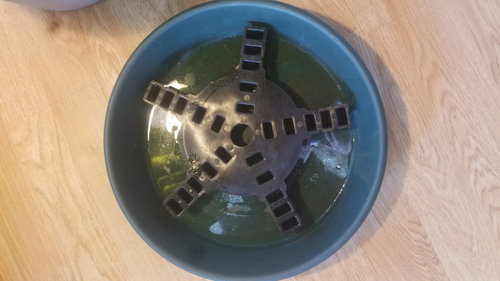
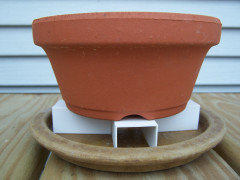
    How do you go about watering beyond the saturation point when you're in a living room (and not the greenhouse)? I moved away from clay pots and now prefer the plastic pots concealed in a basket because I have more flexibility to have an oversized tray and still physically move the plant when necessary. It's a tall enough plant that it's an ordeal to get through a doorway, so I have to water on a laminate floor (I actually already have some floor damage from doing this and not paying close enough attention). One of the photos shows this plant stand thing that fits in the saucer to allow for more overflow potential, but I'm going to throw-out my back picking up the tree and emptying the saucer twice a week. Someday I'll have an orangery with a floor drain, but until then....pragmatic concerns.


  • 6 years ago

    A grow light would be more of a necessity than anything if you want the top to be taller than the windows. Not sure how bright the one you're considering is, but I'd try to be sure it's in the 5,000-10,000 lumen range and adjustable for ht.

    The tree will tolerate being chopped back to about 5', no problem. If you can tolerate it, that's what I would do. If you're lucky, several new lateral branches will break and you'll have much more to work with. You might see things differently, so be true to your wishes. Also, moving the plant outdoors for the summer would make a world of difference.

    The BG potting soil is very water-retentive, so I would at least add a large measure of perlite to it AND add ballast to the bottom of the pot. If you don't know how to use ballast to its best advantage, ask and I'll tell you or direct you to something I've already written. It is a passive way to eliminate almost ALL excess water from a planting, and can be a real game changer for those using water-retentive substrates.

    Set your pot on blocks well above the collection saucer. There should be no pathway by which the effluent can make its way back into the substrate, which would defeat the purpose of watering to beyond the point of saturation. IF the water in the collection saucer doesn't evaporate before you next need to water, suck it out with a turkey baster.


    If you move the tree outdoors and that bud above the leaf/bundle scar is still viable (hard to tell with the stipule cap still covering the bud) moving it outdoors where there's more light and air movement should get it growing.

    Al

  • 6 years ago

    Cool! I'd like the link to the post with more information on building a proper ballast for drainage. Thanks again.

  • 6 years ago

    OK....added perlite and orchid mix (pine bark) to the soil, added a

    ballast, gave a dramatic hair cut, and moved to the deck. Fingers crossed.


  • 6 years ago

    Find more about using ballast here.


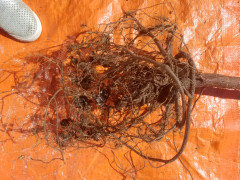
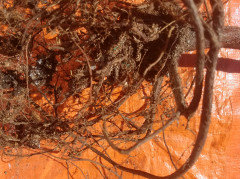
    Are you aware that the roots should be constantly wet as you work on them and they should never be allowed to dry out?

    Al

  • 6 years ago


    I had the tree outside for a while, but I think it may have gotten sunburned even though it was on a covered deck. It does look like there are 4 new branches making an appearance right around the top!

  • 6 years ago

    Looks good - like all will be well, given the new back-budding we expected ..... and no big deal if the existing leaves are shed. Keep a close eye on watering. The leaves in the process of being shed will be walled-off from the rest of the plant by an abscission layer forming where the leaf attaches to the branch. This new layer forms a barrier through which no sap or water will pass. That means the tree will need much less water. You know about the 'tell', so you know how to minimize soil saturation by using that to determine when to water. You can start fertilizing as soon as those new branches start to extend. I can't remember if you said you got the FP 9-3-6?


    Strong work!


    Al

  • 6 years ago

    Yes, I ordered the FP 9-3-6! Thanks for all the guidance :)

  • 6 years ago

    Al, I read on another post that you recommend pruning after a branch has only a few leaves to promote density in the canopy (my ideal tree shape would be more "lolly-pop"). How big do you let those leaves/branches get before pruning? I've already got the third leaf unfurling, but they're just tiny at the moment.


  • 6 years ago

    Pinch (prune) as soon as the 3rd leaf starts to open. Also, the chemical that limits side branching (auxin) is synthesized at branch tips and flows downward, so it's probably inhibiting growth of the new branches you can see in the axils of the 2 mature leaves. Pinching should help activate those buds as well. When you see the branches in the leaf axils are elongating, snip the mature leaves off by cutting through the leaf stem (petiole) with a pair of scissors or pruning shears. Pinching will not limit the ultimate size of the leaves that grew earlier. They will continue to mature after the pinch.


    Al

  • 6 years ago

    I think I ended up with booklice from moving my plants from indoors to outdoors, to indoors again. *Sigh*.

  • 5 years ago

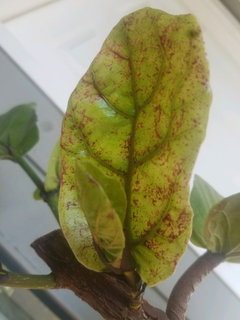
    I've got lots of new growth, but many of the new leafs are spotted. Too much sun? Too much water? The plant is still outside on the porch.


Sponsored
Franklin County's Heavy Timber Specialists | Best of Houzz 2020!