Software
Houzz Logo Print
webuser_976391042

Help reviving a dead lawn in suburban northeast.

6 years ago
LawnNote:

Hi All,

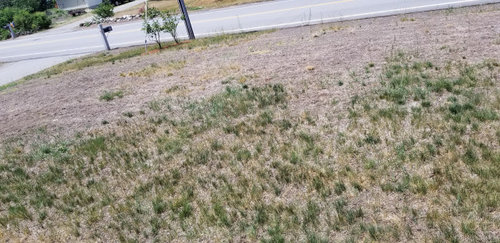
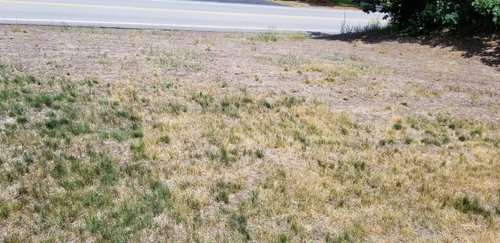
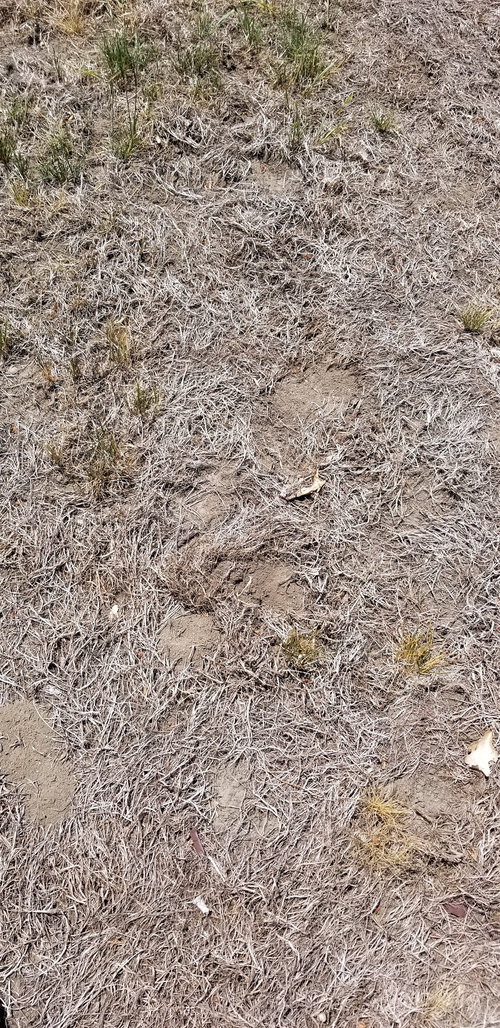
I’m a first time homeowner and need help with reviving a dead lawn (presumably). I’m based out of suburban Boston. I bought the home last summer with the lawn spilt into front yard (6000 sq ft) and backyard (5000 sq ft). Last year we didn’t paid much attention to the yard and I just put in a couple of weed n feed type of fertilizers to keep the yard green. My best guess about the yard composition - rye grass patches (20%), crab grass (50%), and weeds (30%). Please see the attached pics.


The previous owner switched off the irrigation for the last 3 years and I ended up watering the yard with a garden hose once/twice a week. This year, I switched on the irrigation system to prepare the yard for seeding.

The grass that went dormant last winter didn’t turn green this spring. In fact, I can simply grab it with my hands and it breaks easily. The only thing that turned green are weeds and a handful of rye grass patches. I noticed a couple of other problems:

  • Backyard is infested with rabbits, squirrels.
  • I can see ants, termite mounds in both the front and back yards.
  • Back yard soil surface is hard with difficult to push a screwdriver anything below 4 inches.

Here is my tentative action plan. Please feel free to comment. This is quite a big investment and I would like to validate my understanding before start burning $$ in lawn supplies:

  • Smoke the weeds with glyphosate (2 rounds) and clean the yard debris throughout July. Keep watering the yard every other day.
  • Get the soil tested for ph from easy organic. Any advice on easy organic? (I just googled soil testing and easy organic topped the results list).
  • Aerate the yard in early August and then apply lawn insect killer (BioAdvanced Insect Killer for Soil & Turf, Lawn & Yard bug Killer).
  • Apply starter fertilizer (Lesco starter fertilizer 18-24-20)
  • Seed the yards (Wife insists on OSP Ryegrass but I’m open to suggestions). Backyard gets sun pretty much whole day and front yard gets sun from 12:00 PM onwards till dusk. (No trees or any other type of shade).
  • Cover the seeds with compost + loam mix and water as recommended for the seed type.
  • Apply tenacity after 30 days and other fertilizers as recommended by the soil test report.
  • Hand over the yard to wife + TrueGreen so that I can go back to my woodshop.


Thanks for reading!


Comments (4)

  • 6 years ago

    Well, yes, I'm sure we're going to have tons of ideas. :-)


    One, go with Logan Labs. You're going to need more than just your pH, and for $20, Logan will tell you the balance of every resource in your soil. Knowing your pH is like knowing you're alive. That's nice, but it says very little about keeping you alive.

    Second, if you value your lawn, don't go with any lawn company. Caring for it yourself doesn't take much time--feed four times a year and zap some weeds. Watering is, generally, optional (I don't), but for the first year on a new lawn, I'd recommend watering deeply and infrequently (every 5 days to once a week) for the first summer if rainfall isn't adequate.

    If you like rye, that's fine. Personally, I'd recommend a mix with some bluegrass in it because bluegrass will self-repair. Rye doesn't and will require reseeding every few years. Well-fed bluegrass will take care of that for you. I haven't reseeded my bluegrass in fifteen years (and don't really spray for weeds) because a well-balanced lawn (see Logan Labs test above) that's well-fed and well-cared for over long periods of time doesn't allow much in terms of weeds when fully established.

    Rabbits, squirrels, and ants are not infestations as a general rule, they're all natural and serve a purpose (quite useful ones to the gardener, actually). Leave them be, particularly in New England where the ants aren't going to be fire ants (which must die painfully in all circumstances). At worst, they're annoying and can be repelled as necessary. :-) I don't allow any of them in the house, but other than that, they can simply be ignored or turned back at the garden's edge and told to go eat something else.

    Aeration probably isn't necessary and starter may or may not be necessary, but for the latter, we need to see the soil test. High P levels mean you won't need phosphorus. Low P levels mean you can use it, even though it's not very useful at the time of seeding (seeds actually don't have the roots to use soil P and rely on their seed for everything for the first month).

    And, of course, plan to seed on that day when you feel summer starting to end, whenever that is. As I say, for me it's usually August 15th or so here in Pennsylvania. For you, probably a little earlier, but it could vary.

    Sam Dadhwal thanked User
  • 6 years ago

    Seems like you've done some homework, and not all of it on this forum. That's a good thing.

    It seems like you are not big on upper case letters, so I'm going with what you said. Organic fertilizer is easy as going to your local feed store and getting a bag of soybean meal. The application rate is 15 pounds per 1,000 square feet. You can use it all day, every day, without hurting anything, but most people should use it on Memorial Day, Labor Day and around Thanksgiving.

    Watering is the most important aspect of lawn care, so regardless of whether you fertilize or a service does it, your role of watering is far more important. Those mistakes will be the big ones. Search this forum for 'deep and infrequent' for watering advice.

    Sam Dadhwal thanked dchall_san_antonio
  • 6 years ago

    Hi All,


    I've got the soil test report and it looks like I need to add calcium to increase the soil ph. For Nitrogen and Potassium, should I go with the standard 3 in 1 fertilizers? Ex: Scott's summer guard (NPK: 20-0-8) or should I buy separate fertilizers for nitrogen and potassium? Any other recommendations?


  • 6 years ago

    I'm not certain of the validity of this test, but let's pretend it's as good as a Logan test. I'm going to be a lot more gentle than I otherwise would but since your soil isn't that bad anyway, that's not a problem.

    Overall, you look to have a midrange soil, not particularly heavy or dense. It doesn't hold vast amounts of resources, but neither is it particularly resource-trim.

    pH 5.1: It sounds worse than it is, and pH is an overused and underuseful number anyway. Frankly, it could disappear from these tests and I'd be happier. Yes, I have a target in mind: 6.2 to 6.8. And that has an acidity target of a factor of six. Six.


    From here on out, I'm going to change the order of the report to order of importance.


    Organic Matter 4.2%: Pretty good! I'd certainly feed organically, and mow in all your fall leaves to keep fresh OM moving into the soil, but this is a good start.

    Phosphorus 137: Over the top. It's not a problem, but you don't need any more and won't. Probably ever. You won't need starter when you seed, either, the soil is inundated in the stuff.

    Calcium 44.2%: I use the saturation rather than the base amount because I have a target saturation of 60-70% in mind. Calcium generates the pH and if we hit the target saturation, the pH naturally follows and falls into range. We use calcitic lime to correct this, and I strongly recommend fast lime. It's not as cheap, but you'll use less and it works a lot faster. Mag-I-Cal, Sta-Green's version whose name I never remember, and so on all have rapid calcitic limes. You're looking for something where the High rate is around 7 pounds per thousand square feet and magnesium levels are very, very low--well under 10%. I'm compressing applications here which is a tad of a risk (the lawn might yellow a touch), but I doubt it'll be a major problem.

    Magnesium 11.2%: Fine. Magnesium's target is 10-20%. As calcium rises, this will probably drop a bit, but if it heads for 9%, I'm still fine with it.

    Potassium 1.8%: Low. Target is 2-5%. I wouldn't call this very low, but low. We use potassium sulfate to fix this, which many garden or landscape stores can order for you (they don't often have it directly in stock). Some looking around may be required, and check to make sure they aren't selling you potassium chloride. Potassium sulfate will be around 0-0-50. Potassium chloride around 0-0-60. Recommendations below, and I gave you some time to find this.


    Minor Elements:

    Most are fine, although I wouldn't mind seeing the iron rise a bit and the boron is borderline deficient. Fortunately, fixing boron helps both as Milorganite contains iron.

    Boron is...weird. We apply that using 20 Mule Team Borax (available at the grocery store), and I'm going to recommend 8 tablespoons per thousand square feet. 1 box should be way more than enough. The best way to mix the substances (Milorganite "vehicle" and one of more micronutrients) is to pour a bag of Milorganite into a wheelbarrow. Sprinkle half of the micronutrients (reserve the rest for a few minutes) over the surface of the Milorganite and then "mist" them with a handheld spray bottle very lightly. This causes them to stick to the Milorganite. Milorganite smells terrible if you get it really wet, so don't use any more misting than necessary to get a touch of stickiness. Mix with a large shovel for 5 minutes (all the way to the bottom), and then repeat the mixing process with the half of the micronutrient(s) that you reserved.

    When it is thoroughly mixed, shovel it into a spreader and apply it. If you have adequate time, apply it at half the rate in one direction, and again in the perpendicular direction - this provides more even coverage and fewer "missed" or "overlapped" areas.

    When you are done applying the Miloganite/micronutrient mix, water it in with at least 1/4" inch of water - this avoids the possibility that the very uppermost regions of the soil get "shocked" when a very light rain or heavy dew occur, while the deeper soil gets nothing.


    Post that, application of Milorganite for normal feeding would also add iron.


    Recommendation:

    July 15: Apply calcitic lime at 7 pounds per thousand square feet.

    September 1: Apply 2 pounds per thousand square feet of potassium sulfate. Apply 8 tbsp 20 Mule Team Borax per thousand square feet.

    October 1: Apply calcitic lime at 7 pounds per thousand square feet. Apply 2 pounds per thousand square feet of potassium sulfate.

    April 15: Apply 2 pounds per thousand square feet of potassium sulfate.


    Sam Dadhwal thanked User