Software
Houzz Logo Print
visualinc

Beginner gardener: Question about drip irrigation

Greetings! I have been trying to plant and grow flower plants in my garden bed for the last 2-3 years. The plants do well in the spring, but suffer badly during the heat of the summer. I know there could be multiple reasons including soil (I think I have clay soil, but Rachio says I have sandy loam), sun exposure (this bed gets full sun), watering (over/under watering, I may be overwatering), fertilizing, etc.


I am planning to install drip irrigation and the plumbing is already in place — this bed has risers with 4-port manifolds every 8 ft along the bed. These ports can be attached to 1/4 inch tubing.


My question is, should I use 1/4 inch tubing and place the tubes near the root zone of each plant (that would be too many tubes), or should I use 1/2 inch tubing that has emitting holes every 18 inches in a zig-zag manner across the bed?


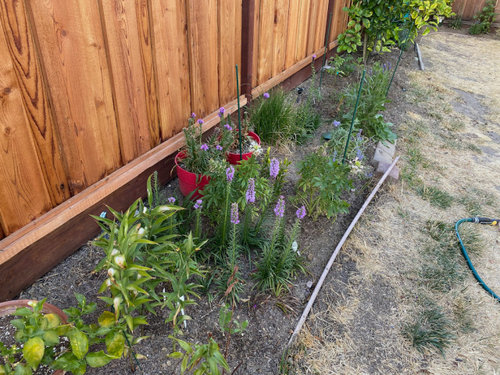
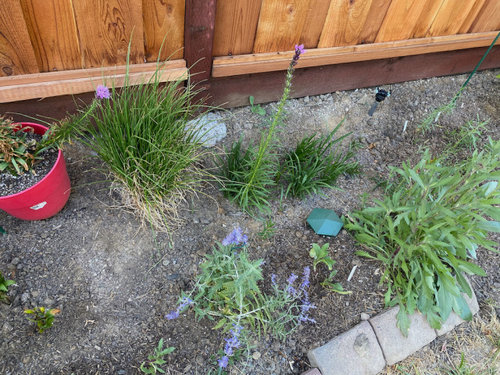
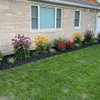
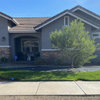
Below are some pictures so you can see the bed and the manifolds. Any advice is greatly appreciated. Thanks!


Comments (22)

  • 6 years ago
    last modified: 6 years ago

    I used 1/4” and installed multiple drips.

    Unless you are commercial: watering/feeding each plant, you do not have to water each plant.

    I do not see any evidence of overwatering. If you are interested there is a tool, costs ~$20, will take core samples to evaluate watering.

    I recommend following the drip system manufacturer’s recommendations. Did you get a grid, list of flow rates, spacing with your purchase of the components?

    Loam and clay are opposite. I see an attempt at mulch. Are your plantings suitably for your area, or are you planning to water and fertilize to futilely.

    Maybe a soaker hose would work for you...zig zag.

    visualinc CA | Zone 9b thanked User
  • 6 years ago

    With your plant spacing and the existing manifolds, I would use 1/4" dripline. It comes with the emitters spaced every 6, 9, or 12 inches. Just weave it around your plants, holding it down with small wire anchors, and then cover with a 2-3" layer of mulch. I have it in my raised vegetable beds, and it works great. I use the larger 1/2" dripline in my shrub/tree borders. I think you will like the flexibility and ease of installing the smaller tubing; the 1/2" can be uncooperative. It's also very simple to lift and set aside when you need to divide/move perennials or add more plants.

    I've had good luck with this company, but you can also get Raindrip brand or similar at Home Depot or Lowes.

    https://www.dripdepot.com/product/quarter-inch-polyethylene-dripline

    visualinc CA | Zone 9b thanked teresa_or
  • 6 years ago

    We have very hard water which clogged emitters constantly. We switched to 1/4" tubing and the 6" spaced drip holes works for our purposes and this system works much better. I wind it through large containers and beds. We still use a soaker hose in our raised bed.

    visualinc CA | Zone 9b thanked Susan Highland USDA Zone 9b
  • 6 years ago

    Thank you @User for your inputs.


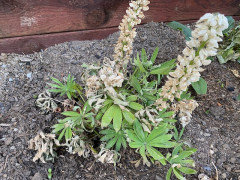
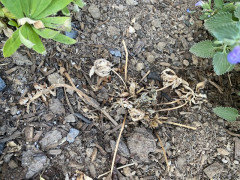
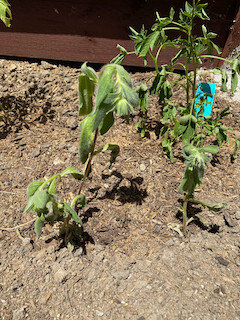
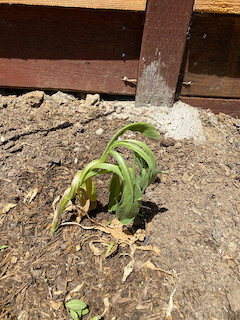
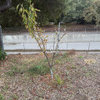
    Here are some pics of the scorched plants, which is I think due to overwatering. Can you let me know what tool it is that will take samples of watering?


    I have no idea about the grid, flow rates, etc. as the irrigation plumbing was already in place when I purchased this home 3 years ago.


    I know loam and clay are opposite, and I really think it's clay, so I was surprised to see the result of yard analysis by Rachio (https://rachio.com/thrive/flow/). Don't know where it gets its data from. The mulch you are seeing is actually a layer of G&B soil conditioner I applied to amend the soil. I do ensure the plants I grow are suited for my zone (9b).

  • 6 years ago

    Thank you @teresa_or for your advice. Looks like 1/4" is the way to go.


    I checked at Home Depot and Lowes today and Lowes did have the Raindrip tubing with emitters every 6". Will that work ok or should I get the 9 or 12"? Also, do you have a recommendation on mulch? I am trying to decide between the below two products:


  • 6 years ago

    Thank you @Susan Highland USDA Zone 9b for your inputs.


    I will go ahead and give 1/4" tubing a try. Does 0.5 gph flow rate work okay for flower plants? How long do you turn it on and how frequently?

  • 6 years ago
    last modified: 6 years ago

    Scorched plants are not a result of overwatering.

    Do you have a garden hose and the ability to water manually, try to see what is happening, vs relying on the existing drip.

    the tool is a core sampler.

    loam does not have much moisture holding properties.

  • 6 years ago

    I am not using existing drip, I water manually by hose or watering can.

  • 6 years ago

    @visualinc CA | Zone 9b To answer your questions. We have 1.5 acres on a rocky hillside and an 8 station drip system. It's a little confusing because this house went through a foreclosure and a short sale prior to us taking over 7 years ago and nobody left an irrigation map. We may never figure it all out, BUT for the dripper on the tomatoes, dahlias, dianthus and containers, it runs every day for 15 minutes. Our temps here in Riverside county, Southern CA range from 95 degrees to 105 in summer, so it is hot and dry! So far nothing is scorched, but we planted sun loving plants. Our water pressure is really high but I don't know exactly how high, just when you turn it on full force, it blasts out of the hose.

  • 6 years ago

    How do I ensure my young plants don't droop, scorch and die in the summer? I will add the drip tubing as advised above asap, but will that alone fix the issue? The temperature is in the 90s this week and I have tried shade cloth but it hasn't helped much.


  • 6 years ago

    To insure that, plant only plants that are sun and heat loving. There are plenty of them. I think I see some Lantana.

    visualinc CA | Zone 9b thanked Susan Highland USDA Zone 9b
  • 6 years ago

    Yes, all the plants I have are supposed to be *full sun* plants: Liatris, Lilies, Lupines, Echinecea, Rudbeckia, Salvias, Catmints, Cleomes, etc.


    I hope once I install the tubing and add mulch, they will get a cooler soil and moisture to deal with the heat.

  • 6 years ago

    All the plants pictured in the most recent set of photos are suffering from insufficient water. Even sun and heat loving plants will require water at least initially, as will xeric or drought tolerant plants. And other than possibly the salvia, I don't see any plant you list that is noted as xeric or drought tolerant.

    visualinc CA | Zone 9b thanked gardengal48 (PNW Z8/9)
  • 6 years ago

    @gardengal48 (PNW Z8/9) I did water them last evening! When I use moisture meter to measure moisture levels in the soil, it shows over 70-80%. Could this be soil amendment gone wrong?


    I bought this home 3 years ago and haven't done the soil tests, but the neighbors told me we have clay soil, and I believed them because the soil is heavily compacted, very hard to dig. I have been trying to amend this soil by adding G&B Soil Conditioner.


    Recently I replaced the old rainbird sprinkler controller with Rachio smart controller. When I put in my address on their site, the soil analysis report showed that this area has sandy loam.


    So maybe the soil does not need amendment, but just de-compaction/tilling?

  • 6 years ago

    How did you water and for how long? Soil moisture meters are notoriously inaccurate so I would check physically with your hand down as deep as the rootballs....6-8 inches at least.

  • 6 years ago

    I watered with a hose, probably around 30-60 seconds each plant. Good to know about moisture meters.

  • 6 years ago

    30-60 seconds may not be enough. I know it wouldn't be in my garden and I have nowhere near the heat and sun you do.

  • 6 years ago

    I've recently installed a few 3 arm sprinklers (our lawn is slightly over 1000 sq.ft.). Our water pressure isn't high, so I'm not afraid that some flowers might be damaged or whatsoever. I guess it's a good solution for a lazy gardener like me, huh

  • 6 years ago

    @gardengal48 (PNW Z8/9) You need an inch of water per day in hot weather, and per week in cooler temps. See how long it takes to achieve that by leaving a dripper on in a shot glass, or putting an empty bucket under a sprinkler or handwater into an empty bucket. However long that takes is how long you should water. Here in the heatwave of 100+ degrees, we are now watering daily for 25 minutes per drip station. In cooler weather, every other day. In winter, with rain we just don't water much at all.

  • 6 years ago

    Susan, you do not need to lecture me on watering requirements. I do this for a living!! And nothing needs an inch of water daily unless it is a bog or water plant! And since we are discussing drip, measuring the amount should be unnecessary as the system and the size of the emitters will tell you how much water is being applied for any given time frame. And it is easy to measure if your volume:time ratio is good by how deeply the water penetrates into the soil profile You want it to penetrate at least 8-10 inches or the depth of the primary root mass.

    It is always far more advisable to water infrequently but as deeply and as slowly as necessary when you do. That encourages deeper root development and increased drought tolerance. Even in my bone dry summers, I seldom have a need to water any plantings other than containers more frequently than once a week.....if that.

  • 6 years ago

    Sorry if I stepped on your toes @gardengal48 (PNW Z8/9). I was thinking you were the original poster. didn't read back far enough. Here, we DO need water because our soil is decomposing granite and we live in high desert, 102 degrees today, Riverside County, Southern California. Our roses look like they are dying if we don't water daily.