Software
Houzz Logo Print
emily_heinz65

Peace Lily Trouble!

6 years ago
last modified: 6 years ago
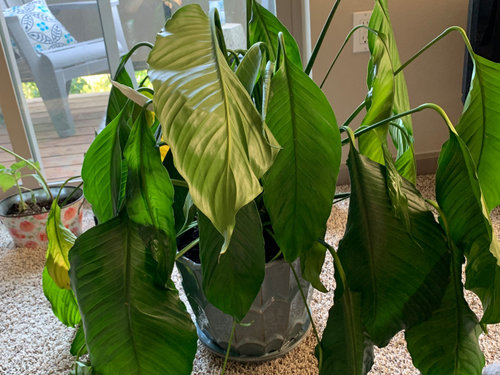
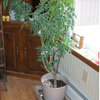
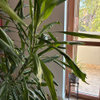
I’ve had my peace lily for about 2 months and I’m new to house plants of this size. It’s not doing too well but I just re-potted it into a bigger pot, I don’t put it in direct sunlight, I water it every other day and give it plant food so I’m not sure what I’m doing wrong. Any advice would be much appreciated!


Comments (8)

  • 6 years ago

    How often are you giving it plant food? Pls stop, it's not medicine. Pls stop watering every other day, you're going to drown the poor thing.

    Likely it's drooping from overwatering; it sounds like it's too wet for the roots to get any air.

    Did it really need a larger pot? Does that pot have a hole in it?

    Emily Heinz thanked User
  • 6 years ago

    Thanks for your input Karen! It’s roots were growing out of the pot that I bought it in so that’s why I transferred it to a bigger pot which does have a hole in it. I’ll try watering it less, and not using as much plant food. I use the miracle grow sticks you place in the pot and it’s good for 6 months but I tried a new plant food and perhaps that was too much.

  • 6 years ago
    last modified: 6 years ago

    What kind of soil is in your pot? Bagged store bought soil, like Miracle grow or peat? Peat, if it gets too dry, actually repels water & the water runs down the sides of the pot & immediately out of drain hole so roots don’t really get any of the water you’re giving it. If you fertilize dry soil, you will burn the roots. If peat or bagged soil w/ no added perlite or grit, and it gets soaked repeatedly, those stay wet far too long & starve the roots of oxygen, rotting them.

    I always check soil moisture by putting a chopstick down to bottom of pot & leave a few mins, then pull out & feel it. If it feels damp only around the bottom quarter of the pot, and rest of soil higher up is dry, I water it till water runs out of drain hole. These plants will wilt severely if they need water but try to not let that happen too much. It weakens plant.

    These are rainforest plants that love consistantly moist soil & bright, partial shade. They like their soil to dry out quickly and frequent water. Example: mine is planted in a mix of bark, peat moss, sifted large grade perlite w/ a little dolomitic lime, aka “Al’s 511 mix”. Some prefer to use actual soil in their mix w/ lots of perlite and/or fir or pine bark. That is a good option also. I have mine currently outside, facing East w/partial shade, until winter. I water it every 3-4 days, w/ once weekly liquid fertilizer added in at 1/4 strength. Miracle Grow, in the yellow bottle. The plant is 5 years old & currently blooming. In eary Spring, late fall II water once a wk & in winter, I water about once every 10 days. They also love lots of humidity.

  • 6 years ago

    I agree with KarenS for the most part - probably too wet. The fertilizer you mentioned doesn't sound like instant death either. Moving it to a larger pot is probably okay as well but with a larger pot, it takes longer to dry out.

    If the top of the soil is wet, don't water it again until it is dry an inch or two deep. That is just a simple measure for watering - stick your finger in an inch or more to determine wetness. Eventually you will be able to tell when to water without black finger.

    It's a tough plant so don't hover over it.


  • 6 years ago
    last modified: 6 years ago

    Hi, I am KarenS, posting under a new name.

    Pls stop fussing w/ the plant; you're overnurturing it, which can be fatal. Pls stop ALL fertilizer, it's making things worse. I'd also pull out the remaining fertilizer sticks.

    New soil has nutrients already, so they don't need fertilizer. More is NOT better w/ fertilizer, so pls stop it completely for now. You've already given it enough for the next 2-3 months at least.

    Once you stabilize it (& the droop stops), you need to learn its watering. These plants wilt when thirsty, once you learn how long it takes them to wilt, then you water w/in that time frame.

    Example: let's say it takes 5 days to wilt, in that case, you'd water every 4th day, BEFORE the plant starts to wilt.

    Checking for moisture w/ your finger in a pot this deep, doesn't work, you can't tell what's going on wayyyy down at the bottom of the soil. That's why Rebecca's advice to use a chopstick to check for moisture is best.

    Ariel, sorry to respectfully disagree, but IMO, once it stops drooping, she needs to learn its watering in this larger pot.

    Bright, but indirect is the correct light for this, it doesn't ever want direct sun, just so you know.

  • 6 years ago

    I winced when you said how often you are watering it! You are giving it too much water! If It's a 10, 12 or 14" pot which most peace lilies seem to be... Watering it every 4 or 5 days is usually fine! They always start to droop when dry, so water it just before that happens and I think you're also giving it too much fertilizer or plant food. I never thought of that chopstick idea but that sounds like a good idea. It is so easy though more than any other plants I've ever had with peace lilies cuz as soon as they start to droop I water! They also like water I put in clean empty milk jugs leaving the lid off for chlorine to dissipate.

  • 6 years ago

    This Overview of Good Growing Practices might be helpful.If you read it, it should leave you with questions that need answering. Don't hesitate to ask them. The more you learn about how plants and what's associated with nurturing them work, the more you'll get from your growing experience.


    I would pull all fertilizer sticks from the medium asap and start using a fertilizer that gives you some control of what your plants get and when they get it. The product you're using (sticks) and over-watering are often a lethal combination because the fertilizer does not stop dissolving until the soil solution concentration is at the maximum.


    I highly recommend Foliage-Pro 9-3-6 as the 'go to' fertilizer for houseplants.


    Using a 'tell'

    Over-watering saps vitality
    and is one of the most common plant assassins, so learning to avoid
    it is worth the small effort. Plants make and store their own energy
    source – photosynthate - (sugar/glucose). Functioning roots need
    energy to drive their metabolic processes, and in order to get it,
    they use oxygen to burn (oxidize) their food. From this, we can see
    that terrestrial plants need plenty of air (oxygen) in the soil to
    drive root function. Many off-the-shelf soils hold too much water and
    not enough air to support the kind of root health most growers would
    like to see; and, a healthy root system is a prerequisite to a
    healthy plant.

    Watering in small sips leads
    to avoid over-watering leads to a residual build-up of dissolved
    solids (salts) in the soil from tapwater and fertilizer solutions,
    which limits a plant's ability to absorb water – so watering in
    sips simply moves us to the other horn of a dilemma. It creates
    another problem that requires resolution. Better, would be to simply
    adopt a soil that drains well enough to allow watering to beyond the
    saturation point, so we're flushing the soil of accumulating
    dissolved solids whenever we water; this, w/o the plant being forced
    to pay a tax in the form of reduced vitality, due to prolong periods
    of soil saturation. Sometimes, though, that's not a course we can
    immediately steer, which makes controlling how often we water a very
    important factor.

    In many cases, we can judge
    whether or not a planting needs watering by hefting the pot. This is
    especially true if the pot is made from light material, like plastic,
    but doesn't work (as) well when the pot is made from heavier
    material, like clay, or when the size/weight of the pot precludes
    grabbing it with one hand to judge its weight and gauge the need for
    water.

    Fingers stuck an inch or two
    into the soil work ok for shallow pots, but not for deep pots. Deep
    pots might have 3 or more inches of soil that feels totally dry,
    while the lower several inches of the soil is 100% saturated.
    Obviously, the lack of oxygen in the root zone situation can wreak
    havoc with root health and cause the loss of a very notable measure
    of your plant's potential. Inexpensive watering meters don't even
    measure moisture levels, they measure electrical conductivity. Clean
    the tip and insert it into a cup of distilled water and witness the
    fact it reads 'DRY'.

    One of the most reliable
    methods of checking a planting's need for water is using a 'tell'.
    You can use a bamboo skewer in a pinch, but a wooden dowel rod of
    about 5/16” (75-85mm) would work better. They usually come 48”
    (120cm) long and can usually be cut in half and serve as a pair.
    Sharpen all 4 ends in a pencil sharpener and slightly blunt the tip
    so it's about the diameter of the head on a straight pin. Push the
    wooden tell deep into the soil. Don't worry, it won't harm the root
    system. If the plant is quite root-bound, you might need to try
    several places until you find one where you can push it all the way
    to the pot's bottom. Leave it a few seconds, then withdraw it and
    inspect the tip for moisture. For most plantings, withhold water
    until the tell comes out dry or nearly so. If you see signs of
    wilting, adjust the interval between waterings so drought stress
    isn't a recurring issue.


    Al

Sponsored
Snider & Metcalf Interior Design, LTD
Average rating: 5 out of 5 stars25 Reviews
Leading Interior Designers in Columbus, Ohio & Ponte Vedra, Florida