Software
Houzz Logo Print
webuser_546655277

Unseal slab, bad idea?

6 years ago
last modified: 6 years ago

The house is 1965, In texas, has a sealed foundation without any major cracks or issues.

Eventually I would like to have solid wood glued to my concrete subfloor and finished with woca or Rubio.

right now, the cost of this is out of the question, but I found an affordable floating engineered floor.

Before the contractor puts down the floating floor, I’ve asked him to grind and prep the concrete slab so it will be ready to glue down hardwood in 10-15 years. My idea is the floating floors will come up and voila the subfloors are ready for the new install.

However, I wonder if unsealing my slab will cause other problems with moisture be cracking.


Comments (27)

  • 6 years ago
    last modified: 6 years ago

    I don't understand you waiting 15 years? is the cost that much that you're going to fork over money for a floating floor now, and then wait a decade?

    I have a concrete subfloor. i have both solid wood, and engineered wood, both glue down.

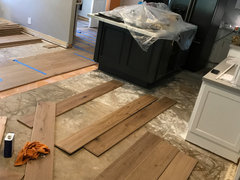
    this was the demo of the old wood floor and tile. I've never applied a sealer on this cement. (it's 35 years old thought)


    new engineered french oak, glue, replaced it


    You can find an engineered wood floor, glue down, that wouldn't be much more than the floating. (unless you're doing a super cheap $1.99 floating floor)

    JJ Smith thanked Beth H. :
  • 6 years ago

    Do it now. Engineered is a great option. Make sure it is FLAT, like seriously flat, and talk to contractor about tolerances. Grinding alone is not enough.

  • 6 years ago

    The cost of the subfloor preparation is the same for a floating floor as a glue down. The glue itself is only $2-$3/sf. Cost of labour to glue down is another $1/sf. A floating floor will save you $3-$4/sf today....but you will have to pay for the flooring twice.


    I'm not fond of glue down wood over a slab. It is tricky. It has plenty of chances of failure due to moisture issues. But many people will do it (as Beth points out). For me it is a risk that I'm not willing to put up with.


    Regardless of glue down or floating, you subfloor preparation will cost the same.

  • 6 years ago
    last modified: 6 years ago

    The floating floor I found was a close-out material for $1.70 a square foot. It's engineered wood and could be glued down. It's nice and smells like wood. The installer said it is good quality. However I don't want to glue it down because I am thinking of the headache it will be to remove it down the road when it's time to install a "forever" floor--real wood that can be refinished multiple times and will last over a century.

    Labor and material to install floating floor (including removing the sealer and leveling)--Total $4.50 a square foot.

    The unfinished solid wood/engineered wood would be $10.50 for labor and material.

    As far as removing the sealer, I'm thinking about the next step and I don't want concrete dust all over my belongings in the future.

  • 6 years ago

    @Beth H. :since you didn't have a sealer on your slab, I bet they just glued the wood down without grinding which saved you a whole lot of mess. The wood you chose is very pretty.

  • 6 years ago

    @Bruce in Northern Virginia: thanks, Bruce, this is helpful. The slab does have a vapor barrier under it. The coating on top is pretty thin. It seems more like the residue from the former glue down vinyl rather than an intentional sealer but it does prevent water from being absorbed if I pour a little bit of water on it.

  • 6 years ago

    @strategery

    I've asked the contractor to make sure there are no differences greater than 1/8 of an inch over 10 feet.

  • 6 years ago

    @SJ McCarthy

    Gluing down the engineered in my area is $2-2.50 a square foot if I hire a wood floor contractor. I'd like a contractor who only charged a dollar to glue down. If that's what it was for labor, I would go ahead with my forever floor.

    With the quotes I received, when I added everything up, the difference between unfinished vs. engineered was over twice.

  • 6 years ago

    OK...the 'sealant' isn't a sealant. It is old glue from vinyl tiles. Has it been tested for asbestos? How old were the tiles that were taken up? Do you have photos of this glue-mess?


    The glue down floor is the most expensive wood install we have. Your slab is one of the old one's that is almost guaranteed to have moisture issues (builders started using moisture barriers under the slab in the mid 1990's). Before you think about 15 years down the road, I would pay for the moisture testing of the slab (in-dwelling probes are your best method of testing the moisture level already in the slab). This can be done now so that you can make decisions later.


    The adhesives are expensive. They have to be. You would have to use one of the most expensive glues on the market = $2-$3/sf. That's ONE of your mark-ups. The other is the labour which is, another $2-$3/sf. Labour costs are roughly 1/2 the price of builds. Human sweat and KNOWLEDGE come at a price. The cost you were quoted for labour (on the glue down) is completely in line with a knowledgeable human doing it properly. Your installer isn't gouging you...s/he is in-line with the cost of his knowledge/time it will take to get this done properly.


    The total cost of materials + install of $4.50/sf is very, very low. The preparation is going to be more than the cost of the wood. Preparation must be paid for. With a situation like yours (left over glue on a slab that needs flattening) is going to be $2-$4/sf. I would guess high. Removing the glue is a b!tch! Yes it is going to cause dust. That's what happens when dealing with old things like glue over slab.


    I HIGHLY recommend you speak to your installer (who sounds like s/he is one of the one's who knows what he's doing) about the cost of the preparation. Labour to install a floating hardwood (there is glue that is added to the joints of every plank) should be $2.50-$3/sf (includes the glue).


    The labour for the concrete prep is a different cost. I would ask about that.


    Photos of what you have please.

    JJ Smith thanked SJ McCarthy
  • 6 years ago
    last modified: 6 years ago

    JJ,,,no, actually there were some high spots they had to grind, (I had tile on one portion) and there were other parts w/self leveler. This particular floor had other engineered wood glued down for close to 15 years without any issue. We might have applied a sealer to the cement way way back, but I know if you dropped water on this slab, it wouldn't absorb.

    in my back bedroom I have a solid hardwood glued down and have noticed a few spots with a bit of cupping issues. not bad, and not even visible. i can slightly feel it w/my hands. Prob should not have done a solid wood. I wanted a herringbone and at the time could only get it in a solid, and not engineered. I'm not worried about it. We don't get a lot of humidity or rain here so there isn't a lot of expansion and contraction.

    As for the front room, the demo alone took them 2 full days. it was horrible. my husband and i had laid both the wood floor and the tile floor, so looks like we did a really good job of using mortar and the glue. the workers who demo'ed wanted to kill us.

    this is the engineered flooring. I love it and am happy I got it over with! I'll be dead before I change this flooring again.


    JJ Smith thanked Beth H. :
  • 6 years ago

    @Beth H. :The room looks great--the floor is exactly what I would prefer. Perfect color!


    Since your floor was "Sealed" before they glued the new one down, did they grind all of the sealer off or did they just grind to level the floor?


  • 6 years ago

    @User

    My remark about the dollar labor was in response to another poster who has dollar per square foot costs for gluing down. I am absolutely fine with paying someone properly to do a job right.

    Bostik makes glues with moisture barrier for gluing solid wood to concrete slab. It is expensive and comes with a warranty if installed properly.... part of the proper installation is setting it onto porous slab or plywood.

    I'm fine with gluing down engineered but would like it to be unfinished with a thick veneer so it could be refinished multiple times. This type of engineered wood is out of the budget right now.

  • 6 years ago

    @Beth H. : just curious, how wide are those herringbone pieces that have started to cup a little? Is it possible someone spilled a drink on them?

  • 6 years ago

    @SJ McCarthy:

    Lots of questions so I am going to break it down:


    "OK...the 'sealant' isn't a sealant. It is old glue from vinyl tiles. Has it been tested for asbestos? How old were the tiles that were taken up? Do you have photos of this glue-mess?"


    Whatever the "sealant" is, it doesn't allow water to be absorbed and the 2-3 installers I spoke with about gluing wood to it, all said it needs to be porous. Bostik also said it needs to be porous.

    I'm guessing the sheet vinyl was original to the house. It had 65% asbestos in the fiber backing. I had it tested. Tyvek suits, p100 respirators, hepa filter and wet scraped it. It still left a ton of residue so we used a mastic remover. Nasty nasty stuff that was not meant to ever be removed. House was tested for fibers and is considered safe. The slab looks great now, I considered just finishing it and having an industrial look, but that isn't very popular in my area so would influence resale.


    The glue down floor is the most expensive wood install we have. Your slab is one of the old one's that is almost guaranteed to have moisture issues (builders started using moisture barriers under the slab in the mid 1990's). Before you think about 15 years down the road, I would pay for the moisture testing of the slab (in-dwelling probes are your best method of testing the moisture level already in the slab). This can be done now so that you can make decisions later.


    There is a moisture barrier under the house because I saw it. The floor was jackhammered in a couple places for drain work and there was a very nice, black, intact moisture barrier present. I made sure to put the moisture barrier back, best I could, before the floor was closed up.


    The adhesives are expensive. They have to be. You would have to use one of the most expensive glues on the market = $2-$3/sf. That's ONE of your mark-ups. The other is the labour which is, another $2-$3/sf. Labour costs are roughly 1/2 the price of builds. Human sweat and KNOWLEDGE come at a price. The cost you were quoted for labour (on the glue down) is completely in line with a knowledgeable human doing it properly. Your installer isn't gouging you...s/he is in-line with the cost of his knowledge/time it will take to get this done properly.


    I agree. I don't think I am being gouged.


    The total cost of materials + install of $4.50/sf is very, very low. The preparation is going to be more than the cost of the wood. Preparation must be paid for. With a situation like yours (left over glue on a slab that needs flattening) is going to be $2-$4/sf. I would guess high. Removing the glue is a b!tch! Yes it is going to cause dust. That's what happens when dealing with old things like glue over slab.


    The cost of materials to float the floor per square foot are $.50 quiet walk, $.50 floor prep, $1.70 wood flooring, $1.80 labor. It's a DIY click lock floor and I asked for them not to glue it on the edges.


    I HIGHLY recommend you speak to your installer (who sounds like s/he is one of the one's who knows what he's doing) about the cost of the preparation. Labour to install a floating hardwood (there is glue that is added to the joints of every plank) should be $2.50-$3/sf (includes the glue).


    He charges $2.25 to install wood floors. This isn't the prep work or the finishing work.


    The labour for the concrete prep is a different cost. I would ask about that.


    This was a little different, his number changed a few times for this which made me concerned he isn't as proficient in this area since he usually works new construction. His final number was $.50.

  • 6 years ago

    My question is:

    If I grind the floor and glue the floor to the slab NOW like everyone is recommending, when I remove it 15 years from now, will the glue leave a sealant on the floor that will need to be grinded away? Or will it be porous once it is scraped?

  • 6 years ago

    I also suspect that anyone doing a floor "later" will want to do the prep themselves in order to feel comfortable with the readiness of the slab and to guarantee their work.

    JJ Smith thanked just_janni
  • 6 years ago

    @User

    i appreciate your comment but I absolutely disagree with you. First, it’s hardly “halfass” what I’d doing to go above and beyond to think of the next step down the line. And second, most engineered wood does *not* last as long as solid.

    if you review the thread, you will see that I am open to a good quality unfinished engineered with a thick veneer that can be refinished a number of times with woca or rubio.

    However, aluminum oxide on a super thin veneer is what most engineered wood is. This is not feasible to refinish and aluminum oxide dust is very harmful to breath.

    My medium quality floor will not last more than 15 years anyways. flooring installers with experience will tell you these floors don’t last more than 10-15 years, who cares about the 30 year warranty.

  • 6 years ago
    last modified: 6 years ago

    @SJ McCarthy

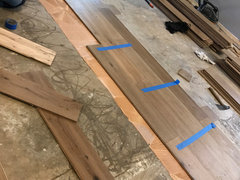
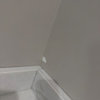
    i added a photo to the main question. It shows pieces of the new floor on top of the slab.

  • 6 years ago
    last modified: 6 years ago

    @User

    Then wait until you can afford to do the project correctly to do the project at all.

    My house needs to have a floor. Right now it has the concrete slab as the floor. I considered leaving this, but it would need to be finished with paint or sealer in order to look half decent.... which would then need to be grinded out in the future. And. I am trying to avoid grinding the concrete slab when I am living in the house.

  • 6 years ago
    last modified: 6 years ago

    JJsmith,, my new floor is from Casa California, Mediterranean line. I love it. (and I got a really good deal on it)

    Grinding should just be done and get it over with. They'll plastic sheet everywhere and bring fans.

    and you're right about the glue having a barrier in it. I totally forgot about that. I believe that's what was used back in the bedroom.

    as for the cupping,,,,no, I have spilled some things, (like the cat water bowl, and cat vomit,,eww) but nothing major. actually I did have a leak at the back door during a rain storm. water was dripping down from the glass onto the new floor. that cupped rather badly, but I put a fan on it, fixed the leak and it went back to normal. The other parts are in weird areas that I haven't spilled anything. don't really know why it's doing it

    During install I had a high spot where the back portion was added on. they had to really grind that down. (there was carpet here prior). we also did a self leveler for this back portion, and the bathroom


    the cupping issue is actually in the older part of the room, in random small spots. not a big deal though.

    this is the front room where I had the other wood. they didn't do much grinding here. you can see in the back they did some self leveler there. I want to say way back when we did the wood the first time, we applied a concrete sealer/water barrier. But the cement slab was so old and cured, I don't think it really mattered.


  • 6 years ago

    OK JJ. I think you are doing as much as you can TODAY so that you can have a great start to another project at another time in your life. I see that. I can't see any glue residue but I can see a bit of efflorescence (the white marbly looking stuff on the top of the slab in your pic). For a floating floor that's not a big deal.


    I would simply do what needs to be done today for today's wood floor. Since it is a floating hardwood (with a click-edge no less) you can be content with doing what you can afford today (some grinding and filling...nothing more) and leaving tomorrow for tomorrow's contractor.


    As pointed out above, a different contractor will work your next flooring project. The technology we have today is going to be 'old fashioned' by the time we get to your next project in 15 years. Which is why you want to do what is needed today and let tomorrow's installer worry about tomorrow. Who knows...Bostik will probably invent a glue that no longer needs a porous surface to work with. We have 15 years to find out!


    Your slab will need a bit of grinding just to get it flat. It will also need a little fill just to get it flat. I would do what needs doing today. Tomorrow's wood floor is 15 years away.