Software
Houzz Logo Print
sfmally

Dwarf Tree Ideas Needed

6 years ago

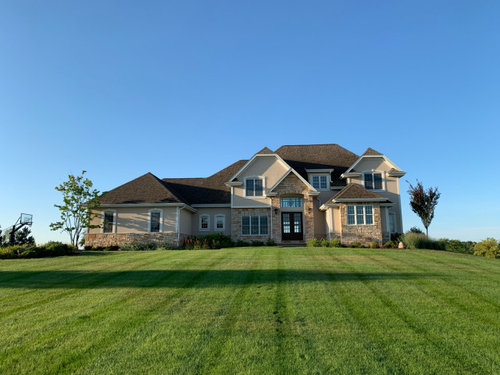
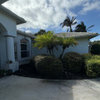
Help! My front landscaping bed has three Annabelle Hydrangeas that are drowning my Tiger Eye Sumac which is drowning my boxwood. I’m trying to find a replacement for the Tiger Eye Sumac that will be taller than the Annabelles but still fit with the architecture of the house. I’m in zone 5. Any suggestions?

Comments (18)

  • 6 years ago

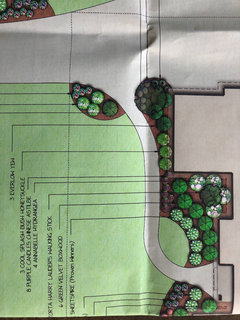
    Here is the original landscaping plan. The Sumac was supposed to be a Harry Lauder’s Walking Stick but I don’t think that would clear the Annabelles either. Thoughts?

  • 6 years ago

    The Harry Lauder's could get as much as 8-10' tall and 8-10' wide in time. That's bigger than any Annabelle I've ever seen.

    Would not fit well in that space.

  • 6 years ago

    I can’t speak to the particular sumac you have, but the one my neighbor had was not very neighborly—- constantly sending out runners and the shoots still threaten to take over a section of my yard months after removal of the original plant, which was about 10’ high. If you need the sumac somewhere, and they are so lovely in the fall, I would either put it in a nice, roomy pot or way out away from the house (or neighbor’s) where it has room to attempt world domination.

  • 6 years ago

    If you dont mind answering, where do you live? as a California resident, that looks like a dream. Wow.

  • 6 years ago
    last modified: 6 years ago

    Contorted filbert is being hammered by blight in my area these days. And as mentioned is too large growing for that space - you should be looking at shrubs for the tall plant there. And if you think the planting is too crowded now - I on the other hand see lots of uncovered bed surface - then you will need to choose carefully, in order to not end up with something that you find completely overbearing.

  • 6 years ago

    There are blight resistant cultivars of contorted filbert. But still too large a plant for that specific configuration in that bed.

  • 6 years ago

    The common name Harry Lauder's walking stick is used specifically for blight susceptible, green leaved 'Contorta'. Which also has a history of being called "contorted filbert". Due to the fact that until quite recently it was pretty much the only one around.

    And I have seen what appeared to be blighting of stems of nursery stock of the first red leaved, twisted hazel cultivar to make it on the general market in the PNW.

  • 6 years ago

    LOL!! Always the pedant........

  • 6 years ago

    I live in Wisconsin so there’s a lot more room here than a typical California home. :) Based on the comments, I’m planning on transplanting the sumac to the back corner of my lot which butts up against an open field. I think I’m going to have to move some other things around in that bed in order to take advantage of the space and make room for the Annabelles.

  • 6 years ago
    last modified: 6 years ago

    Yes, the bed is too small to host everything that’s squeezed in there, and the Annabelles are too close to the house. They’re not very big but it looks like they’re already touching the house.

  • 6 years ago

    You’ll want something light and airy plus slow growing if you want a specimen in this location.


    Would you be up for a low spreading vase shaped Japanese maple?


    Assuming this is north vs south facing?


    I wish I could fire the majority of WI landscape designers - they are so damn boring!


  • 6 years ago
    last modified: 6 years ago

    Looking at the overhead view of the section asked about here nothing is arranged like I would have done. Starting with that isolated section of lawn that crosses the path to take a bite out of and poke into the bed. Instead of having the bed and lawn follow the curve established by the path, as was done with the rest of the area around that one path.

    The box and bush honeysuckle being in rows instead of comparatively drift like groupings also departs from the style established by the bed shapes. Otherwise it works best to group evergreen shrubs at building corners and bed end points with deciduous shrubs between these and often at the back of a bed. Preferably one where there is a fence, hedge or wall behind to provide additional year long structure when these deciduous kinds turn to bare sticks in winter. And to use herbaceous (non woody) plants at particular points where the lawn shape and shrub groupings have formed a sort of stage like configuration for these comparatively insubstantial types to be featured against and within.

  • 6 years ago

    It is important to note that different landscape designers will have different approaches. That does not make one right and the other wrong. There are very few, if any, hard and fast LD rules about plant placement....other than using some common sense with regards to sizing/spacing. What works "best" is up to you and your designer and your aesthetics.

    Personally, I find a mix of both evergreen and deciduous material intermingled throughout a planting area a more visually or aesthetically pleasing combination than relegating these types of plants to specific areas. I also prefer that the front entry garden be more evergreen than not (if at all possible), so that it provides a similar visual appeal year round.

  • 6 years ago
    last modified: 6 years ago

    I know this is getting off topic but the most disappointing issue is the color selections than anything. Too much green and white flowers when in reality there should’ve been more blue based on the color of the house. That vase shapes tree is all wrong too. You want to soften the edges not enhance it with an inverse of the house peaks.


    gg, to your point a few blue dwarf conifers would have been nice anchoring points. Standing Ovation Little Bluestem would have been nice too. Cool Splash honeysuckle against that stone makes little sense.

  • 6 years ago

    @whaas_5a Any suggestions for a tree to replace the plum tree on the right side? As far as blue plants, there is actually Little Bluestem all around the base of that tree and there used to be purple dragon spotted dead nettle in place of the daylilies on the right side of the door. They all died though. We have a lot of clay and rocks in the soil. I'll see if I can replace with something else blue though. Appreciate all the suggestions!

  • 6 years ago

    For a low planting, the blue would need to be against the house to have the appropriate effect.

    You could even go purple.


    How well does your soil drain and do you know your ph? Generally in SE WI you're going to be neutral to 7.8 but go west and you can be in the upper 6s. I had rocky clay when I lived in Menomonee Falls.


    There are quite a few options you can go after. If you're in SE WI and want B&B the choices can be hit or miss. Frontier Elm would be nice choice but you have to pick it out as they can be vase shaped. The last two I've had are arching ovals. Otherwise the very long lasting red/purple fall color would be nice next to the house.


    The texture is a bit more course but a Green Column Sugar Maple would be nice as long as you have good drainage.


    Hybrid Paper Bark Maple would be a my top choice but they are hard to find and spendy.


    I wouldn't be a against repeating the left side tree - which I believe is a Japanese Tree Lilac. Its a very common choice next to a house in this area though so somewhat boring based on how many are planted around here.