Software
Houzz Logo Print
liquidfeet

Is this foliar nematodes?

I just posted this but the entire post disappeared. So here goes, again.

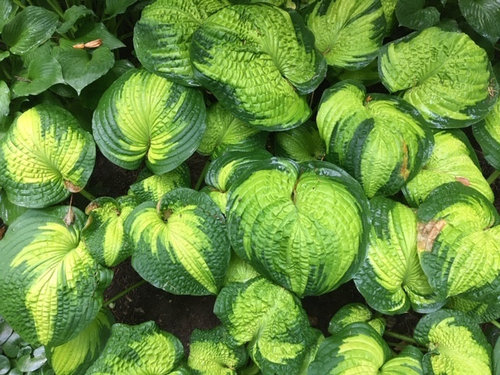
Here is a cluster of Brother Stephans with one Dick Ward. In the lower right there are some burned-out spots on the leaves. We've had a drought, it's mid-August and has been hot, and many of my hostas are coming up with burned spots.


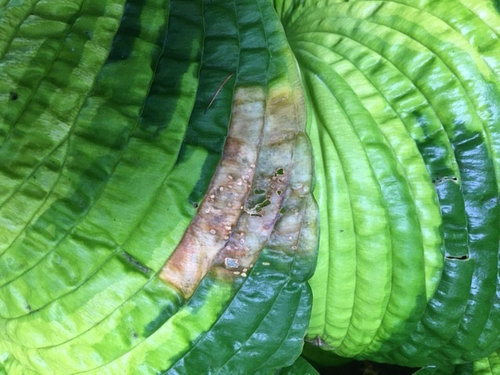
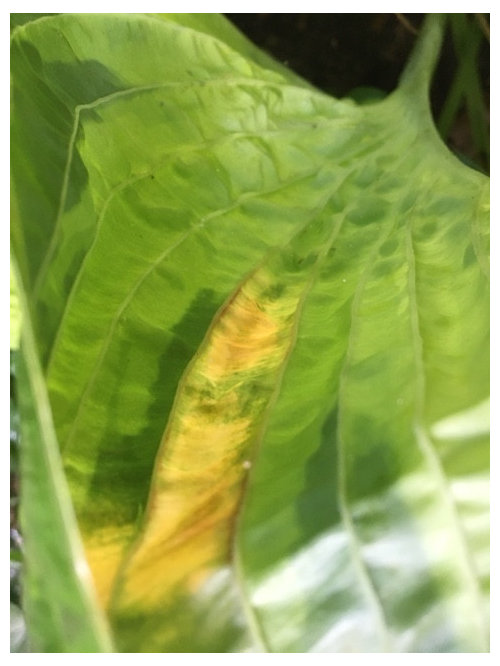
Here's a closeup of one of those dead spots.

Here's the underneath of that spot.

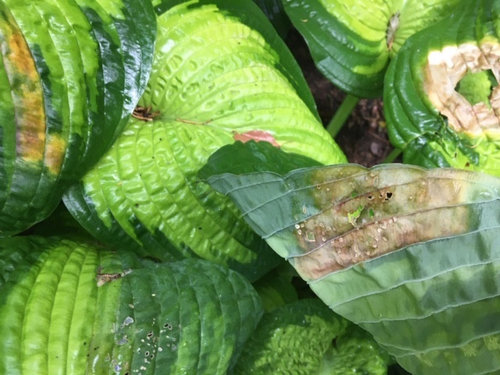
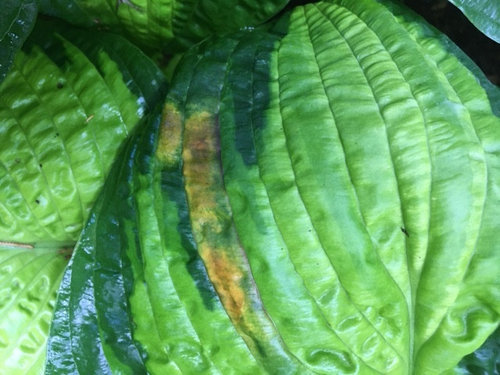
Here's a second dead spot.

And here's the underneath of that spot.

I hope these spots don't look to you knowledgeable folks like foliar nematodes. But tell me the truth. I need to know.

Comments (15)

  • 6 years ago

    I have a Gold Standard with some leaves like that..I'm thinking that I read you can't do much about nematodes..should we remove our bad leaves?..

  • 6 years ago
    last modified: 6 years ago

    There's a test where you put a piece of the dead part of the leaf in water a day or two (or three?) and look for the little wigglers with a jewelers loop. I've looked at a few of my suspect leaves and never seen the wigglers. Lots of other causes out there for this. If you search I'm sure you can find a better explanation.

  • 6 years ago

    what the perfect round hole in the third pic?

  • 6 years ago

    @ken_adrian Adrian MI cold Z5 I don't understand your question, sorry.

  • 6 years ago

    Ken I have had those round holes when a stick or small branch falls and impales the leaf. liquidfeet- got trees?

  • 6 years ago
    last modified: 6 years ago

    I'm not worried about a hole. I'm worried about the yellow parts on the leaves. Tell me I'm stupid to worry, that those yellow parts don't look anything like foliar nematodes, and I'll be grateful.

  • 6 years ago

    Well, I can’t say they’re not but as Steve said, other things can look like that.

    tj

  • 6 years ago

    i was wondering about hail

  • 6 years ago
    last modified: 6 years ago

    Do the test with the water. It's cheap and it just takes water and a good magnifying glass.

    You just put a small amount of water in a glass (or test tube if you have one) and part of the desiccated leaf and a little bit around it. Let it sit for a few hours or a day or so, and examine it under a magnifying glass. This site has a photo of what they look like.

    bkay

  • 6 years ago

    Ken I wouldn’t think it was hail as it is following the vein lines.

    tj

  • 6 years ago
    last modified: 6 years ago

    Hail? There has been no hail. Oh, you must be talking about that hole.

  • 6 years ago
    last modified: 6 years ago

    @bkay, thanks for that link. Here's a quote from it that makes me realize photos for visual inspection are not going to be adequate for diagnosis. I've spent some time this morning looking up foliar nematodes on hostas. I've now learned they attack all kinds of plants, not just hostas, and especially ferns. I have ferns near those Brother Stephans.

    One of the problems in identifying this pest is that it often looks similar to normal browning of leaves that occurs in the fall. Unless a person was very familiar with the problem they might easily overlook it.

    Foliar nematodes are rather rare. Most types of this plant pest infect roots and are known as root knot nematodes. The foliar types go up into the leaves to feed and then move back down into the crown of the plant to overwinter. The veins of the leave form a type of barrier so that the activity may be between one set of veins and might not show in the next interveinal area.

    What do these critter do to the hosta? Well it appears that they do two things. First, they make the plants less thrifty and cause them to loose vigor. The other impact is that they make the foliage look bad starting in about August.

    I also found this at MoBot, which is very specific.

    https://www.missouribotanicalgarden.org/gardens-gardening/your-garden/help-for-the-home-gardener/advice-tips-resources/pests-and-problems/diseases/nematodes/hosta-leaf-nematodes.aspx

    To diagnose foliar nematodes, break or open the leaves showing symptoms (yellow or brown between the veins). Put some water on a piece of clear glass or a clear glass dinner plate or petri dish. Let the cut edges of the leaves stay in contact with the water for 30 minutes to over night. Then hold the glass plate over a lamp so the light shines through the water and leaves, and examine carefully, preferably with a magnifying glass or dissecting scope. The nematodes, if they are there, will settle out or swim out of the leaf tissue and be seen as actively moving, glistening tiny white threads. The presence of a stylet in the head is a conclusive clue to determine if the observed nematode is a plant pathogen. From chlorotic or necrotic tissue can emerge different nematode species, including saprophytic ones, but only those with stylet are pathogens. The stylet can be observed under a microscope.

    Here's more from MoBot on how to prevent foliar nematodes.

    1. Sanitation. Inspect new plants for symptoms, and do not buy plants with questionable necrotic tissue. Discard any contaminated stock. Cut and burn the infected leaf. Do not compost the leaves as the nematodes may live in the compost. Perform a complete clean-out in the fall, removing all dried leaves and stems.

    2. Check the companion plants like ferns for the tell-tale brown markings. Remember the host range of the hosts foliar nematode may be greater than 250 plant species.

    3. Use good hygiene in the garden. For instance, when pruning or deadheading, dividing or cutting, clean all tools using 10% bleach solution before moving to the next plant.

    And they say this about treatment. I used to live in St. Louis and went to the Missouri Botanical Garden weekly. It's a great resource for all things plant.

    5. Foliar nematodes are easily killed by heat. Some gardeners have tried to heat-treat plants but this may not be very practical for gardeners. Soak infected plants in hot water (120-140 degrees F.) for up to 10 minutes (you may wish to divide plant up and soak 4,7 and 10 minute intervals). Beware, however, you can kill the crowns if the water is too hot or if they are dipped too long. Immediately following the hot water treatment, the plants are plunged in a bucket of cold water (as cold as possible from the faucet). Do not leave plants in the cold bath more than about 5 minutes. Use just enough time for the tissue to cool. Drain and pot the plants immediately. Plants do not store at all well after this dipping regime, so it is best to treat plants about the time they would be breaking dormancy. Unfortunately, because the nematodes can survive saprophytically (can take nutrients from dead organic matter) in the soil, the long-term efficacy of this approach is questionable. (based on information from the University of Minnesota).

    6. Few chemical controls. There are nematicides labeled for nursery use, these products are EXTREMELY toxic, especially to fish and wildlife, and are not available to the homeowner. Misapplication of these pesticides has been linked to death of hundreds of songbirds, fish and wildlife. It truly has no place in the home landscape.

  • 6 years ago
    last modified: 6 years ago

    I have read that foliar nematodes are inevitable in the garden. My garden was fallow when I started playing in it 8 years ago. Nevertheless, I have always seen signs of foliar nematodes by late July and August, as well as anthracose patches. I used to try the bleach solutions, antifungals, and even nemicide. Nothing works except acceptance and resignation. I have found that the plant is more likely to survive and thrive if I leave it alone. The nematodes and anthracose are part of my soil and the oak trees of my garden. Now you know why I take so many pictures in spring and early summer.

    Funny enough, by next months, the heavily affected leaves have withered away and the hostas that make a second flush of leaves look nice and tidy again, no pruning.

  • 6 years ago

    Before I knew that ferns have nematodes, I had purchased a large, beautiful $50.00 Lakeside Cindy Cee. It came up the next year with foliar nematodes. I asked ken (privately) should I tell everyone that I got this infected $50.00 plant. He said no and I took his advice. Then I later learned that those cheap ferns we buy every spring regularly have nematodes, so I was glad I didn't say anything. I had hung those ferns over the LS Cindy Cee. I had foliar nematodes once before, in another area. I had ferns hanging over those, too. Now, I'm careful not to put hosta close to those ferns.

    bkay

0