Software
Houzz Logo Print
stabab11

Removing popcorn ceilings

13 years ago
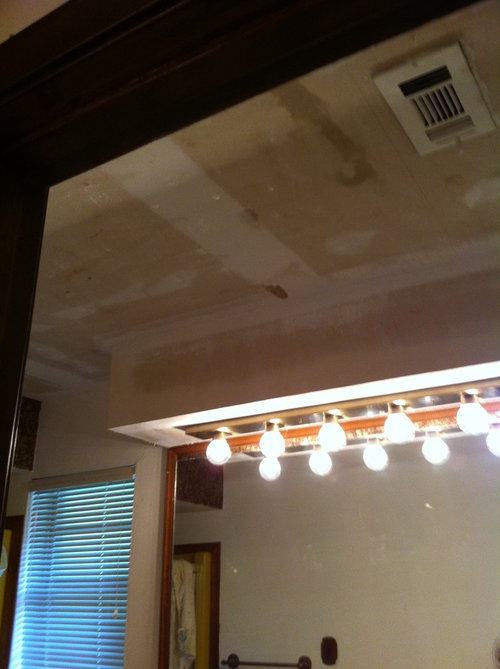
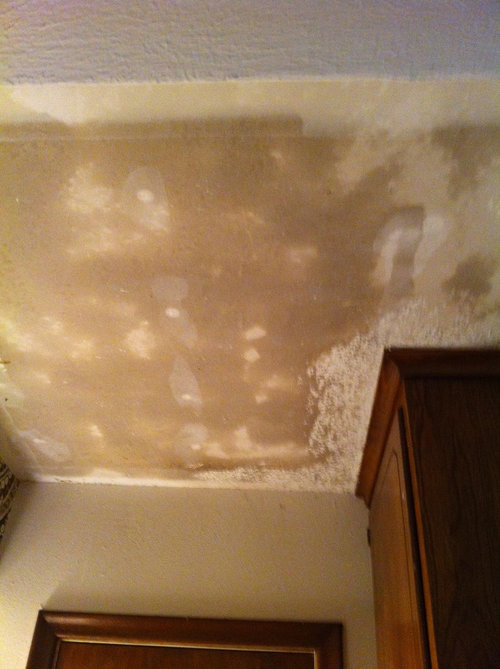
Removing has been easier than I though but now what??? Do I just lightly sand & paint or do I need to re-texture???

Comments (26)

  • 13 years ago
    What do you mean by skim?
  • PRO
    13 years ago
    You are making no mention of asbestos. Hopefully you had the material tested before removing it.
    Most remove the 'popcorn' ceilings to realize a smooth ceiling finish.
    Your finish should depend on: 1. What's the finish of your walls? 2. Your taste 3. Your skill level (or conversely, your budget).
    1. Your walls: if your walls are textured, it would make sense to texture the ceiling as well. There are fairly accessible and easy to apply products on the market that should be well within the comfort zone of a DIY for that application. If your walls are finished smooth however, I would recommend finishing the ceiling smooth as well. This will require 'mudding and taping'. Typically (especially on a ceiling) this is beyond a DIY comfort zone or skill level (to get it to look right)
    2. Some prefer texturing. If that's the case here, the answer should be clear
    3. As noted above, if you plan on tackling this yourself, you'll have an easier time texturing the ceiling. If you are having others do this, price both option and, if in your budget, opt for the smooth finish.
    Good luck!
  • 13 years ago
    Personally, I am not a fan of the wall and ceiling textures matching. We have knock down texture on the walls and recently scraped our ceilings for a flat finish. As the first guy said, they need to be skim coated to cover any seems, tape, minor flaws, etc then primed and painted.
  • 13 years ago
    *seams
  • 13 years ago
    We are about to tackle that same project. What was the sq. ftg. amount you removed and how long did it take you?
  • 13 years ago
    It looks like its a moot point here, but I was shocked to find out that popcorn ceiling applied as late as the 1990's can have asbestos in them-I have a little house built then, and was looking into removing the stuff myself. So, if you go to removing it, you could find yourself breathing asbestos fibers. There are kits you can buy to test a small amount to see if it has asbestos in it. If it does, then its best to have a professional person do it. More expensive, I know, but once something gets into your lungs, its not coming out unless the lung does. If a person is going to go ahead and DYI, then you should at least get an asbestos mask from somewhere.
  • PRO
    13 years ago
    There's a lot that's goes into to removing popcorn ceilings with asbestos . You will need to setup each room by removing all the belongings and then using 4 mil plastic on the floor going up the wall about twelve inches taping the edge to the wall you will need to setup a clean up area outside the room with plastic on the walls and floor this area will be to remove the tyvek suit you will be using you will also need goggles and respirator . The key is to keep the texture wet at all times wet the texture and scrape it off keep it wet when it's on the floor after all the texture is off wipe the ceilings with wet rags as well as walls. You will need to bag plastic and tyvek suit into black trash bags and label the bags with the address and date and take it to a proper hazmat disposal site
  • 13 years ago
    last modified: 13 years ago
    I am in total agreement that a mask isn't good enough. However, there are those who will go ahead and tackle the ceiling anyway, so I was just advising to at least get a mask. Depending on a particular city's code, if its required to get some kind of license to do any kind of remodeling work-and I know most cities would require it if it does require some kind of demolition or removal of a structure, then perhaps the city would point out any hazards that a regular person wanting to do a DYI project isn't aware or. However, obviously some people do little projects that their city never is aware of inside a home. I stated I was shocked to find out about the popcorn ceiling, and I'm sure that, like me, many never would have thought that they'd have to worry about something in a house that's barely 20 years old, but the truth is that you do.
    Unfortunately, we humans have this tendency to think that something is not having an effect on us unless we keel over dead the next day, or in a week-or that its not going to have any effect on us, personally for whatever reason. Breathing asbestos fibers won't have an effect that fast, but if you have breathed in enough of them, then eventually they could start having an effect on your breathing, and that can also start to effect your heart, etc. So, its not something to be taken lightly, for sure.
  • 13 years ago
    Where do you get a testing kit?
  • 13 years ago
  • 13 years ago
    River Valley Cabinet Works, that's amazing-and not in a good way. It would seem that, if there are some stringent rules on how to remove the stuff, then there would be the same when it came to actually disposing of it, but, apparently not.
  • 13 years ago
    Yes, there is only so much we can do individually, but we can try and do the best thing we can for ourselves and the folks around us, if at all possible.
  • 13 years ago
    Re texture, there is spray for that.
  • 13 years ago
    No offense, but if u have to ask what to do next with the ceiling, you cannot do it (whatever treatment you decide) yourself and have it look good. Both a smooth finish and texture require someone who has a experience doing ceilings. Do yourself a favour, and pay someone to do it. ESPECIALLY, if there's an asbestos concern.
  • PRO
    13 years ago
    ugggh... hire a licenced contractor! You need to know if it's hot or not. It needs to be removed correctly. Doing a smooth finish is for the pros! Good luck!
  • 13 years ago
    last modified: 13 years ago
    River Valley, I don't know where your boss got his information but he's not even in the ball park...... let alone left field. 1) All asbestos contaminated items (disposable suit's ,glove, breather filters, etc., etc) and debris materials are required to be double bagged in no less than 6 mill plastic sealed and clearly marked as ASBESTOS CONTAMINATED or larger items have to be wrapped in a double layer manner and identified accordingly. 2) All landfill disposals have to be certified as TSDF's (Treatment, Storage Disposal Facilities) and double lined pits. 3) All disposed materials have to be recorded (location, date, time, amount), they have to be location documented (i.e. mapped in the land fill) and immediately covered with a minimum of 0.6M of compacted fill coverage.

    The requirements for a TSDF Certification are quite extensive and expensive and well monitored and require extensive long term obligations, certified monitoring system, certified containment / recovery systems, etc., etc.......One thing to consider, is that while home owners may DIY, there is no guarantee that a Certified TSDF will take your materials as there is a EPA standard that any Asbestos Contaminated materials has to be transported by a licensed and certified transporter.............I don't too many home owners that meet the requirement.
  • 13 years ago
    Today's landfills are like big bathtubs, with liners and collection systems both above and below to collect any leachate. Not that they are 100% foolproof, but they are not simply a hole in the ground where everything can leach down and contaminate soil and groundwater. And, environmental laws and regulations are only as good as the public that follows them, as always.
  • 13 years ago
    As I mentioned, when it comes to this problem, most DYIer's don't realize that they are dealing with a possible environmental hazard. They think its just plaster, so they just dispose of it in plain, old everyday trash. People are also painting over the old lead paint, but they are doing so with paint that is designed to be applied without sanding, etc. That, of course, is fine for the present, but what happens if the new owners sell the house a few years from now and maybe forget to tell the soon to be new owners that they just painted over old lead paint. At some point, multiple layers of paint get unsightly and have to be removed, so the lead problem is going to have to be dealt with eventually.
    I don't mean to get off topic here, but this is something that really troubles me. These older homes have a lot of good things about them-as chances are that they were built really well-which should be obvious when they are between forty or sixty years old and often just need cosmetic changes, depending on when they were built to start with. However, these toxic materials need to be dealt with.
    Okay, I'll get off my soap box now. I just hope anyone with popcorn ceilings will realize that they could pose a problem if they remove them themselves.
  • 13 years ago
    Wow, I never said I didn't know what I'm dealing with... Just ask what's best leaving it flat or a texture. I'm all about for environment & I did everything correctly so back to texturing if anybody has a few simple hints would be great! Thxs
  • PRO
    13 years ago
    Are yours walls textured ? Do you want smooth or textured and how heavy do want the texture ?