Software
Houzz Logo Print
chris_chicago

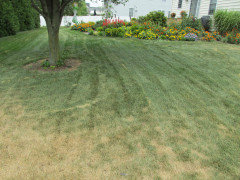
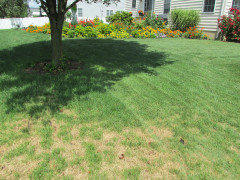
dried grass after dryspell

6 years ago

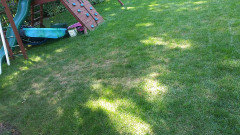
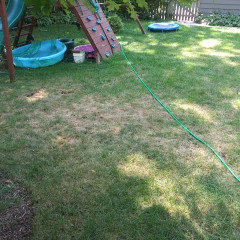
My back yard gets a good bit of sun. the lawn is mostly kbg but there are some other shad grasses mixed in from when I had a big oak tree back there.


Ive noticed that when there's a hot/dry spell, certain areas get dried out faster than the rest of the lawn. So after this summer of little rain, most of the grass is still green but I have a good bit of brown grass here and there. I would like to get rid of this quick browning grass and put some seed down that does better.


What is the best way to reseed the spots that are brown with grass that will be less likely to dry out?


thanks!

Comments (20)

  • 6 years ago

    Have you established if the browning is dormancy, death or fungus?

  • 6 years ago

    no, I am not sure how to establish that.


    i do see a strong correlation between certain areas of the lawn turning brown from year to year, and hot/dry weather. but there could be fungus among us and I wouldnt be aware. how should I proceed?

  • 6 years ago

    Fortunately, fungus is exceptionally unlikely in dry areas due to the fact that fungi don't flourish in dry conditions. If you don't notice white threads in the grass during other times of the year, or brown, dead patches in spring, you can probably rule out a fungus.


    Those certain areas...are they where parts of the oak was? Or the roots were? Or do they get a bit more sun, a bit more wind, or have slightly shallower soil (you can test your soil with a long, flat-bladed screwdriver, if it'll penetrate).


    Usually, areas that dry first simply have a thinner soil that doesn't hold as much water. There's no magic grass or magic solution to this, but there are some things that will work over time if you figure out what's going on.

  • 6 years ago

    how do i test soil depth with a screwdriver?

  • 6 years ago

    Stick the screwdriver into the soil, preferably when damp. See how far it penetrates before striking rock or impenetrable base soil. Don't force it, or bend the screwdriver of course; it should be usable when you're done.

  • 6 years ago

    ok, will try after rain in forecast for tomorrow.


    is it not possible that some of the grass likes less sun and that is why it dries out sooner?

  • 6 years ago

    Not as a general rule, no. Most grasses prefer full sun. The rare exceptions--like red fescue--won't be in most seed mixes unless they're listed for shade. They'll tend to thin out and die in sun pretty quickly.


    While we're waiting, you can fill us in on how much and how often you water, and your feeding regimen on your lawn as well. It all makes a difference on how long the grass goes.

  • 6 years ago

    im sure there's some red fescue in there somewhere. We had kbg sod that struggled a at first under the old Oak. Some died and I tossed down different shade seeds esp close to the tree. Then it died and the joke was on me.

    I know all the grass commandments from my time on here 5 years ago, though this summer I've not done a good job keeping up with the watering bc we were gone during a long hot stretch. And most of the lawn is still a nice green.

  • 6 years ago

    So you did break them. It shouldn't be too much surprise that the grass browned, then, as it will do so after as little as 10 days of heat. I let mine go down, but in slightly more shadowed areas, 14-20 days result in grass that's blasted, but still green and able to recover. In the sunniest areas, it's fully dormant and not coming back until September.

    If you want, you can certainly renovate the areas that are browning, but...I don't think I'd expect much in terms of improvement. The definitions we've gotten so far are:


    * The sunniest areas

    * The driest areas (which tend to go hand in hand)

    * A mixed lawn

    * Occasionally inconsistent watering practices during heat waves


    The best summer-performing grass for there might be a Meyer Zoysia, which will be the most tolerant of some dry weather and very bright, hot sunlight. The down side is that it's going to look like dead hay from first frost to mid-May--it's a warm-season grass and doesn't tolerate any cold weather. The University of Illinois says "Yes it can be done, but it can be a bit difficult." You're right at the northern edge of the range, so your exact locale and microclimate is going to come into play as well.

    TTTF and rye will tolerate the dry weather the best before finally turning brown, but once they goes, they're going to die the fastest. And they're not going to look great when dry. They don't have much of a dormancy mechanism, so once they start to go, they go.

    Bluegrass will tolerate the dry weather the worst, turning brown first, but will also tolerate drought the best overall. Once fully established (year 2 or 3), it'll go dormant and wait for rainfall. It should get about 1/4" every 2 to 3 weeks, optimally, to keep the roots alive, but as long as it gets that, it can go for months without significant rainfall.


    I chose bluegrass. I don't irrigate, don't mind dormancy (the attention in the summer is on the gardens), live in a state with a lot of rain, and wanted a grass that performed well over winter (KBG far outperforms the other two in my case).

  • 6 years ago

    That's interesting, I always assumed it was the kbg staying green when it got hot.


    Is there an easy way to determine if brown grass is dormant vs dead?

  • 6 years ago

    Only by killing it, which defeats the point. If it's been less than a month of brown and the grass is fully established (and we're sure it's not a disease), there's close to a 100% chance the grass is alive but either in water-saving mode (the crown is awake) or dormant.

    Resuming watering, or waiting for nature to do so, would wake it up. Once it does, continue watering. It's difficult to impossible for the grass to do that a second time.

  • 6 years ago

    ok. And thanks Morpheuspa, glad to see you're still on here helping people out after all these years. I saw some recent thread where people were still sharing that photo of your lawn compared to your neighbors. that's a classic.

  • 6 years ago

    This year's is...somewhat different. This was July 30th, when the grass was partially in dormancy, Things improved and, with August being a particularly rainy month, did so quite rapidly.


  • 6 years ago

    Wow, your lawn is showing it's mortal. Disproving the conspiracy theories that it's an expensive perfect looking synthetic turf

  • 6 years ago

    Exactly. Three weeks later, it had improved considerably as rains resumed in August. Photo below. Did you try out the screwdriver or just figure it was the missed watering?


  • 6 years ago

    Yes. The rains didn't come, but I watered last night and make sure to get an inch of water down with the sprinkler. The screw driver went in easily to 6 inches 5 out of 6 spots. One spot it only made 4.


    Here's a pic of the grass


  • 6 years ago

    That pic is from couple weeks back. It's worse now:


  • 6 years ago

    Dormancy, then. Four inch penetration isn't bad for a standard soil in the slightest (for a well-balanced soil, to the hilt on a 12" screwdriver would be expected, but that's after a lot of work).

    That "creeping dormancy" I'm seeing is also very reasonable. It's patchy, just like dormancy usually is (see the patchy bits in mine above? And that's all bluegrass! Different cultivars, but not different enough that they should show that much difference in terms of dormancy).


    If you really want to go further?

    You can do a soil test through Logan Labs; water penetration and deeper rooting can be encouraged by having good soil balances of nutrients. That would also give you an indication of where organic matter levels are. Fix those and lawn health will increase.

    Spraying 2 oz of baby shampoo or cheap clear adult shampoo per thousand square feet on the lawn as often as monthly during the growing season (if there's normal irrigation or rainfall) can help loosen a soil and increase water penetrance over time. It's not magic and works best with a balanced soil and good organic matter levels, but it really does help.

    And increasing organic matter levels will certainly assist in water retention regardless. Feeding organically can assist here, along with mowing in all of your fall leaves (no more raking, in other words). But again, I'd balance the soil as well.

  • 6 years ago
    last modified: 6 years ago

    Thanks Morph. I did the logan lab thing 5 years ago and you translated it for me. had to add corn meal and something else. cant recall. some white powder I think (potassium sulfate) never tried the shampoo but remember people doing that.

    here's the thread https://www.houzz.com/discussions/1550731/logan-labs-results

Sponsored
Custom Home Works
Average rating: 4.6 out of 5 stars10 Reviews
Franklin County's Award-Winning Design, Build and Remodeling Expert