Software
Houzz Logo Print
ryan_w40

Need Help Identifying Grass Type

6 years ago
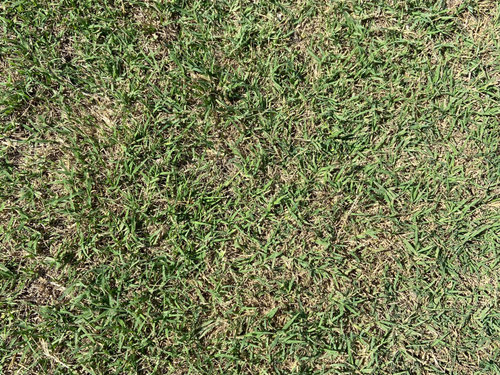
Hi All, new here to the forums and also new to lawn care. Thank you in advance for your time!


We just purchased a house in Los Angeles (built 1942). I don't think the soil or grass has seen much love over the years, other than a once-per-week mowing/trimming by a gardener. My primary question is: What type of grass do I have? My secondary question is: What feed/herbicide products are recommended for my grass in So Cal?


The grass was particularly neglected this spring and early summer as we were renovating the house before moving in, so for the most part the grass was just sitting unattended for several months (other than a once-per-week visit from gardener). Since move in I've been watering regularly and deeply, and it has responded well but still has a ways to go. In the front yard in particular, I also I have quite a few weeds, clover etc.


Some non-experts (such as my realtor), guessed that the grass was St Augustine. While we were having some landscaping done (new privacy hedges, gravel etc), the vendor we hired looked at the yard and said "this is weeds, I suggest you replace with new sod." But of course they would say that, they want my business!


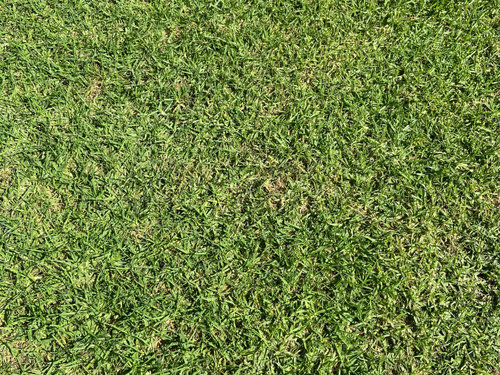
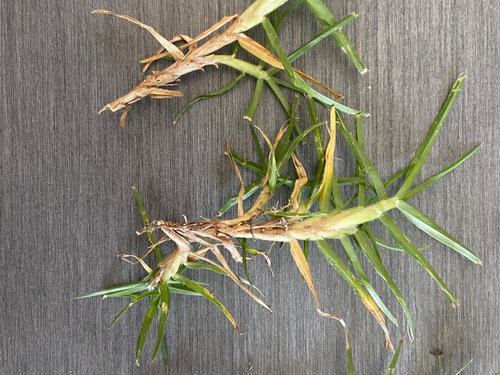
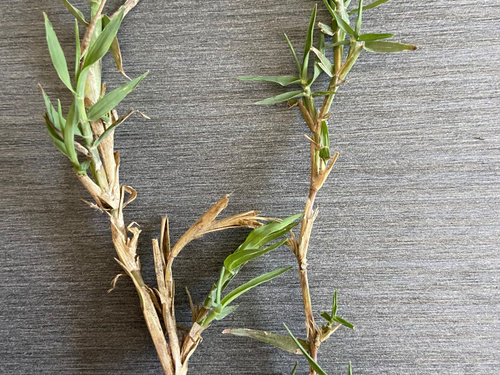
Attached are some pictures of the grass (or weeds, depending on who you ask : ). The grass does have some traits of St. Augustine, but I'm also thinking it might be centipede grass. It grows by sending off shoots and is spreading into previously dead areas with regular watering. It is very low-lying, and doesn't seem to grow much vertically (that being said, the gardener cuts it very low)


Can anyone offer some advice on grass type? If this is centipede grass, then in So Cal I have a lot more options for herbicide/fertilizer products. If it is Augustine, it seems my options are much more limited in Southern California. Almost every herbicide I see recommended for Augustine doesn't seem to be available in so cal stores, and Amazon will not ship these products to California.


Any help you can provide would be much appreciated.


Comments (10)

  • 6 years ago

    Note--a lot of our southern grass people seem to have decamped for the weekend. If this doesn't get a reply (and it still might), add another comment on Tuesday or Wednesday and you'll probably get something then!

  • 6 years ago

    Thank you, I will be sure to check in again Tuesday if no one responds!

  • 6 years ago

    Thanks for the patience. It's centipede. If it was St Augustine, the tips of the blades would be blunt. Yours are pointed. Your "weeds" guy is probably used to seeing fine bladed lawns like fescue. Centipede is obviously a coarse bladed turf.

    I have to ask where you live. Los Angeles doesn't cut it for me. I lived in Hawthorne, Downey, and Pomona, and my grandfather lived in Crenshaw (waaaay back in the 50s), and my first wife lived in El Monte, so I know Los Angeles is not Los Angeles is not Los Angeles. It makes a difference (to me) where you are.

    Centipede loves acidic soil and neglect. We used to have a grass farmer on the forum who was famous for saying, "drag an empty bag of fertilizer over it every 2 years." Use a fertilizer with zero phosphorus, because phosphorus tends to bind up iron in the soil. And never use lime for the same reason. Something like a 15-0-15 would work. Put it on at 1/2 the bag rate, because too much N can cause disease. in the early spring after you have mowed it for the second time. Never use a weed-n-feed with centipede (or any other grass). Instead fertilize early and, 2 weeks later, spot spray weeds with an atrazine product if you can find it in CA. If you can't, then get something safe for centipede. There really aren't that many safe herbicides. Centipede needs FULL sun like bermuda needs full sun. Soil needs to be well drained. Boggy or soggy soil leads quickly to disease in centipede. Centipede is one of the few grasses which becomes most dense when it is mowed at the mower's lowest setting. Yours looks fine.

    Well, fine can be a strong word. I do see some fungal disease on the blades. The solution to that should be ordinary corn meal. Tell me where you live and I'll tell you where to find it in 50 pound bags. Think feed stores. They are all over the place. The application rate is 20 pounds per 1,000 square feet. Corn meal works by attracting a biological predator which feeds on fungi. It will kill the disease in 3 weeks and take away the spots on the blades.

    What is your watering schedule? How often and for how long do you water?

  • 6 years ago

    Thanks very much for the reply! We live near Crenshaw/MLK.


    Thank you for the tips on fertilizer and weed control. Just to make sure I understood your write-up correctly, it sounds like centipede likes neglect, so I should fertilize (at half the rate, as you suggested) only once per year, in the early spring, then combat weeds as they appear. And I will avoid phosphorus and lime as suggested. Let me know if I mis-understood.


    The lawn in our front yard is shaded by a very large Jacaranda tree, but the grass still seems to be doing ok despite not getting full sun for much of the day. Weeds are much more prevalent in our front yard than back, so perhaps there is a correlation there?


    In regards to watering schedule, to be honest it has been a bit inconsistent until just recently. But here is where I now stand:


    Front lawn: Has sprinklers, which I run in the early morning 2 times per week for approx 10 minutes. These sprinklers put out a lot of water, between 1/4 and 1/2 inch in those 10 minutes. And as the front is mostly shaded, I don't water as deeply as the back.


    Back lawn: Does not have sprinklers, and is exposed to sun all day. At first I was hand watering, then tried a shower sprinkler (which absolutely sucks for even coverage). I finally purchased a Gilmour pattern master and feel it is the best product I have found. I customized its pattern and now get decent coverage across the full yard, including the oddly shaped areas. I am running it 2 times per week at approx 45 minutes.


    Thanks again for your advice. Much appreciated.


  • 6 years ago

    DUDE. My grandfather lived in the 4100 block of Somerset.

    Okay get a screwdriver and stick it into the ground in several places. It should go in uniformly deep everywhere, but when it doesn't, note how hard it is to stick into the ground. For the places where it is harder to push in, put a tuna can or cat food can there. For the places where it goes in easy, put a can there. Then turn on the sprinklers and note how long it takes to fill both cans. That is how long you should be watering, but it's not quite that simple. The high temperature average is what drives how often to water. I realize you just had a really hot day, but that's not your average. But if you did average in the 90s every day, then once a week of deep watering should be all the lawn needs. With your more likely averages in the 80s, then once every two weeks for deep watering will work best, especially for centipede. When it cools into the 70s, then back off to once every 3 weeks. If you get runoff before filling the cans, stop immediately and let the water soak in for 15 to 30 minutes. Then resume watering and timing. Repeat stopping and starting as necessary for runoff.

    You got all that other stuff.

    Jacarandas allow filtered light. If it has limbs low to the ground, you might trim those up.

  • 6 years ago

    Just down the street from us pretty much!


    Thank you for the watering tips. I will calibrate with the cans and see how it goes. Thanks again for all the advice.

  • 6 years ago
    last modified: 6 years ago

    Hi dchall and fellow experts,

    I was pretty confident in our identification a couple of weeks ago, but this week I started seeing seed heads, which made me doubt our previous decision.

    Based on the seed heads, I'm now pretty confident that bermuda is the dominant grass in both our front and back lawn. The front lawn also has quite a few weeds and an invasion of what is either crabgrass or kikuyu grass. I didn't even know what Kikuyu was until today, but it seems to match the sample I pulled pretty closely (hairy runner stems and blades, thick runners and a bright green color). Honestly the kikuyu (or crabgrass) looks pretty good to me, but I would like the Bermuda to win out so the lawn has a consistent color and look.

    You have all been a great resource so far, so I come asking if you have any opinions on my revised identification. And if you agree, do you have advice on a care plan for Bermuda lawns? Is there anything specific I should do considering we are in SoCal, with no frost?

    I've been reading up on "how to with Doc." Forgive me, as I'm not sure if he is a trusted source on this forum or not, but he seems knowledgable about bermuda lawns.

    My immediate plan is to fertilize using Doc's recommend PGF product, and also put down a post emergent to try and fight back the kikuyu (or crabgrass). Then, in the Spring, I might adopt the doc's Bermuda schedule and see how it goes: https://www.bermudalawnguide.com/bermudagrasscalendar.pdf


  • 6 years ago

    More photos


  • 6 years ago
    last modified: 6 years ago

    Front yard


  • 6 years ago

    Back yard. Sorry for the spam, it wasn't letting me post all the photos at once.