Software
Houzz Logo Print
webuser_255110582

Stressed Liquidambar

6 years ago
Hello,

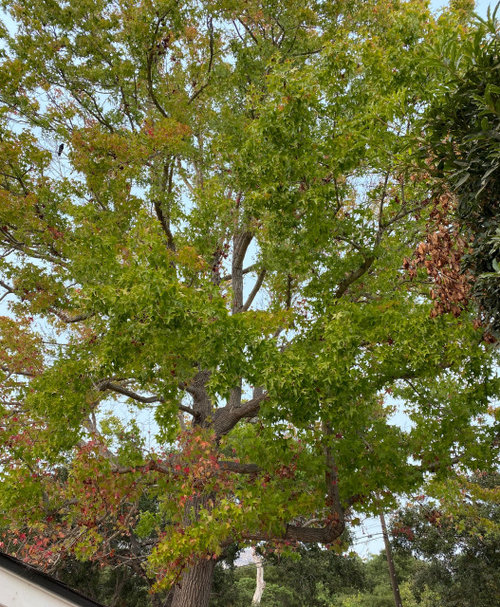
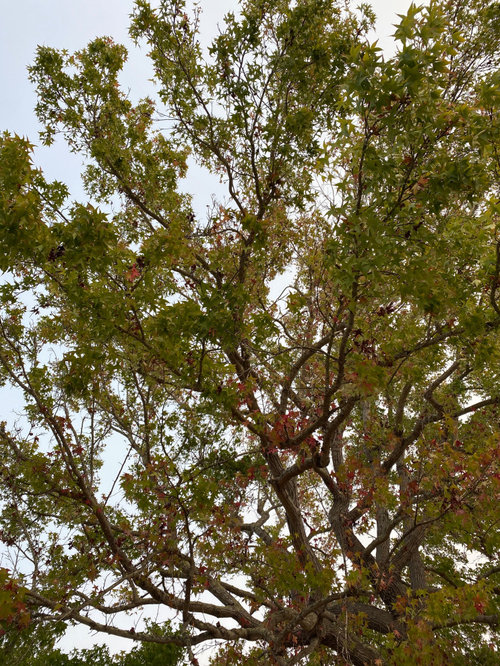
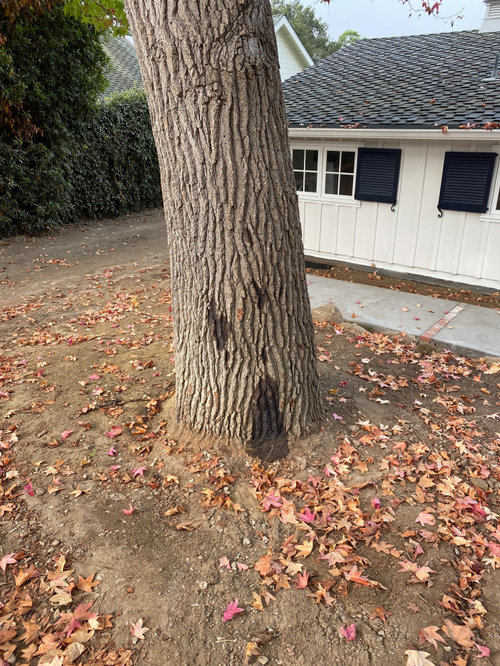
We purchased a house that needed work done to the grading. Unfortunately, we think construction equipment, lack of water, and soil compaction has affected a liquidambar. Should we be concerned about the tree? New black spots are forming on the trunk (that smell minty), and many branches do not have leaves, although I do see quite a few buds forming. Could this tree be turning fall colors a bit early? We are in Southern California.

Thank you


Comments (16)

  • 6 years ago

    Since these unusually ephemeral trees tend to shoot up and then fall apart anyway I wouldn't want one near my house whether it looked to be struggling or not.

  • 6 years ago

    Sweetgums aren't particularly drought-resistant since they originate in very humid/summer rain areas. Leaves turning color may only be from the current dryness.

    Derek Smith thanked bengz6westmd
  • 6 years ago

    With a lifespan under cultivation of as much as 125 years, I would hardly term these as "ephemeral"! And they are quite common in SoCal and once established, far more drought tolerant than many expect. I wouldn't necessarily do any pruning but a few deep soakings sure wouldn't hurt.

    Breaking apart or collapsing is not something I have encountered with these. I think that comment is overstated as well. Some always prefer the glass half empty approach :-)

    My sister's former coastal Orange County townhome had 13 (!) of these planted in a tiny (less than 1000sf) garden when she moved in. Over the 20 or so years she lived there, most were removed as they grew and the garden got shadier and shadier, leaving only 5 in place, all within 20' of the structure. No issues at all.

    Derek Smith thanked gardengal48 (PNW Z8/9)
  • 6 years ago

    Appreciate all the comments. Curious if those black spots on the trunk will disappear once the tree gets enough water?

  • 6 years ago

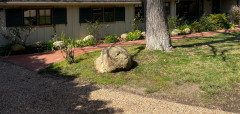
    Was the soil level near the tree changed? I can almost see the root flare (or the start of it) on the left, but not on the right.

  • 6 years ago

    We tried not to change the soil level, but I believe it was slightly raised on one side. The house sits below grade, and the level of soil from the tree to the house gradually goes down. We may have raised the soil level a touch on the side that faces the house. As you can see from the pic, the tree used to be surrounded by grass that was watered regularly.


  • 6 years ago

    It looks as though soil was removed from the base exposing the root flare on the left but not the right. Is the oozing just what we see or is there more further up?

    tj

  • 6 years ago

    Oozing is just what you see. The small ooze spot at the top is new and just appeared a few days ago. The 4 main spots at the bottom all appeared at once, or at least I think they did.

  • 6 years ago
    last modified: 6 years ago

    In many cases, trees were reported to have been heavily laden with seed pods. Also, American sweet gum is a species known to be subject to the phenomenon "summer limb drop" (Arboriculture 2004 p.429)

    University of California

    Western Tree Failure Database/California Tree Failure Report Program

    Liquidambar styraciflua branch failures

    https://ucanr.edu/sites/treefail/Species_Profiles/Liquidambar_styraciflua_branch_failures/

    Derek Smith thanked Embothrium
  • 6 years ago

    And yet......despite all the doomsaying from the above, this tree is still highly recommended in all parts of California and can be relied upon for typically excellent fall color in an area that is not known to generate much.

    Derek Smith thanked gardengal48 (PNW Z8/9)
  • 6 years ago

    I'll agree w/gg -- alot of rather thoughtless doomsaying here (and elsewhere). Since the tree's leaves are turning color & not just drying up, the tree is prb'ly OK, and hopefully will get some rain this coming winter. The piling on of soil in the root-zone isn't good for it, tho.

    Derek Smith thanked bengz6westmd
  • 6 years ago

    I agree. Many times soil is added around a tree to bury surface roots that are protruding up, making for a rough surface in the lawn. But what actually happens, is the roots get smothered from the added soil, adding to the stress of whatever else the tree is suffering from. In this case drought.

    Derek Smith thanked User
  • 6 years ago

    Sorry to break into this topic with my own issues... but what do we do if the tree has been too deep in the soil for 5 years or so? I've just recently gained interest in trees and realised all of ours have been planted too deep with little volcanoes of soil around trunks, including our liquidambar that had a branch failure this summer. Other than that it's doing fine, but some other trees are having their bark splitting and falling off which I assume is the result of being buried too deep for too long. As I started digging around trunks to reach flares I discovered that there were no new roots formed above them, but I do see trunks that have different texture on the parts that were in the soil, looking kind of shrivelled and a bit thinner than the trunk above the soil. Should I continue to expose all those covered parts of trunks or just leave them be?

  • 6 years ago

    How big are the trees?

    How deep is 'too deep'?

    Can you provide some pictures? Showing the whole tree plus close ups of the excavation?

  • 6 years ago
    last modified: 6 years ago

    You could start your own thread, that way people won't have to sift through all the previous clutter and many won't so you'll get better attention with a separate thread.