Software
Houzz Logo Print
molly_nations

FLF Advice Needed

5 years ago
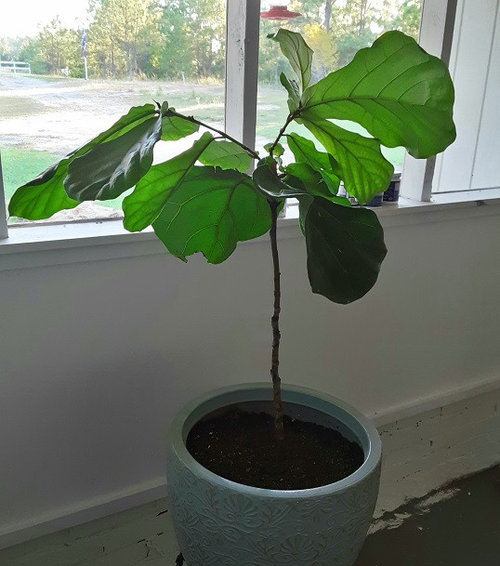
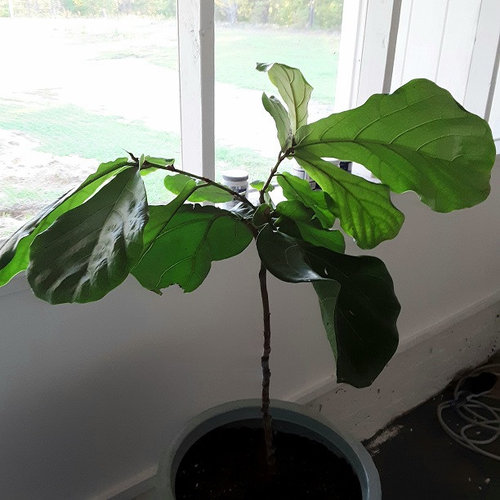
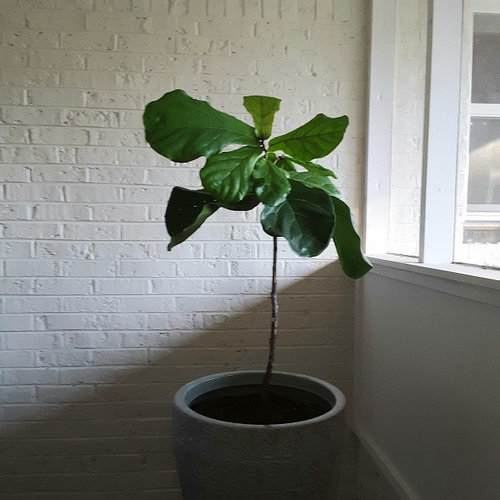
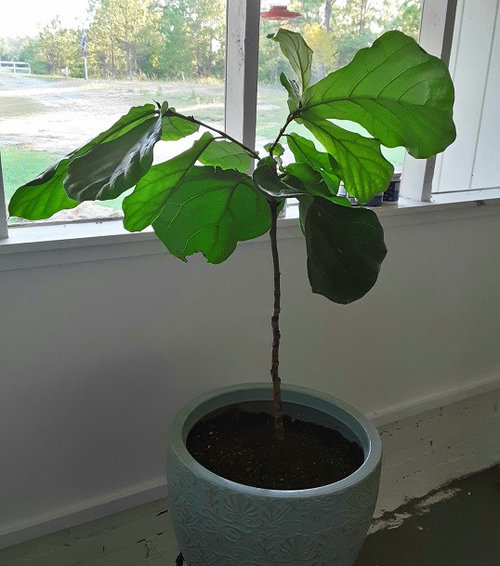
I'm new to plant care so any advice is welcome and appreciated. This FLF was given to me by a friend last year. I placed it inside where it immediately dropped all but 3 leaves and appeared to be slowly dying. In March of 2020 I put it outside on my screened-in back porch and then the world started falling apart and I sort of forgot about it. In Mid-April I decided to try and revive her. Bigger pot, new soil, watering every 2-3 weeks, and feeding her coffee grounds once a month. I'm in Alabama and the FLF is facing south with high, bright but indirect light. I'm assuming she's doing well because she has added 10 new leaves since April. It is now October and getting cooler. Alabama can get fairly cold in the winter so I'm wondering if I need to move her inside. Also, should I prune any of the newer top leaves? I worry she is getting top-heavy. 4 photos attached so you can see the progress>


Comments (3)

  • 5 years ago

    The plant won't do well at temps below 55-60*, so use your best judgment when it comes to bringing it in/leaving it out. Coffee and tea grounds have biocompounds in them (until they are well-composted) which are harmful to plants, so I would reverse course insofar as using coffee, tea, or grinds from either for containerized plants. I'll leave for you something I wrote about the fairly common practice below.

    If you're measuring watering intervals in weeks long intervals, there is no question you're leaving a notably large fraction of growth/health potential unrealized. The prolonged period of soil saturation it takes to provide such long watering intervals means the root system must be suffering from an inadequate volume of air/oxygen in the root zone. My suggestion would be to not repot into a medium with better aeration/less water retention until next June, but to address the issue now by putting in place measures which physically limit the volume of excess water the planting is capable of holding. Your plant has several innate rhythms, the main being the growth cycle, during which the plant's level of vitality and its ability to make food (via photosynthesis) varies markedly. The idea is to plan hard work like heavy pruning and repotting for weeks bracketing the summer solstice (think Father's Day), and avoid stressing the plant when it's stored energy reserves and ability to make food are most limited.

    If you have interest in learning more about how to decrease length of watering intervals to the benefit of your plant, let me know, and I'll help.

    As far as pruning is concerned, I wouldn't prune, but I would pinch. Pinching is a somewhat specialized form of pruning during which only the apical meristem (growing tip of the branch) is removed. This stops extension growth of the pinched branches permanently, and forces new branching from dormant buds immediately proximal to the pinch. It soulds complicated, but it's really very simple.


    Coffee/Tea Grounds

    Forum discussions frequently center on the question of adding dilute coffee/tea or grounds to plants as a 'tonic', but Arabica (coffee) and Camellia (tea) are known for their toxic alkaloid (caffeine) content and their allelopathic affect on plants as well as autotoxic (poison to their own seedlings) effects on future generations. Caffeine interferes with root development by impairing protein metabolism. This affects activity of an important bio-compound (PPO) and lignification (the process of becoming woody), crucial steps for root formation.

    We also know that the tannins in both coffee and tea are known allelopaths (growth inhibitors). There are ongoing experiments to develop herbicides using extracts from both coffee and tea that cause me to want to say they might serve better as a nonselective herbicide than as a tonic. I would not use either (stale coffee or tea) by applying directly to my plants - especially containerized plants; nor would I add tea bags/coffee grounds to my container soils.

    Al

    Molly Nations thanked tapla (mid-Michigan, USDA z5b-6a)
  • 5 years ago

    I just stumbled on this and as usual enjoyed the read from Als comment.


    @tapla (mid-Michigan, USDA z5b-6a) how would you recommend to decrease the length of watering schedules as you mentioned in your comment?

  • 5 years ago

    Ideally, a grow medium should be porous enough that nearly all water the medium CAN hold would be held on the surface of soil particles, in internal pores of soil particles, and at the interface where soil particles contact each other, leaving spaces between soil particles filled with air, even at container capacity (when the medium is holding as much water as it's capable of holding). This requires increasing the volume of coarse soil particles to a very high fraction of the medium's o/a volume - somewhere in the 80-90% range, and eliminates almost entirely the potential for over-watering, allowing exceptions for plants adapted to arid conditions in situ and plants that commonly undergo dry dormancy or quiescence (quiet rest).


    Al

Sponsored