Software
Houzz Logo Print
headmotty

Hydrangea diagnosis

6 years ago

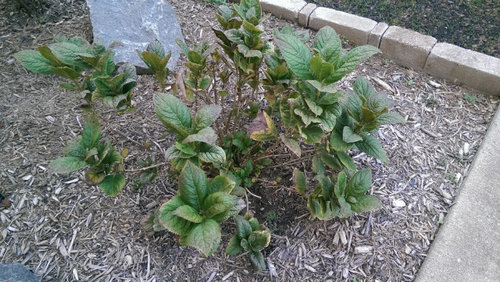
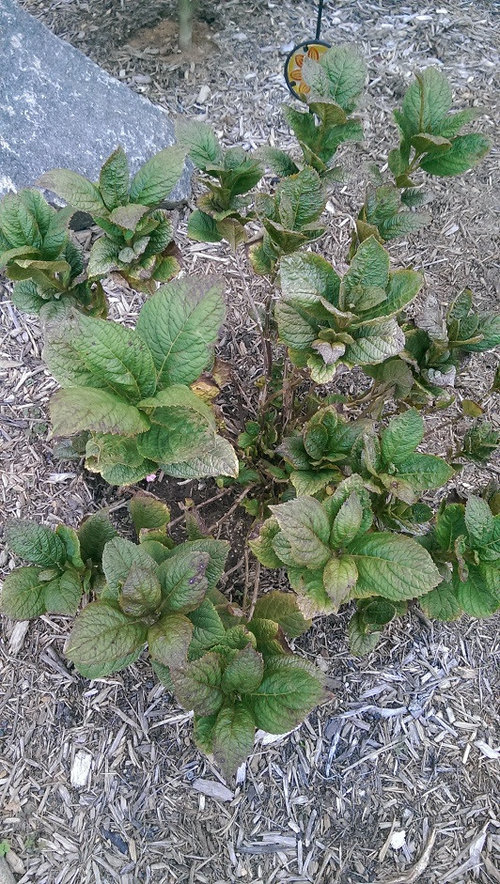
Can any hydrangea experts out there perhaps tell me what's going on with my hydrangea? Have two of them and they both look the same and have been like this pretty much throughout the summer - leaves aren't the lush, vibrant green, they are kind of "bronzed" green, and tough and leathery, curled up and lots of brown, crispy areas. Lots have fallen off or I've gone ahead and picked them off. I thought it was maybe not enough water, but the leaves weren't wilting in the daytime heat and then coming back in the coolness of the night or after watering like you might expect. They've just taken on this appearance (the pictures actually look better than they do in real life). So I'm guessing this may more likely be leaf scorch/scald from too much sun? They do get a good amount of sun, that's for sure. I should also mention that I was dealing with cercospora in the early part of the summer and was spraying every couple weeks with Immunox. Could that have caused leaf damage?



Comments (4)

  • 6 years ago
    last modified: 6 years ago

    The frequency of Immunox applications sounds correct (every two weeks). However, I usually apply chemicals only after I make sure that the soil is moist. I am not sure how well the plants would react if you applied Immunox when the soil was dry.

    And in this case, I would say that the problem is a mix of soil moisture and inconsistent watering. Hydrangeas have shallow, tiny, fibrous roots that only grow about 4” deep so it is important to maintain the top 4 inches of the soil as evenly moist as you can. Avoid times when the soil gets dry then gets wet, then gets dry again. Evenly moist soil should be the goal. Watering on a schedule or visual inspection of the plant does not accurately tell you if the soil is dry and the plants need water. To check the soil moisture, insert a finger into the soil to a depth of 4” in several spots and then water if the soil feels dry. You should also water enough to get the soil moist down to a depth of 8”.

    The soil in the pictures needs more mulch. To minimize evaporation, maintain 2-4” of mulch year around. Apply it past the drip line. It will also help protect the roots from high/low temperature extremes.

    When you do not supply enough water as evenly as possible, you can get leaf browning, leaf loss, stems with leaves only in some sections, leaves of varying sizes, etc. Some leaves dry out fast, do not brown out quickly and become tough, papery feeling but, the good news is that the plant may produce new foliage if the root ball has not dried out too much. In a recently planted hydrangea, I would suggest now that you temporarily extract the plant and dunk it in a pail full of water for 1-2 hours but, on larger plants like yours, that is not practical. When the root ball dries out, it begins to repel water. As a result, you need to very slowly water the plant with a soaker hose. If using a regular hose to re-hydrate the root ball, water very, very, very slowly (think: drip irrigation). The root ball is where the stems originate from so get that area moist again but, again, do it very slowly. And use the finger tests to carefully check the soil moisture there.

    About the current foliage… since we are at the end of the growing season, with consistent moist soil, the plants may produce new foliage either now or in Spring 2021.

    During winter, make sure that the plants get some water when dormant if the soil is dry and winter is dry.

    The plants are currently stressed so do not fertilize them until Spring.

    You mentioned that they get a ‘good amount of sun’. Since the foliage of these hydrangeas resemble that of hydrangea macrophyllas, they should be getting either morning sun only (until 10-11am) or dappled sun. Make sure they do not get afternoon or evening sun.

    When they leaf out in Spring 2021, begin to water them at "Spring levels". When temperatures typically reach or exceed 85F, increase watering amounts to "Summer levels". When temps are typically below 85F, reduce the watering amounts to "Spring levels" again. When dormant, reduce watering to once a week or once every two weeks depending on local rains. If unsure at any time, use the finger method to check soil moisture at a depth of 4".

  • 6 years ago

    Thanks for the diagnosis and tutorial on all-around care, Luis. Great information.

    I do try to keep them watered in the hot summer, but I admit it probably isn't as consistent as it should be, with a fair amount of back and forth between moist to dry in the top few inches of soil. I will water real well and deeply now, and we are scheduled to get a couple inches of constant gentle rain this weekend and first part of next week.

    These are macrophyllas - one is Nikko Blue and the other is Glowing Embers (the pictures I posted are both of the Glowing Embers though). In any case, the leaves will be falling off soon, and I'll try to be better from now on with the watering.

    Can I ask some specifics on mulch? First, I guess I'm correct not mulching right up to the stems, and leaving about 3" or so of distance between the mulch and stem? Now, if you are putting down something like granular fertilizer or soil acidifier, do you put it down right on top of the mulch, or pull back the mulch, put it down, and then pull the mulch back over? And do you put down fertilizer/acidifier from the drip line in towards the stem, or just in a ring around the plant right at the dripline?

  • 6 years ago

    It probably will work better if you (1) pull back the mulch, (2) add the fertilizer and amendments and (3) cover and water. If you have just have a sliver (< 1") of mulch left (as opposed to a recently added layer of 4" of mulch) then it probably does not make much difference. You can add the fertilizer and amendments everywhere where roots grow, including some fertilizer after the drip line (where the roots are going to eventually expand into). Amendments to acidify are only needed when your soil is alkaline. Fertilizers are also only needed until the shrubs become established as hydrangeas can feed off the decomposing organic mulch and nutrients already in your soil. But if your soil is deficient in some nutrients (like when the soil is sandy) then fertilizing always in Spring is useful (you can use organic compost, composted manure, cottonseed meal or a general purpose, slow release, chemical fertilizer with a NPK Ratio of 10-10-10). A single application of fertilizer in the Spring usually works for the whole year. Apply amendments according to the product label directions.

    headmotty thanked luis_pr
  • 6 years ago

    Great, thanks!