Software
Houzz Logo Print
sandchicken1984

Natural walnut shaker kitchen cabinets - solid vs veneer?

5 years ago

Hi there everyone! There are more decisions to make regarding cabinets then I realized for sure, and I was hoping to get some guidance regarding construction.

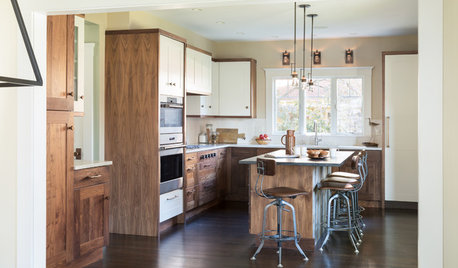
I received a few estimates for options regarding kitchen of natural finish walnut shaker cabinets. One from Scherr's which is a solid walnut stile/rail and veneer panel, one from Omega which is fully solid walnut with reversed raised panel, and one from a local cabinet shop using Conestoga parts which is fully veneer. The quotes are within $2500 of each other.

Given these options and the choice of natural walnut finish, what would you go with? I'm also currently trying to find out if the local place with Conestoga parts can do a solid wood option but I with no prior cabinet experience I don't know if it's actually better or not.

Thanks everyone!

Comments (3)

  • 5 years ago

    Just wanted to hop in here and provide some more information. A solid wood panel upgrade is also available from us.


    Edge-glued solid wood panels (on their own) are notorious for cupping/bowing/twisting as well as expanding/contracting with environmental changes (seasonality.) Within a solid wood frame, this warping is mitigated by the frame members that are situated perpendicular to the grain direction of the panel, and the seasonality is hidden by the fact that the panel is free-floating inside the tongue and groove joints of the frame. This wood movement issue is why you don't see many solid-wood flat-slab doors, especially on newer frameless cabinet boxes. The tolerances are just too small to accommodate much natural wood movement or seasonality. Despite the frame holding that solid wood panel in place, it can still become an issue in the door's ability to remain stable and lay flat against your cabinet.


    Solid wood is luxurious, it's a premium feature in the cabinet world, but it's not always practical. It can stand up to being sanded down and refinished better than engineered or veneered products. It comes down to your preferences and what you're willing to deal with. Do you want to flex on your neighbors and family members with 100% solid walnut doors, but you're also ok with added expense and the likelihood of needing to order one or two replacement doors for the few that warped? Get that solid wood!


    If you want walnut but you are budget conscious and/or you need something made with a quick turnaround and a much lower chance of needing to address stability issues. Get the Veneer!

  • 5 years ago

    Thank you, great to hear from the source!

    I have read of matching issues if using a veneer panel but solid wood frames for some wood types, especially when going for a natural or light stain finish. Is this the case with walnut?

    Also what about the option of an entirely veneer shaker door, frame panel and all? Is that a common option, and does it hold up over time?

    Thanks again!

  • 5 years ago
    last modified: 5 years ago

    Walnut can certainly show a good deal of variance in grain structure and color/tone. Mahogany is notoriously bad for this as well. A lot of times, when a cabinet shop purchases material, that solid wood may not be coming from the same trees or forest as the veneers are. This is where "Standard", "Select", and "Premium" grades usually come in. There needs to be a selection process prior to assembly to ensure that the grain structure or colors are going to match in the end. This slows down the process, ergo + labor, + lost opportunity cost in the shop -BUT- a more uniform product in the end.

    With veneers, you may be paying extra for grain matching, book matching, or slip matching—which can get very expensive, very fast. All of these things drastically increase the amount of attention needed in manufacturing and it caters the entire assembly/milling process to whatever the end-goal is.

    As for finding or making frame-and-panel doors that are entirely veneered... We can't speak to that since it's something we don't do. The only benefits I can imagine this has is driving price down, speeding up production, and allowing greater control for a uniform color/tone. All of this at the cost of a product that looks real, but... isn't.


    EDIT:

    I realize I never answered the last part of that question.

    If a person has the mindset that when a door gets scratched or dented then it needs to get replaced then a veneer door will last just as long as a solid wood door, with the exception being water damage. More specifically, what I'm talking about here is a door's ability to remain looking presentable until it needs to be addressed. In this case, veneered doors and solid doors will last a similar amount of time.


    When talking about durability, a door's ability to "hold up over time", IF you have the mindset to fix or refinish a door, is where a solid wood door will shine. Because the veneer on a veneered panel is so thin (industry standard in the US is about 0.6mm, premium veneers can get thicker), we're talkin' less than a 1/32", it becomes incredibly difficult to sand through a finish and stop at the veneer in a repeatable, time-efficient manner. With solid wood, you can work a little bit past your finish and sand into the surface of the wood and there will still be more wood... because it's 100% solid wood! Solid wood doors, if they're made from a nice species of wood will likely be worth the time and effort to refinish, thereby increasing their lifespan. A decent finish should last at least 8-10 years. A great finish will last 15+ years, depending how they're handled.


    Keep in mind, completely refinishing doors isn't cheap. Many times, a good finish can be 75%-100% the total cost of the unfinished doors themselves. If cabinet doors get refinished professionally, you will get charged for the normal cost of a good quality finish, PLUS the time/labor of sanding through the old finish and making repairs. All of that will cost maybe 75% the total value of the original doors (including their original finish) but should cost less than buying new solid wood doors. If you're a DIY-er or you "know a guy", many times you can get this done cheaper. Be warned though, good finishing requires a lot of experience, talent, and quality products.

Sponsored
Miller Woodworks
Average rating: 5 out of 5 stars23 Reviews
Franklin County's Trusted Custom Cabinetry Solutions