Software
Houzz Logo Print
stefan_stefan999

Oleander lower leaves yellowing and falling after moving it indoors

5 years ago
last modified: 5 years ago
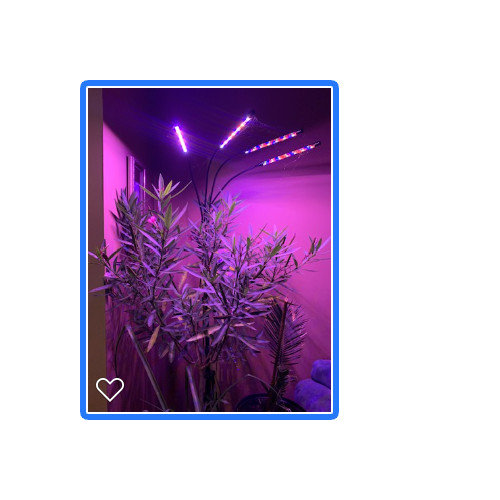
Hello, I moved my oleander indoors for the winter (in Maryland) and installed one of the best growth lights from Amazon 80 LED full spectrum etc, - 12h daily. A week later the lower leaves start getting yellow and easily fall but on the other side the top is okay and even started blooming. The watering didn't change much from the summer when it was outdoors. Is something wrong? A am adding a picture. Thanks.


Comments (28)

  • 5 years ago

    No picture. And you will get better responses if you were to post in one of the plant related forums, like Houseplants (although oleander is not a houseplant) or Shrubs.

  • 5 years ago

    Thanks. I updated the settings and photo.

  • 5 years ago

    hard to tell much with the purple pic ...


    of all the cultural variables.. you only addressed light ... otherwise everything else changed ...


    the plants are in very light shock from the move .. and it is not uncommon to to shed a few of the lower leaves in response .. no plant holds its leaves forever.. and with the declination of light in fall .. thats when the process triggers ...


    and i would not consider it a big deal.. if thats all that you lose ..


    its neat how the pic captured red and blue lines in the lamps/bulbs ... wonder if that is a manifestation of the spectrum.. whatever ..


    i thought the lights were in a light stand.. and a few inches above the plant.. but then i spotted the arm chair there ... how far are the lights form the plants.... are you applying any usable light to the plant ...


    perhaps a pic in regular light.. and not purple.. will help us understand the set up ...


    ken

  • 5 years ago
    last modified: 5 years ago

    Hi Ken,

    I made better photo. That's the lights I am using and supposedly they are enough for all needs of a plant: https://www.amazon.com/dp/B087JN3CVR/?coliid=I2VPZ6X0RQEQ1A&colid=NDI5XPAEC68&psc=1&ref_=lv_ov_lig_dp_it

    I also made another picture with normal light in the living room but I do not want the plant to rely on the ceiling light. Therefore I bought it a "growth light". Those growth lights seem to be a big hit now with their two parts of the spectrum. I am sending also a pic about the light.


    Thanks,


    Stefan

  • 5 years ago

    i ceiling light would never provide any light useful to a plant ...


    i found no info in the stats about how close the lights need to be to the plant ....


    when i used florescents .. the lights needed to be 2 to 3 inches from the plant to insure useful intensity ...


    perhaps there are peeps onboard [yeah.. you engineer types .. lol...] ..... who have a better understanding of these new type of lights ... or you can report back over the winter ... lack of light will quickly make itself apparent ... as the leaves slowly start yellowing up thru the whole plant ...


    ken

  • 5 years ago

    Most likely dropping oldest leaves because of changed light exposure. Also soil moisture should be checked.

  • 5 years ago
    last modified: 5 years ago

    Thank you for warning me but I grew up in southern Europe among oleanders and nobody dies from them there. They are on highways and streets, towns and villages. You may die if you eat oleander leaves which is very very hard to do but, hey, you may decide to do it. As a kid I never had the slightest desire to try oleander leaves or lettuce for that matter :-)). You may also die if you buy some OTC medicine and swallow a lot of them. No escape from this. :-)

  • 5 years ago

    Thanks everybody for advices. I will add more growth lights from another angle so they shine on the lower parts and leaves and see what happens. The process of leaves getting yellow is pretty fast - every day, so if the top ones are good - it is the light, if not - then there is a bigger problem. I will post here in a week or so. Thanks. Stefan

  • 5 years ago

    Flowering house plants typically need very strong light.

  • 5 years ago

    Curious about how you water. Oleander grow everywhere here too. It’s a particularly popular choice for planting along the freeways in the center dividers. I think because they can get kinda tall & bushy, fast growers (helping to block the headlights of cars going in opposite directions), low maintenance and drought tolerant.

    Since your plant is now indoors with less wind, less light so maybe less expiration and evaporation should the watering also be changed accordingly?

  • 5 years ago
    last modified: 5 years ago

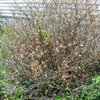
    I water kind of once in 3 days - about 70 ml (2-3 oz). Is that ok. Here close pic of the bad leaves. Also, just ordered a second light.


  • 5 years ago

    I’ve never grown this plant myself so, I’m sorry that I can’t offer a diagnosis.

    My comment was more an observation based on what I’ve seen here locally and the info you provided above.

    In general, I don’t water in sips, but more in thorough flushes...EXCEPT for one 7-8ft “money tree plant“ (sorry, forgot the Latin name) that is in a HUGE pot indoors that is too heavy for me to drag in & out to water by flushing.


    Instead of watering on a schedule, many people use a wooden dowel inserted all the way into the soil to determine if their plants need watering. Leave it in for a few minutes. If the dowel is wet when you remove it, don’t water yet. If it’s dry, then go ahead & water.


    All of that having been said though, I still know nothing about this plant or what your leaf discoloration is due to. Maybe growing medium moisture has nothing to do with it.


    Hopefully others who are more knowledgeable will chime in & assist. I’m very interested as I’ve never know anyone to have an oleander indoors.

  • 5 years ago


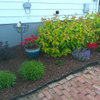
    Hi Stefan, here's one growing in the ground in Wash DC. If the plant will not overwinter outside for you I suppose you could treat it as a houseplant. Maybe bring it inside in November. Overwinter in a frost free area where it receives light and water sparingly. A sunny, enclosed porch or sunroom is an example.

  • 5 years ago

    I grew oleanders in Northern CA. They can get huge! They need very little water- almost none and perhaps some in super hot California sun! I can't imagine trying them indoors and wish you a lot of luck. Don't remember any damage in our few freezing temps in winter. As for them being poisonous - NO Deaths have been reported in CA where they are used all over - gardens, landscapes, highways and many parks.

    “There is not a single other case in the American literature that I know of of people eating oleander leaves and dying,” he said. Los Angeles County botanist Jerry Turney, who helped sheriff's investigators identify poisonous plants growing near the Wiltsey home, agreed.Jul 26, 2000

    This article was followed by this one! https://www.latimes.com/archives/la-xpm-2000-jul-26-me-59440-story.html

  • 5 years ago

    Seeing the picture from DC (outdoor oleander) I am tempted to take it back outside because outside it got big and healthy on its own. Also because I live in North Bethesda - a suburb which is no more than 10 miles from DC National Mall. In which part of DC is the plant? Also, seems it survived the few occasional Jan/Feb frosts which we always have in this area because it is at least few years old, right? I cannot imagine that plant which survives outdoors in DC will die in Bethesda/Rockville area!

  • 5 years ago

    I agree with your assessment of the conditions for your oleander to survive outside. The oleanders in my CA garden were more than 10 feet tall. They bordered the 8 ft fence and towered over the top of the fence by 2 - 4 feet at least. Good luck moving them back to the garden.


  • 5 years ago

    Hi Stefan, the oleander in my pic is 'Calypso' and it was taken at a very well protected site at the US Botanical Garden

  • 5 years ago

    you'll need to winterize the pot: wrap it in several layers of bubble insulation.

    as a side note: on yr last pic the leaves show fungal infection. usually it is recommended to thoroughly spray the plants with insecticide and anti-fungal before bringing it in. even better to use systemic 2 weeks prior to bringing it in.

    you at least should spray it with anti-fungal.

  • 5 years ago

    Thanks @petrushka (7b). I really care first time for indoor oleander so - have few questions and will be grateful for ANY answer you can give me: Can you recommend insecticide/anti-fungal product? (I have copper one from Home Depot - use for outdoor) What is "systemic"? Why wrapping the pot if it is already inside? Btw. the plant is already in the living room so I will have to spray it inside. Is that a problem? Is it ok to put Spanish moss for esthetic purposes on the top of soil? I programmed automatic watering system to pump about 50ml water each 2 days. Too much/ too little? Thanks a lot. Stefan

  • 5 years ago

    Stefan wrote: " the plant is already in the living room"

    Oleander is not a tropical, your living room is much too warm for this plant. As I posted earlier, if you decide to bring it inside for the winter keep it in a cool, sunny, frost-free location.(not your living room)

  • 5 years ago

    50 ml is barely going to dampen the soil. Better to give it a real thorough soaking (ca a few litres) far less often and allow it to drain. You can't put it on a timetable because we don't know the conditions its in. But it does need to be as cool as possible with as much light as possible. Somewhere like a spare room window or glass porch. What are your winter temperatures like? And how long does winter last? Could it still be outside for a while longer?

  • 5 years ago

    Stefan, Here is some advice from someone who grew oleander in the proper climate - MEDITERRANEAN. Stop fussing with the plant! No spray, no fungicide and certainly no automatic watering. This will be the last comment that I make because I don't think you really want comments that do not agree with your plans for the plant. One last time, oleanders are not house plants. Put it outside or in a cool - cold spot and leave it alone!

  • 5 years ago
    last modified: 5 years ago

    Won't be hardy over an extended period in the ground in USDA 7. Keep it potted and outside except during sharply frosty periods, which it should spend in an intermediate area such as near a garage window.

  • 5 years ago

    Agree with the above. I tried it once in a zone 8 PNW location in the best microclimate I could manage and it still did not last long......two or 3 winters at most. IMO, zone 8 is pushing the envelop for this plant and zone 7 doesn't offer much hope at all.

    According to MOBOT: Plants generally grow best when overwintering period is short. Since plants will tolerate some frost, consider leaving containers outside in fall until temperatures dip below 20 F. and return containers to a protected outdoor as soon as temperatures permit in spring. Overwinter in a cool location (40s F.) with moderate light and very little water or as a houseplant in a bright sunny but cool room with reduced water.

    I think you could squeak by with it as a temporary, winter-only houseplant but with as much natural - not artificial - light as you can muster and a cool location.


  • 5 years ago

    Thanks everybody. I got the idea - for the winter - cool but not frosty location (winter garden etc.), little water, no coddling.
    I will move it to such a location actually. In the meantime, during last 10 days indoors it blossomed actually. I am adding a pic. Soon to be moved back outside and around Christmas - to a cool but indoor location for Jan and Feb - the coldest months in Maryland.

  • 5 years ago

    the pic

  • 5 years ago

    Put it back out before it becomes deconditioned by the current situation, apt to be more prone to cold damage than if it had been left outside up to this point.

  • 5 years ago
    last modified: 5 years ago

    I don’t trust any of the leds on amazon and those were only $59. Lack of light is the likely cause for the loss of lower leaves.

    I find those 100w equivalent 5000k 1600 lumen led bulbs in clamp on shop lights penetrate much better and provide more usable light.