Software
Houzz Logo Print
webuser_669208901

Garden Digger (only soft top soil)

5 years ago
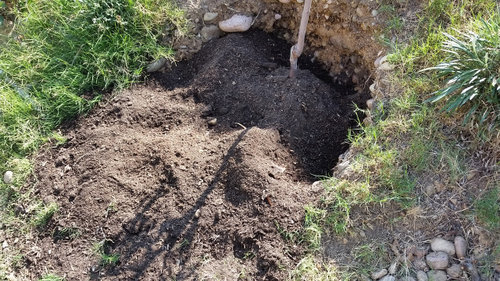
Howdy,


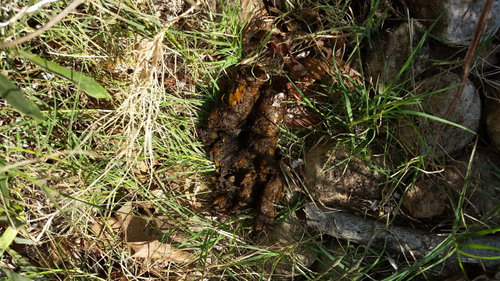
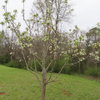
We have a small garden and some newly planted fruit trees in our San Diego backyard that are attracting some wild animals. We have witnessed some desert cotton tails and ground squirrels digging around our garden before, but never around our peach tree until recently. Main differences now are that digging only occurs on soft top soils and droppings are left behind. The first image is the digging and the second image is... (I do apologize for the graphical nature of the image). Those orange pigments are probably persimmon skins (courtesy of our neighbor's tree). I am trying to figure out what animal is doing this because it is still happening about twice a week.


Thank you for your time.


Clueless Gardener


Comments (23)

  • 5 years ago

    Do you have raccoons in San Diego?

  • 5 years ago

    Yes, we have raccoons, skunks, and opossums. This happens either early morning or at night. There appears be some kind of stridulation sound coming from the picket fence at night time (under ground?). For sure it's some kind of wild animal, but I can't see it.

  • 5 years ago

    Well, I've been introduced to a new word. Thank you! So it's either an insect or a fish...do you live near the ocean or a river?


    "Stridulation is the act of producing sound by rubbing together certain body parts. This behavior is mostly associated with insects, but other animals are known to do this as well, such as a number of species of fish, snakes and spiders."


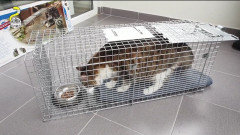
    If this were here in Oz, from the scat and the holes I'd say it's possums, but that's just my local experience. Are you able to use a (harmless), baited trap to catch the culprit? I've successfully used one similar to this to catch and relocate possums, feral cats and even foxes...


  • 5 years ago
    last modified: 5 years ago

    The fruit content could be taken to indicate raccoons although the shape and color of the scat may be wrong for those. One thing you could do is buy and set up a wildlife camera that will take their portraits when they walk past it.

    Do note that if raccoons are possible in this situation their waste is a serious human health hazard and needs to be disposed of in specific ways in order to be sure of protecting oneself and family. Because of this aspect the public health department in my State has about 3 pages on the web about raccoon roundworm and how to deal with it. Including the statement that all raccoons here should be assumed to be infested and all places the animals have simply walked should be considered contaminated.

  • 5 years ago

    Please allow me to correct the usage of the word stridulation; It sounds more like a dog scratching its body and parts of the fence at the same time. Come to think of it, I've seen a cat roaming around the neighborhood and defecating on our property before. I just didn't think a feral cat would eat fruits off trees, so I have discounted that possibility.

    Thank you shaxhome and Embothrium for your suggestions. I'll see if I can get or build a motion activated portable camera. As for setting traps, I need to do more research on what kind of traps I am allowed to set based on local regulations. Will keep you posted.

  • 5 years ago

    The pile you showed was not buried either. House cats do sometimes leave them on turf grass etc. in the manner of dogs but I think pretty much any time loose soil is present they will wrap their gift.

  • 5 years ago

    Just get a 'trail cam' HERE or one like it.

    reasonably priced and uses IR for night pictures so no flash can be seen by the naked eye. Put it within recommended distance on a stake or fence.

    Fun too, you'll be surprised at what you'll see roaming the yard at night. :-)

  • 5 years ago

    Yes, I also have a feeling that it's not a cat :( Thank you Bill for the trail cam product link; It is far better than what I can put together for far less. I will try this method first and see what I "capture". Will keep you posted.

  • 5 years ago
    last modified: 5 years ago

    You're welcome.

    Another thing I noticed, in your first pic, it appears the graft union is planted too deep. It might be just the photo angle.

    I didn't want your next post to be 'why isn't my tree growing well'.

    Trees need to be planted so the root flare is at or slightly above grade level.

    They need a grassless area around them too, with a mulch layer (not against the trunk).

  • 5 years ago

    Thank you Bill. We plan to pot that tree come next spring and replace it with something that will thrive in clay soil; this tree hasn't grown much more than 1 inch this year.

  • 5 years ago

    Put a chicken wire with a hole in center for the trunk to cover all loose soil area around tree and see what happens, even though if it is an underground creature it won't help. It protected mine for a couple of years until the tree established itself. Put a few bricks on the top to stop animal moving it around.

  • 5 years ago

    Another thing to consider you have to do something with a soil around it - I see pretty much a rock wall in the area with was not filled with new soil. It will struggle there in a few years time after planting once its roots fill the amended soil space.

  • 5 years ago
    last modified: 5 years ago

    Amending of planting hole backfill often has a temporary inhibiting effect plus reduced top growth first year after transplanting is typical also.

  • 5 years ago

    Yes, this planting was a beginner's mistake. Planning to fill to that hole to the brim and amend some soil surrounding it (about 3-4" depth) before planting another fruit tree that will do well in clay soil. Don't have wires atm, but I can place some bricks around the tree. I have just ordered a trail cam that will be here shortly. Hopefully we can see what is digging. Thank you for your suggestions.

  • 5 years ago

    Horticultural techniques for successful plant establishment

    http://pnwmg.org/wp-content/uploads/2015/03/PlantingFS-2015.pdf

  • 5 years ago

    Thank you for the link to planting instructions. My problem is that I no longer have the original soil to back fill, so I am thinking that I'll back fill with garden soil from a local nursery or Home Depot. I shouldn't have drainage issues in that hole since it's on a hill and I partially filled it with sand below. The surface area of the hole when filled should be about 9-10x the diameter of a 15 gallon container. I am just hoping that some clay loving tree would thrive in it if it eventually outgrows the hole.

  • 5 years ago
    last modified: 5 years ago

    Planting holes dug out of clay soils and filled with coarser material may become collection points for water during wet conditions. Same as with a sump.

  • 5 years ago

    Yes, it has happened before, and it worries me. This time around, I am planning to create a mound on that hole and plant a tree a bit higher. I think most water will drain from the lowest point of the hole and most of the roots will be above that. At least that may protect roots from standing water, but I don't know if it will work or create other problems.

  • 5 years ago

    Any candles in that wind?

  • 5 years ago

    first.. perk your soil.. and determine its drainage capacity ... if it drains.. you have no problem ...


    https://duckduckgo.com/?q=perk+garden+soil&t=ffcm&iax=videos&ia=videos


    we must insure you are not fixing.. that which might not be broken ...


    if it doesnt drain in the requisite period ... ... then you plant high .. perhaps only half the root mass in the ground ... and you plant in native soil ... and you bare root the tree at planting ...


    then you build a berm around the rest of the roots ... above the ground ...


    it is imperative.. that the root flare be at ground level ... next spring might be too late ...


    https://duckduckgo.com/?t=ffcm&q=root+flare&iax=images&ia=images


    tree trunk are made to be in the air.. and dry 99% of the time... not under the soil ...


    the prime issue is drainage.. and just about anything you add to a bad clay soil.. usually only retains more water.. completely defeating your goal ... such as peat moss.. humus ... potting media... etc ... trees want a drink of water then complete drainage.. just like they had in the pot they came in ...


    other than drainage.. clay is usually one of the most ertile soils you can have ... if you can just get the tree to live long enough after the transplant to put its roots into it ...


    all that is left after that.. is that you water it properly after planting.. letting it near dry between waterings ... insert finger or dig small holes to find out how it all works in your soil .. in your yard ... its usually not a irrigation or drip system thing ... its an art.. rather than a science.. meaning not a schedule thing l...


    to my very fast reading.. this is contrary to just about everything you said above ... i took the time to type it.. i hope you take the time to understand it ... meaning.. you dont need the stuff that came in the pot .. and you dont need any amendments... etc ... its ALL done with native soil ... mother earth doesnt need potting soil .. refer to any forest or orchard you ever walked thru ....


    good luck


    ken


  • 5 years ago

    Finally, I have something to report.


    Thank you for this insight. Yes, I'll try to plant 1/2 of the root mass above the ground and create a berm around all the roots. Just crossing my fingers come rainy season.


    I must say going through images of Santa Ana winds was quite challenging.


    I have finally identified the digging culprit much to my dismay; it is a skunk :( I was just out storing some stuff inside the shed and saw a skunk moving around the yard. I'll post a pic if trail cam captures something. I will try to use some deterrence methods (blocking entry/scent) before calling a San Diego wildlife officer.

  • 5 years ago

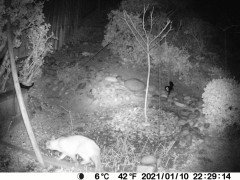
    Trail cam didn't capture any images of the skunk but captured what appears to be a feral cat. I guess so far I've identified two diggers.