Software
Houzz Logo Print
masb333

Help! ...My lawn is infested with slugs

5 years ago


Help! ...My backyard seems to be infested with slugs. I see them come out at night. What can I do to get rid of them ? I would need to use something that would be safe for my puppy as we let him go out in the backyard.

Comments (15)

  • 5 years ago

    Are they bothering your plants? Afaik slugs don’t bother grass or lawns. So unless you see damage I’d not do anything. We don’t know where you’re located but they are not very active in winter if you have a cold one.

    masb333 thanked floral_uk z.8/9 SW UK
  • 5 years ago

    Make it a place where they can't thrive anymore. I love natural remedies first but you need to wage war with them. Salt around your parimeter and establish a battleground.

    Have a place for them to retreat to by creating an environment they like, then destroying them daily on a regular basis or they will multiply. In the same area put down beer traps they will drown in.

    Give the non native pests a quick and painless death. Choose a weapon and kill as many by hand as you can.

    You can recruit birds to join the fight by attracting them with bird food, bird houses, and a bird bath since they eat slugs and larvae.

    Black coffee is healthy but slugs don't like the grounds so scatter them around areas where they are most.

    Slugs love dark and damp areas, so check for any places like rotting logs, under rocks and weeds Keep your crawl space clean. Don't use large mulch and rake your leaves regularly.

    Plant flowers that are recommended that slugs don't like such as ferns, hydrangeas, euphorbias, lavender, rosemary, geraniums, Japanese Anemone, cyclamen, California poppy, nasturtium, and lantana.

    masb333 thanked Christopher Dudley
  • 5 years ago

    It's unfair to call slugs non-native pests.


    We don't know that they are being pests (aside from existing) and we don't know that they are non-native. We don't know where the poster is located or what species is present...


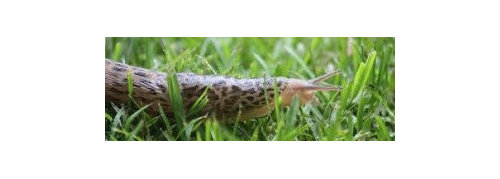
    I doubt that the generic image above is the actual critter being considered.

    masb333 thanked Fori
  • 5 years ago
    last modified: 5 years ago

    I live in western Washington, arguably the slug capital of the universe! In fact, a slug is our state's unofficial mascot. Because this area is so verdant and lush and receives plenty of moisture most of the year, slugs - and snails - are everywhere and can become serious garden pests.

    Slugs will feed on tender young grasses, especially in newly seeded lawns, but they are not a major lawn problem. They are of much greater concern for young seedlings of many plants, especially vegetable crops and annuals..

    There are countless suggestions for methods of control - baits, trapping, barriers, deterrents, even handpicking (which is remarkably effective and rewarding if slightly gross). But none are 100% effective and some can be dangerous to pets.

    Baiting tends to offer better results than most methods but can be the most harmful control to your pets if you are not careful. Avoid metaldehyde based baits as they have ingredients that appeal to pets as well as being highly toxic. Even the so-called pet-friendly and environmentally safe iron phosphate baits can cause problems as most contain EDTA, a chelating agent that makes the product work more efficiently but adds a significant degree of toxicity. Try applying in a short length of PVC piping or under a tilted upside down flowerpot. This keeps the product away from pets and also protects it against too rapid degradation by irrigation or weather.

    And suggestions to remove or eliminate possible hiding places are valid. Heavy groundcovers, weedy areas, piles of debris all make good daytime cover for slugs. Keep compost piles well away from planted areas. Learn what slug eggs look like and go on egg patrol!

    And much like deer, slugs in various parts the country may have different appetites. They certainly do not avoid munching on nasturtiums or newly leafed out hydrangeas in my garden!

    This link has good listing of additional resources you can review to gain a better understanding of your adversaries and how best to conquer them.

    masb333 thanked gardengal48 (PNW Z8/9)
  • 5 years ago

    https://wavets.com.au/departments/emergency/information-sheets/toxicities-evenomations/snail-bait-toxicity/#:~:text=Iron%20EDTA%20(red)%20snail%20pellet,vomit%20within%20minutes%20to%20hours.


    Dogs'll usually vomit it up if they're attracted in the first place, but I wouldn't use any EDTA around pets, no.


    Iron phosphate shouldn't be confused with iron EDTA, as they're not chemically the same, but the chemistry can certainly be confusing to the uninitiated! It may start with "iron," but the extension at the end makes a huge difference. Plus there's a lot of scare tactics used on the Internet to deter use of any "chemical." (Water is, of course, a "chemical").


    Iron phosphate is listed as "practically non-toxic" to mammals, birds, and fish (LD50 > 2000 mg/kg, about double as poisonous as table salt). Molluscoids are peculiarly susceptible to it.


    So this isn't really something to worry about overmuch and not something I'd be too scared of. If they're going after your plants, and you can't move the trash can, have at. :-)


    *** This announcement NOT brought to you by Dow, but by somebody interested in increasing human knowledge and decreasing fear in basic chemistry ***

    masb333 thanked User
  • 5 years ago

    Way back before I turned to organic gardening, our neighbor had a yard full of ivy and bamboo. So guess what? We had ivy and bamboo sneaking through/under the fence. And snails and slugs. The snails and slugs came first, because they run faster than even bamboo. Anyway, I did some reading and found that in merry olde England they were using ammonium sulfate as their slug/snail control. Of course ammonium sulfate is fertilizer here. That product made perfect sense. Ammonium sulfate looks like rock salt. I bought what I thought was a lifetime supply of AS for under $5 at the time and scattered it all around the yard. The snails and slugs were completely gone the next day. In a week or two they returned, presumably from the previous generation of egg layers. I scattered another dose of AS and I never saw another one of those bastards for the next 20 years.

    AS is still comparatively cheap. Not sure what iron phosphate goes for.

  • 5 years ago

    So, is that picture the OP’s pest or is it just an image from the web? If the latter can we see the actual pest? ‘Seems’ implies some uncertainty as to the id.


    masb333 thanked floral_uk z.8/9 SW UK
  • masb333 thanked Fori
  • 5 years ago

    Doesn't salt help?

  • 5 years ago

    Only if applied directly onto the slugs. Haven't seen it have much effect on snails. And you need to be careful applying any salt (table or road salt, that is) in the garden or to the soil as it is just as likely to kill the plants as it is to kill any slugs.

  • 5 years ago

    And it’s rendered useless the minute it rains. If you can see the slug or snail, which you need to for salt to be effective, you might as well just stamp on it. Just as effective as salt, costs nothing and doesn’t harm the garden.

  • 5 years ago

    That's smarter, but tiring.

  • 5 years ago

    "Doesn't salt help?"

    Yes, which is actually why DCHall recommended ammonium sulfate (a salt fertilizer) above. If you can feed on an evening when the slugs will be out, you can reduce the population. It won't kill the plants at normal levels, will reduce the population somewhat, and does find use as a slug killer. Once watered in, it's a fertilizer. Ammonium nitrate would also work. Now that I think about it, urea would also work, but you'd be able to apply far less. Give me thirty uninterrupted second and I can come up with a dozen other garden-safe salts depending on your individual soil chemistry.


    Personally, I think using Sluggo (with iron phosphate) or Escar-Go is a lot easier. It's a reasonably harmless (with some considerations) bait and killer in one that breaks down into a minor fertilizer over time.

  • 5 years ago

    I would dilute ammonia 50% and go out in the morning with my cup of tea and a spray bottle. I spent time wandering around the garden, looking at my plants and spraying the slugs. Much easier than hand picking without the problem of salt.