Software
Houzz Logo Print
jackson_sarber

what is wrong with my apple tree

5 years ago
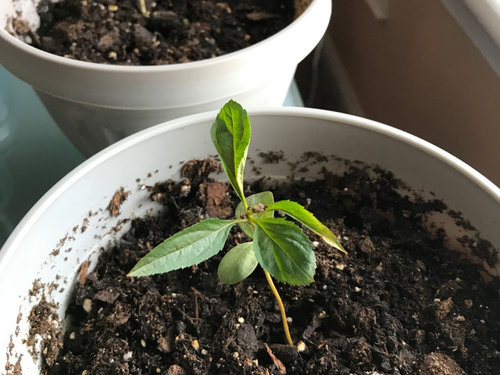
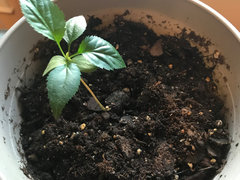
My apple tree I started out from seed is starting to brown the new forming leaves. Any advice on what it might be or what I could do? The other apple tree is doing great though


Comments (13)

  • 5 years ago
    last modified: 5 years ago

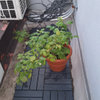
    I agree with Ken that your potting mix looks wet. It should be moist after watering, and then you should let the plant dry out *slightly* before your next watering. When potting mix stays wet, you eliminate air pockets around the roots, and this leads to rot. Also, deciduous fruit trees make terrible indoor plants.

    And keep in mind that apple seeds are like children -- they are not genetic copies of a parent, but a whole new combination. So, your future apples may or may not be edible. But it still sounds like a good winter project!

  • 5 years ago

    Deciduous temperate climate trees also need a period of dormancy, marked by cool/cold temperatures and low light/short day length. The leaves should change color and fall off. Maybe move them to a garage or other area where temps can remain above freezing but below 45F. Once the leaves drop, they require no light at all.

  • 5 years ago

    Chesapeake, VA USA

    It’s a west facing window


    ive never had a problem with an apple tree until now, I think it’s because my creeping jenny had a disease and im worried it may have spread to one of my younger apple trees. I have another younger apple tree next to the one that’s browning and it’s actually thriving right now


    i started from the seed, not planning to keep them indoors though as I know they do best outdoors and in real soil. I don’t like the look of them indoors thag much


    I just like getting them started in pots so they don’t get trampled or destroyed in any way.

    When you start from the seed they go through a cold period of 6 weeks in order to trick the apple seeds that it’s winter and that they can start germinating-

  • 5 years ago

    I water once every week to two weeks, or until the soil is dry. Which usually works for me and the other 5 apple trees I have grown (I give them away as gifts, plant them outside, etc)


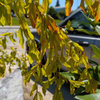
    sorry if it’s hard to see the brown. it’s in the leaves that are barely starting to form in the very middle of the tree and it’s slightly spreading to the other leaves.


    this tree started out deformed and the seed itself was cracked when it started, but the germination process and sprouting process went by perfect so I assumed that might not be a factor but it could be

  • 5 years ago


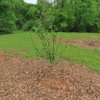
    This is what the other tree looks like!! This is how apple trees normally turn out for me so the one that’s browning is just weird. now they look almost black :/

  • 5 years ago

    you also have creeping jenny in the house??? .. just curious ...


    diseases are usually plant specific ... they usually dont jump across species ...


    but that doesnt rule out cultural issues ... like the media.. sunlight ... heat .. humidity ... etc ... plant culture.. to be clear ....


    ken


    https://duckduckgo.com/?t=ffcm&q=plant+culture&ia=web


  • 5 years ago

    Jackson, I'm curious, why are you growing apple trees from seed? It would be easier to get a cutting from an existing tree and root that cutting in a pot (not to mention grafting). Then you will be sure the tree is going to produce edible fruit.


    Unless you don't care about the fruit and only want the tree? Just curious...

  • 5 years ago

    Oh, what fun! Sorry for the delay, the last couple days have been busy (for many of us, I'm sure!)

    Dry out the soil a bit now that you're past the initial sprouting phase. It looks like you have the beginnings of a fungal problem there, and I don't like the way the base of that sprout looks. I'd separate it from the healthy one for now as well until the issue resolves itself...or not. Damp-off is a common issue with younger "trees" until there's more development.


    Very young apple trees are difficult and you're now heading into the most difficult season (source: my cousins own an apple orchard) and you started those seeds at the wrong time. That's OK, we can work with it.


    I'm going to agree and disagree with some of the above. If you're growing these just for fun, great. Carry on. Or if you purchased seeds that will produce edible apples, also great. Although please note that "edible apples" is a comparatively relative statement. Without a lot of comparatively nasty chemistry, apples usually won't be very attractive or nice, or particularly good. And a great deal of careful cultivation (such as trimming branches manually back to usually 2 apples) goes into it, although it depends on the cultivar. Plus having trees of the appropriate age. And so on. You can do the research on that.

    There's the warnings on what to grow and why. Apples are not for the timid, but they're not as bad as peaches (the cousins raise those as well).


    Your window light levels won't be enough for those this winter. But putting a good LED light on them for an additional 10 hours a day or so will be. And you don't dare let those go dormant this winter. They're far too young, they haven't developed enough, and they're unlikely to survive the situation. It's also completely untrue that many deciduous trees require dormancy; they do not, although those who are not native to deciduous trees' areas and don't know apple trees or the like may not know that just due to ignorance.

    I've kept everything from deciduous hibiscus to crepe myrtle to an oak tree up over the winter. No harm, no foul. Just keep light levels and warmth up. They'll go partially dormant on their own, then drop leaf shortly before spring hits and rapidly re-grown new ones. "Dormancy" lasts about fifteen minutes.

    Some may require it, hence the "many" above, but I have yet to find it, and yet to find the sapling or sprout that demands dormancy at that age. Don't try it. Secondary source: turning my head and looking at the extended season ageratum, 3 deciduous hibiscus, desert rose (which really does prefer dormancy and I'm disallowing it on this one--but it is not a temperate-zone plant), a random mustard plant, and the 9 other things in 4 rooms.

    We can go into why it's not a wonderful idea to store dormant trees in sharply reduced light or complete darkness all winter (as my garage has no windows and many of the ones I'm familiar with don't), but that's a story for another day.


    Feed very, very gently during the winter, by which I mean quarter rate or less. They won't want much. When spring arrives--and I mean post-frost as the leaves won't tolerate a frost--adjust them slowly to sunlight as the window is screening out most ultraviolet. Start at an hour a day for 3 days, then 2-3 hours a day, then leave them out all morning, then after a week, they should be good for all day long.

    When ready to plant outside, place them in full sun, with well-draining soil, and feed well until maturity. Once mature, the tree will not want to be overfed, and follow instructions for proper feeding to produce fruit (soil test; keep good levels of potassium in the soil, and don't mindlessly toss potassium on the plant).

  • 5 years ago

    Jackson, I just realized you're in Virginia. I used to grow fruit trees very close to you in Maryland and ended up removing my orchard altogether (I only left fig trees). I was getting so much disease -- especially apple cedar rust. The Mid-Atlantic is just not a good area for non-native fruit trees. You may have to spray, and spray often.

  • 5 years ago

    Although I've read online a thousand times that apples from seed have only a 1 in 1000 change of being good, or that you'll often get "spitters," that is not my experience. At the school I worked at, students always wanted to transplant and save the apple seedlings that came up in the garden from cores thrown away. The apples have always been pretty nice to eat, at least fresh. We have a lot of people and only a few trees, so we don't store them, but so far about ten trees have produced nice fresh fruit.

  • 5 years ago
    last modified: 5 years ago

    HighColdDesert -- I remember reading Michael Pollan's book that included a chapter on Johnny Appleseed, and his work to introduce apple trees to the frontier (at the time it was mostly Pennsylvania, Ohio and Illinois). He used seeds in that process (he didn't believe in grafting for religious reasons) and the resulting trees were in fact "spitters." BUT, in those days people grew apples to make cider, not to eat fresh out of hand. So it all worked out... :)

  • 5 years ago
    last modified: 5 years ago

    "It's also completely untrue that many deciduous trees require dormancy; they do not, although those who are not native to deciduous trees' areas and don't know apple trees or the like may not know that just due to ignorance."

    This is probably one of the silliest pseudo-horticultural pronouncements I have seen on these forums! Dormancy and deciduousness are inextricably intertwined. ALL deciduous woody plants go through dormancy if allowed to follow their own internal clock. You can certainly prevent them from entering dormancy but it will typically cut short their lifespan rather dramatically. The ignorance is more evident in those that may think deciduous trees are not common across the country regardless of location. Does one have to live in a certain area of the country to "know" about them?? LOL!

    It is also more than a little amusing to be lectured - erroneously I might add - on how to grow apples to someone who lives in the largest apple producing state in the country!! Nah.......we dunno nuthin' about growing no apples here!! Lawn care guys in PA are just so much more knowledgeable about these things, dontcha know!!

    SMH