Software
Houzz Logo Print
azsteve24

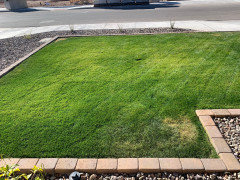
Yellow tips on rye

5 years ago
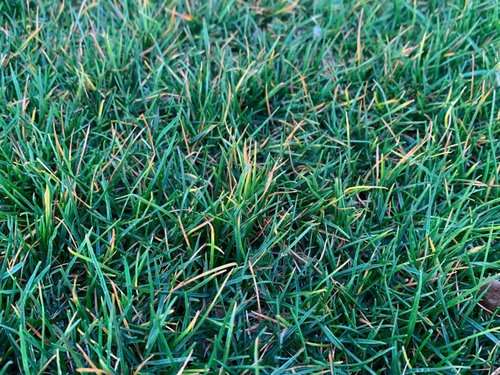
I had sod rolled out the first week of November. It was already over seeded with rye for the winter. Once it was time to mow, I mowed and then put some fertilizer down. I did over fertilizer on accident, I wasn’t paying attention. Now I have these weird yellow tips on the rye and some yellow patches. Did I burn it or is it a fungus?


Thoughts and ideas are welcomed!


Comments (19)

  • 5 years ago
    last modified: 5 years ago

    Thank you! I am in Phoenix. here is a larger photo


  • 5 years ago

    Except for that patch at the lower right, there are no signs of any issues (and that patch just looks like browned-out southern grass where the rye didn't take). Overall? I wouldn't worry about it right now.

    My rust problem is ten tines worse every year and my response is to ignore it. In my case, it fades out when winter starts. In your case, it'll stop when your spring begins--although you could feed again if you wanted, certainly.

  • 5 years ago

    Assuming you have bermuda under the rye, it's almost Groundhog Day, so you need to be thinking about how you will awaken the bermuda and kill off the rye.

    What is your current watering schedule? How long and how often do you irrigate?

  • 5 years ago
    last modified: 5 years ago

    3 times a week at 10 minutes each water. Comes on at 6:30 AM


    and correct, it’s Bermuda under the rye.

  • 5 years ago

    Perfect. That's a horrible watering schedule, but thanks for being honest.

    Deep and infrequent is the mantra for watering MATURE turf. Your rye is not mature, so you'll get away with this. And the bermuda has not started to take root yet, so there's a lot complicating the watering transition to deep and infrequent. Deep means 1 inch all at one time. The way you measure that is to place cat food or tuna cans around the yard, turn on the sprinkler, and time how long it takes to fill all the cans. If one or two cans fill faster, you may have to adjust your sprinkler heads. Be sure to put a can in your dry spot. Then write that time down because it will be your watering time from now on. As for frequency, and remember this is for mature turf, when the temperature is lower than 70 degrees F, deep water once per month. When temps are between 70 and 80, water once every 3 weeks. When temps are between 80 and 90, water once every 2 weeks. When temps are from 90 to 100, water once a week. With temps from 100 to 110, water every 5 days. With temps from 110 to 115, water at 3-and 4-day intervals. This schedule was developed in Phoenix and seems to work most everywhere. Use it as a guide once your bermuda matures - which will happen in about May. Not that you will never, ever, water 3x per week, although in PHO you might get temps higher than 115, so never say never.

    Now, how to kill off the rye so the bermuda can get some sunlight? Golf courses use a special herbicide, but homeowners cannot get it. Springtime awakening is the main problem with overseeding rye. Your bermuda, since it has no roots yet, is especially vulnerable. And now that I think about it, the herbicide I use for St Augustine weeds is effective against rye. You might try that in a small spot. I think it will work fast, but sometimes it takes 3 full weeks to completely take out the weeds. I would test that about Washington's Birthday (22 Feb not 12 Feb). If that works, you're golden. Spray the rye, wait for it to die, and scalp it down to let the sunlight hit the bermuda sod. It will warm up and start to put down roots. About that time you might have to go to the "new sod", or immature grass, watering program of watering lightly 3x per day. That's much closer to what you're doing now, but it is every day. The idea is to keep the soil right under the sod moist enough that the roots of the bermuda will grow into it.

    Mulch mow when the bermuda is up to 2 inches. Mow it down to the mower's lowest setting. If that seems to scalp the grass, then blame your sod folks for not prepping the soil better, but also raise your mower a notch until it does not scalp anymore. You can deal with the unevenness later in the summer. Write back for instructions or search this forum for 'leveling' topics.

    DO NOT FERTILIZE until you have mowed the bermuda for the second time. It is a waste of money to put down fertilizer until the roots are awake and making new grass. Then you can fertilize the bermuda with high N (low to zero P and K) fertilizer every 4 to 6 weeks for maximum green.

    You can put down a preemergent herbicide NOW. It will last 3 months and take you well past the awakening stage. If you have new weeds in April, spot spray them with a Weed-g-Gon product for bermuda lawns.

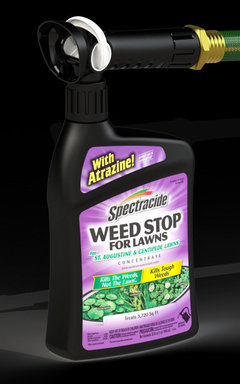
    Here is a picture of the atrazine product I use for St Augustine. It kills a lot of weeds along with their seeds. For example, poa annua is a pesky weed for almost everyone, but this stuff wipes it out seemingly forever. This stuff is not recommended for use on bermuda, but I've tried to do some damage to bermuda in my yard and this doesn't touch it. Use this to kill the rye in a couple weeks - again, test it first to be sure it works, but I think it will work perfectly. Apply as a mist to the grass, not a soil drench. Walk backwards when you apply and walk upwind so you don't get any on you.


    azsteve24 thanked dchall_san_antonio
  • 5 years ago

    "3 times a week at 10 minutes each water. Comes on at 6:30 AM"


    ...and we also just found the reason for the rust. :-)

    azsteve24 thanked User
  • 5 years ago

    I really appreciate the feed back guys! First home and lawn plus I’m on the corner! So I want a nice lawn, ha!

  • 5 years ago

    New guy. Good to know. Then here's another tip or two. If the bermuda does not come in or seems to be thin, do not overseed with bermuda seed. The grass you got is a hybrid and has a different appearance from seeded bermuda. If bermuda thins out in PHO, the only reason would be too much shade. If you have thin bermuda, the best thing to do is to outline the area, spray the remaining thin grass with RoundUp, twice, or thrice, at weekly intervals, and plant flowers or something in that area. Otherwise it's going to be weedy and a mess.

    Next fall, DO NOT overseed with rye. Sure it looks nice to have green grass in the winter, but the problems with spring awakening are not worth it. The rye grass provides shade to the underlying bermuda and always delays awakening, and that can be a problem for the remainder of the season.

    Bermuda can take as much high N fertilizer as you can throw at it. Monthly or every 6 weeks is good if you want to be the best on the block; however, you don't have to be. Every other month might be good enough and that much less hassle. When you apply chemical fertilizers it IMPORTANT to water them in immediately. Do not wait until tomorrow to water them in, because the morning dew, yes, even in Phoenix, will have caused a problem. The granules of fertilizer have to be dissolved before morning, because the dew will only partially dissolve them. The partially dissolved fertilizer is a strong salt solution and can cause a burn on the grass blades.

    In all the fertilizing you will be doing, I strongly urge you to use an organic fertilizer at least once a year, if not exclusively. The monthly use of high N fertilizer is relatively excessive for the soil and will end up depleting the population of beneficial microbes that give you a "healthy" soil. Feeding the microbes with organic fertilizer at least once will help the soil not go completely dead. I have a friend in Gilbert who uses organic fertilizers always on his bermuda in front and St Augustine in the back under the sissoo tree.

    Organic fertilizers can be expensive if you buy branded bags. If you want to try an inexpensive organic approach, you can find the ingredients of organic fertilizers at your local feed store. Organic ferts contain ground up soybeans, corn, cottonseed, wheat, alfalfa, and some other nuts, beans, seeds, or grains. All those come in 50-pound bags at the feed store for about 1/6 the price of commercially bagged organic fertilizers. I think soybean meal is easy to find in your area while cornmeal is more of a special order. Alfalfa pellets seem to be universally available for people raising rabbits, koi, chinchillas, and other small herbivores. The application rate is 15 pounds per 1,000 square feet. I use alfalfa pellets. I have a can that holds 2 pounds of pellets. I put about 1.5 pounds into the can and eyeball a 10x10 ft area (100 square feet) and scatter all the pellets around in there. Then I reload the can and move on. It doesn't have to be perfect. Also, if you think you missed a spot but are not sure, feel free to reload and hit it again. You cannot over apply these grain type organic fertilizers unless you smother the grass. That would be like pouring an entire bag on 10 square feet. After the fertilizer is down, you can moisten it to wash the fertilizer down to the soil. Organic fertilizers do not dissolve like chemical fertilizers. They are food for the soil microbes, so all they have to do is touch the soil.

    Have you been in Phoenix long enough to know about the monsoons? You'll have to adjust your watering so you don't flood the lawn soon after it has rained.

    azsteve24 thanked dchall_san_antonio
  • 5 years ago

    Yup, born and raised in Phoenix. The rolled out sod is mid iron. At least that’s what the invoice say.

  • 5 years ago

    One more thing about Phoenix soil. It is not known for being rich in nutrients. I would suggest getting a soil test from Logan Labs in Ohio. Get the $25 test. They will email you the results. Then you can have that test read by the good folks on another forum, which I would love to link you to, but that violates the T&C on this forum. We can figure that part out. When those guys read it they will tell you what to use, where to find it, how much to use, when, and how often to tune up your soil. If you were to pay for that kind of reading it would be $250 or so, but these guys just love doing it. Morpheuspa is one of the readers. If you Google his name and mine together, you'll get this forum and the other one. Then look for the soils forum. Read a couple of the soil tests to get an idea of what they will tell you. All the instructions for doing it are on that forum. You could get a test from ASU, but you won't get the same number of tests, quality, or reliability as the Logan Labs test. Plus those reader guys won't read an ASU test.

    Your invoice should have said Midiron - one word. I don't know how to pronounce it. MID uh ron? muh DEER on? MY dur on? Anyway, "bermuda" is usually an adequate description to get the conversation going.

    azsteve24 thanked dchall_san_antonio
  • 5 years ago

    Thank you for not committing me to do the read here. :-) And yes, the soil test is a good idea to be read...over yonder.

    I may even be the one to do it if Andy doesn't get bored first....

    azsteve24 thanked User
  • 5 years ago

    You guys are awesome thanks! Speaking of ASU I actually got in touch with the head guy over there for the football field. And he offered to come out and look as well. Good people!

  • 5 years ago

    My friend in Gilbert used to work on the grounds crew for ASU. They are NOT the football greens keepers and really don't care to learn anything about grass, so if you got the football guy, that's probably a really good thing.

  • 5 years ago

    Yup, it’s the football guy.

  • 5 years ago

    If he comes by, would you mind taking notes and sharing them here? We are eager to learn what we can from successful turf managers.

  • 5 years ago

    Absolutely!

  • 5 years ago


    Just checking back in after my initial post, sorry for the delay.


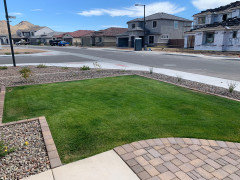
    Outside of a few dry spots. The yard is looking much better! Just wanted to say thanks for the advice/info.


    As for the guy in charge of ASU’s field he came by unfortunately I wasn’t home. Sorry I wasn’t able to get notes for you!


    He did take a ground sample however and said it was actually dry. So he gave me a water schedule to go by for a week or two.

  • 5 years ago

    Greenest lawn on the block! Nice job. What is the recommended watering schedule from the pro?