Software
Houzz Logo Print
bmwstephen

Ground level planters and drainage

5 years ago
last modified: 5 years ago
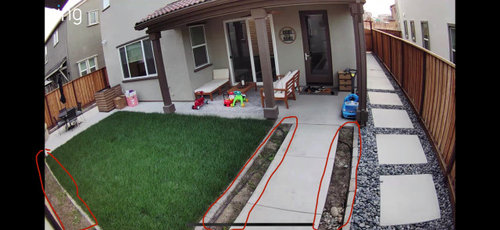
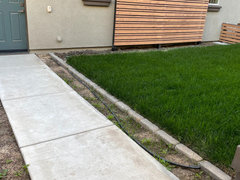
Hi all- I live in the Central Valley CA and just recent had my back yard fully landscape (save for some plants). I am reluctant on putting any sort of plants yet until I fully understand the drainage. I have some ground level as depicted but am concerned if any sort of additional drainage is needed underneath the soil?

After having some wet days here, water appears to get trapped within the borders as efflorescent has started and discoloration has appeared on the edge concrete walkway. It doesn't look like it is going to dry up anytime soon so looking for ideas.


Comments (15)

  • 5 years ago

    Your statement that you "had my back yard fully landscape (save for some plants)" could open a can of worms with one side of the profession accompanied with this picture. Let's just leave that aside for now.

    What I see is a lot of new concrete, a paver walkway with river rock and a square of new sod. Within all this new construction you have three narrow slivers of dirt that are truly too small to be useful for "some plants" regardless of the drainage.

    But let's talk drainage. Despite the recent rain I am going to take as a given that the new square of sod is regularly irrigated. Two of those narrow planting slivers are separated from the lawn by brick edging. The third is across the walkway. All three belong to the same soil volume as the irrigated lawn. They will have the same basic water content. You are just seeing the wet in the planters because there is no grass on top.

    The only other thing I might want to investigate is how much concrete drippings, walkway base materials of gravel, sand and rock may have ended up in the planters instead of actual soil. You will need to stick a shovel in them to find out. If they are full of construction debris they may not drain well.

    I see you have drip lines in at least two of the planters by the walkway. Keep in mind that as long as the grass gets watered those planters will be feeding off the same irrigation to a large extent.

    What to plant in them is the truly big question.


  • 5 years ago
    last modified: 5 years ago

    Fair enough And definitely good eye on the details.

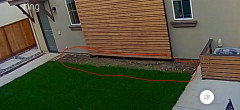
    We are considering succulent flower bed there which will obviously need as little water retention as possible to avoid root rot. But more importantly those “ slivers” (i learn something new every day) are in between the foundation of my garage and patio. my concern is if there will be any water accumulation (if improperly drained) will wreak havoc on that foundation over time given how close they are And no slope to drain too. I should also mention that probably 2 inches below the top soil below the slivers is basically clay soil.

  • 5 years ago
    last modified: 5 years ago

    Clay soils drain. They just drain slower than other soil types. You don't show the garage side planting sliver between it and the concrete patio. I'll take it this picture is looking in from the garage door and the one in question is off to the left. These planting strips are too small and too connected to the irrigated lawn for there to be any fundamental difference in the water content of the soil from lawn to planting strip. The far end of one between the garage and patio could be a bit dryer on the surface, but that's it. Unless you regularly flood the thing with irrigation I don't see it harming the garage foundation. Excess water could wick up the walls depending, but California homes with irrigated landscapes like yours in similar situations would be in a world of hurt if foundation problems were the case.

    But - if you have clay soil 2 inches below in these planting strips next to an irrigated lawn you are not going to be planting succulents with much success. Between the cement and clay soil you have created a bathtub effect. Digging down and removing the clay will only make your bathtub deeper. Planting succulents on a clay soil involves a raised bed, a berm, a hump of soil above grade that can drain. Unless you box in and make raised bed in your planting slivers, succulents may not work for you.

  • 5 years ago
    last modified: 5 years ago

    attaching a better pic of the garage side. very insightful and equally concerning on the bath tub effect as this was what I was afraid. to be clear, the irrigation is not on currently for the slivers (just preplumb). I didn't want to plant anything until I resolve any drainage and potential impact to foundation. The walkway itself is already stained from the excess rain water that has been trapped. so would a french drain be advisable at this point? there is a drain in the center of the grass (the grade underneath the grass is slopped/pitched towards the drain in case the area ever floods)


  • 5 years ago
    last modified: 5 years ago

    Put cobbles on the strip beds and grow your plants in portable planters, pots or tubs that sit on top of the pavement.

  • 5 years ago

    I tend to agree. The strips of soil next to the path are too narrow to grow much more than a row of parsley. You might get away with something along the wall since it won’t interfere with access to the house. Maybe an espalier shrub.

  • 5 years ago

    Thanks again Chris and everyone else for chiming in. Very likely I am over thinking it as this was our first home and new construction. In CA we don't have a lot of yard space so whatever we do we have to make the most of it.

  • 5 years ago

    I am a San Joaquin Valley native and am quite familiar with alternately silty clay and alkali flats for soil. (alkali flats are vast native land areas that show white surface powder after a hard rain). The underlying soil can vary a lot on the same block. Is there an old riverbed near by? Was this a cotton or alfalfa field in the past? Was this a rice field?


    The suggestion of parsley is not a bad idea. It appears you have young children, so why not surround the lawn with flowers for this summer to see how it fares. Buy some petunias, dwarf french marigolds, or allysum. I'd stay away from wildflower mixes this first summer because it's so hard to tell the difference between them and weeds.

    If you want to experiment with something edible, put in strawberries or herb plants, there's plenty of room for them. If you're leaning toward succulents for low maintenance or low allergens reasons, then small vegetable plants could fill the space. If they don't work, it won't be a big loss and you can try something else in the fall.

    If you don't have other plans for the garage wall, an espaliared fruit tree could look dramatic. They're not exactly no maintenance. You do have to prune off small shoots going the wrong direction, which can be a relaxing, tinkering sort of destressor.


    If you are at either the north or south ends of the Central valley, don't forget about the March freeze, or the Easter freeze as we used to call it. Back when fancy dresses were purchased for the girls, covering them with the winter coat or a raincoat happened about 75% of the years. As long as it's not one of our temps in the teens years, the plants I mentioned should survive it.

  • 5 years ago

    There are xeric plants that thrive in lean, clay soils. I am a horticulturist who lives in an area that is more arid with clay soil. I agree with Christopher C Nc in that the strips are too narrow . If you are concerned about water shrink your lawn. The brick edging works like a dam to hold water in the bare soil that is draining more slowly since it is mostly clay. There are no plants in that area to suck up the water with their roots, so you have much the same effect as clear cutting forests which result in flooding. I would not worry about damage to your foundation, which I don’t believe will be a problem, but rather, how to enhance your garden with plantings that elevate your your property. A patch of turf does little to beautify the space and is a water guzzler.

  • 5 years ago

    I am a retired Horticulturist who spent my career installing and maintaining a multitude of landscaped areas in our City's parks and other public spaces. From this perspective I see the potential for an amazing amount of fun with your planting strips. From the toys on your patio, it looks like you have a young child or children that play in your backyard. Why not treat the strips as an educational "play" area and use it to teach your children about plants, both edible and ornamental? By mixing colorful flowers with vegetables and herbs, it would look beautiful too.

    The ideas for using cobbles (or other mulch material) and pots would certainly work for this, and in the end might be the best solution, however since there is already a lot of rock being used in your landscape, it seems a shame to not at least try to grow something in the planting strips first. To help make your decision you need to determine exactly what the soil conditions are in the strips. Lay a small tarp or plastic sheet down to control mess and remove the soil in a test area down to at least 12". Have a neighbor with a nice yard come over and take a look at what you've got. If the soil is too poor to use (which I suspect is the case) then completely replace it with Miracle Grow potting soil (not top soil), then try growing some inexpensive annuals. As mentioned Marigolds would be a good choice. You could get a couple of six packs and also plant some in an unimproved part of the strip for comparison. If they do well then you know it's possible to utilize the strips and also how much work it's going to be to dig them out if necessary.

    Two other observations:

    1) If you decide on pots please do not make the mistake so many do by using anything other than a good quality potting soil to fill them - anything else compacts when used as a potting medium. Also make sure there are drainage holes in the bottom of the pots!

    2) Dial in you turf irrigation system so that only the amount of water your turf actually needs is being applied. This is usually described as the equivalent of one inch of rainfall per week.

  • 5 years ago

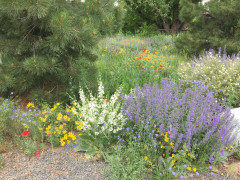
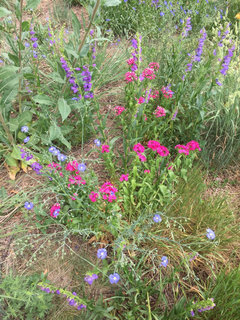
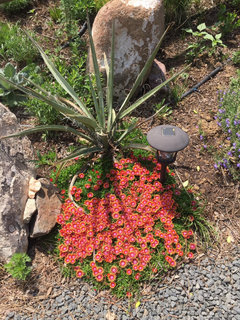
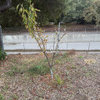
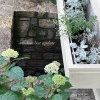
    All the pictures below show a variety of plants that grow in clay and low water in my garden. The last picture shows a variety of Delosperma which is a succulent with showy blooms. It is low growing and will fit into narrow spaces. It can be interspersed with aeonium, another type of succulent which has a rosette form and comes in varying colors from almost black to variegated varieties and would offer some height tho the border.There are also many low growing, spreading sedums available varying colors and textures That could form an interesting mosaic along your concrete hard surfaces to soften the starkness. However, none of these shallow rooted plants like ‘wet feet ‘ so you could mix in gravel with your top layer of soil raising the surface up a bit higher than the grass to allow drainage. Mulch with pea gravel as they do not like organic mulches that retain water and rot them. This would be so much more attractive than a row of gravel with pots sitting on top.

  • 5 years ago

    @aniluap2 Go visit Stephan's other post about his landscape. Say hi. You are just the kind of person he needs. Yard Rocks/Hardscape recommendation for Spanish/Mission Style Homes (houzz.com)

  • 5 years ago

    Black mondo grass would look awesome and can handle the water and poor drainage.

  • 5 years ago

    Christopher C Nc thank you for the suggestion. I just commented on his post. I love helping people embrace their gardens with sustainable natural but aesthetically pleasing solutions.

Sponsored
Peabody Landscape Group
Average rating: 3.5 out of 5 stars8 Reviews
Franklin County's Reliable Landscape Design & Contracting