Software
Houzz Logo Print
bernard_jurcina

Will trees grow here?

5 years ago
last modified: 5 years ago

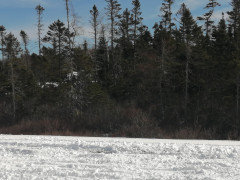
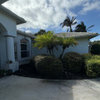
I have about two acres of poorly growing wooded wetland. It can be wet in the spring and has about 2 feet of moist organic soil that should be great for growing. It gets lots of sun and dries out in the summer with cool coastal weather. This land is in Atlantic Canada and would be zone 5 I believe.I would like this area to grow up quickly so that it can provide some privacy plus it needs something to make it look better. I'm thinking of planting some Atlantic Cedar for evergreens and then some wet soil deciduous trees. Not sure what type yet. My question is am I wasting my time with this or should I be able to get the right trees to grow here? Also does anyone have any suggestions as to what trees I should plant here? I'll try to include a picture of the area but it doesn't really do it justice. Lots of stunted spruce and some thick shrubs and bushes.

Comments (17)

  • 5 years ago
    last modified: 5 years ago

    There was a guy here that planted trees on mounds that he built, on his overly wet acreage, some time ago. I think his name was pete? Some of his posts showed pictures of his work.

    You could try the 'Bog Garden Forum' too and maybe get some ideas there.

    Good Luck!

    Bernard Jurcina thanked User
  • 5 years ago

    Look for similarly wet sites in your area to see what trees might be present on those.

  • 5 years ago

    two acres of poorly growing wooded wetland


    ==>>> he says its already wooded ... he just doesnt like whats there ... so one might suspect he can grow other things there .. including trees which should be within the definition of 'wooded'.... if he had a bog.. it seems like it wouldnt be called wooded ...


    first.. you ought to ID the plants you have ... there is a name that plant forum as well as here ...


    second.. you should contact the CA equivalent of your county agricultural or forestry office.. and ask for a list of what trees and plants might thrive there ... why ask for answers from around the world.. when you should have local experts ....


    i also suspect.. not many of us know what atlantic canada technically is... looks like the east fifth of CA ... is there any reason you cant be a bit more specific???


    with as little specificity as provided.. check this out:


    https://duckduckgo.com/?q=Atlantic+Canada+forests&t=ffcm&ia=web


    finally ... a pic or two might also help us understand what is there.. and what issue needs be solved ... eh??


    ken

  • 5 years ago

    Thanks everyone. Ken, it's on the East coast of Nova Scotia about ten miles inland. There are some fresh silver maple starting to grow and some other species. Unfortunately they are not on ideal places on the property and I may try to move some but I'd like to get some evergreens started.


    I thought about using dirt mounds but want sure if that was a good idea. I will look for Pete's posts. Thanks!


    I've attached a photo but it's not great. As you can see there are some mature spruce trees that look terrible and I'm not sure what causes that and how I can avoid it for future growth. You can just barely see some of the short shrubbery kind of trees that are growing in and around much of the wetter parts of the property.


  • 5 years ago
    last modified: 5 years ago

    What about Dawn Redwoods (Metasequoia)? They are VERY fast growing, and tolerate seasonal flooding. They are also gorgeous. They are planted in coastal Maine and hardy to zone 4. But!, they are strictly deciduous, in my NJ yard, they drop their leaves in early November, but the trunk is still reddish, textured, and gorgeous.

  • 5 years ago

    Seeing all those dead and dying conifers in your picture, there might be something going on there.

    It would be a good idea to get your Ag extension person (or the equivalent in CA) to come out and take a look. Might be a bark beetle problem or something like that. He could also give some advice on projects like this.


    Depending on your laws and how easy it is for you to make use of heavy equipment, you could dig a pond and raise some of the rest of the area with the resulting soil.


    In my area, those low dips grow the best plants, just because that's where all the wind blown organic matter ends up and clay deposits pool into those areas during heavy rains.


    Picea mariana (black spruce), Larix laricina (Larch, Tamarack) and Abies balsamea (Balsam fir) are trees that are zone hardy and will take seasonal flooding and wetter than normal conditions, most of the season.


    I'd look into what's killing those trees as a precursor to the work.


  • 5 years ago

    Thanks Bill.


    Yes, there have been pests affecting spruce trees in this area in the past. I'm not sure when the last cycle was or what the insect was but I suspect that was part of the problem. There are many examples of forest areas close to this property that have similar tree stands. I thought maybe it was something to do with the salty costal air or the type of soil. Probably a combination of both the environment and the pests (wet soil, weak tree growth and insects). I have some examples of fresh Spruce tree growth on the property that look very healthy but these are on an elevated section. I'm not sure what services are available here for the small property owner looking to improve his land. The local government leaves a bit to be desired.


    "I'd look into what's killing those trees as a precursor to the work." I guess this was part of my original reason for posting this thread here. I'll start asking around to see what or who is available locally that can explain what caused this first.


  • 5 years ago

    'I thought maybe it was something to do with the salty costal air or the type of soil.'


    Generally, if conditions aren't right for growing trees, they either won't grow at all or grow very scraggly, then die.

    Your trees look to have grown quite large in the past, indicating good growing conditions.


    In my neck of the woods, plagues of bud beetles will devastate large portions of our wooded areas. Pines (especially pinus banksiana, Jack pines) get more prone to maladies once they near their age limits (about 40 years for JP).


    The remedy for that is occasionally clear cutting (logging off) the trees and starting over again. We have local logging companies you can call and they'll send out the crews to do the work and they'll cut only what you tell them to cut, if you want to leave some of the nicer trees. Generally we end up with a nice check to boot. :-)


    What you end up doing there is totally up to you, just giving you some food for thought. :^)

  • 5 years ago

    Bald cypress (Taxodium) and Dawn redwood (Metasequoia) would definately make my list. Both I think reach max height and fastest growth in zone 7 but they're both interesting.


    Acer rubrum seems like it should be native.....


    Any of the nyssa family grow up there?


    There are a couple oaks which tolerate dormant season flooding if I recall.

    Bernard Jurcina thanked Toronado3800 Zone 6 St Louis
  • 5 years ago

    Tornado, do you think Atlantic, coastal Canada provides enough heat up there for Bald Cyperus, they would be cold hardy enough, I just thought they would need more Summer heat. The Dawn Redwood is cold hardy enough and has a lower Summer heat preference, however, they are sensitive to any salt issues that may be around.

    Bernard Jurcina thanked Phoenix Rising (Zone 7a/b, NJ)
  • 5 years ago

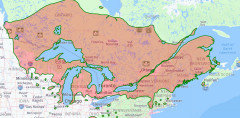
    And don't forget Thuja occidentalis (species) for wet woodlands. They are native to that area from what the map shows.

    Range map for northern white cedar:

    Bernard Jurcina thanked User
  • 5 years ago

    Toronado3800 yes there are what looks to be a few red maple growing in the area but only a few large ones and not that healthy. I'll try to take care of the saplings and see if they take off. I'll likely try to plant some of the white cedar and see what happens but from what I read they should do fine.


    How wet is too wet. Some of this land is flooded now and will likely drain a bit by May but will still be very moist. From what I read that should be ok ?

  • 5 years ago

    Bill_min_3b yes they are native but not many around in this area for some reason. Apparently there are a lot more in New Brunswick which from my experience is alot drier.

  • 5 years ago

    'How wet is too wet.'

    That's a good question.

    It might be different where you are but our precipitation levels can vary from year to year.

    Are there springs feeding that area? Or is it just snow melt and rainfall that supply the water? If that's the case, it may be that place will be drier mid and late summer.

    The trees I mentioned all like consistently moist soils, some, like Larch, will grow where it's pretty wet same with black spruce. We have some larch saplings starting up on their own in a floating bog at my sons land. But I think in general, it would be difficult to start trees in an area where it's very wet all the time.

    Tree roots like air as much as they like moisture and they will not do well in stagnant wet areas that don't dry out at all during the growing season.

    In those types of areas where it never dries, you might have success planting around the edges where it's a little higher ground and less standing water.


  • 5 years ago

    The area is connected to a lake through a long low lying wetland. It will dry out in the summer once the lake guess down. Some years are drier than others and the timing varies as well.


    There are Spruce and Juniper growing there plus Maple but it almost seems wetter where they are growing and drier where the shrubs are.

  • 5 years ago

    I can't tell you specifically how to plant in very wet locations. Make sure they're not planted too deep and they are of a type that can tolerate water for periods of time. I believe red spruce will also grow in wet locations.


    Those shrubs you talk about are most likely willows, dogwoods and other water loving plants and even those will many times grow better in locations where they are not submerged all the time.


    Planting trees is a gamble.

    Between the mice, rabbits, gophers, deer, porcupines, drought, flood, disease and other pestilence it's a wonder we have any trees survive in nature. Seems like some always make it through.


    2 seasons ago, we planted 140 white-cedar seedlings on my sons floating bog. The water is less than 6" below the surface and it's wet/damp all the way to the surface. We saw a few of them the following spring that seemed okay but didn't want to look around to much for fear of trampling them in the long grass.

    I haven't been out there since so I don't know how they're doing. We just put them in and now we hope for the best. We'll be planting more of the same this spring. :-)


    Hope it all works out for you and please let us know how it all turns out.

    Bill

    Bernard Jurcina thanked User