

ITS ALIVE!!!!!!!
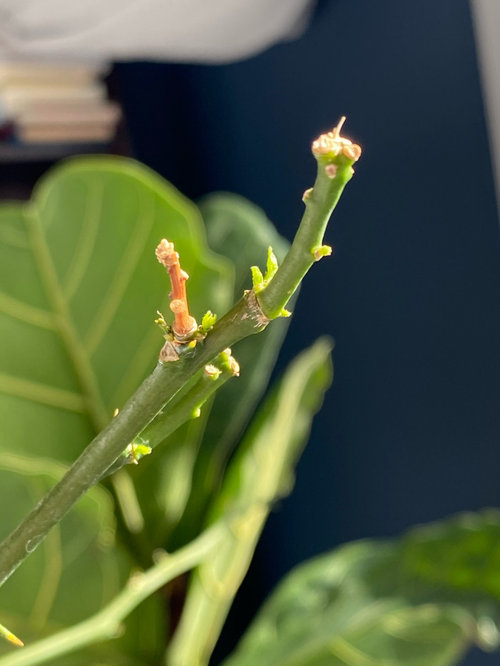
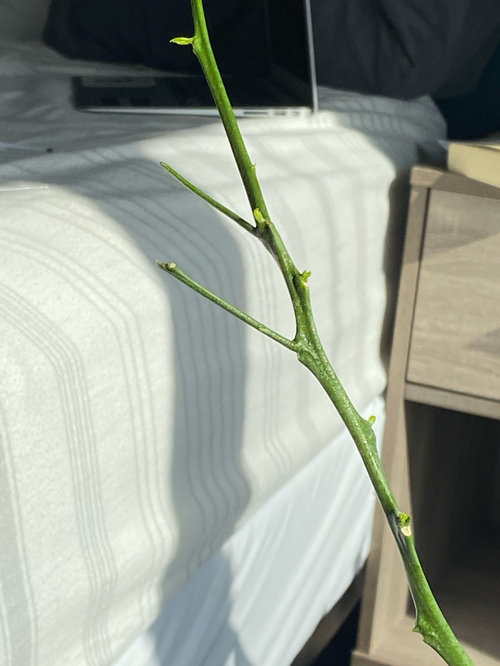
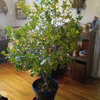
Only a week ago I posted how I thought I killed my Meyer lemon by over fertilizing. It lost all its leaves and the few fruit it had but one. Even had some branch die back. Now it seems I have a ton of new leaf growth already! I know it’s still early and this might not mean we’re out of the woods but I am absolutely ecstatic right now
Comments (91)
Grace Romito
Original Author5 years agoYeah, it’s just always disappointing and even a little frustrating to discover pests on new plants. I’m going to shower it off later. Baby wipes are a good tip, I’ll have to store that in my brain for next time.
 5 years ago
Although, baby wipes are convenient for those who have it around, but there is nothing inherent in them that makes it uniquely suited to scales. Most wipes will do since the action is primarily physical removal aided by some surfactants which is what most household wipes are. You could as well use properly wetted tissue paper and achieve the same result. If you are not against using your fingers you could emulate the same thing and eliminate the tissue paper too. A bowl of water with couple of drops of soap will do. Dip your fingers in the soapy water and wipe away. Fingers are much more effective. It is much easier to follow the contours of leaves and branches. For crevices you can use qtip or toothpicks dipped in the solution to scrape the scales. In either case, the physical action is what is removing the scales primarily. If you use diluted alcohol instead, then you can some additional kill effects of alcohol (Alcohol can be a bit harsh undiluted depending on the plant).
Related Professionals
Shreveport Landscape Architects & Landscape Designers · Springfield Landscape Architects & Landscape Designers · Indianapolis Landscape Contractors · Olean Landscape Contractors · Murrieta Landscape Contractors · Las Vegas Landscape Contractors · Washington Home Builders · Hudson Home Builders · Wilmington Landscape Architects & Landscape Designers · Kahului Landscape Architects & Landscape Designers · Daytona Beach Landscape Contractors · Augusta Landscape Contractors · Richmond Home Builders · Greenville Home Builders · Edmonton Home Builders 5 years ago
Personally, I use Cottonelle "flushable" wipes (they were a stand-in when TP got short during the COVID craze), which are 98.8% water, and add just the tiniest bit of surfactant. Since I pre-treat those with just a wee bit of witch hazel, that's there too, but I doubt it does a durned thing to any pest.
But in this case...Cottonelle. "Good enough for my a**, good enough for my plants (tm)." I should suggest the slogan.
But of course, surfactants will instantly destroy most plants, which will apparently go up in flames if they so much as see the bottle from across the room. /snark Kidding, of course, but one gets to the point where one has had it with the BS and people who can't understand the concept of "dosage," "dilution," and "let's not play Texas sharpshooter with somebody who knows what that is."Grace Romito
Original Author5 years agolast modified: 5 years agoFor that olive tree, I also did a lot of scraping scale with a flat piece of mulch I found. It was gross but effective.
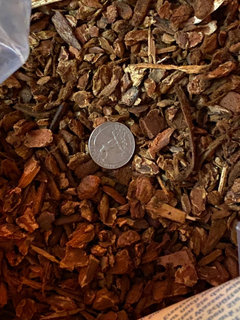
So I got 2/3 of the 511 ingredients. I had to order coarse perlite as my nursery didn’t have any. I opted for Repti-bark this time which I already regret. I purchased it online for store pick up and the second I got it to my car and looked at it I knew I f***ed up. Any thoughts on this stuff? I know this is quite the loaded question but....
Also, I would usually add a slow release fertilizer like osmocote plus but I’m assuming just the lime will do in this case, yeah? Lol
I have another 2 weeks now to observe my lemon while this 511 brews.
and Morpheus, I hope that dilution/dosage comment wasn’t hinting at me! Definitely not something I would f**k up lol- 5 years ago
Grace: Why don't you like the repti-bark you got? It does feel different from regular pine bark since they are sifted to be more uniform in size. It lacks the smaller and fine stuff as bagged pine bark. But you are going to add peat anyway for 511. I have not used repti-bark myself but quite a few of the citrus growers in this forum do. May be one of them will pipe in here with their experience with repti-bark.
You do not need to add osmocote now. You can always scratch that in later. The lime is added only to adjust the Ph towards neutral. You probably knew that already.
Grace Romito
Original Author5 years agoThe repti-bark just looks way too fresh. Is that a bad reason to hate it? Lol It does also seem like the pieces may be a little too large but I could be wrong on that. Oh well. I’m kinda stuck with it now.
- 5 years ago
Repti bark, I believe, has two grades: small and large. The small grade is suitable for 511. Yes they look too fresh. It is fir bark and actually preferred over pine bark. It degrades slower and so lasts longer. It has a more roundish profile as opposed to pine which has flatter profile. And so fir bark drains better and has more air spaces. Fir is more common on the west coast and so they can buy it cheaper in bulk like we get pine bark here on the eastern side.
- 5 years ago
Grace, make sure you soak that bark at least a few days before you mix it, Great stuff if soaked first) Hopefully you got the smaller size, because the large size would be useless(
Let's see a pic like next to a quarter for size comparison)
- 5 years agolast modified: 5 years ago
I suppose an extra large mortar and pestle might help with the large size (what, everybody doesn't own one?) or maybe a Cuisinart... :-)
"The lime is added only to adjust the Ph towards neutral."If so, it should be calcitic. Dolomitic is a mix of magnesium and calcium (35-36% magnesium carbonate), which will be (once you reduce it to elemental Mg) be rather too much and toss the Ca:Mg balance out of whack. You can reference the resource antagonism charts for that one.
I'd be more comfortable with 90% calcitic, 10% dolomitic, or just use calcitic and add the tiniest pinch of Epsom salt (magnesium sulfate) to the first watering for magnesium, which will bind to the soil.
It's for this reason we never recommend dolomitic limestone for adjusting soil pH, even though it's the cheapest and, in my area, the most commonly available.
Grace Romito
Original Author5 years agoI didn’t see an option for sizes on the bark. I’ll take a picture when I get home. I have dolomitic lime, haven’t added it yet. Only did the bark and peat with water last night. Was going to add it tonight with the perlite I ordered. Should I hold off then?
- 5 years ago
"I have dolomitic lime, haven’t added it yet. Only did the bark and peat with water last night. Was going to add it tonight with the perlite I ordered. Should I hold off then?"
Can I be blunt here? Yes. Dolomitic is completely the wrong choice and I don't care who made it. https://www.bakerlime.com/calcitic-lime-vs-dolomite-lime/ I'm just going to call the return volley an Appeal to Authority right off the bat and can we please skip it and get to the science?You're going to find that plenty of articles are out there that state that dolomitic is great because it supplies magnesium. It does--and if your soil test shows you're incredibly magnesium short...you still shouldn't use it. Dolomitic and non-humate bound calcitic limestone is glacially slow to release. Humate-bound faster calcitic limes work in six months or so. Even non-humate bound calcitics take a few years. Even so, you'll be tossing the soil by then.
We use alternate sources of magnesium that are much faster in those cases due to being water-soluble.
Yes, soils and plants require magnesium. But not much and only at about one sixth the rate of the calcium level minimum (saturation levels are OK to about 1 part Mg to 4 parts Ca, but not much higher than that). Among other things, magnesium starts to act as an antagonist to potassium. Calcium is the other heavy-hitter on the chart, and there are other minor issues associated as well (any double-positive ion will have interference, like iron).Second, you do have that pH test. I'm just saying. While wildly inaccurate, test your mix first and see what the pH is. Don't rely on it...but remember, I never recommend adding anything without some information at least.
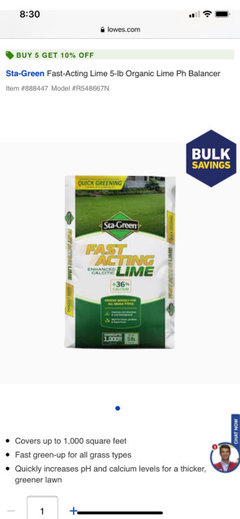
What do I use? Well, in the garden, post a good soil test, calcitic lime only, humate bound. It's not cheap, but seven pounds per thousand square feet is all that's ever required to boost my pH quite considerably (due to speed of action and effectiveness). Mag-I-Cal, Sta-Green Fast Acting Lime, any of those that recommend those approximate amounts are within the ballpark.If I need magnesium (I never have, it being very strongly soil binding and this being Pennsylvania), I'd add it separately.
 5 years ago
There seems to be some serious confusion here regarding amending inground soil or creating a suitable container mix. Since they share nothing in common except as a media for growing plants, one cannot arbitrarily make suggestions for creating/amending a potting or container soil based on what one does with inground garden soil. It is apples and oranges and you will not get similar results.
FWIW, homemade potting mixes typically will always need a pH buffer as the ingredients tend to be overly acidic (4-5 for bark fines, 3.6-4.5 for peat) and dolomitic lime is what is recommended for this purpose.....and what is used in most commercial mixes as well. There is little concern about upsetting nutrient balances as the common ingredients of potting soils tend to carry minimal nutrient loads anyway.
I would also add that getting a soil test for a potting soil is an unnecessary step unless you are adding materials of dubious value to the mix. Otherwise, you are testing for whatever nutrient load the bark, peat or coir, perlite/pumice or Turface, etc. carry.........which is almost none. A soil test for the garden is a great idea (at least a baseline test) but of zero value with a container potting soil.
btw, home soil tests kits are a waste of money as well........BUT........the pH test kits, if used with distilled water, will produce a remarkably accurate result.
- 5 years agolast modified: 5 years ago
morph: You are talking about garden soil. This is about soil-less potting mix which does not have anything to start with. Peat is acidic and bark too to a lesser extent. It is well established. There is some variation in acidity depending on source but they are acidic nonetheless. Peat has a high CEC (and to lesser extent bark) and as a result resists change in Ph.
Commercial soilless formulations do sometimes have a tiny bit of calcitic lime to immediately bring the Ph up. But it is poor in long term Ph buffering. Peat, with its high CEC has better Ph buffering capacity than calcitic lime. Dolomitic lime is slower acting and has a longer term Ph buffering capacity. Plus we are starting with zero Ca/Mg in a soil-less potting mix. Every article from soil makers and universities will tell you that dolomite is a better choice. It adds both nutrients, buffers Ph better and adjust the Base saturation levels better. Over time Mg will leach out more since it is loosely held in soil compared to Ca and so may need a small Mg boost from time to time if the fertilizer used does not contain it.
Here is a link from ProMix - one of the better soil-less potting soil manufacturer: https://www.pthorticulture.com/en/training-center/calcitic-vs-dolomitic-limestone/
ETA: I see GG has posted while I was writing something similar.
- 5 years ago
OK, I see the edit with the posting that now includes the article.
When they started to misrepresent the concept of a pH buffer, it's a problem; it's in solution, not sitting in a particle. Allegedly, these peat and bark sources are sitting there with their CEC points empty (this is impossible; the instant they got wet, they'd grab a hydrogen ion and have a pH as low as it could get--as already stated, it should land in the acidic range, call it 4.5, which is not as low as it could get, so there really are some resources present).And yet the argument is that no fast adjustment is required for a pH of 4.5 (which they state will happen within 1-2 weeks with calcitic and never bother to state the reality of a month or more to even begin with a dolomitic).
So let's pretend there are no resources, which we're going to let the plant sit in until the dolomitic limestone starts to release. That's not good.
Dolomitic limestone: "resulting in longer term pH adjustment (up to 2-4 months) and buffering to improve pH stability." This is directly quoted from said article.(Personally, I'll state that this is probably greatly understated from testing; the stuff just doesn't show that fast).
OK, so you're gaining 1-2 additional months maximum (assuming the article's stated time period is correct) to have an excess of magnesium released into the medium that's far too much that you could have added using an alternate that will also supply sulfur--which you have stated will also be absent due to the medium not having any resources, and which will also therefore not be present?And no, the magnesium will not leach in that time period. My magnesium has not leached out of my soil in decades, and soil simply doesn't differ from medium enough for that to make a difference. Don't make the mistake of Special Pleading; a CEC point is a CEC point.
You are correct and I reversed myself above; Mg does leach faster than Ca. Not that much appreciably, but some. It's not going to be significant in any soil or medium, however, as a bit of research did show. Soil flushing is minor and rare compared to the upper soil horizon of any outside soil.
So you're right, in this case a medium is not a soil, it's more constrained and less likely to change.
This article sources no studies (which is fine, I'll forgive it that as basic information but simply point it out; I've certainly shown I can handle far more than this, however).
I remain unconvinced for obvious reasons. But when I create a medium, I add Ca, Mg, P, K, and a set of micros. And as noted, tend to restore things organically except for the desert roses and other succulents, which don't appreciate that very much... Grace Romito
Original Author5 years agoHow did I know bringing up a proper 511 mix would stir controversy? I haven’t done anything yet so we still have time to debate over lime or no lime and if so, which one is better. I used dolomitic lime the last 2 times I’ve made the 511 and didn’t observe any major problems from anything growing in it but then again, that’s not a very scientific way of going about things. I really just want what’s best for my Meyer- she deserves it after the abuse I’ve put her through recently. Anyways, Mike- here’s a reference picture of the bark for you as promised.
Grace Romito
Original Author5 years agoAlright! I’ll look into humate-bound calcitic lime! Already using something different this time with the bark, might as well mix it all up. I could also do a side by side pH comparison test with both types since I have these cheap tests anyway. I have more than enough to make two small samples to test.
- 5 years ago
What is the exact line that soilless mix vendors use when making their product ? Curious. We know all gagged mixes have lime added to make it workable for most nurseries and potted plants. Do the bags even say what kind ? I know they say added lime.
- 5 years ago
Mike: In my quick search, most manufacturers do not reveal which lime. But Promix discusses the pros/cons of each in english language: https://www.pthorticulture.com/en/training-center/calcitic-vs-dolomitic-limestone/ . I had posted the same link previously. They use a starter dose of calcitic lime to bring up the Ph quickly. And also dolomitic lime for longer term Ph stability. To answer your question here is an excerpt from the same linked page:
Most commercial growing media manufacturers rely solely on dolomitic
limestone and vary the particle size to control release rates. Premier
Tech Horticulture, however, uses a combination of both forms. Together,
dolomitic and calcitic limestone create a more even and consistent
growing medium pH.And no need to worry about Ca:Mg ratio being around 1:2 in dolomite. All recent papers show plant growth/yield is the same in a wide range of the ratio. It was believed for a long time there is an ideal ratio from a paper in 1940s. Current thought is that as long as there is sufficient of each in soil the roots can differentially absorb the correct amount needed.
- 5 years ago
"Would this one be good? It says “+36% calcium”"
Sta-Green is one of the ones I regularly recommend! It's wonderful stuff and I use it myself on the property and in mixes.
TropicOfCancer Repsonded:
At this pont, I'm going to consider the dolomitc/calcitic speed and effectiveness question asked and answered and continue to recommend calcitic with Epsom salts. Preferably without being taken to task in the manner above since it seems that even professionals use it. As far as "longer term pH stability," I hope we can agree that an extra 1-2 months over fast calcitic is not something we can consider longer term in any real sense and not worth arguing about.
That last point we're going to discuss because again, it's going to require some quotations. Resource antagonism--recently tossed at me by Tapla and not countered by anybody, including you--is quite commonly accepted. While I've seen the quote online that out of balance resources are perfectly fine, the arguments are always circularly quoted.
https://www.nutriag.com/mulderschart/
The Mulder Chart is still considered definitive. Too much magnesium blocks absorption of calcium and potassium due to it competing for absorption at the ion sites at the cell walls. Since said ion sites simply aren't intelligent--they can open and close, but absorb whatever they can get, and then either use it or have to discard it if it's the wrong element. The cell also excretes the reverse charge to balance things out.Because magnesium, calcium, and potassium all have positive charges, they can interfere on absorption. Too much magnesium, when calcium is used at a much higher rate, can lead to the cells overworking to absorb calcium when they're in a magnesium bath.
Magnesium in soils can also tighten media, decreasing air and increasing water and the dreaded PWT, and so on. That's exactly what you don't want in a loose mix, and it'll get worse over time as that magnesium builds up if you're using Dynagro (4:1 calcium-magnesium ratio).Don't overdo magnesium in 5:1:1 mix.
Next up: Ask me about phosphorus, the element that CEC binds AND particle binds.  5 years ago
Hi, Grace. For almost all non-custom container media formulations, dolomitic limestone, which usually has somewhere around a 2:1 ratio of calcium:magnesium respectively, is used as the liming agent of choice; and, it's unusual for calcite/ calcium carbonate or more reactive sources of lime to be used. You're being overwhelmed with superfluous information, only a small portion of which has anything to do with your plant's condition.
Folks like Gardengal and Tropic of Cancer are well-grounded in practical considerations when it comes to growing well in containers, and they make it conspicuously clear they always have your best interest at heart.
Al
Grace Romito
Original Author5 years agoIt’s an honor to hear from you (sorry morph but I’ve been drinking tapla’s koolaid for almost 3 years now HA) I’ve always used dolomitic and have some on hand now. However, I’m going to switch to calcitic because we don’t learn unless we try new things. So don’t take it personal. As you stated “only a small portion of which has anything to do with your plants condition” I don’t think using one or the other in my case will make or break my plant. I believe there’s only so much you can do to enhance nature/genetics in a single plant living in a container. Tons of things that will kill it, fast- see above example; but as long as it gets its basic needs met, there’s only so much you can push nature to do that it wouldn’t have on its own. Maybe that’s a naive perspective but one that is practical for my own growing hobby. However, I’m still waiting on an opinion on my bark size! This is my most burning question now.
- 5 years ago
There's nothing wrong with trying new things, and there's nothing wrong with drinking a little Kool-Aid now and again. As long as you're willing to keep an open enough mind to realize that the Kool-Aid server...well, might be serving you Kool-Aid for a reason and might not be willing to let you go for a reason.
In my case, I just go with the CEC and soil/binding science. If the science changes tomorrow, I'll tell you to use something else. So I guess the science is my Kool-Aid.
Like I said, dolomitic ain't gonna kill the plants. Calcitic and magnesium sulfate isn't going to make a magic difference.I do a hundred things (all of which are backed by science and research--and all get ad hominems and bandwagon pushback just like this) that all make differences. I post photos of pots and gardens, they look absolutely bloody amazing.
The proof, as they say, is in the pudding. Proverbially speaking.
Just for idle fun, here's an ageratum growing out of season on a windowsill in Pennsylvania in early March. In full bloom.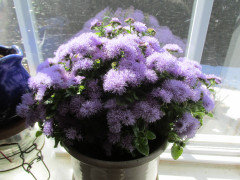
Grace Romito
Original Author5 years agoAn open mind and evidence-based science is what I’m all about. You have to remember I’m a student of biology and medicine. I’ve also worked in healthcare for 10 years now. I’ve met many pharmaceutical reps pushing products that claim to be the new magic pill when there’s no need to replace the old pill. Sometimes it’s better, sometimes it’s not, and sometimes they are not significantly different. You also always have to keep the specific patient in mind when making these decisions. In my case, that patient is a sick Meyer lemon. I have an antivax sister that I have to explain to at times, if the science changes, I’d be the first to be on your side, until then... and it’s so so so important to remember, when met with new information it’s okay to change your opinion. Humility is good. I’m not on either side of this debate, I don’t have all the information I’d need to know about lime and it’s effect on different plants and in different environments along with the inevitable endless other caveats. The main reason for my decision on switching to calcitic is just to try something new knowing the risks are extremely low. I’ll be okay if I have to start again because of this small decision and I’d actually be grateful for the experience. Respect to you all for the fun debate but let’s please move on now. The bark question still remains.
Grace Romito
Original Author5 years agoI find it all interesting and helpful (even if it’s practically not). However, I have my days too. Mostly with the anti-science crowd we’ve grown over the past year. I’d like to know your opinion, even if it differs from mine. I have a feeling the bark is no good. Or maybe it doesn’t really even matter. I just need another opinion to help gauge my own. That’s what this forum is for me. Love the nice and helpful people, the debates, the photos, the insight, but obviously this is a selfish post to hear what others would do in my situation. So let’s hear it! I understand the need to hold back in this instance as well though. I’d also love to hear what your basic recipe is for such plant success!
- 5 years ago
Grace: Absolutely do what you you feel like and experiment. The house is not going to burn down because you switched to calcitic lime / epsom salt combo. If you understand the science it makes it even better.
A number of times I wrote long rebuttals at various times in this thread. Most of those times I decided not to post it for the sake of my sanity. May be 5 years back I would have.
I did my share of experiments and reading many years back. These debates give me the opportunity to brush up again. But I have settled on set of standard simplified practices. I have well over 300 potted plants all in soil-less mix - many over 10-20 years in my care. It is either gritty or 511 or some variation of it borrowed from the bonsai world. Similarly I have simplified fertilizers, pest management and wintering indoors through various successes and failures.
Two realizations that changed my container growing skills: One I read this article about 30 years back: Why the Earth Is Not Like a Pot and then about 12 years back I read Al's famous CONTAINER SOILS - WATER MOVEMENT and RETENTION XXII
In bonsai there is a saying: If you have not killed 100 plants, you are still a beginner"
- 5 years agolast modified: 5 years ago
Grace, forgot: That bark looks very good. I would sift out anything more than 1/2 inch if there are any. @Meyermike what you think, you have used it?
Grace Romito
Original Author5 years agolast modified: 5 years agoTropic, LOVE that perspective and that quote. I’ve also read both of those posts before! Thanks for the bark advice too!
- 5 years ago
morph: just scrolling through many of your musings. Here is one that illustrates how you are focussed on yard soil:
Magnesium in soils can also tighten media, decreasing air and
increasing water and the dreaded PWT, and so on. That's exactly what
you don't want in a loose mix, and it'll get worse over time as
that magnesium builds up if you're using Dynagro (4:1 calcium-magnesium
ratio).Don't overdo magnesium in 5:1:1 mix.
If you understand the contents and particle sizes of a soil-less mix like 511 mix then you would understand that Mg has no scope of tightening the media. That is true for mineral soils where particles sizes are small and gaps between soil particles are small. In soil because of proximity the ions behave differently because the particles are well within the ionic influence sphere.
511 mix, gritty mix, bonsai mix behave closer to a hydroponic system. The bulk of the nutrients supplied to the roots is in solution already. The traditional properties of soil becomes secondary. So traditional notions of nutrient movement and availability are not exactly the same. The CEC influences how much nutrient is held back at CEC sites . But it is a secondary effect, sort of like a nutrient buffer. Once it is in equilibrium, the soluble nutrients in the macro-pores of soil determines nutrient availability. And these mixes have a very large fraction of macro-pores - unlike ground soil which is mostly micro-pores.
People who grow cactus and succulents would get it immediately. Those soil mixes are extremely poor in nutrient holding capacity. But they also are very airy to keep the roots happy and prevent any root rot. Bonsai soils are a step up. The ingredients are designed to hold more water. 511 mix is at the top of ability to hold water while still providing substantial amount of macro-pores.
Grace Romito
Original Author5 years agoOh boy. This is disheartening. Let’s stick to plants if we can’t get along shall we? I appreciate everyone’s input but this is ridiculous. Even if I or anyone else disagreed with some of what has been said, it does still hold value. If you disagree, either ask questions, add your opinion from either personal experience or research, or ignore it and move on. Don’t start an ego war. That doesn’t get anyone anywhere. I know from experience; as you both probably do as well. If you see flaws in logic, sometimes it’s best to ask a follow up question or just keep it to yourself. Pointing it out will never change someone’s mind, only drive them deeper into their own convictions. Again, thanks antivaxxers for teaching me that lesson. See, even they hold some value. Taught me a very important lesson in psychology. Anyways, appreciate what you both have offered in advice until now and I hope we can all move on and focus on the real issues at hand; the plant I nearly killed.
- 5 years ago
Grace: Absolutely. My sincere apologies for being instrumental in what I could have easily avoided.
Grace Romito
Original Author5 years agolast modified: 5 years agoYay! No more arguments though! Wrong mindset, morph! I’ll keep you all updated on how this repot goes. I watered her last night and so far so good (fingers crossed) the bark and peat have been sitting in a plastic tub for 2 days now after I moistened everything. I’ll have to get new lime tomorrow and mix that in with the perlite. I’ll let that sit until I decide to repot. Probably another week or two. I want everything to dry out as much as possible (the lemon not my new mix) until then. I’ll keep you all posted when that happens. Probably post a picture of how the roots look.
- 5 years ago
So...Again, this is a very, very general thing.
Perlite has a CEC of around 150, give or take (a lot). Sand's CEC varies from 1 to about 8. Peat's is 100-300, bark is 40-60. So you can do the math.
Stuff to add: Nothing initially. Miracle Gro Moisture Control consistently tests right around a pH of 6.5, every bag I open. Every time. I've had the analysis done and the returns were actually...pretty good, scarily enough. Ca was OK, nothing stellar. Mg was higher than I liked and out of proportion. K was high. So I add nothing. If I get a pH test out of whack I'll use calcitic lime to adjust it a little low appropriately for the mass and watch for magnesium shortages. Sand doesn't require additions. Perlite will attract resources as we go. I wouldn't object to a tiny pinch of calcitic if you wish, though.
Succulents: This depends on the succulent. If you've caught me over on the Adenium (desert rose) forum, you'll see that I actually do raise them. Lots of them. These get 1 part Miracle Gro Moisture Control (about half peat and half bark fines) 3 parts sand, and 1 part large grained sand, and 1 part Perlite. Reason being, they need a tiny bit of ability to hold water, but mostly need to be incredibly well-draining or they rot.Why not 5:1:1? Because it holds too much water, it's too organic a mix for these, and it's not recommended by anybody for these plants. Sand, perlite, and pumice are recommended.
Some of my succulents technically aren't, and do well in 1 part MG, 1 part Perlite, and 1 parts sand. They don't mind a bit more water. Of course, one has to know the plant and its native soil type to determine the best match for it.
Most plants: Variable amounts of MG and Perlite with sand thrown in for drainage. On average, I'd say it's 1 parts MG to 1 part Perlite to 1 part sand. For those keeping track at home, that means my hibiscus has been growing for more than 20 years (not without soil changes, of course) in 16% part peat, 16% part bark, 32% parts Perlite, and 32% parts sand.Given that 5:1:1 mix contains 14% peat, yeah, I can see where my mix really falls down on the job here... :-)
As far as water table issues, this just doesn't have any. Not with that much sand (huge particles) and Perlite (boulders). But it still retains some water (peat, bark).
Citrus: See above. They fall under "Most Plants." My baby pomegranate is in daycare at the moment and being...well, babied. It's currently in a heavier mix as the pot is tiny, drying out would be fatal very quickly, and yadda yadda. It's about half and half MG and sand but will get repotted this summer. Pomegranates tend to prefer deep, rich, very fertile and heavy soils, so I'll go a little heavier here and adjust as necessary. This is a first-time experiment for me, and hopefully the pom doesn't enter the next category...
Heavy-soil plants: Adjust the amount of MG upwards and add in less sand and Perlite. These soils will require more frequent replacement, can't be organically fed as easily without constant clogging and fungal issues, and are a mess to work with. I don't like them and don't raise a lot of plants that want them anyway. My new pomegrante looks like it'll run this border, but I'm thinking it'll adjust lighter.
*****
So, why sand and Perlite and not bark and peat?
Well, one, I do use bark and peat. They're great at holding water when they get wet, are a little hydrophobic when dry, but that's not really a problem for me as a general rule (and if it is, a tiny touch of soap will fix that in the most extreme cases, or simple patience with watering). But..
It doesn't rot. I can leave my plants in there longer, testing and adjusting my soils at home (just because some people don't, can't or consider this impractical doesn't mean I do).
I can feed organically. Mind, you can do that in any soil (including soilless media in that), but it'll accelerate the speed at which your soilless media decays itself, so I sort of understand why people don't in those.Rather than decay off the bark, it just slides around the sand and Perlite, which don't decay, replacing the peat and bark fines that are burning off as carbon dioxide and mush. The mass of the pot remains roughly the same.
Why feed organically? It's a slow, stepped feed (some say boom/bust from the bacterial crash but...no, it processes through fungal steps, the process is rather complex and I don't have time to do the educational work). Organics will contain a lot of your secondary and micro-elements necessary. All of them? Not necessarily (although it's usually a pretty good bet and claims to the contrary are dubious--if not, then plants wouldn't need them as they aren't in the resulting mass of the resultant).
Rough sand is cheap: And it has a great variety of particle sizes, drains beautifully, and doesn't support that dreaded water table. It does not absorb water, unlike pine bark which will saturate, particularly as it ages (soak some for a few days, I'll wait). It does not decay. It will never fix so much phosphorus to its surface that it becomes a water hazard when I eventually do have to dump it in my garden, which I have to do much more rarely due to its durability.Once great oak forests are not cut and covered in trash pine just to harvest it for its bark and cheap wood (my father took particular issue with this; I continue it in his memory).
While we do have a shortage of very fine sand for optics and beaches, rougher sand is not in any shortage at all, and lesser colors and rougher types can be used with abandon.
Perlite is a little more ecologically questionable and you may wish to look into it yourself. I evaluated it as OK, but you'll want to make your own determination. That glass is no longer in any demand for most other purposes, is not rare, and has no real value.There's lots more, but that should do for the basics.
Grace Romito
Original Author5 years agoAll very very interesting, Morph. I am very curious about two things now. Well the first has been in the back of my mind the last few days. I totally understand if you don’t want to share on here, especially given the recent climate. What is your education and career background? Second, this is a new question since your most recent comment, do you add any sort of beneficial fungus?
Grace Romito
Original Author5 years agoAlso, I get the Dad thing. Very sweet. Reading that is reminding me that knowing about environmental impact things are also important. Hell, I should know to be better about thinking about these things. My Dad was a big hippie and the first apartment I had, he went through my trash and sorted any recycling out and shamed me for it lol and my mom hated to waste anything so we composted my whole life. Lots of resourcefulness and caring about those sorts things. Plus the school I go to (even though virtually the past year) is all about the environment. We make our own soap for the bathrooms out of bio diesel so it’s brown. The list goes on and on with that university. Plus, I am a bio major. I should be better at forgetting convenience for conservation. Thanks.
Grace Romito
Original Author5 years agoI understand, as as someone also in science, it wouldn’t make me agree with you any more or any less, just pure curiosity.
Grace Romito
Original Author5 years agoIn other news, finally bought a plant stand so I don’t have to use an old box and notebooks anymore
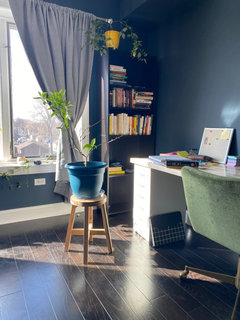
- 5 years ago
That is a nice picture. Would be nice subject for painting or a sketch.
- 5 years ago
Grace , hi ).
What I do is pull out something of use in everyone’s posts then find what truly works for my trees.
Gardengal has never steered me wrong and has helped hundreds here. Morph I’m still getting to know)
So much did you end up doing ? Do you have a pic update ? Any new growth. Let’s see please? I thank you for a very informative thread.
Keep safeGrace Romito thanked Meyermike(Zone 6a Ma.) Grace Romito
Original Author5 years agolast modified: 5 years agoI’ll post pictures and updates in a week or 2 when I repot. Currently soaking the bark/peat mixture (on day 4? now). Being slightly lazy and slightly cautious before I do anything else. Continuing to closely monitor the plant in the meantime. No new growth but the the spurt of leaves I got are still hanging on and I haven’t noticed any further branch dieback 🤞I appreciate everyone’s input :)
- 5 years ago
Grace. After reading I noticed your question sorry.
Tropic , thanks )
Grace. Perfect size. That’s what use. Soaking it is great too. That’s what I do. It softens the bark a little and helps to hold moisture better along with helping the small fractions of peat and perlite to be evenly distributed with then adhering to the bark without falling past the bark to the bottom of your pots making the mix dry evenly throughout. Good job.
 5 years ago
Hi there - there have been many comments removed from this discussion that were not on topic and in keeping with providing a welcome and helpful community and instead were attacking other users and unnecessary argumentative. If you run across comments you disagree with - best practice is to ignore them and move on. If you think a comment crosses a line and is a personal attack, flag it and our team will review it.
If there are accounts that can not do these things, and instead contribute to a hostile environment, they may be removed permanently. 5 years agolast modified: 5 years ago
Outside: snowstorm in CO. I've never seen the sun shine through during snow before I moved here.

Inside basement: paradise within wooden walls!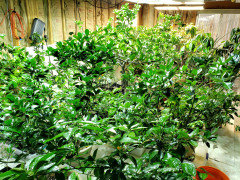
- 5 years agolast modified: 5 years ago
Beautiful pictures tom. Sun shining through clouds and snow does create wonderful scenery. Thunderstorm with snow is another of my favorite.
Grace Romito
Original Author5 years agoTom- we had the weirdest snow flurry with the sun shining bright the other week in Chicago. I don’t think I’ve ever seen anything like it before. It was like a mini rain shower in the middle of the day in late spring or summer but snow for maybe 20 minutes then back to a bright sunny day. Anyways, want to ship one of those babies out here? Lol are those all Meyers?
- 5 years ago
Small world! I was born and raised the northwest suburbs of Chicago.
This was the tail end of the storm that dumped two feet of snow on Denver. We only ended up getting around 9" here, but it's almost all melted three days later.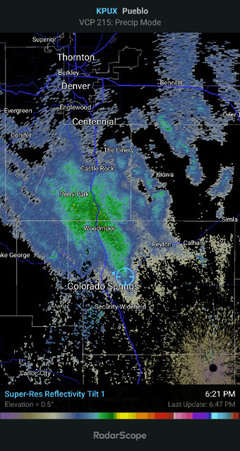
Haha, they're not all Meyers, but I do have one! It's my second-oldest citrus tree... I think I bought it back in 2011. At first, it was a lot of work, but it finally settled down and is now one of my lowest-maintenance and consistent producers. I can send you some budwood of other varieties though!










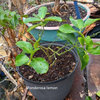

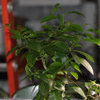
Ken B Zone 7