Software
Houzz Logo Print
sam_md

Brood X ********

5 years ago

Are you ready for them? It's been 17 years since their last appearance. Following from Baltimore Sun

article: "in addition to Maryland, a center for the emergence, the cicadas are expected to emerge in Delaware, Georgia, Illinois, Indiana, Kentucky, Michigan, New Jersey, New York, North Carolina, Ohio, Pennsylvania, Tennessee, Virginia and W. Virginia....."

I remember 17 years ago, they are really loud, 100 decibles, same as a lawnmower. I remember driving and cicadas smashing and making a mess on my windshield. They do incredible damage to the new growth of trees and shrubs and render them unsalable. Imagine if they could get into the Nat'l Bonsai Collection.

Is there any silver lining? Perhaps a feast for the birds? What do you think?

Comments (68)

  • 5 years ago


    Hi Ben,

    I was thinking of you when I saw this sign this morning. We raked up about a bushel basket of them and put your name on it. Where should we send it?

  • 5 years ago
    last modified: 5 years ago
    Send them to the White House..... And to L Clark, I believe they're louder and more of them now as 2004. It seems like there's 2 completely different "songs" -- not sure what's up with that. Many of them emerge from the grass & never get off the ground -- lawn is carpeted w/them.

  • 5 years ago

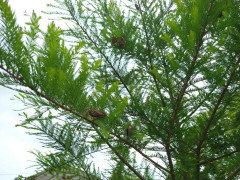
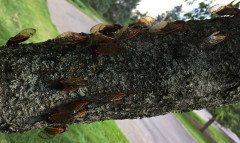
    Here are some in the needles of Taxodium X 'LaNana', formerly T406.


  • 5 years ago
    last modified: 5 years ago
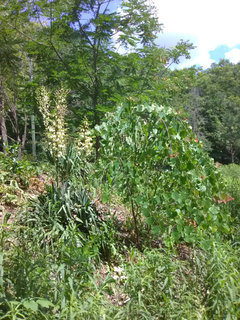
    I Kind of want to make a trip out east to witness this bizarre spectacle. mybsister lives in harrisburg and i have never gone to see her...

  • 5 years ago
    last modified: 5 years ago
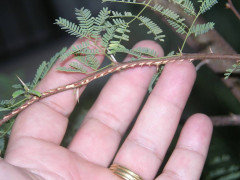
    I'm realizing the larvae don't live just off tree roots, there are just as many emerging from the adjacent lot in areas where there are no trees, just grasses and perennials like goldenrod and asters.

  • 5 years ago

    Show us what that lot and environs look like.

  • 5 years ago

    You better hurry, it's almost over.


  • 5 years ago

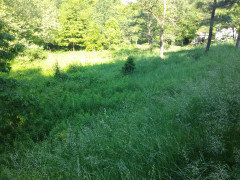
    They're in this field of grasses, perennials & various weeds. Cicadas and empty shells on the weeds.


    On goldenrod.


  • 5 years ago

    consider the sound of your neighbor two or three houses down using his bench grinder. That's what they sound like to me.

  • 5 years ago
    last modified: 5 years ago
    Yeah, it so loud that when I try to make videos of it, my phone's automatic volume gain controls turns the volume down right away.


    https://vimeo.com/559387255

    (video embedding seems to no longer work)

  • 5 years ago

    Thanks for the video davidrt. The very highest pitch sound in your video is the sound that is deafening on my lot. The other sounds start early, then the highest pitch sound gets really going a few hours later.

  • 5 years ago
    last modified: 5 years ago
    Hey beng, I was asking in regard to your comment about tree roots or lack thereof.

    I suspect - given proximity of woody plants to that grassy meadow area - that there are plenty of tree roots under the surface there for cicada larvae to nibble on.

  • 5 years ago
    last modified: 5 years ago
    Some interesting cicada feeding info:

    https://www.cicadamania.com/cicadas/what-do-cicadas-eat/

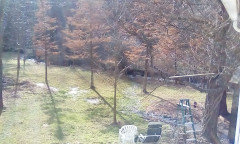
    As an aside, I had been thinking (maybe hoping) that alot of the larvae had been killed in the very wet period of 2018 to spring 2019, as there was often standing water on all the lowest areas of my lot and a near-surface water table on all of it. Thought that might "drown" them. Obviously it didn't. Example pic below:


  • 5 years ago

    The noise in Baltimore is so bad, even with all the windows closed and the a/c running, you can hear them loud and clear. I can hardly wait for this to be over. I can't stand the noise, it's horrible to go outside anywhere near a tree as you find them landing on you and crawling on you, and I want to be able to uncover my little crape myrtle tree on my balcony.

  • 5 years ago

    I'd go with this guy: http://genekritsky.com/


    I wonder about some of the things written on that Cicadamania link...xylem is a drink?


    Think I'm going to order his books, too.

  • 5 years ago
    last modified: 5 years ago

    Fori asked (3 months ago) "Do you get cicada killer swarms to go with the cicadas?"

    Cicada Killers emerge when annual cicadas are present later in the year, so they aren't around earlier in the year when periodical cicadas emerge. According to this article from the BYGL (4/1/21), "Cicada killers feed exclusively on annual dog-day cicadas; they do not prey upon periodical cicadas. The synchrony [of cicada killer wasps] with annual cicadas makes sense if you consider that the wasps would starve to death waiting 13 or 17 years for a periodical cicada meal."

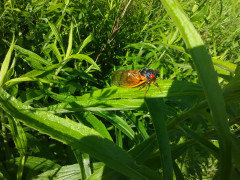
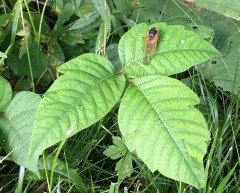
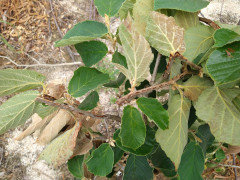
    Had the privilege of experiencing Brood X for the 2nd time in southwest Ohio over the weekend, apparently near the peak of emergence in that area. Nailed quite a few on the highway with my vehicle, but only had time for a brief stop to take a couple photos.


    Even poison ivy doesn't deter them ;)


  • 5 years ago

    I went into a pharmacy today and while I was standing in line, I felt claws on my face. Sure enough, one of those darned cicadas had hitched a ride on my hat or something and was on my face. I screamed and knocked it off, stomping it to heck on the floor. I asked the man behind me if there were any more on me, and he assured me there were not. I HATE those things!

  • 5 years ago

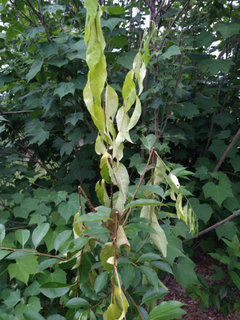
    Here is a picture of their damage to a weedy Prunus serotina seedling in my garden.


  • 5 years ago

    During and after mowing my lawn, the smell of dead, rotting cicadas was strong. Smells like dead crabs set out in the hot sun for several days....

  • 5 years ago
    last modified: 5 years ago

    Yes I am just starting to git a whiff of the dead ones now. It's interesting how far behind Baltimore and "Ben G Land" I seem to be. I was in Baltimore a couple weekends ago and was stunned by the density of them. Literally stand still for 10 seconds (or move, it hardly mattered!) and one of them would try to land on you. (Well obviously the forested northern part of B'more) I thought to myself, "Oh, I'm lucky, I must be on the edge of Brood X and there are fewer of them here." I am, as the crow flies, just a few miles from sandy soil of the eastern shore which they supposedly don't like. BUT NO. On Sunday it was almost just as bad here.

    [FWIW there is a line of demarcation of course. My nephews in the more rural northern part of Bucks County have not seen them and I expect they won't at this point. But there are media reports of them in southern Bucks, closer to Philly. I think my brother's house must be in the Brood II region. Waaayyyy OT but what a great county in which to grow up. I know they have been to this place: https://en.wikipedia.org/wiki/Mercer_Museum and I would have loved that as a kid.]

    But this corroborates the theory about how chilly my springs are...I went to a garden tour once just south of Trenton NJ ( the amazing garden of initials "S.S" if anyone knows who I'm talking about) came back to "davidrt28 land" and realized, 60 miles NORTH of me, all the plants were further along by roughly 2 weeks. Fine with me! Parts of Baltimore closer to the Bay like Essex or the oh-so-Baltimorean sounding "Bowley's Quarters" might track closer to me.

  • 5 years ago

    BTW also OT, but it blows my mind how common it is to hear it referred to as "Brood EX". The X is roman numeral 10, wouldn't it make more sense to say in speech, "Brood ten"? Do they speak of the other broods that way? Is Brood Two called "Brood Eye Eye?" lol. Are people being idiots or am I just being pedantic?


  • 5 years ago
    last modified: 5 years ago

    How do the cicadas damage plants? Do they eat the foliage and the bark? It also looks like that cherry has broken branches.

  • 5 years ago

    They can create gashes in the stem so numerous and deep that the wind or rain knocks them over. I am both a windy location on a hill near the bay, and have had some real gully washers recently. There are broken branchlets like this all over the garden.


  • 5 years ago

    I noticed the last time (2004) that many twigs on one of my sugar maples weren't outright killed, but formed brittle, lumpy calluses where they were damaged that got broken over the next years.

  • 5 years ago
    last modified: 5 years ago

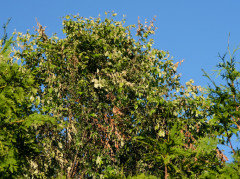
    It's actually a lot worse here than I expected it to be. Here is the top of a neighbor's Betula nigra.


    At first there seemed to be a pattern where they were avoiding small newly planted trees and shrubs so I thought I didn't need to worry about it, but I am now thinking that is just law of averages. They attack whatever they land on and the new stuff is obviously just less available because there's less of it. I do feel like it must be ending soon, they are less noisy and I see fewer of them flying around today. They seem especially fond of Rosaceae and one of my Prunus mumes is in very bad shape. Conversely they seem to be totally avoiding magnolias.

    Beng does it seem to be abating out there for you?

  • 5 years ago
    last modified: 5 years ago

    Sound is alittle less than it was (it had been actually pressuring my ears), but there seems to be even more down low on all the trees, shrubs, even weeds pairing up and females splitting twigs/laying eggs. My crape myrtles are badly damaged like your black cherry & birch above. If you look closely you can see lines of parallel slits on the underside of hard and soft stems from the females' egg-laying. Tho they concentrated their singing in my Chinese elm, they don't seem to like it for egg-laying -- twig size/structure not to their liking. Also, I see they avoid my umbrella magnolia and catalpa -- stems too thick.

  • 5 years ago

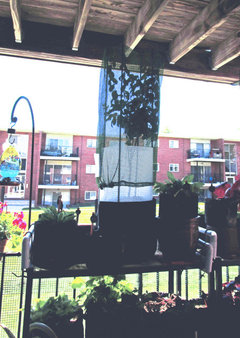
    Bengz, your description of the damage to your crape myrtles makes me glad I installed a mesh laundry bag and plastic needlepoint canvas

    Tover my balcony's dwarf crape myrtle. I had to sacrifice being able to see the beauty of my new tree baby, but I was willing to make that sacrifice to save the tree. Yes, those darn things are able to make it up to my Baltimore balcony. Can hardly wait for this plague to be over. I hate the noise, them landing on you, the dead bodies, having to cover my crape myrtle--I hate the whole scenario. Hopefully this is IT for 17 more years!


    Balcony looks darker than it is. In another hour, it will be bathed in the SW exposure sun.

  • 5 years ago
    last modified: 5 years ago

    Esther just curious do you mind saying roughly where you are? (Obviously in the Brood X zone!) Beng is out in Washington County, MD, (I think) and I am in Cecil County.

    Think the first thing they might have outright killed was an 'Eight Ball' Pomegranate from Woodlanders. Things with thin, wiry stems like that are especially suspectible to complete destruction, I suspect. Not too worried about that...it's not an especially uncommon plant. Thing I'm next most worried about, I I will be pissed if dies, is an expensive Parrotia cultivar from Bloom River. I still see a few flying around but it's almost completely quiet today...fingers crossed the plague is almost over!

  • 5 years ago

    She is in Baltimore.

    tj

  • 5 years ago
    last modified: 5 years ago

    davidrt -- grew up in Washington Co, now in Allegany Co. Allegany Co actually has more diversity of trees, I guess because of the more diverse terrain/geology. Washington Co, tho, has some of the champion "limestone-adapted" trees in Md, like chinkapin oak, Kentucky coffeetree and cottonwood. Big cottonwood in Hagerstown City Park, which has a number of limestone springs.


  • 5 years ago

    Trying to match math with memory. I was born in 1949 in Baltimore and moved to a new location (also in Baltimore city) when I was three. That's what I remember being told. It was a "locust year" and remember the dead locusts in a pile in the corner of the new house and crunching under my feet as my mother and I walked up the block. I remember it being the '17 year locust'. I didn't turn 4 until November, so I think the math works out. I remember those skins as huge....gotta say from the Boston suburbs I'm not missing the experience!!

  • 5 years ago
    last modified: 5 years ago

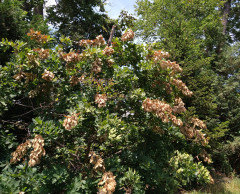
    Hoping the onslaught is over for the next 17 years. Saw none flying today and only a couple on the ground, the rains washed a lot of the dead ones off pavement. Lots of nasty last minute surprises though...like this Witch Hazel 'Wisley Supreme'. It will live, probably, but will take a couple seasons to grow past this disfigurement. At least we aren't having a drought on top of the damage they caused. That would increase the fatality count, I'm sure.


  • 5 years ago

    David, I'm in Baltimore, near Pikesville. Over the last few days, there has (yay!!!) been a marked reduction in those horrid cicadas. I don't hear the loud din, I don't see them flying everywhere, and I don't see masses of dead ones in the gutter. When will it be safe to remove the mesh laundry bag I'd put over my dwarf crape myrtle to protect it from cicadas?

  • 5 years ago

    I would wait one more week because it seems like the surprise damage is their last hurrah in many cases!


  • 5 years ago

    Thanks, David. I'd hate to have covered my beautiful little dwarf crape myrtle for nothing if I remove the protective mesh laundry bag too soon.

  • 5 years ago
    last modified: 5 years ago

    New damage here appears to be completely over, and I don't think a saw a single live one yesterday. Good riddance!

    It's hard to say if any given angiosperm was particularly affected. In my garden at least, it seems like oaks fared the worst. Here is my Q. X turneri OP, slated to be deaccessioned and already having had its top chopped off by my tree guys who were removing branches from a nearby large maple. I told them to not worry about stuff falling on it LOL.


    Meanwhile in the distance you can see the cones forming on one of my Abies firma, which was, along with all other conifer, unaffected. Did anyone see any damage on conifers?

    Broadleaved evergreens and deciduous magnolias seem far less prone to attack. In the case of the latter, I wonder whether it's the thick stems, or the particular magnolia odor, that repels them. Odd exception: Ilex X attenuata 'Longwood Gold' is the only of my many Ilex cultivars, including the native Ilex opaca trees already on my lot, with a significant amount of damage. Go figure.

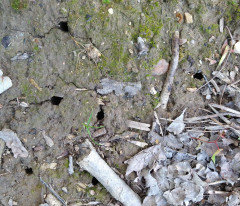
    No discussion of these horrid things should close without a picture of their foreboding exit holes that are dotting the soil under any trees that were around 17 years ago:


  • 5 years ago

    DAVID and fellow Baltimore residents: I just heard from Dr. Michael Raupp this morning, via email. He wrote: "...sure it is safe to remove the netting now. The visit of Brood X is ending." So a bit later, I will venture out onto the balcony (it is HOT HOT HOT today!) and remove the mesh laundry bag from my beautiful little dwarf crape myrtle. Hopefully, I will not find any damage to it. If any cicadas got to it (and I never saw any near it), you will hear a shriek across the county!

  • 5 years ago

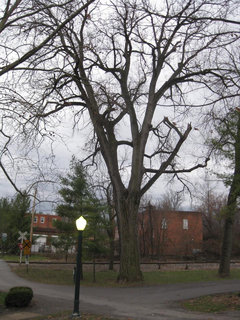
    Still a few here hanging on. Alot of dead ones on the ground or locked in a death grip on twigs. Poor redbud here looks like a weeper, but that's because all the stems are half-breaking. Kentucky coffeetree behind.


  • 5 years ago

    bengz6, where in MD are you located? Are you further south than Baltimore or further north? I noticed on a visit to Joppatown, which is a bit NE of Baltimore, that they had the cicadas out in absolutely full force at least a week before we got them here in Baltimore near Pikesville.

  • 5 years ago
    last modified: 5 years ago

    Ben said above he is in the westernmost county in MD, Allegheny.

    I suspect weather patterns leading up to the 'emergence' would influence exact timings. So maybe Pikesville had had more cloudy or cool weather than Joppatown. I don't really think of Joppatown as a 'coastal influenced' area of MD, even though it has a small amount of frontage on the Gunpowder and some marinas, because it's blocked by the Edgewood peninsula. (where nobody really lives past Amtrak because it's APG!)

    I had to drive to near Pikesville last week. There's a hill visible in the distance near the 81/695 interchange. It is covered in deciduous hardwoods and they had so much damage that from a distance there was a decidedly brown cast. Strangely reminding me of what is seen in areas with broadleaf evergreen/sclerophyllous forests when they are leafing out with new growth.

  • 5 years ago
    last modified: 5 years ago

    Esther, I'm within a hundred yards of the MD-PA border. As of yesterday, the sound is diminished, but there are still plenty of them. An odd sight I saw was a gang of noisy birds in the trees chasing & even catching them in the air, and they were red-winged blackbirds, which I've never seen here before. And driving on Rt 68 I see young northern red oaks are particularly damaged.

  • 5 years ago
    last modified: 5 years ago

    Well, I removed the mesh laundry bag from my dwarf crape myrtle last night. I had the mesh laundry bag supported on 4 bamboo stakes stuck into the soil of the fabric grow bag the tree is in. The laundry bag fell about 7" short of the soil, so I had stuffed some plastic needlepoint canvas on its edge into the soil and curled around inside the laundry bag, drawing the bag tightly closed around the needlepoint canvas. It looked like my tree was all enclosed. When I removed the mesh and canvas last night, I found one single cicada wing on the soil in the pot, and a wiggly green caterpillar on top of the soil, which I dispatched at once. Do you think a cicada made its way into the mesh--there was only the one wing--or do you think a bird dropped its cicada treat? Birds do come and perch on pots and stuff on my balcony.


    How can I tell if there is cicada damage to my little crape myrtle?

  • 5 years ago

    If the stems don't bend/break and/or die, you're OK. Some trees/shrubs' stems bend, but stay alive awhile, while others bend badly and/or outright die or break off, like the dead tan/brown ends of branches on trees that we see now.

  • 5 years ago

    Bengz, a few of the newest branch tips are dipping downward, but I think that's due to being mushed up in the mesh laundry bag. I'm hoping that now freed, they will eventually spring back. I didn't see any incisions in the bigger branches from cicada egg laying. And I don't see any brown leaves. So what do you think?

  • 5 years ago

    Incisions would be pretty obvious and underneath (on the bottom) of stems. Below is an example:


  • 5 years ago

    OK, I will go out on the balcony today and look at the crape myrtle's branches.

  • 5 years ago
    last modified: 5 years ago

    Ready to stop thinking about these, but as a final note for posterity, they DO in fact attack broad leaved evergreens just as much as deciduous plants, it just takes longer for the damage to show up. An Osmanthus X fortunei in full sun is looking particularly damaged now. Might update this comment with a pic later, but for now can say actually very worried about the effect it could have on certain borderline hardy BLE*s, to have hundreds of little zipper cuts in their stems. Will they by able to seal off that injury in time for winter?

    * not referring to the O X fortunei in this case...Dave and I agree these are rock hardy in all but the very worst, once every 50 year winters. Mine sailed through the PV I & II unaffected. 1994 might have damaged it...but hopefully we won't have another winter like that for a while!


  • 5 years ago

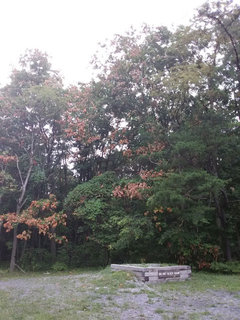
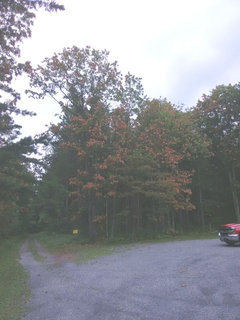
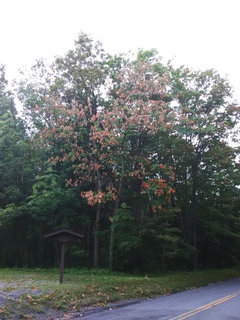
    I saw some almost total cicada-caused-browning of some oaks along US Rt 68 in west MD, but didn't have my camera. Here's some less serious damage in PA, but still impressive, again, mostly on oaks (it IS an oak forest).


  • 5 years ago

    Rocky Gap State (MD) Park, you can see whole patches of almost completely browned trees on Evitts Mnt. I see such brown patches on other nearby mountainsides too.


  • 5 years ago
    last modified: 5 years ago

    yep it's really kind of depressing to me although most plants will be fine...a few of my rare plants I'm really worried about now, like a new-to-horticulture Chinese Clethra from Far Reaches that lost > 50% of its crown. Same happened to pomegranate 'Eight Ball'. So now those borderline zone 7 hardy plants will have lower carbohydrate reserves to get through winter. I wish I'd protected those with some fine netting I bought way back in winter, but I just had too many things going on in my mind at the time I guess.

    AT LEAST I'm not worried about drought on top of this, had over 6 inches rain in both June and July...although it seems to be coming in infrequent, heavy downpours.