Software
Houzz Logo Print
katie_o_brien92

Tips on water propagating

5 years ago
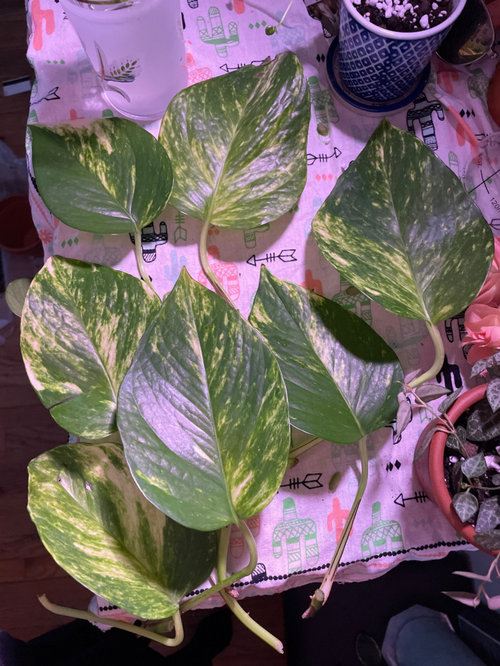
I’ve made several attempts to water propagate cuttings in the past. And have lost many to rot. I’ve just recently managed to successfully water prop and transfer a few plants to soil without running into rot issues or then just simply not acclimating to the transfer from water to soil... I was recently given several golden pothos cuttings that have probably the biggest and most pretty looking leaves that I’ve ever saw on a golden pothos.. can anyone give me some advice as to how to properly water prop them so that I don’t lose any to rot or have them die when I transfer them to soil? TIA!! Also.. I was told it was safe to add superthrive to prop water.. is this safe?

Comments (13)

  • 5 years ago

    i simpy dont fool with water ...


    get some quart plastic pots.. [about the size of a big coffee cup...] heavily moisten some media ... shove 2 or 3 in each quart pot ... insert pot in upright gallon baggie .. and leave top open ...we are creating humid atmosphere to keep the leaf moist ...


    in 2 or 3 weeks.. gently try to pull a plant out.. if it wont come.. its rooted.. if it slips out easily ... just put it back and refirm media ...


    in a month or two ... get a bigger pot.. or a hanging pot.. and put two pots of rottings.. into the bigger pot ... and presto.. done ...


    you are simply making it harder than need be ... crikey.. most pathos cuttings already have a root right there at the node ... all they need is some damp media to trigger root growth ...


    ken

  • 5 years ago

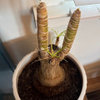
    Is that an actual pothos cutting with stem or is it just leaves? If the latter, they won’t work.


    you need to include a full stem when rooting.

  • 5 years ago

    the piece at 530 appears to have a stem part and root ... but i agree.. others look like bare leaves ...


    ken

  • PRO
    5 years ago

    Those look like just leaves, you don't have any stem nodes for roots to grow from. And don't let it sit out in the air when you get stem cuttings- they need to go straight from cut into their rooting medium.

  • 5 years ago

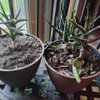
    Nope .. all stems

  • 5 years ago

    2 vines cut up into several cuttings with multiple nodes

  • PRO
    5 years ago

    The first pic didn't look like it had stems/nodes, but that second pic does. Make sure your stems aren't too long, try to keep to 1 node per cutting if you can.

    I don't usually mess with water much for this sort of thing, just rooting powder and stick into clean potting medium. If you go with water, make sure you are changing the water daily, helps keep em clean and not so prone to rot.

  • 5 years ago

    Since I have had them in water for about a day would I still be able to do this.. I have rooting hormone. If so what would you recommend for media?

  • 5 years ago
    last modified: 5 years ago

    I agree. My top tip on water propagating would also be “don't bother”. And yes, just move them to medium now. Their day in water wont hurt them.

  • 5 years ago

    Any specific medium?

  • 5 years ago

    the only reason to use hormone on pathos.. would be if said hormone also had a fungicide in it ...


    as noted.. it already has a root nub... no need to develop one with hormone ... but avoiding any potential rot with the fungicide is always approved ...


    dip it in.. knock off all excess back into the container .. its not a more is better thing ...


    you really cant fail with rooting pathos.. just trust me on that ...


    ken


    https://duckduckgo.com/?t=ffnt&q=potting+pathos+cuttings&iax=videos&ia=videos

  • PRO
    5 years ago

    Oh yes, the rooting powder I use does have fungicide in it, a big part of the reason why I use the stuff. I pour out a little from the container into a small dish, and never tap back off into the container to prevent cross contamination, but I do always tap off the excess after dipping a cutting into powder.

    I use the same medium for cuttings that I use to start seed with. It's sterile, fine, and does not have any fertilizer in it.

  • 5 years ago

    Rooting in Water

    Though roots form readily and often seemingly more quickly on many plants propagated in water, the roots produced are quite different from those produced in a soil-like or highly aerated medium (perlite - screened Turface - calcined DE - seed starting mix, e.g.). Physiologically, you will find these roots to be much more brittle than normal roots due to a much higher percentage of aerenchyma (a tissue with a greater percentage of intercellular air spaces than normal parenchyma).

    Aerenchyma tissue is filled with airy compartments. It usually forms in already rooted plants as a result of highly selective cell death and dissolution in the root cortex in response to hypoxic conditions in the rhizosphere (root zone). There are 2 types of aerenchymous tissue. One type is formed by cell differentiation and subsequent collapse, and the other type is formed by cell separation without collapse ( as in water-rooted plants). In both cases, the long continuous air spaces allow diffusion of oxygen (and probably ethylene) from shoots to roots that would normally be unavailable to plants with roots growing in hypoxic media. In fresh cuttings placed in water, aerenchymous tissue forms due to the same hypoxic conditions w/o cell death & dissolution.

    Note too, that under hypoxic (airless - low O2 levels) conditions, ethylene is necessary for aerenchyma to form. This parallels the fact that low oxygen concentrations, as found in water rooting, generally stimulate trees (I'm a tree guy) and other plants to produce ethylene. For a long while it was believed that high levels of ethylene stimulate adventitious root formation, but lots of recent research proves the reverse to be true. Under hypoxic conditions, like submergence in water, ethylene actually slows down adventitious root formation and elongation.

    If you wish to eventually plant your rooted cuttings in soil, it is probably best not to root them in water because of the frequent difficulty in transplanting them to soil. The brittle "water-formed” roots often break during transplant & those that don't break are very poor at water absorption and often die. The effect is equivalent to beginning the cutting process over again with a cutting in which vitality has likely been reduced.

    If you do a side by side comparison of cuttings rooted in water & cuttings rooted in soil, the cuttings in soil will always (for an extremely high percentage of plants) have a leg up in development on those moved from water to a soil medium for the reasons outlined above.

    Al