Software
Houzz Logo Print
webuser_59016767241

Is tap water killing my citrus trees?

5 years ago

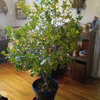
I live in Philadelphia and have a couple of indoor citrus trees. They do well with growth for a while, but then drop a ton of leaves quite randomly.


Recently, I switched to distilled water to see if it will help. Though I have yet to see real issues with my trees, it's still pretty early. The main reason I'm asking is because it is quite a chore to distill water for my plants for regular watering.


Below are the additives to Philadelphia's water supply. Any thoughts on if they would hurt my citrus trees, or if I can go back to tap water safely?


Chlorine

Chlorine in the form of chloramine (chlorine combined with ammonia) is added, first to disinfect the water and then to make sure that the water stays free of germs or harmful bacteria all the way to your tap. Chlorine levels in water vary from about 0.2 parts-per-million to 2 ppm depending on where you live relative to the water treatment plant, as well as the time of the year (chlorine is harder to keep in the water during the summer when the temperature of the water is high).

Hardness

Philadelphia's water is moderately hard because the rivers from which we get the water contain calcium. We increase the hardness slightly as we add lime to adjust the acidity, or pH level of the water. These are natural minerals.

pH

The acidity of Philadelphia's water is controlled at the treatment plant using lime to make sure that treatment works properly and to make sure that the water coming out of your tap is consistent and low in corrosiveness. The natural water's pH can change. The treatment plants control these changes so that we can supply water that is neutral in pH.

Corrosion inhibitor

The U.S. Environmental Protection Agency and the Department of State require us to control the corrosiveness of our water to prevent lead and copper from leaching out of the plumbing materials into the water. We add parts-per-billion levels of a corrosion inhibitor, a phosphate, to the city's water to reduce the corrosion of the pipes.

Fluoride

Fluoride is added to the water at 0.7 mg/L concentration for the prevention of tooth decay. This is done under the Philadelphia Department of Public Health's guidance. Some fluoride is natural in the water, but we boost it up a little more to keep it consistent and beneficial.


Comments (18)

  • 5 years ago

    Tap water isn't great but I doubt it's the cause of your problems. Indoors is not a great place for citrus, why don't you put them outside when it's warm out? Also, get a rain barrel. It's much easier than distilling your tap water. Dropping a bunch of leaves occasionally isn't that abnormal. Do you get a growth flush right afterwards?

  • 5 years ago

    Well I don't have any outdoor space in my condo building. As for the dropping/growth cycle, it tends to drop more leaves than it grows, so I end up with a net loss on growth.

  • 5 years ago

    How much light are they getting? I would think that not enough light is your biggest issue.

  • 5 years ago

    Well I have a plant light shining on them for 7 hours/day, plus there are skylights in my condo - could certainly up the timer on my light if need be.

  • 5 years ago
    last modified: 5 years ago

    What kind of medium are they in and how often do you water? A picture would be very helpful.

  • 5 years ago

    I would also ask about the medium, how often you're watering, what kind of pots are they in? (Are they self-watering? Single drainage hole? Over a large saucer or small?) As Ken said, a photo would help. I've been growing exclusively indoors for awhile and my trees grow well, so it can be done. Each environment is different though, so fine tuning is always necessary.

  • 5 years ago

    They're in a 5-1-1 that I made with reptibark, and in plastic pots with several small holes for drainage. I was watering them twice a week, about a quarter gallon each time, though I may change that to one time per week (at half a gallon) to see if it helps.

  • 5 years ago

    Do you have them over wide drainage trays? How do you water? And have you been checking moisture levels prior to watering? In other words if you touch your mix with a finger does it feel dry or wet? Do you stick a dowel or a chopstick into the mix, pull it out and see if it needs water?

  • 5 years ago
    last modified: 5 years ago

    I do - I have wide drainage trays underneath them. I let those trays fill up after a watering, then I put dry trays underneath to make sure they aren't sitting in water (same day).


    Before watering, the top-most surface is a bit dry, but if I move a few pieces of bark, there's a bit of moisture underneath - this is what made me want to try a once-per-week watering to see if it spurs more growth.


    P.s. I just touch the soil with my hands and feel wetness to check moisture content.


    P.s.p.s. the plant seems to be doing mostly fine so far with the month and a half of distilled water, are you guys saying that my previous troubles were because of bad watering schedule, and not tap water?


    P.s.p.s.p.s. I have friends in Philadelphia who also grow indoor plants, and use tap water with no problem at all. However, they aren't growing citrus plants, so I'm wondering if there's a difference. Maybe I was making some type of mistake before switching to distilled water that was hurting my trees...

  • 5 years ago
    last modified: 5 years ago

    I'd watch the watering schedule, if it were me, the surface of your soil can be dry, but it can be really sopping underneath. Something that your trees won't have is a lot of evaporation due to the airflow, so you don't need to water as much indoors. You want to check moisture level about 6 inches down or more depending on the depth of your pot. If it's still moist that low down then don't water until it's on the drier side. Trees need water when they need it, sometimes you may find it's only 5 days before you need to water, sometimes 14-16, it really depends on ambient conditions and the tree. I note that you say that you empty the trays. Trees DO like some humidity so something that can be helpful is to fill your trays with large rocks or put your tree on pot feet in their tray to elevate the bottom of the pot off the tray. Then water as usual. The water will evaporate and provide a little extra humidity to the tree, and the elevation will prevent the tree from reabsorbing that water. Also saves you a bit of work. Just a few things I've observed.

  • 5 years ago

    A few pics would really help.

  • 5 years ago

    Thanks for the thoughts, will definitely be conscious of those things as I continue watering - probably going to experiment going back to tap water, and possibly adding sulfur to counteract the lime in my tap water.

  • 5 years ago

    I'm really hoping I can go back to tap water. Don't have outdoor space at my property, so getting rainwater would still be a hassle. Just using a distiller to gather cleaned water, but that takes many hours to produce one gallon, and is also a burden.


    Do you know if your water has the same additives as mine/have you narrowed down the problem in your tap water?

  • 5 years ago

    How sure are you that your tap's PH is neutral?

  • 5 years ago

    Not very sure, that's what I was getting at - all those additives might be leaving behind lime/etc. and changing the ph of my soil. Unless they actually are balancing the water's PH, as they claim, and then maybe the soil is fine?

  • 5 years ago

    An easy way to check is to toss a bit of vinegar into your tap water. If it fizzes, your water is alkaline, if not, then it might be acidic (check that with baking soda). Or you could make yourself some boiled purple cabbage for a meal and drop a spoonful of the cabbage water into a cup of your tap. If it turns bluish, your water is alkaline.

  • 5 years ago

    Or if you drink some red wine and rinse out the glass when you're done, it'll turn blue just as the cabbage would.