Software
Houzz Logo Print
hope_

Root pruning small citrus

5 years ago
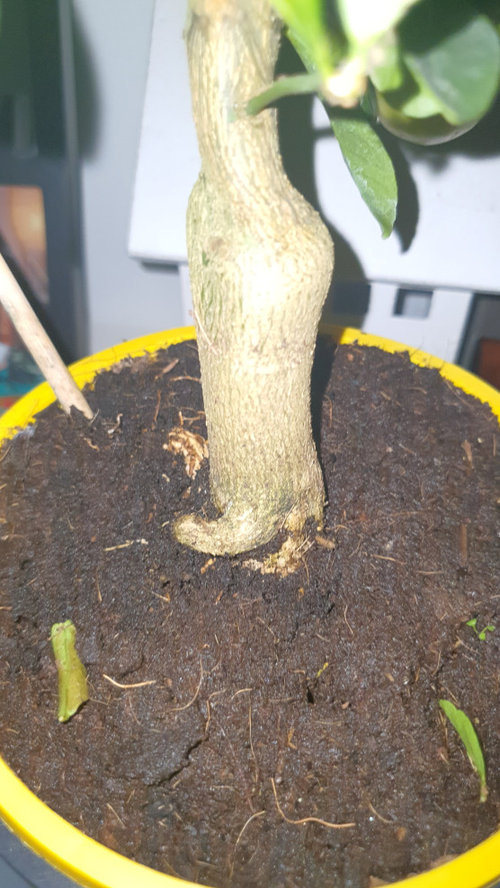
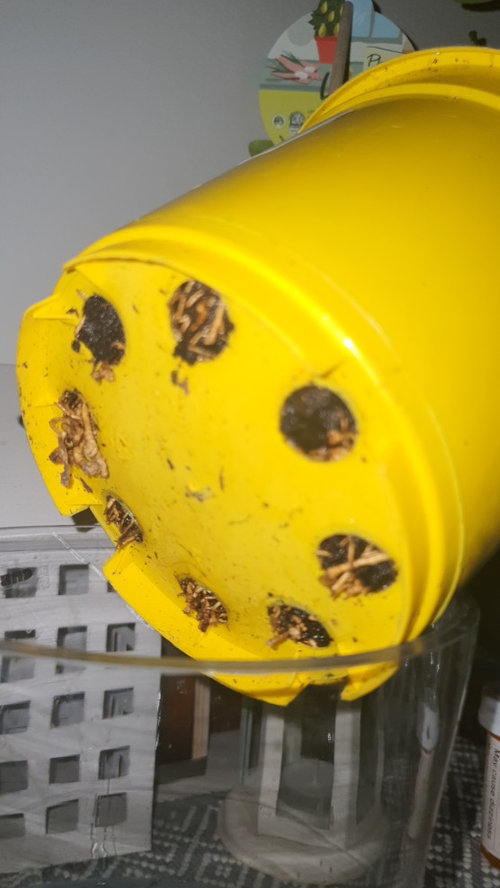
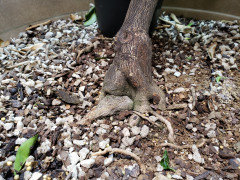
Hello, I recently bought a small Limonella tree to keep indoors on my desk, however, I noticed it has a large root towards the surface which twists back over the trunk before stretching down into the pot soil. Additionally, the smaller roots are coming out the drainage holes at the bottom. I have no experience in root pruning, but would like to remove the large root, and prune the smaller ones to ensure it can stay in the small pot I bought it in. When is it best to prune these roots? And how would I best ensure the survival of my tree?
Thanks! - Hope

Comments (8)

  • 5 years ago

    I would not prune the large root that does a surface dive. It is sizable so, will have many feeder roots below the soil. That does look root bound from the bottom roots showing through the drain hole, especially considering the trunk size to the pot size. You could probably get in a root trim, but unless you're going for extra management like growing bonsai tree in a small pot, I would consider upsizing the pot a bit. For sure, slide the plant out of the pot to get a better look at the roots before making any decisions.

  • 5 years ago

    Full repots are an essential part of maintaining containerized woody material at the highest levels of vitality. Included in a full repot is bare-rooting, root-pruning, and a change of grow medium. While the root can't be removed all at once, it can be removed over the course of 2 repotting sessions. How to do it:

    1) When you repot, shorten that root by making a pruning cut just distal to (beyond) another secondary root. The cut should be as close to the trunk as possible, just beyond a smaller root of about 1/8" diameter. Even the 1/8" root can be shortened to just beyond a tertiary (3rd order) root if required. On the bottom of the stub of the heavy root that's left, use a razor sharp knife (you can buy #11 scalpels for under a buck apiece) to remove a strip of periderm (outer covering/bark) from the very bottom of the root to within about 1" of the trunk. Follow the curve of the root but stay on the bottom. Tread the edges of the cut with a insoluble rooting aid. I use Dyna-Gro Root Gel. This should be the last thing you do before you finish the repot.

    2) At the subsequent repot, probably 2 years later, you will have a large number of new roots growing from the wound edges and will be able to shorten the offensive root as much as you wish/need to.

    Potting up is a half measure that ensures the limitations associated with root congestion remain in play forever, as in for all time, or, until a pair of human hands gets busy in the root mass and corrects the congestion and problem roots. I've repotted thousands of trees and can affirm with great certainty, when it comes to maintenance on roots, starting sooner is a whole lot easier than putting it off. When I grow trees from seed, needled evergreen seedlings get the tap root pruned off and repotted as soon as the first true leaves appear. Temperate deciduous trees are rootpruned while dormant in the spring after they sprouted.

    One might imagine that fussing with roots is detrimental to trees in pots and slows growth. The truth is, root congestion can rob a huge fraction of your tree's growth, vitality, and yields w/o the grower even realizing it. I grow in very small soil volumes, root prune regularly and hard, and I have to constantly prune prune prune (in summer) to keep my trees from becoming an overgrown mess. Those who know me have seen hundreds of pictures that illustrate the veracity of what I just said.

    Al

  • 5 years ago
    last modified: 5 years ago

    Hi Hope,

    It really depends on the goal you have for the tree. As Ken said, if you're going for bonzai, root pruning isn't a bad idea after up-potting it. Though if you're going for bonzai, I'd also replace the medium (in sections). Small trees don't have substantial energy reserves to deal with significant root trauma.

    I would recommend against pruning the large root that you're not a fan of; I guarantee you most of the nutrients and water funnel through that odd shape. From my experience, some citrus rootstocks like to be eccentric like that.

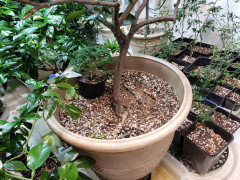
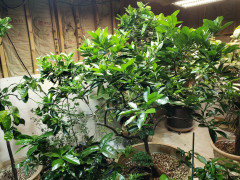
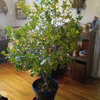
    For example, here's my oldest citrus tree on Poncirus Trifoliata:


    Let the tree do what it wants, and it makes a fun-charactered bonzai, nonetheless! :)

    -Tom

  • 5 years ago
    last modified: 5 years ago

    If the goal is not to allow a girdling root to cut off sap flow to 1/3 of the tree, the root needs attention. Also, after having repotted thousands of trees, it's clear the youngest among them are most forgiving of root work and have the strongest "will to live", this, because the tree is virtually 100% viable mass.

    Being the largest root, of course most of the water/nutrients use that pathway into the plant, which is why it should be removed in 2 steps instead of 1.

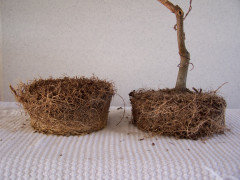
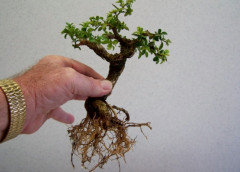
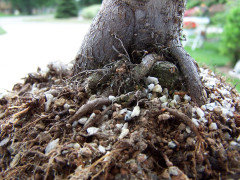
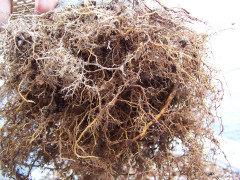
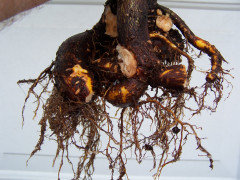
    W/o being able to see the rest of the root system, I can't say for sure, but I'd be leaning very heavily toward removing it altogether. As you'll see below, trees can take massive hits to their root systems and be pushing new top growth within a couple of weeks, which means the root mass will have grown enough to support new top growth, or it wouldn't have happened. Root growth always precedes top growth. Most hobby growers have little idea how important regular rootwork is to a tree's long term potential and vitality, and they have little feel for how tolerant young trees are of rootwork. Examples.

    Maple, from this:


    to this:


    I layered the old root system off because it was so ugly and actually chose where I wanted the new primary roots to grow. You can still see the wire tourniquet used during the layering process. With the graft union well above the existing roots, there is no reason Hope's tree couldn't be air-layered off the existing roots to do away with the existing problem.

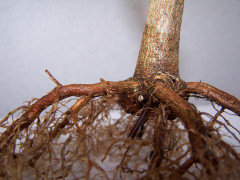
    Next is a boxwood, from this:


    to this:


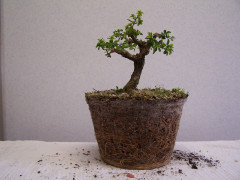
    Last is a Ficus, from this:


    to this:


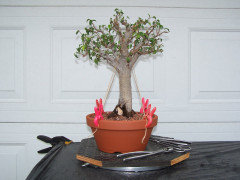
    Same tree after repotting and pruning:


    I'm not suggesting that Hope should be as aggressive as I when it comes to root pruning, but the problem root isn't going to fix itself, and the longer she waits, the more difficult it will be to fix the conspicuous issue.

    Finally, trees, especially citrus, will not grow to look anything like a bonsai without some serious manipulation by the hands of its care giver. Trees grown indoors do not grow true to their normal growth habit, and actually require more attention to pruning that in situ trees and trees planted out.


    Al

  • 5 years ago

    Thank you everyone for your replies! I do actually really want to keep it as a bonsai. I have absolutely no experience with bonsai, however, so I've been very unsure of how to proceed.

    I've watched a lot of videos and read some about pruning but never quite found the courage to as I do not feel I understand the process enough to not kill my plants. in fact, I've killed a few saplings I've brought in by either pruning too hard or using the wrong soil. I want to proceed woth care for this citrus tree. Are there any videos or places I can go for step-by-step walkthrough/help to ensure the health of this tree?

  • 5 years ago

    I will save this thread. Perfect timing for what I am about to do to mine!

    Al, as always thank you0)

  • 5 years ago

    Corkscrew roots on woody plants presented to the retail market are common and are the result of stock being kept too long in small narrow containers at production facilities.