Software
Houzz Logo Print
agata_sobocinska

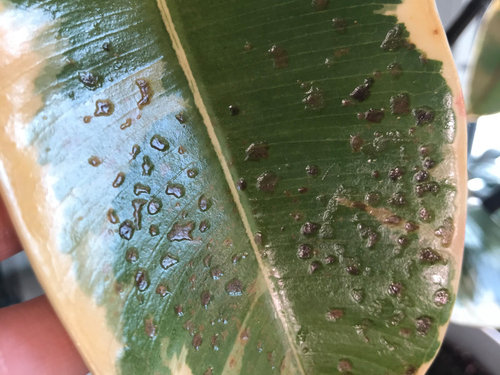
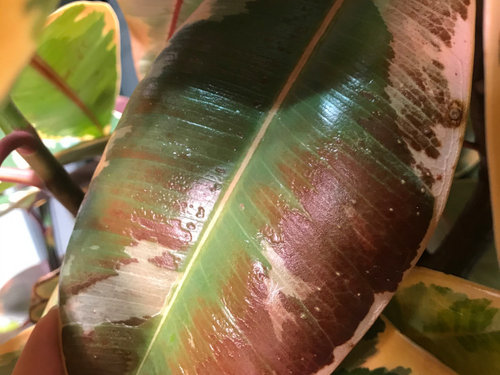
Weird Sunken „scars” and discoloration on Ficus elastica tree.

Hi Everyone!


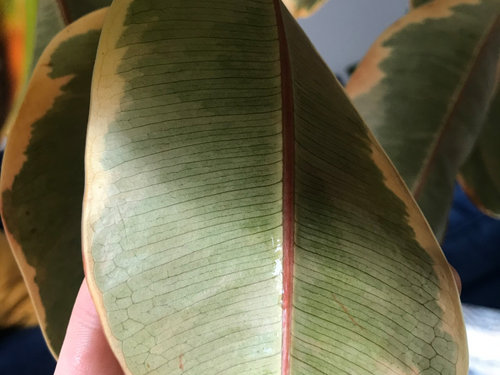
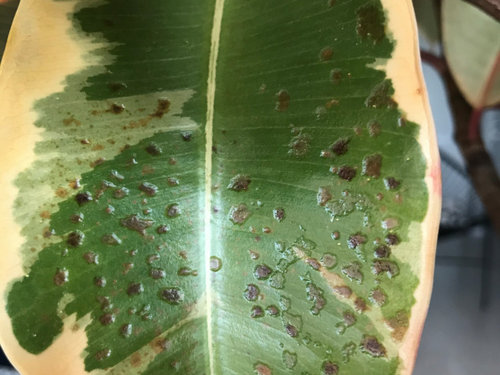
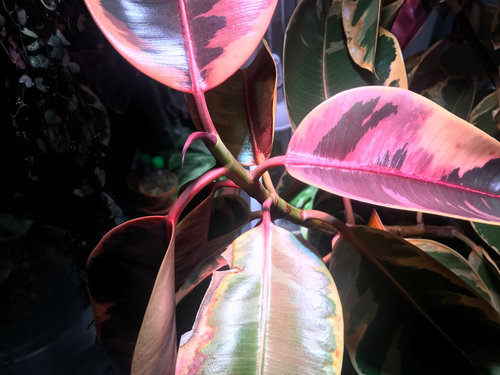
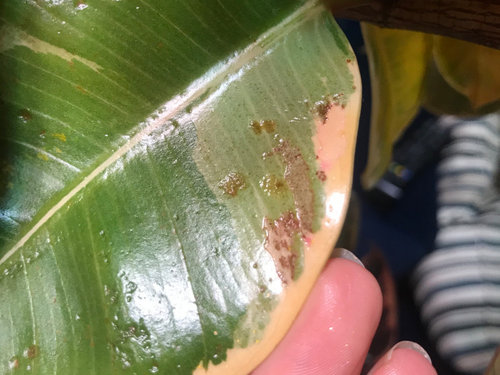
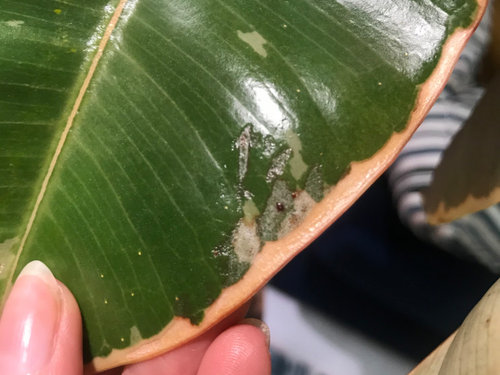
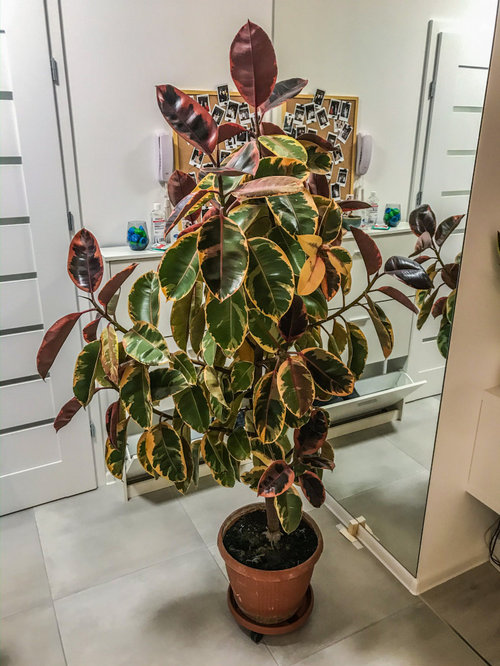
Few months ago I bought a Ficus from someone , quite a big tree. it did have some scale but I removed it and monitored the plant. I noticed that 2-3 leaves on the bottom of the branches had these weird sunken , brown/ discolored “scars” (they don’t go all the way to the back of the leaf, the bottoms look perfectly healthy, so it seems like only the top surfice is damaged. I thought it could be due to some previous neglect from scales attack and since its now in my care I left it like this hoping that it won’t get any worse. I thought everything is under control now until I took some new photos of the tree and noticed that the “spots” have actually spread a bit more and now they spread over few new leaves too. I did another inspection and found some scales again, this time a bit more but still not bad at all. I washed the plant carefully couple of times and sprayed with some pesticide and I am now monitoring it further. The thing is the scale I found was waaay further on the tree, more on the top of the branches and these scars appeared on bottom leaves that didn’t have any scales . Maybe I underestimate how fast they spread and travel throughout the plant but could the cause actually be something else? What is interesting is that this appeared on the very bottom leaf of almost every branch and now starting To spread on a leaf above that , so second bottom and it seems to travel up the stem. Completely different spot to where all the scale was. These leaves dont fall off either (at least for now) they stay this way. Also it happened over a period of about 5 months so not very rapidly at all. Any ideas if there could be any other cause of this? what you see on the pictures is not the scale, those are perfectly clean leaves with sunken scars and discolorations that you can’t rub off. I also attach pictures of few other leaves that look weird but since I have a variegated ficus (ruby) I expected that some leaves might have issues- I prefer to show you those anyway in case these give any clues. The vast majority of the leaves and the plant in general look otherwise healthy.


I’ll be incredibly grateful for any ideas and directions, this tree is over 15 years old and my heart would break if it died under my care 😓😢


Comments (16)

  • 5 years ago

    no pic of what you think is scale???


    does it look like any of these ...:


    https://duckduckgo.com/?q=Ficus+scale&t=ffcm&iar=images&iax=images&ia=images


    just stop spraying it... until you find something worth treating.. spraying is not going to make the spots go away ...


    if its just a few lower leaves.. i might be tempted to just cut them off ... and i would look to the newest growth for any ongoing problems ....


    could it have been damaged when moved from seller to you ..??


    its a gorgeous plant.. lets not kill it with too much love ...


    ken

  • 5 years ago

    The top photos with the pitting look like oedema to me. And I see nothing on the lower photos to cause concern other than some slight mechanical damage.

  • 5 years ago
    last modified: 5 years ago

    Yes, this is exactly how the scale I found look like. i don’t spray it much , I did the initial scale treatment when it first got to me and then again two times - last week and yesterday for scale as well. Other than that I don’t spray it at all. I know they won’t go away but I dont want it to spread further cause it already did. I spray when I see something to treat.

    you think it’s oedema? I water this tree once a month cause it’s not growing at all in the winter season and it seems like it enough for it. I don’t know how could this possibly be overwatering, the soil mixture is very light and loose too

  • 5 years ago

    I know it is oedema :-) And it may have nothing at all to do with your watering regime. With just a few leaves showing the pitting being older ones, it likely occurred long before you acquired the plant.

  • 5 years ago

    It actually did spread since when I first got it but I was super cautious with watering. if it’s oedema then I guess it’s not that bad, I was worried that something is eating up my plant or it got some kind of infection. Any tips how to treat/prevent it?

  • 5 years ago

    "It actually did spread since when I first got it but I was super cautious with watering."


    If it had scale when you first got it (it did, and even after), it probably came from that. If it hasn't significantly spread recently, I'd keep an eye on it, but not otherwise worry about it for right now.

    Old leaves don't heal, unfortunately (or not significantly, anyway). But if it's not moving much or at all in recent history, it sounds like you're fine.

    No new growth in late winter on those is completely normal. The growth period is spring, summer, and early fall; growth should resume shortly--figure April-ish, depending on light levels and where you are, and any artificial light on it the plant.

  • 5 years ago

    well it did spread recently so that’s why I’m making this post. Whether it is scale or oedema I think I can handle it, but if any of you know how to prevent oedema ( I did not overwater even once for the last 5 months of it being at my house) I would happily get some tips from you

  • 5 years ago

    Monitor for scale and remove it immediately, but you're already doing that. Physical damage will do this as well, but that doesn't seem to be happening here. And you'll notice damage that you didn't see before, of course, because you're looking for it. :-)

    I find the lazy gardener's rule useful here and try (often unsuccessfully) to follow it. As long as it's not spreading, if damage isn't visible from 5 feet, it doesn't exist. If it's invisible from 15 feet, I can ignore it. :-) As I'm visually impaired, I'm more much more sensitive to color differences than damage, so I'd see the light difference more than the damage itself.

  • 5 years ago

    Oedema is just a reflection of inconsistent watering habits. Here is a very helpful little synopsis on oedema written by our resident container gardening guru:

    "Oedema


    Oedema is a physiological disorder that can affect all plants. It occurs
    when the plant takes up more water than it can rid itself of via the
    process of transpiration. The word itself means 'swelling', which is
    usually the first symptom, and comes in the form of pale blisters or
    water-filled bumps on foliage. Under a variety of
    circumstances/cultural conditions, a plant's internal water pressure
    (turgidity) can become so high that some leaf cells rupture and leak
    their contents into inter-cellular spaces in leaf tissue, creating
    wet or weepy areas. Symptoms vary by plant, but as the malady
    progresses, areas of the leaf turn yellow, brown, brown with reddish
    overtones or even black, with older damage appearing as corky/ scaly/
    ridged patches, pitting, or wart/gall-like bumpy growth. Symptoms are seen
    more frequently in plants that are fleshy, are usually more
    pronounced on the underside of leaves, and older/lower leaves are
    more likely to be affected than younger/upper leaves.


    Oedema is most common in houseplants during the winter/early spring months,
    is driven primarily by excessive water retention in the soil, and can
    be intensified via several additional cultural influences. Cool
    temperatures, high humidity levels, low light conditions, or partial
    defoliation can individually or collectively act to intensify the
    problem, as can anything else that slows transpiration. Nutritional
    deficiencies of Ca and Mg are also known contributors to the malady.

    Some things that can help you prevent oedema:

    * Increase light levels and temperature

    * Monitor water needs carefully – avoid over-watering. I'd heartily
    recommend a soil with drainage so sharp (fast) that when you to water
    to beyond the saturation point you needn't worry about prolonged
    periods of soil saturation wrecking root health/function. Your soil
    choice should be a key that unlocks the solutions to many potential
    problems.

    * Avoid misting or getting water on foliage. It slows transpiration and
    increases turgidity.

    * Water as soon as you get up in the AM. When stomata close in
    preparation for the dark cycle, turgidity builds. If you water early
    in the day, it gives the plant an opportunity to remove (for its own
    needs) some of the excess water in the soil.

    * Put a fan in the room or otherwise increase air flow/circulation.
    Avoid over-crowding your plants.


  • 5 years ago

    Yes, if that were edema. I think at least some of it's old scarring, personally. Some of it's leaf tipping, which nobody discussed, but it's wise to see what the change in care brings since it's a new plant and old care no longer applies. And so on.

  • 5 years ago

    I have just read about edema and most info says that it’s because the leaves stomata can’t process excess moisture from the plants roots and it ruptures. That makes sense but at the same time the vast majority of leafs stomata is on the underside of the leaf and so far all cases I googled show edema damage that is visible on either both sides of the leaf or the bottom mostly. It usually causes tissue damage that goes through all layers of the leaf and starts on the underside. mine is only on the upper side of the leaf so I guess I have some more reading to do cause it doesn’t make much sense to me yet :)

  • 5 years ago

    I guess the best I can do is to inspect the plant more frequently in the following weeks, have an eye out for any pests and make sure I don’t overwater ...but then again, I know I didnt so i really dont know how to improve my watering regime. The soil is loose and fast drying , within a few days its completely dry, I give it water once a month cause it doesn’t really call for anything more frequent - the leaves are firm, they never droop ...if you have any tips for watering ficus in particular that would be very helpful too :)

  • 5 years ago

    "It usually causes tissue damage that goes through all layers of the leaf and starts on the underside. mine is only on the upper side of the leaf so I guess I have some more reading to do cause it doesn’t make much sense to me yet :)"


    Exactly. There are a number of incidences of damage showing here. Proper watering is, of course, important, however, to avoid edema.


    Your average Ficus elastica is not a demanding plant. In fact, barring disease or insects (like that one got) they're pretty easy. Water when dry; overwatering is a mistake. While monthly might be a bit spare, if the plant seems to be working well on that schedule in lower light, that's great. It's better than overwatering it by far. You'll notice the watering recommendations in the two guides differ, showing that there are some differing opinions here.

    It's a great example of "You do you, BooBoo." If you don't soak it (both do say that) and don't overwater, the plant's pretty flexible (pardon the pun) about it.


    https://www.houseplantsexpert.com/rubber-plant.html

    https://smartgardenguide.com/how-to-care-for-a-rubber-plant-ficus-elastica/

  • 5 years ago

    Im seriously starting to think these are pests. Possibly thrips? I do not see any even if I look for them very closely but my Ficus Abidjan that stands right next to Ruby started getting weird marks on its leaves too! And it was completely fine just 2 weeks ago! Additionally I think those new marks on Ruby look about weird too, not at all like edema.


  • 5 years ago

    Agata - I didn't read the entire thread, but the major issue is oedema. Just upthread a bit, Pam provided an overview of the physiological disorder and provided a list of potential causes.

    I didn't note where you live; but, if you live in the Continental U.S. and unless your Ficus is completely isolated from natural light, your tree should be conspicuously pushing growth by now. All Ficus in my collection have started their spring push, dictated by day length (actually it's the length of the dark period) which is the primary influence on the plant's natural rhythms.

    If your plant is stalled, it's probably because the root system has been damaged by (a fungal) disease or is/has been severely limited by long/frequent intervals of soil saturation and possibly other exacerbating influences (see info Pam provided above). If the root system is damaged by disease or limited by poor cultural conditions such that its ability to provide hydration to the top of the plant is compromised, the plant's chemical messengers tell plant central to stop top growth until the root system can support an increase in top mass.

    Some of the photos show what looks like soft or terrapin scale; however, most scale concentrations are found on primary or secondary veins on the inferior side of leaves. Plants suffering chronic or severe stress are prime targets for insects as the plant's ability to defend itself is closely linked to the plants metabolism, so both the oedema and if present, scale, should be addressed asap.

    Al

  • 5 years ago
    last modified: 5 years ago

    Thank you! I will address both issues and definitely have a look out for pests. Will probably hang some beneficial Incects on it just to make sure that if there’s any thrips or spider mites those will be gone too.

    None of my plants got out of dormancy yet except for philodendrons. I live in Eastern Europe and the closest reference to my climate zone would be that of southern part of Canada so we still have some time for the proper spring to come (we still get snow and negative temperatures).

0