Software
Houzz Logo Print
westes

How to Calculate Effective Nitrogen Delivered to Soil From Compost?

Compost is a widely used soil amendment and top-dressing. In soil tests I have read for hot-composted garden waste - typical of what 90% of home gardners buy at a local nursery wholesaler - the tests have a low NPK number. The problem is that this number is determined by weight and most of us apply more compost by weight or volume than we do fertilizer from a bag. So the low NPK number on compost is misleading, because the higher volume and weight of compost used in practice delivers a higher amount of NPK to the soil.

This is a typical soil test for compost:

https://store.lyngsogarden.com/inet/storefront/getpdf.php?recid=289

So how do we convert from the "ppm" reported in these tests to an amount of nitrogen delivered to the plant, and how do we fairly compare that against a fertilizer? Is there any study that documents how much NPK is actually delivered to the soil when compost is used in typical volumes (e.g., one, two, three inches of top dressing)?

Comments (22)

  • 5 years ago

    Have you had a soil test done? I think that should be your starting point, unless you've identified some clear deficiency (based on plant growth), or know that what you're growing is particularly demanding.

    This is not an area I know that much about. From my own periodic noodling and reading, I can say there are studies out there, but not surprisingly, most of them are targetted at commercial growers and so there are some aspects that may not apply - for example, they will tend to talk in terms of applying fertilizers for "quick availability" ie they're focussed on what is applied and available to plants within the growing season or a one-year cycle.

    westes Zone 9b California SF Bay thanked armoured
  • 5 years ago

    @armoured A soil test is linked to the original post.

    I am looking for a way to estimate what will be made available to plants during a growing season or a one-year cycle, so the studies you mention might apply. If you want to link them I can try to follow them.

  • 5 years ago

    As I understood you linked a test of the compost, not your soil. Have you had a test of your soil done?

    westes Zone 9b California SF Bay thanked armoured
  • 5 years ago

    @armoured But I am only asking how much NPK the compost would make available to the soil. I am not asking how much the soil needs or would absorb.

  • 5 years ago

    And @westes I don't have any particular studies on use of compost that I want to recommend - I've just been googling and reading. I just noted in reading over time that many/most are from point of view of agriculture/commercial farming, not from backyard gardeners. Just something to keep in mind when reading. The jump/gap between fairly technical commercial point of view - that go into more detail about the chemistry - and the plethora of 'gardening blog' type articles that avoid details is really noticeable.

    westes Zone 9b California SF Bay thanked armoured
  • 5 years ago

    @westes - our messages crossed. If you're really interested I think it's worth getting a soil test.

    westes Zone 9b California SF Bay thanked armoured
  • 5 years ago
    last modified: 5 years ago

    @armoured I am going to get a soil test. I don't understand what that has to do with my question.

    If I have horrible soil, then one cubic yard of compost still delivers N amount of nitrogen over a period of six months. If I have wonderful soil, then one cubic yard of compost still has the same characteristics. I am not asking about how well the soil will absorb the available nitrogen. I am only trying to calculate the available nitrogen.

    A soil test has lots of value. It's a totally different thread than this one.

  • 5 years ago

    Maybe this will help. I didn't read through it extremely thoroughly but it does explain the N availability from compost pretty well, IMO. Interpreting Compost Analyses

    There are a couple of items of significance to be gained as well....like having an analysis of the compost done much the same as one would have a soil test done. And having a good grasp on what the C:N ratio was of the compost as well, as that can have a bearing on overall N levels.

    westes Zone 9b California SF Bay thanked gardengal48 (PNW Z8/9)
  • 5 years ago
    last modified: 5 years ago

    @gardengal48 (PNW Z8/9) The same document was linked by @ValRose PNW Wa 8a . I need to read this before I tackle ValRose's post below.

    In the end, you are probably going to be right (yet again :) ) and compost will simply improve soil structure and provide minimal nutrition. It won't replace fertilizer no matter what dose of compost is used. But seeing all of this information turned into numbers helps my mind understand these points in a more solid way.

    What I will say is I used compost for the first time on my sickly front-yard hedges last Fall, and I am starting to see positive changes in the health of those plants. I had imagined that this was all about nutrition, but probably it is more complicated than that. The changes are very very slow to happen but they are progressive and the trend is up. I am so encouraged that I am going to order another few cubic yards of compost and keep applying it widely throughout the garden and keep layering it a bit higher in places I had already placed it.

    And yes I am going to be sending soil samples from every area of interest in my garden to the University of Massachusetts for testing.

  • 5 years ago

    A few small points on this:

    -the full quote from that explainer (which I think is quite good) says 'composts with 1 to 2 percent N have minimal effect on N fertilizer requirements for crop production.' I think that 'for crop production' is a really important qualifier - depends what you're growing and what you need and particularly starting condition of your soil; it rather obviously presupposes a soil test being done and N requirements being established.

    -I personally don't think it means exactly that there is no (macro)nutritional benefit to compost, which does add N - but rather that the amount is not decisive in calculations of 'fertilizer' needed. (Usual caveat here applies that 'fertilizer' in many contexts means specifically concentrated fertilizer with relatively high and confirmed amounts of the main nutrients - i.e. mostly compost and manure are not, by law, fertilizers even though no-one is disputing they contain nutrients.)

    -And as I referred to above, that usually the focus in a cropping context is on the amount of
    fertilizer needed for delivery to plants in a growing cycle/season (less
    than a year). There's a good discussion with numbers in there that organic N is tied up and made available to plants (mineralized) over several years. To me it follows logically (and they supply some analysis) that there is some cumulative availability if compost is applied regularly. (I think not specifically referred to here because ... presumption is soil testing is done if you're cropping). Caveat needed that how much is released/not lost over time will depend on lots of other factors hence ... again testing.

    That's basically why I reiterated the soil testing if you want to understand better the effective availability. I don't come to a fundamentally different conclusion - don't count on compost providing huge amounts of N in particular when applied. It's not zero, but it likely won't correct a significant deficiency - critically important if you're in 'crop production' and yield etc are your goals, and N is well-established as the most common limiting factor / nutrient most needed for crop production.

    BUT: it still doesn't mean compost doesn't help with 'fertilizing' (adding nutrients); it isn't established that it's an issue (deficiency) until your soil test confirms; if you're not doing crop production, you might be okay with what you have (or might not); and at any rate the next steps (eg adding a 'fertilizer' properly named) still need a soil test.

    Your example of your hedges is a very good one: there are still benefits of applying compost, which can include nutrients (macro and micro). Your hedges may indeed have benefited from the N in the compost applied - it could still be below optimal (how much does 'optimal' matter for hedges? I don't know); or they improved because of soil amendment generally, moisture effects, other missing nutrients, etc. The nice thing is that (within reason) applying compost is rarely harmful/pretty safe; and it might be enough for casual gardening without additional fertilizer.

    westes Zone 9b California SF Bay thanked armoured
  • 5 years ago
    last modified: 5 years ago

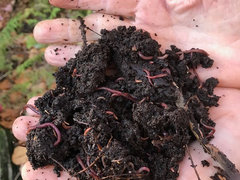
    My compost amended areas of the yard are so thick with red worms and earthworms that I consider their contribution of castings the most significant fertilizer I "apply".


    westes Zone 9b California SF Bay thanked annpat
  • 5 years ago

    All anecdotal ... but my father had never used any fertilizer so far in his 44 years of gardening and his veggie production is abundant every year.... with just compost and shredded leaf mulch application.

    westes Zone 9b California SF Bay thanked Nevermore44 - 6a
  • 5 years ago

    Compost is not a really a fertilizer. Fertilizer is for feeding plants. Compost is for feeding the soil life and conditioning the soil. The soil life will then make the nutrients available to feed your plants.

    westes Zone 9b California SF Bay thanked ValRose PNW Wa 8a
  • 5 years ago

    In all my years of gardening, other than my containers, I have rarely ever needed to fertilize anything planted in the ground! But I do mulch with compost annually. While not a fertilizer, it does replenish soil nutrients sufficiently so that any supplemental fertilizing is rarely required. And I prefer the look of a compost mulch over any other.

    westes Zone 9b California SF Bay thanked gardengal48 (PNW Z8/9)
  • 5 years ago

    Well put, gardengal. Yes, compost is not a fertilizer per se - but it does contain the same nutrients in lower concentrations. Whether those nutrients are 'enough' or can supplant the need for fertilizer depends, of course - but plants grow better in good healthy soil regardless.

    I was rather insistent about the soil test - not because I think everyone needs one, but because I think the calculations @westes was looking for are not that informative without the soil test.

    I also don't really use fertilizer and find my compost and mulching is sufficient.

    westes Zone 9b California SF Bay thanked armoured
  • 5 years ago

    I love a soil test! I haven't had one done in years, but the last one from our extension service gave organic recommendations if you requested. Things like I could apply a certain amount of sheep manure or a different amount of horse manure. One of my tests read: Lay off the wood ash.


    westes Zone 9b California SF Bay thanked annpat
  • 5 years ago

    Hi Westes,


    You asked for a ppm conversion from compost to fertilizer and I crunched the numbers.


    What I should have told you is that the numbers are basically useless, because they are not comparing the same things.


    The article offers a great explanation. Nitrogen: Organic vs. Synthetic | EcoFarming Daily .


    Here a some important passages from the article:

    • The efficiency of organic sources is illustrated by applications on turf on sand-based golf courses. The inorganic nitrogen nutrients, which may range from 8 to 16 percent inorganic nitrogen, must be applied every 30 to 45 days to maintain an acceptable level of dark-green color. By contrast, only two applications of 4-4-4 organic fertilizers per year, in spring and fall, will maintain a deeper and healthier green
    • Use of inorganic nitrogen units to determine nitrogen needs for organic growers is therefore problematic. A popularly available and reliable conversion algorithm between tested inorganic nitrogen and untested organic nitrogen in organic soils does not exist, however. Without such an algorithm there can be no scientific basis of comparison.
    westes Zone 9b California SF Bay thanked ValRose PNW Wa 8a
  • 5 years ago

    I'm just visiting from the lawn care forum to see what you folks have been up to. Back in 2002 to about 2007 I hung out here, but then moved primarily to lawn care. Anyway this topic caught my eye, and this sentence has me wondering: Is there any study that documents how much NPK is actually delivered to the soil when compost is used in typical volumes (e.g., one, two, three inches of top dressing)?

    Being a lawns guy now, where would you use 1-3 inches of top dressing? The answer, I presume is in a flower or veggie garden. At those amounts would you still call it top dressing? Anything 1 inch or deeper is mulch to me.

    In the amateur lawns biz, we have always talked about using no more than 1/4-inch of compost as a topdressing. Why? Because any more and you seriously risk smothering the turf. I have pictures of a lawn which smothers their St Augustine lawn every other year, and they pay for it the rest of the growing season. So 1/4-inch it is. How much is that? That is 1 cubic yard per 1,000 square feet. That is roughly 700 to 1000 pounds depending on moisture content. If you are limited to 1/4-inch for a lawn, the cost of that (in my area) is $50/yard for the compost and $100 delivery up to 3 yards. For 3 yards delivered that's $250 or $83 per yard (or per 1,000 square feet). Then you get to spend the weekend behind a shovel and wheelbarrow applying the stuff. Or, you could apply organic fertilizer instead of compost. The organic fertilizer I like for now is alfalfa pellets, but I'm warming up to Tractor Supply's floating catfish food and will try that later in the season. The application rate for these fertilizers is 15 pounds per 1,000 square feet. Alfalfa pellets cost $12 for 50 pounds at the local feed store. Cost to apply then is $12/50*15 or $3.60 per 1,000 square feet. In order for compost to be a favorable 'topdressing,' it's going to have to have a lot more benefit than it seems to have.

    Yes I have a compost pile, and it gets used under the roses when we don't have chipped tree mulch. Also under the roses I use both alfalfa pellets and corn meal several times during the growing season. Our roses have not had chemical fertilizer...ever.

    westes Zone 9b California SF Bay thanked dchall_san_antonio
  • 5 years ago
    last modified: 5 years ago

    Lawns are a different matter entirely. I think use of 'topdressing' when referring to a thick mulch for garden is really just to distinguish clearly that the compost/mulch is not dug in - you're right it's not a light topdressing like one would use for a lawn.

    There's no question in my mind that if the primary goal is to fertilize, i.e. add concentrated nutrients that are deficient, fertilizer is cheaper than getting the same amount of nutrients from compost - as your calcs show. (Ignoring for now the 'free' compost/mulches gardeners might have and the value of work).

    But the main reason to add compost or other mulches to garden or other soil is as a soil amendment. The nutrients in them come along for the ride and often enough are sufficient.

    Thanks for the info on cost of alfalfa pellets, I didn't realize was that cheap; might consider getting some to try.

    westes Zone 9b California SF Bay thanked armoured
  • 5 years ago

    @dchall_san_antonio I used the wrong word. I am using compost as a mulch.

  • 5 years ago

    Another reason to mulch under roses is to stop or slow down the black spot disease. That disease lives in the soil. When it rains hard enough, raindrops can splash the disease onto the foliage. If the soil is covered in mulch, splashing is not likely to happen and splashing with the disease is less likely.

    westes Zone 9b California SF Bay thanked dchall_san_antonio