Software
Houzz Logo Print
webuser_758601014

soil doesn’t seem to be draining

5 years ago
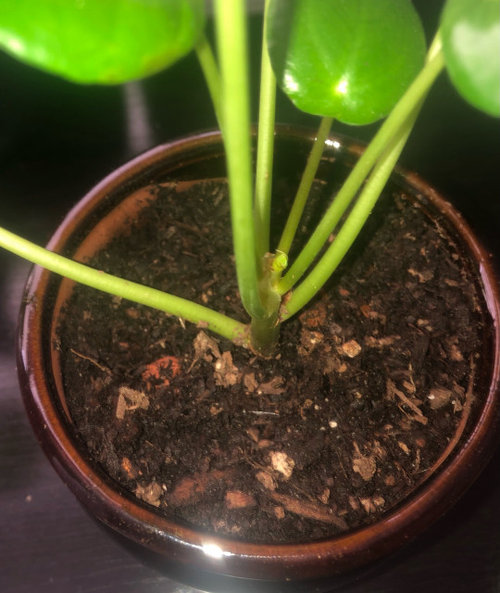
I recently replanted my pilea in a ceramic pot with part cactus mix part all purpose soil. I watered it about four or five days ago and the top of the soil still looks and feels fairly moist. I don’t plan on watering it again until it feels dry enough to water and the plant seems to be doing well, but I’m worried this will end up harming my plant because of too much moisture. Is there a reason it’s retaining so much moisture and will it cause problems?

Comments (8)

  • 5 years ago

    part cactus mix part all purpose soil


    ==>> i hope you mean second part all purpose media ... no garden soil.. right??? .. doesnt look like it.. so good ...


    does the pot have a drain hole ...


    if the plant seems to like it.. why are you overthinking it..


    water a plant when it needs it.. not on some preconceived notion of how long it should take ..


    and dont just look for the surface to look wet or dry ... insert finger and find out ..


    from what little part i can see.. looks very happy .. dont hurt it by loving it too much ...


    ken


  • 5 years ago

    Ideally, the particles that make up a medium would support water as a microscopically thin layer on the surface of soil particles, in any internal (open) pores of particles that will hold water, and at the interface where particles contact each other. The larger spaces between soil particles, macropores, would be full of air. What determines whether or not conditions allow pores between particles to remain full of air after a complete watering is the size of the particles. As particle size decreases to <.100", the pores start to fill with water, as the size of the particles decreases, the medium holds less and less air. This affects roots' ability to function normally and sets the stage for fungal infections of the root and stem tissues.

    I just wrote something on another thread that you might find interesting:

    "There are 2 perspectives from which to view the frequency with which a grow medium requires you to water a planting. From the grower's perspective, a need to water every few days (say, 3-5) might seem like an inconvenience. From the plant's perspective, however, it's a godsend. When a grower is accustomed to measure watering intervals in weeks instead of days (because of the grow medium being used), it's easy to become conditioned to the idea long watering intervals should be considered the norm, even when a planting's ability to hold water enough to provide long intervals between waterings (measured in weeks) is innately limiting to root function and often wrecks root health.

    If the grower is willing to water as often as required, it's far more often true than untrue that the more frequently a planting actually needs watering, the greater will be the plant's/plants' opportunity to realize a greater measure of its genetic potential. Excepting instances where the grower is withholding water intentionally to force a consequential dormancy, or, when the plant material is known to appreciate (different than 'tolerate') going completely dry, watering intervals much longer than 5 days at most, would be listed in the 'limiting conditions' column.

    The media I make and use usually offer 3-6 day watering intervals over winter, indoors, under lights, and 1-3 day intervals outdoors all summer. That is by design and not happenstance; this, because longer intervals cause a loss of potential that's quite conspicuous once you've had a basis for comparison."

    This should provide more insight.


    Al

  • 5 years ago

    If you think that your soil too moist after days, you should increase your watering habit at least every 2 day or maybe daily until the plant grow big enough and able to evaporate water quicker. It sound weird but that's the way protecting their root from rotting. Growing medium of root should be free from anaorobic bacteria so if the soil unable to circulate air because too moist, water circulation should be increased. Air and water both bring oxygen that prevent soil entering anaerobic condition. Most plants can live both on full water near pond or in managed container indoor.

  • 5 years ago

    There is still an outstanding unanswered question. Does the pot have a drainage hole?

  • 5 years ago

    Al - given your comment above how would you help with the transition from an overly moist water retaining soil to one like your 5-1-1?
    Would that mean watering even when the 5-1-1 mix still looks and feels moist?

  • 5 years ago

    Al - given your comment above how would you help with the transition from an overly moist water retaining soil to one like your 5-1-1? Nothing special needs to be done other than keeping the roots moist during the repotting session. I would prune the roots after bare-rooting, though I often start a repot by sawing the bottom half to 2/3 of the root system off before starting soil removal. For beginners, it is best to progress slowly during the first repot. It hasn't happened to me because I was forewarned, but by jumping right in and removing the bottom 1/2 - 2/3 of the root mass it's possible to accidentally remove the entire root mass. Sometimes cuttings are stuck deep in a pot, followed by emergence of roots from callus tissue that forms at the wound site. So, if you remove the basal end of the cutting, it's possible you might find when you start untangling roots, they are ALL connected to the stub you removed. There is little chance that could occur during subsequent repotting sessions, but it's something to consider for each plant's initial repot.

    s In the case of Pilea and other plants with fibrous root systems and which are not commonly divided, I would just do the repot w.o ceremony and let the plant do the rest.
    Would that mean watering even when the 5-1-1 mix still looks and feels moist?
    I think the best answer to that would be to point out, that a plant might tolerate something isn't much of an indication it likes it. So, even though most plantings would tolerate that sort of treatment w/o complaint, it's still better to be on the safe side and water when the planting actually needs it.

    Even though a well-made 5:1:1 mix is free-draining and highly aerated, it's still something of a compromise in that it will hold some measure of perched water, which is usually to blame for the most serious impediments of root function. There are, of course, many other factors that affect root health function, but excess/perched water in the container is paramount insofar as loss of potential is concerned when it comes to hobby growers and water-retentive media.

    Al

  • 5 years ago

    Thank you Al!


    Nothing special needs to be done other than keeping the roots moist during the repotting session.

    What would that look like? More frequent watering for a month or so ? Till the roots grow deeper?


    When repotting how deep do you recommend to place it? Ive seen you mention exposing the root flare which is something that I did not know about. How much root flare should be exposed? (for example with a ficus lyrata?)