Software
Houzz Logo Print
kiltsrhott

Cherry tree graft not blooming

5 years ago
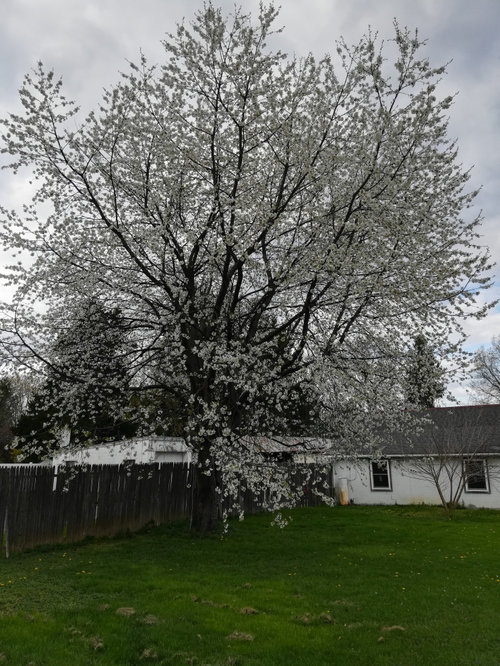
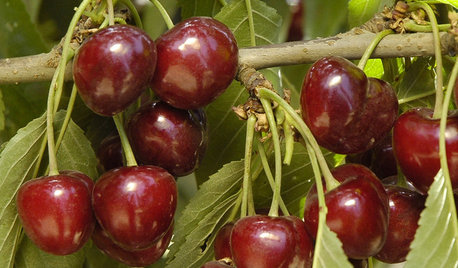
I've been in my house for 5 years. There's been a large cherry tree in the back yard since before I bought the property. I don't know how old it is but it's taller than my house. It's a grafted cherry tree and has bloomed and produced cherries every year since we've been here... except this year. the graft didn't bloom this year. Only the graft appears to be affected. The rest of the tree seems healthy. What might have caused this and is there any way to help the tree?

Comments (16)

  • 5 years ago

    "the graft didn't bloom this year. The rest of the tree seems healthy."


    Not sure what you mean here. "The graft" is the area down by the soil where the rootstock meets the rest of the tree. It is the tree trunk now, and trunks don't bloom.


    Perhaps show us what you are calling "the graft" that isn't blooming?

  • 5 years ago

    This tree has a single grafted branch so it will self-pollinate. The grafted Branch normally blooms in pink at the same time that the rest of the tree blooms in white. This year that single branch is naked.

  • 5 years ago

    where are you ,., big city name ..


    when any spring flowering tree or shrub does not bloom.. its usually associated with some extra cold event last fall or during winter ...


    i have never heard of this type of graft thing before ... wonder how the prior owner did that ...


    but it is possible that the pink flower type is slightly more temp adverse that the rest ...


    any chance at a pic from prior years with the two tone effect ...


    i have seen such an effect on crabapples that have been allowed to sucker.. and half the plant is root stock,,. well.. i was driving by at 50 mph... so i think it was a crab ... usually the high grafted weepers gone bad ...


    i might have a pic.. if i find it.. i will post it ...


    ken


  • 5 years ago

    actually i have it labeled as cherry gone bad ... so i bet way back someone here corrected my assumption ...


  • 5 years ago

    oh.. and as to your tree... it might very well set fruit without the alleged pollination branch ... in fact.. it might prove it wasnt even necessary ...


    a tree that size is going to attract bees from miles around ... hopefully there are others to pollinate it


    ken

  • 5 years ago

    It looks like an ornamental flowering variety of cherry that was grafted onto rootstock, but the rootstock overgrew what was grafted onto it.

    The rootstock is probably Prunus avium, so it will likely produce edible cherries, but the cherries will not really be the best quality.

    Pollination may be required for fruit production. The pink flowering ornamental variety can pollinate it, but many of these ornamental cherry varieties are very poor pollinators (and do not produce much viable pollen).

    It may be that you might require a different cherry variety in the vicinity to get much fruit. (With a couple of rare exceptions, one type of cherry variety can usually not pollinate itself)

  • 5 years ago

    Trees with multiple varieties on them are called fruit salad trees. You can also graft two rootstocks together and then graft the variety you want to plant on the tree. That's called a multiworked; or an interstem. As an example many of the dwarf and semi-dwarf fruit trees are grafted to rootstocks that require staking for the life of the tree. So you could use an M-111 apple rootstock which is somewhere between a semi-dwarf and a semi-full tree as the root of your tree and then graft to that a dwarf rootstock and then to that the variety of apple you wish to grow. The M-111 does not need to be staked as it has a vigorous root system. It also grows well in clay.

    If you let suckers grow from the rootstock on your tree then you can graft additional varieties to the tree. With the interstem graft you would tend to get more suckering as the rootstock needs to be higher off the ground to allow for the extra rootstock stems.

  • 5 years ago

    It sounds like the grafted on pink cherry part may not be doing so well, if it did not flower. The rootstock variety has overgrown it, so is diverting most of the energy away. The grafted part may continue to do worse and worse.

  • 5 years ago
    last modified: 5 years ago

    Yes - apparently there was a single Japanese flowering cherry branch still lingering from the original grafted combination and Erika made the assumption (or was told) that it was a single branch from the beginning. Stuck onto what is in reality a sweet cherry rootstock overgrowth rather than an orchard cherry cultivar planted for its own sake. For starters orchard cherries do not produce pink flowers.

    And grafted Japanese flowering cherries in the process of being overwhelmed by sweet cherry rootstock sprouts are a recurring sight in my area. Along with grafted rhododendrons disappearing under Pontic rhododendron rootstock sprouts in older plantings. In either case apparently nobody involved with the properties where these are planted knowing what is going on, thinking something needs to be done about it.

  • 5 years ago

    i saw another one like my pix.. 5 miles in the other direction yesterday ... its not hard to miss .. when you see the contrast between the white and pink blooms ...


    pretty sure the one in my pix is gone.. new owner ...


    not sure we know where erica is.. but she should drive around today.. and see how many cherry she can spot in the general area ... when one blooms.. they all tend to be blooming ... and if she sees a bunch of them around the area ... the closer the better ... then there is a good chance she will have a fruit set ...


    i am rural ... and frankly.. this spring.. because of a very mild MI winter.. the fruit trees are blooming everywhere .. you cant throw a stick without hitting one ..


    you dont need a pollinator attached to your tree .. and you might be surprised that it doesnt need to be all that close ... if you are running an orchard ... then closer is better ... but most home peeps dont need this tree to produce 200 bushels of cherry ...


    that that ride .. look about you ...


    ken

  • 5 years ago
    last modified: 5 years ago

    As John above says, a number of different grafts can be grafted onto a single rootstock. They sell them in the garden magazines, like the 5-in-1 pear with 5 different pear varieties on one tree. I bought one yrs ago, and one of the "varieties" turned out to be a dang Bradford pear!

  • 5 years ago

    Hi Erika, if I read your OP correctly a single branch flowered and pollinated your cherry tree in previous years, is that right? While it is probably too late this year here is an idea for next year: just as the flower buds are starting to open, take some branches from a seperate tree to act as pollinator, put them in a bucket of water under your tree. Seems like that would make a good substitute.

  • 5 years ago

    I'm in south-central Pennsylvania. There are other cherry trees blooming around the neighborhood. Hopefully, that's enough to pollinate mine. I don't get more than a handful of cherries off this tree per year. It's a pretty big tree and I can't reach most of them. The birds get the rest, but I do like having all the birds in my backyard, and I appreciate the few fresh cherries I do get each year. Thank you all for your input on this!

  • 5 years ago

    I grafted a Shenandoah pear scion to my Bartlett yesterday as a pollinator. I wanted a Blakes Pride because of matching bloom times but couldn't find one late in the shopping season.

    The stone fruits are the best candidates for creating a Fruit salad tree. You can graft peaches, apricots, plums, and nectarines to the same tree. Also cherries, although they aren't as likely to succeed. I think. I never tried that combo. I have a young apple tree with an interstem graft and 5 different apples grafted to it.

    You can buy scions for $3.50 to $5.00 each. Shopping season is from the holiday's thru January and shipments are made in spring for north eastern nurseries. I bought this year from a west coast operation for the first time and they shipped in January, and I didn't notice when they start making sales.


  • 5 years ago

    Pink flowered branch already being there on its own = remaining top was rootstock for Japanese flowering cherry. And may have been raised from seed, even if clonal not likely to be an orchard cultivar. And specific named sweet cherry cultivars have to be combined with one another in order for an assurance of improved pollination to be acquired:


    Pollination – Sweet Cherry | WSU Tree Fruit | Washington State University

  • 5 years ago
    last modified: 5 years ago

    No sooner did I mention in my last note our famous two-tone wonder-trees, half pink ‘Kanzan’ and half single white flowers from the Prunus avium rootstock, then people started finding them

    Another tree that is not a cherry | UBC Botanical Garden Forums