Software
Houzz Logo Print
webuser_901047896

Getting ready to transplant!

5 years ago

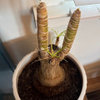
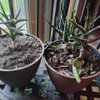
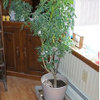
Thank you for this opportunity! I just purchased a few plants (rubber, birds of paradise, Swiss cheese and snake plants) and on the full moon I plan to place them in clay pots. Received compliments over the years, of having a green thumb. Maybe I am reading too much but I want to try something new. I want to mix Miracle Grow potting soil, Malibu compost, used coffee grounds and Epsom Salt. My question is how much of each to use. In addition, I will use pebbles on the bottom of the pot for drainage along with a saucer. Can you help?

Comments (17)

  • 5 years ago

    most of us believe that pebbles or rocks at the bottom of a pot dont do much of anything ... and i presume since you mention a saucer.. the pot has a drain hole .. yes??? .. if not.. get a pot that does .. that fits in the pretty pot ...


    with your dream mix.. im not sure there will be many peeps who have tried the same.. and can give you specific info ..


    why are you considering epsom salts???


    but.. if it were me.. i would try new things with duplicate plants .. and not my whole collection at once ...


    in other words i would practice with sacrificial lambs ...


    ken


    HU-901047896 thanked ken_adrian Adrian MI cold Z5
  • 5 years ago

    Thank you! Maybe you're right, I might use Epsom salt as a fertilizer and spray it on one of my older plants and see.

  • 5 years ago
    last modified: 5 years ago

    If you’re going to use MG soil, just mix with 50% perlite for better drainage. Don’t add compost to potting soil and don’t add coffee grounds either.

    Also, don’t use pebbles at the bottom. That only pushes your perched water table higher in the pot and doesn’t help with drainage. It’s a myth and does nothing in a pot.


    I would also skip the epson salts.

    HU-901047896 thanked Dave
  • 5 years ago

    Unless there is a magnesium deficiency, Epsom salts is not a fertilizer!

    The Myth of Epsom Salts

    If you need to fertilize - and you will - choose a complete fertilizer with necessary trace elements in a liquid or fully water soluble form......like Dyna Gro or Miracle Gro. And water the soil media and roots with it, not the leaves. Plants take in almost no nutrients via their leaves.

    And there isn't much question about being "right" or not :-) There is a science behind successful container growing which contradicts most of what you planned to do!! But we were all at that point sometime, so the more you learn, the better you get and the more your plants will benefit!! I'd suggest you start reading some of the informative, teaching threads you will find on the Container Gardening forum and begin with this one: Container Soils - Water Movement and Retention.

    HU-901047896 thanked gardengal48 (PNW Z8/9)
  • 5 years ago

    btw ... newly arrived plants are stressed.. from shipping from grower.. to seller to you.. plus all cultural variables have changed ...


    i do not repot stressed plants ...


    give them a month or two.. to settle down.. and then do what you want to do ..


    ken

    HU-901047896 thanked ken_adrian Adrian MI cold Z5
  • 5 years ago
    last modified: 5 years ago

    FWIW, if the timing is right, I repot plants shipped to me or purchased from another grower as soon after bringing them home as possible, often same or next day. Whenever you improve the most limiting cultural condition, you should expect positive results within the limitations imposed by timing. Moving a plant to a fast-draining, well-aerated medium is a greater benefit on the day you receive a plant than it would be weeks or months after; this, because lost potential can never be regained, it's lost forever.

    The recipe for the container medium sounds like a disaster in the making. Something I've written about Epsom salts and coffee grounds below. Those who suggested your experimental medium would be extremely water-retentive are correct. The link to the soil thread will help you learn how to control water retention in your grow media, which is the primary source of the problems people flock to forum sites in search of resolution.

    Epsom salts

    Most growers THINK that when their plant's are chlorotic, doing ANYTHING that makes them green again must be good, wholly right, and fully justified. But is it? If plants are exhibiting chlorosis because of an Fe (iron) deficiency, and the grower doses with Epsom salts, and the plant subsequently returns to a nice green color, is all REALLY well? It would seem so to the grower whose only objective is turning the plant green, but you can't fix a Fe deficiency by providing over-doses of Mg (and sulfur ...... but let's focus on the Mg in Epsom salts because S deficiencies are a rarity) any more than you can remedy a Mg deficiency with massive doses of Fe. The ONLY time supplemental magnesium carries with it the potential to benefit is if it's used to correct a deficiency of Mg or the Ca level in the soil is so high, uptake of Mg becomes a problem; and, since a toxicity (excess) of any nutrient or combination of nutrients has the same potential to limit as a deficiency, practices aimed at increasing the amount of one or 2 nutrients in the soil solution are more likely to be limiting that a benefit. If you're going to use Epsom salts to supply extra MG, you should have an extremely good reason to suspect there is ACTUALLY a magnesium deficiency in the soil solution, and that's very unlikely if you're dosing regularly at appropriate concentrations with FP 9-3-6, especially if the soil was limed with dolomite when it was made.

    Coffee/Tea Grounds

    Forum discussions frequently center on the question of adding dilute coffee/tea or grounds to plants as a 'tonic', but Arabica (coffee) and Camellia (tea) are known for their toxic alkaloid (caffeine) content and their allelopathic affect on plants as well as autotoxic (poison to their own seedlings) effects on future generations. Caffeine interferes with root development by impairing protein metabolism. This affects activity of an important bio-compound (PPO) and lignification (the process of becoming woody), crucial steps for root formation.

    We also know that the tannins in both coffee and tea are known allelopaths (growth inhibitors). There are ongoing experiments to develop herbicides using extracts from both coffee and tea that cause me to want to say they might serve better as a nonselective herbicide than as a tonic. I would not use either (stale coffee or tea) by applying directly to my plants - especially containerized plants; nor would I add tea bags/coffee grounds to my container soils.

    Al

    HU-901047896 thanked tapla (mid-Michigan, USDA z5b-6a)
  • 5 years ago
    last modified: 5 years ago

    Can I use/mix compost and MG? Or just use Compost?

  • 5 years ago

    Why would you want to? Compost or other readily degradable organic materials in a container soil mix tend to work against good drainage and maintaining porosity.

    HU-901047896 thanked gardengal48 (PNW Z8/9)
  • 5 years ago

    In the same vein as Gardengal's comment, most container media you buy off the shelf is actually difficult to grow well in; this because it is excessively water-retentive and when soggy, robs roots of oxygen enough to function normally. What primarily drives water retention in container media is the size of the particles that make up the medium. The smaller the particles, the more water it contains. You'll find it explained here. To reduce water retention and add aeration, it's necessary to add a significant % of coarse material, like pine bark. Finished compost holds more water than peat because it lacks the loft (airiness/ resistance to compaction) that peat has. Also, finished compost has very little nutritive value, which is why it's best left out of container media and used in the garden where it provides nutrition for soil dwellers that provide aeration and increase the productivity of mineral soils.

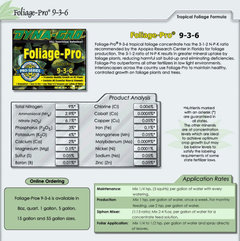
    When it comes to nutrition, a soluble synthetic fertilizer like Foliage-Pro 9-3-6 gives you almost complete control over what your plant gets (in terms of nutrients) and when it gets it. There is significant value in that fact; and, it's a complete fertilizer. Really complete. All the term "complete" means in fertilizer terms is, it contains the big 3, nitrogen, phosphorous, and potassium. Foliage-Pro is unusual among fertilizers in that it supplies ALL nutrients essential to normal growth, in a ratio that closely mimics the ratio at which the average plant actually uses the nutrients. Most soluble fertilizer products lack either or both calcium and magnesium and derive their N from urea. Foliage-Pro has both of those essential nutrients and gets more than 2/3 of its N from nitrate sources and the rest in ammoniacal form. This is easier on plants when using water-retentive medium (can cause ammonium toxicity), and helps promote fuller and more compact growth.

    Al

    HU-901047896 thanked tapla (mid-Michigan, USDA z5b-6a)
  • 5 years ago
    last modified: 5 years ago

    For Espon salt It will take 20 grams of Epson salt for a 1 pound plant supplied over the growing season. 20 grams is 2 Teaspoons and the weight is the plants vegetation at maturity.

    So guess the weight (not the pot, roots or soil) and if you think I'll be 2 pounds use 40 grams (4 teaspoons). If it only weighs 4 oz's use only 5 grams (1/2 teaspoon) and so on, but don't apply it all at one time and proportion it over time with your scheduled fertilization schedule. I could show the facts and math to support this but it's long and could be confusing, but it's based on scientific studies of the average plants magnesium intake vs weight. What I'm doing here is maintaining the average intake over time without any consideration what's already in the potting soils. It may sound low but what I've recommended is more than enough for your plants.

    Coffee grounds?.......well not to much, it will release nitrogen over time but could be from 2 to 10% and the time to breakdown will vary considerably and without worms it will take months. If piled on the top it will create a barrier to water and oxygen and not good either. It's best used in a compost pile and I'd suggest finding another composted organic source to feed your plants.

    HU-901047896 thanked outpaientzero
  • 5 years ago

    Well I guess that malibu compost and coffee grounds are to be use moderately. Heavy on MG potting soil will be sufficient. Thank you!

  • 5 years ago
    last modified: 5 years ago

    Let me just repeat....Epsom salts is not a fertilizer unless you have a determined magnesium deficiency. And since you should be supplying a liquid fert as Al and I described that will include all necessary micronutrients, there is no need to use multiple products for multiple purposes.

    I would also add that only reason directions for using Epsom salts as a fertilizer are confusing or complicated is that it doesn't work for that purpose under 95% of growing conditions!!

    "I'd suggest finding another composted organic source to feed your plants."

    And I'd suggest finding another nutrient source that is more efficient and less compromising to the functionality of container gardening than would be any composted organic matter.

    HU-901047896 thanked gardengal48 (PNW Z8/9)
  • 5 years ago

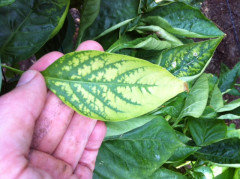
    What does a plant looks like when it's lack of magnesium?

  • 5 years ago

    Starts as a loss of color around the margins of older leaves first, then develops into more of an interveinal chlorosis but less defined than iron chlorosis. Older foliage may drop off and plant growth may be stunted.


    Can be differentiated from iron chlorosis by less uniform yellowing and by affecting the older foliage first (iron chlorosis typically affects the newest growth first).

  • 5 years ago

    Tapla, you're by far the most knowledgeable person I've ever encountered here and a notch above the best. I wasn't referring to your comments and sorry I wasn't a little more specific. I did feel the OP was being overwhelmed with technical overkill and might lose interest, not to mention all the statements with exclamation marks from other.

    My attempt was to limit the Epson salt to a level which wouldn't contribute much more than half the PPM of Mg recommended as average in one cubic foot of soil, and less than an average the plant would take in which is .75 to 3 grams in a season. If later she was confused and decided to ask someone else they could say a "couple of tablespoons every month" for example it and it wouldn't be good. I figured 1/2 to 4 teaspoons in a season of Epson is only enough to raise the Mg level 50 ppm and a bigger plant would mean more dirt and bigger pot. If anyone would understand this it would be you.

    I don't use Epson and know what you're talking about and try to mix my own fertilizers. I work down to the milligram for some micro nutrients like boron but one thing which really peaked my interest is your comments about Pro 9-3-6. I would need to adjust the K in the NPK and for what I need just to expensive for how much I'd need, but looking at the analysis it is almost perfect, (no boron).

    I also didn't know "container gardening" existed. I don't container garden but have the biggest outdoor container imaginable and know the topic on ammonium toxicity well. The outdoor container is a 1/2 acre garden in Muck soil with poor drainage and a high water table. I've amended, graded, dug ditches and chiseled 16" down to get drainage but still have low oxygen, low microbial activity and of course ammonium toxicity. I must mix the best I can with Urea, KN03 and CAN03 to up the ratio of ammonium to nitrate. It's nice to meet someone who finally knows his stuff and plan on reading your comments in the container garden to see what I can learn. Thanks.

  • 5 years ago

    See product analysis/left column/bottom item for boron content. I was surprised when you said "no boron", but I shouldn't have been. I checked their website to see if the most recent label indicates boron content and it does. The little blurb to the right of the Product Analysis box is probably indicating varying state laws re fertilizer product labeling might have sway over how/what is reported. I asked Dave Neal, Dyna-Gro CEO, about that because other posters had mentioned that some of the micros were not listed. He indicated that states vary and when a product contained less of any given nutrient than whatever threshold was established by the state in which the product was sold, it could not be listed as an ingredient; but, he assured me the nutrients are in the product, that they make only 1 formula of FP 9-3-6. Easy to see how that could happen given the minute amounts of some of the essential nutrients plants need.

    Al

    HU-901047896 thanked tapla (mid-Michigan, USDA z5b-6a)