Software
Houzz Logo Print
webuser_660576547

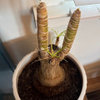
Help me withthis Ficus

5 years ago
last modified: 5 years ago
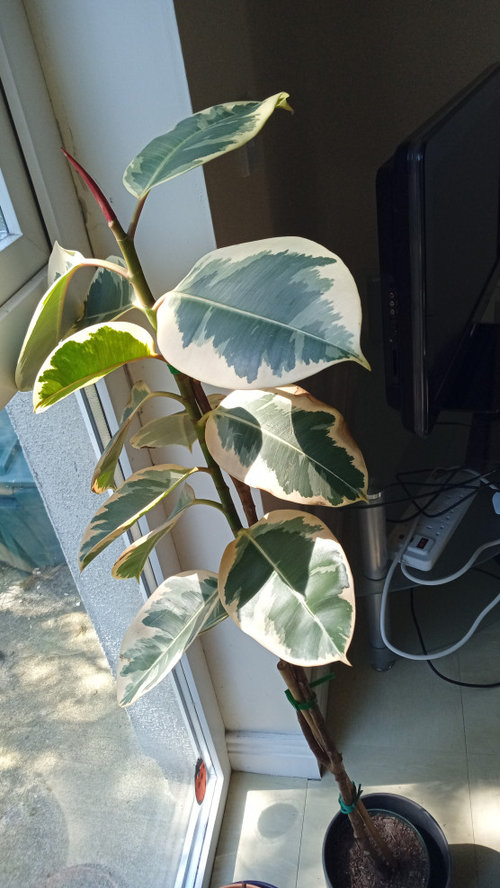
I have this plant 12 years

I haven't taken as much care as i should for a while.Fed up of conflicting views about too much water /not enough water etc. No matter what i did i lost leaves. One of the branches has no leaves but there are couple new branches budding since I cout it back.

This is the compost I used. https://www.diy.com/departments/westland-houseplant-compost-8l/5023377006197_BQ.prd Repot last year and top dressed this year

This is the feed i used to use.https://www.lovethegarden.com/uk-en/product/miracle-gro-all-purpose-concentrated-liquid-plant-food-1-litre

I think it was too weak solution.And it ran out the end of the pot

I used this recently after cutting back the plant and making cuts above the node https://www.lovethegarden.com/uk-en/product/miracle-gro-pour-feed-ready-use-plant-food-1-litre

I got some growth on some nodes not all. It is growing but slow. I want to make it bushy and thrive

The soil looks a bit dry. I put a bamboo cane right down it is damp and soil sticks to the cane.Some say not much water. some say loads of water then let dry. some says sips of water. Some say feed from tray under

I am in Ireland. It is at a south facing window. I know when the door opens in cold weather it probably does not help but it needs to be near the light. My house is very dry air in winter when the heat is on


@ tapla In another thread you wrote about "salts from fertilizers and tapwater accumulating in the soil, thereby limiting the plant's ability to take up water and the nutrients dissolved in the water"


Can you say how this happens please,How do salts in the soil limit plant's ability to take up water and the nutrients in it


Also what do you think of the compost i used https://www.diy.com/departments/westland-houseplant-compost-8l/5023377006197_BQ.prd Would it be OK to flush or would it stay wet too long?


Comments (5)

  • 5 years ago
    last modified: 5 years ago

    In the 12 years you've owned it, has it been potted-up to larger pots; or better, has it been fully repotted, which includes bare-rooting, root pruning, and a complete change of potting medium?

    The fertilizer product doesn't inform the buyer what the NPK %s are, which tells me it's so low they'd prefer you didn't know.

    "@ tapla In another thread you wrote about "salts from fertilizers and tapwater accumulating in the soil, thereby limiting the plant's ability to take up water and the nutrients dissolved in the water" Can you say how this happens please, How do salts in the soil limit plant's ability to take up water and the nutrients in it." For the purpose of the explanation,"dissolved solids" means everything/anything that is dissolved in a solution. The walls of cells are semi or selectively permeable, either is ok - meaning they allow water and some select other molecules to pass into and out of the cell through its walls. Water moves into cells when the level of dissolved solids in water inside of cells (cytoplasm) has a higher level of dissolves solids than water surrounding or between cells. If you had 2 containers with different strength aqueous (water) solutions in them and rigged a tube so the solutions could move from container to container, it wouldn't take long for the solutions in both containers to reach a stage where the concentration of dissolved solids in both solutions were the same (isotonicity). The main point is, solutions move from an area of low concentration of dissolved solids to an area of higher concentration.

    As the amount of water inside of cells decreases, the amount of dissolved solids within that cell stays the same. In a normal situation (high solution strength inside of cell, low concentration strength outside of cell), this 'invites' water with a lower concentration of dissolved solids to replace water lost from the cell.

    When the level of dissolved solids in the soil solution, the water that moves from the soil into roots carrying its dissolved solids with it, has a higher concentration of dissolved solids than the water inside of cells, it can actually reverse the flow of water into cells (osmosis). When this occurs, the cells protoplast is torn from cell walls, which is called plasmolysis, the technical term for fertilizer burn.

    Proper watering technique would see the grower flushing the soil when (s)he waters by using 15-25% more water than it takes to fully saturate the soil. The excess water leaves by way of the drain hole, carrying any build-up of dissolved solids in the soil/soil solution along with it. Once the effluent (waste water) has exited the pot, it is important that the salts they contain have no pathway back into the pot, so your plant should never be allowed to sit in the effluent. Wait until the pot has stopped draining before you return it to a cache pot or collection saucer; or, block up the pot so the bottom is always above the effluent that exits the drain.

    "Also what do you think of the compost i used?" Can't say. I have no experience with it, and without seeing it spread out on a sheet of white paper, I can only note that most commercially prepared media can be improved on significantly by judiciously amending what one has, or by the grower making his/her own.

    These are the 2 basic media I make. All my trees are in the medium represented by the second image, but the medium shown in the first image is my answer to commercially prepared media based entirely on fine materials like peat, compost, coir, composted forest products, sand, topsoil, etc. Particle size is what drives water retention - the finer the particles in a medium, the more water it will hold.

    "The soil looks a bit dry." Have you read about using a 'tell', to 'tell' you when it's time to water? It works far better than a finger or relying on watering when the top inch or two of the medium is dry. See below. I put a bamboo cane right down it is damp and soil sticks to the cane. Some say not much water. It's best to avoid watering in small amounts as the practice ensures ALL dissolved solids/salts that aren't used by the plant remain in the soil/soil solution. some say loads of water then let dry. That is best, but only if your grow medium allows you to do that with out adding a tax on the plant in the form of a soil that remains soggy for long periods between waterings. Soggy soil can rob as much as 90% of a plant's growth potential, as well as limiting the plants level of vitality (health) and making the plant look shabby (lacking the 'green glow' that comes from a high level of vitality, and spoiling foliage). some says sips of water. See reply to 'not much water above. Some say feed from tray under." Again, this ensures ALL dissolved solids/salts that aren't used by the plant remain in the soil/soil solution where they build up if you don't make an effort to flush the soil regularly. Not the best option.

    Using a 'tell'

    Over-watering saps vitality and is one of the most common plant assassins, so learning to avoid it is worth the small effort. Plants make and store their own energy source – photosynthate - (sugar/glucose). Functioning roots need energy to drive their metabolic processes, and in order to get it, they use oxygen to burn (oxidize) their food. From this, we can see that terrestrial plants need plenty of air (oxygen) in the soil to drive root function. Many off-the-shelf soils hold too much water and not enough air to support the kind of root health most growers would like to see; and, a healthy root system is a prerequisite to a healthy plant.

    Watering in small sips leads to avoid over-watering leads to a residual build-up of dissolved solids (salts) in the soil from tapwater and fertilizer solutions, which limits a plant's ability to absorb water – so watering in sips simply moves us to the other horn of a dilemma. It creates another problem that requires resolution. Better, would be to simply adopt a soil that drains well enough to allow watering to beyond the saturation point, so we're flushing the soil of accumulating dissolved solids whenever we water; this, w/o the plant being forced to pay a tax in the form of reduced vitality, due to prolong periods of soil saturation. Sometimes, though, that's not a course we can immediately steer, which makes controlling how often we water a very important factor.

    In many cases, we can judge whether or not a planting needs watering by hefting the pot. This is especially true if the pot is made from light material, like plastic, but doesn't work (as) well when the pot is made from heavier material, like clay, or when the size/weight of the pot precludes grabbing it with one hand to judge its weight and gauge the need for water.

    Fingers stuck an inch or two into the soil work ok for shallow pots, but not for deep pots. Deep pots might have 3 or more inches of soil that feels totally dry, while the lower several inches of the soil is 100% saturated. Obviously, the lack of oxygen in the root zone situation can wreak havoc with root health and cause the loss of a very notable measure of your plant's potential. Inexpensive watering meters don't even measure moisture levels, they measure electrical conductivity. Clean the tip and insert it into a cup of distilled water and witness the fact it reads 'DRY'.

    One of the most reliable methods of checking a planting's need for water is using a 'tell'. You can use a bamboo skewer in a pinch, but a wooden dowel rod of about 5/16” (75-85mm) would work better. They usually come 48” (120cm) long and can usually be cut in half and serve as a pair. Sharpen all 4 ends in a pencil sharpener and slightly blunt the tip so it's about the diameter of the head on a straight pin. Push the wooden tell deep into the soil. Don't worry, it won't harm the root system. If the plant is quite root-bound, you might need to try several places until you find one where you can push it all the way to the pot's bottom. Leave it a few seconds, then withdraw it and inspect the tip for moisture. For most plantings, withhold water until the tell comes out dry or nearly so. If you see signs of wilting, adjust the interval between waterings so drought stress isn't a recurring issue.

    Sorry I missed your post when you initially posted it. I saw your link on another thread and followed it here.

    Al

  • 5 years ago
    last modified: 5 years ago

    In the 12 years it was repotted twice in a new pot and new compost The roots were not pruned but as much old compost as possible was removed and new compost used. It was also top dressed a couple times.

    The concentrate feed the yellow container NPK is 7-3-5. When i used that i think i maybe made it too weak was wary of burning roots. The one i used recently, the green container ,doesn't say the NPK. it has responded to that though. I can see a couple of what seem to be the beginning of branches just appearing. But i want to have it create new branches all the way down and be bushy


    Would it help if i put some compost on white paper and photograph it? I can tomorrow.


    Thanks for your help

  • 5 years ago

    Yes, an image would help.


    I added some afterthoughts above the piece on using a 'tell'. Not sure you saw them?

    Al

    jane ferguson thanked tapla (mid-Michigan, USDA z5b-6a)
  • 5 years ago

    Yes i saw about the tell. I had seen that on other threads you posted. I put a bamboo cane into it. it came out damp and had some compost stuck to it. I will make a photo of the compost on white paper tomorrow. Thanks

  • 5 years ago

    way to small a pot for such a large plant .. you must not have kids or pets that knock it over all the time ...


    otherwise.. the leaves look pretty good ... i dont understand what the issue is.. besides guilt you havent done enough for it ...


    you might want to propagate the top .. and start a fresh new young.. shorter plant ... and then watch what happens to the rest ...


    and otherwise.. everything al said ...


    ken


    https://duckduckgo.com/?q=ficus+propagation&t=ffnt&iax=videos&ia=videos