Software
Houzz Logo Print
jason_carlton26

Endless Summer hydrangeas getting spindly

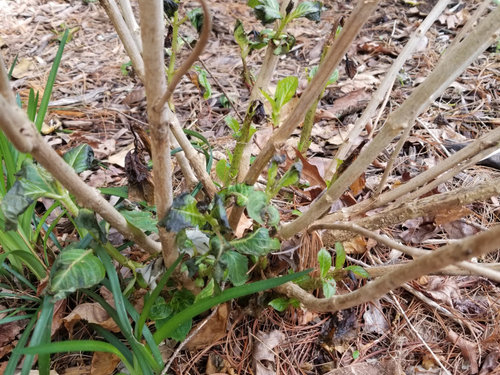
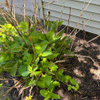
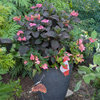
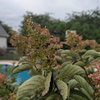
It's kinda hard to tell from these pics, but I bought these Endless Summer hydrangeas maybe 10 years ago? They've always bloomed and looked healthy, but they seem kinda... spindly.


I know that they bloom on old wood, so is there a way to increase the quantity of limbs to make it thicker? Or to encourage existing limbs to split?


I haven't deadheaded yet, and the 2 pavers you see are where I started to ground layer last year:


You can see some wimpy leaves, that's from a sub-freezing night we had Friday. And that's a mondo grass growing at the base.


Comments (13)

  • 5 years ago
    last modified: 5 years ago

    Mondo grass and hydrangeas have rather shallow roots that compete with each other for water and nutrients. I would keep them away from each other.

    Endless Summer blooms from both, old and new wood. So in theory, an ES should now have flower buds from late 2020 inside the stems that will open in Spring 2021.

    Damaged leaves will be replaced but not overnight. Wait about 2-4 weeks for new foliage. Remember that your average date of last frost goes through the end of April (although the current 15-day forecast does not currently show a chance of late frosts this year). To minimize injury, you can maintain the mulch, water deeply the night before the late frost, winter protect or cover the plant with frost cloth or blankets (just watch out that the weight of blankets will not break any stems).

    Suggestions: remove weeds and nearby plants. make sure that the soil as as evenly moist as you can make it. That means try not to let the soil dry out. Inconsistent watering results in less foliage. Also, regularly check the soil pH in case it needs to be acidified. Maintain 2-4" of organic mulch at all times of the year and give them shade starting at 10-11am (or dappled sun). Use blankets to protect from a very late frost; remove the following day when temps bounce back. Spindly growth may indicate too much shade or too little sunlight.

    Jason, zone 7A, near Greensboro NC thanked luis_pr
  • 5 years ago

    All the conifer needles on the bed suggest it is underneath a pine which is making the situation too tough for the other plants.

  • 5 years ago

    That's a great point, I didn't think about that. There are 2 pine trees nearby; one directly overhead that supplies part of the shade, and another about 20' farther away.


    I thought that it would just make the soil more acidic, though, affecting the color of the blooms but not the quantity of limbs?


    Any suggestions on how to improve the situation? Cutting down the pine is easier said than done because (a) it supplies much of the needed shade, and (b) it's close to the house, so I'll need to hire a pro to come out and take it down (10 years ago, the quote was $1,000; God knows what it would be today)


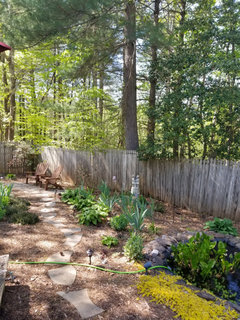
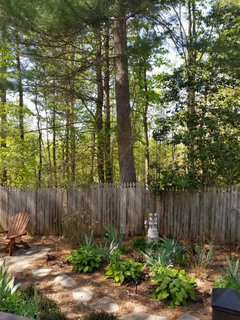
    It's kinda hard to see in the pics because it hasn't bloomed yet, but the main hydrangea is about halfway between the Adirondack and the statue. There's another smaller one just behind the first large hosta on the path; it used to be on the other side of the Adirondacks but did very poorly there, so I moved it 2 years ago.


  • 5 years ago

    Spindly growth may indicate too much shade or too little sunlight.


    @luis_pr , somehow I overlooked your reply, sorry about that! But hmm, I didn't know that, so maybe it IS in too much shade. I have hostas, irises, callas, coral belles, and fern all around; they're all doing well, so maybe it would be best to move the hydrangea entirely?


    I would actually love to remove that pine tree before it falls on the house, but I'm concerned that doing that will give everything else too much sun :-(

  • 5 years ago
    last modified: 5 years ago

    Dappled sun should be ok with hydrangeas. Can you guesstimate when it receives direct sun, from what time until what time? Consider afternoon and evening hours during the summer. Pictures 1 and 2 show the main hydrangea to be in shade at that time of the day.

  • 5 years ago

    The pics you're seeing in my second post are with me standing on the back deck facing North, at 4pm. So right now I'm pretty sure that 100% of the sun it gets is dappled through that pine tree.


    During the summer, it'll probably get direct sun for about 3-4 hours in the late afternoon / early evening.


    I should mention that it blooms well through the whole season, my only complaint is that it only has about 12 legs, all of which are about 4' long, so it looks kinda thin.

  • 5 years ago

    I have a sprinkler there that runs for 5 minutes every 4 hours. Most of what's in this area are bulbs (hostas, irises, and callas), and It partially hits the lawn, so I just used the same watering schedule that I have for the lawn.


    Do you think I should change it up? Longer periods less often, maybe?

  • 5 years ago

    I would not recommend watering a planting bed on the same schedule one does a lawn. I would also not recommend even watering the lawn on that sort of schedule!!

    Daily watering is seldom necessary even for lawns.....unless one lives in a very hot and arid climate (not North Carolina!!). It is far better to water at most once or twice a week but for a longer period of time. You want the water to penetrate down through the soil profile to encourage a deep and therefore more drought tolerant root system. 5 minutes does nothing more than tickle the surface!

    You receive more rainfall in NC than I do and spread out over a more even period of time. We are almost bone dry here in summer, yet I only water my hydrangeas every 10-14 days during the driest part of our summers. Since your hydrangeas are likely planted within the root zone of the adjacent pines, they could be experiencing some drought stress from the root competition so I might bump that up. But you want a deep, slow soaking, not a 5 minute drizzle from a sprinkler!

    And just an FYI but pine needles to do not contribute to soil acidity at all. That is a persistent garden myth :-)

  • 5 years ago
    last modified: 5 years ago

    I agree. I would touch base with the person that set up the drip irrigation (if you can). Based on my drip irrigation set up and water pressure, the landscape company said that watering for an hour with the drip would provide 1 gallon of water so 5 minutes sounds too little watering unless you typo'ed.

    The hydrangea, being under the thickest part of the tree canopy will need more water than other plants located near the edge of the canopy.

  • 5 years ago

    Sadly, there's no "irrigation guy" for me... I'm in a rural area, so my only sources for info are here, a local message board, and the teenager that stocks shelves at Lowes (if you can find him) :-(


    If I understand the term properly, drip irrigation is where the tube has a bunch of holes that leaks directly to the ground, right? That's not what I have; I buried 5/8" tubing, then connected it to pop-up impact sprinklers (maybe not this exact model, but at least similar):


    https://www.lowes.com/pd/Rain-Bird-24-ft-45-ft-Pop-up-Impact-Sprinkler/3118641


    I can't find the article now, but it was on golf.com that I read to do 5 minutes every 4 hours. Last year I did a ton of work to get rid of weeds, then fertilized and sowed a higher quality Tall Fescue, and I think that I found that article while researching that specific type of grass. In retrospect, though, that MIGHT have just been a recommendation for the seeds instead of long term :-/


    So I can easily change it. I have 8 zones, soon to be 12... 1 on the back garden you see here, 2 in the back lawn, and 1 on another shadier back garden, then 2 in the full-sun front garden, 1 in a part shade front garden, and 1 on a part sun front garden. And probably in the Fall I'll run 3 to the front lawn and 1 to another part sun garden.


    Note that the front garden uses spray head sprinklers, but when I install them for the front lawn I was planning to use pop-up sprinklers like I have for the back lawn. These are the exact ones I have in the front garden:


    https://www.lowes.com/pd/Rain-Bird-1800-Professional-Series-8-ft-15-ft-Pop-up-Spray-Head-Sprinkler/1057903


    What do you think about 20 minutes per zone, every 2 or 3 nights? That would be 2 hours and 40 minutes on my well pump (4 hours when I get the 3rd controller set up), so I would probably spread it out a bit; like, 20 minutes on then 20 minutes off, starting at 1 or 2am.

  • 5 years ago
    last modified: 5 years ago

    To see if the hydrangea itself is getting enough water, try to keep the soil moist down to 8": water as usual (20 minutes was your suggestion above); wait a while for the water to drain and be absorbed; insert a finger to a depth of 8" into the soil 3-5 spots and see if the soil feels soggy, moist or dry. If it feels dry, increase the time so water reaches down to 8" of depth or so. If soggy, reduce the time.

  • 5 years ago

    I'm not sure what lawn care site you saw but that advice is just wrong :-) Established lawns need only one inch of water per week and that is best applied all at once. If the soil is hard or compacted and water does not penetrate easily, then you can do the on-off routine but keep the application all together at the same day. And never at night...that just encourages fungal issues. Watering right before dawn is best. Almost no evaporation then but the soon-to-rise sun will dry the leaf or blade surfaces quickly to avoid the conditions that foster fungal growth.

    I am a landscape designer and horticultural consultant by trade and I caution my clients about using pop-up sprinklers for planting beds and I include them in my designs ONLY for lawn areas. They tend to spray too high and water foliage, not the soil around the root system so a lot of the water is wasted and does not get down deep enough to be of proper benefit to the plants. And every 2-3 days sounds too frequent to me as well but I am basing that on my climate and weather conditions. That's the other thing I dislike about automated pop-up irrigation systems - not only are they inefficient and wasteful for anything other than a lawn, you are fixed to some sort of schedule rather than watering when the plants actually need it.